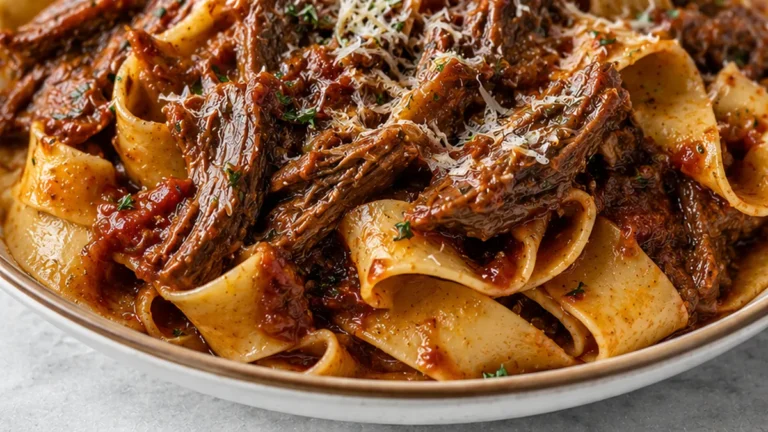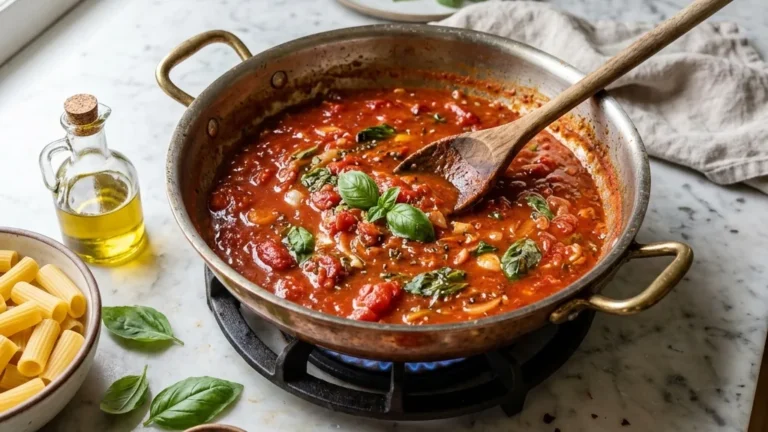
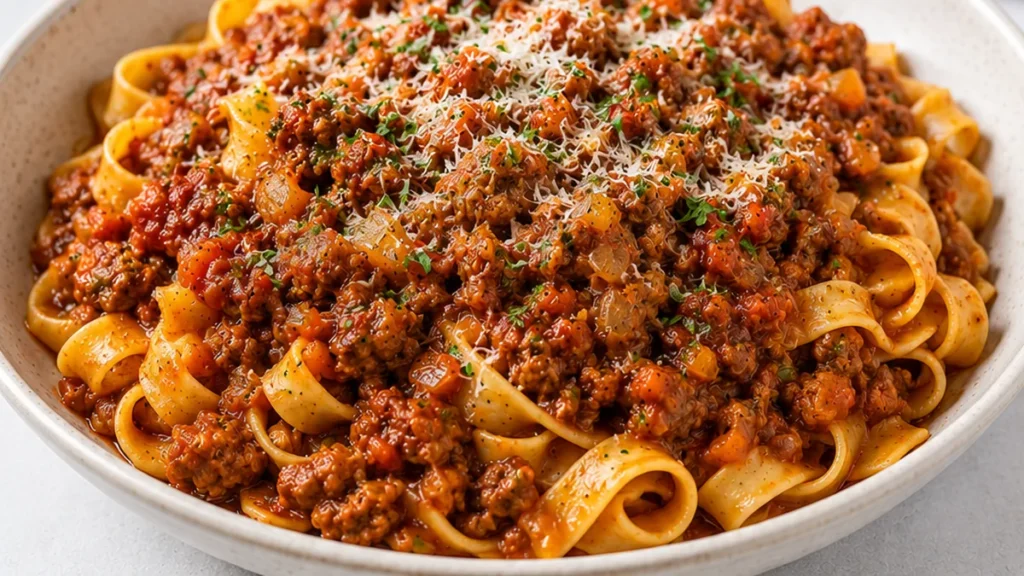
Sausage ragu is a hearty dish that brings together the rich flavors of pork and beef sausages, blended with fresh vegetables and red wine. This recipe is perfect for those seeking comfort food that is both satisfying and easy to prepare. Ideal for family gatherings or cozy nights at home, this sausage ragu pairs beautifully with pappardelle pasta for a truly memorable meal. The slow-cooked sauce allows the flavors to meld together, creating a robust and savory experience. This dish is not just a meal; it’s a festival of flavors that will delight your palate and make any occasion special.
Key takeaways
- Achieve deep flavor by properly browning sausage meat and slowly cooking aromatics.
- Toast tomato paste and reduce wine to concentrate flavors and remove alcohol.
- Simmer uncovered to thicken, skim fat to reduce oiliness, and add umami boosters if needed.
- Adapt sausages and wine for different flavor profiles; use broth as a non-alcoholic substitute.
Mouthwatering Sausage Ragu: A Comforting Classic!
Ingredients
- 2 tbsp olive oil
- 1 small onion, finely chopped
- 3 garlic cloves, finely minced
- 1 carrot, peeled and grated
- 2 celery stalks, grated
- 1 tsp fennel seeds
- 350 g pork sausages, meat removed from casings
- 350 g beef sausages, meat removed from casings
- 2 tbsp tomato paste
- 1 cup pinot noir red wine
Instructions
- Preheat oven to 180°C (160°C fan-forced).
- Soffrito – Heat the olive oil in a large heavy-based pot (with a lid) over medium heat. Add the onion, garlic, carrot, celery, and fennel seeds. Cook for 8 minutes until the carrot is soft and sweet, but not golden.
- Cook sausage – Turn the heat up to high and add the sausage. Cook, breaking it up as you go. It won’t crumble like ground meat, but that’s okay; we will break it up more later.
- Deglaze – Once the meat is no longer pink (it won’t really brown), add the tomato paste. Cook for 1 minute, then add the wine and let it simmer rapidly for 2 minutes until reduced by half, scraping the base of the pot clean.
- Slow cook #1 (1 hr) – Add the remaining ragu ingredients. Stir, bring to a simmer, cover, and place it in the oven for 1 hour.
- Slow cook #2 (45 min) – Remove from the oven and use a potato masher to mash the meat finer. Cover again and return to the oven for 45 minutes. The sauce will thicken as it cooks and loosen when tossed with the pasta.
- Salt – Taste and add more salt if desired, as sausages vary in saltiness.
Notes
The technique that makes it
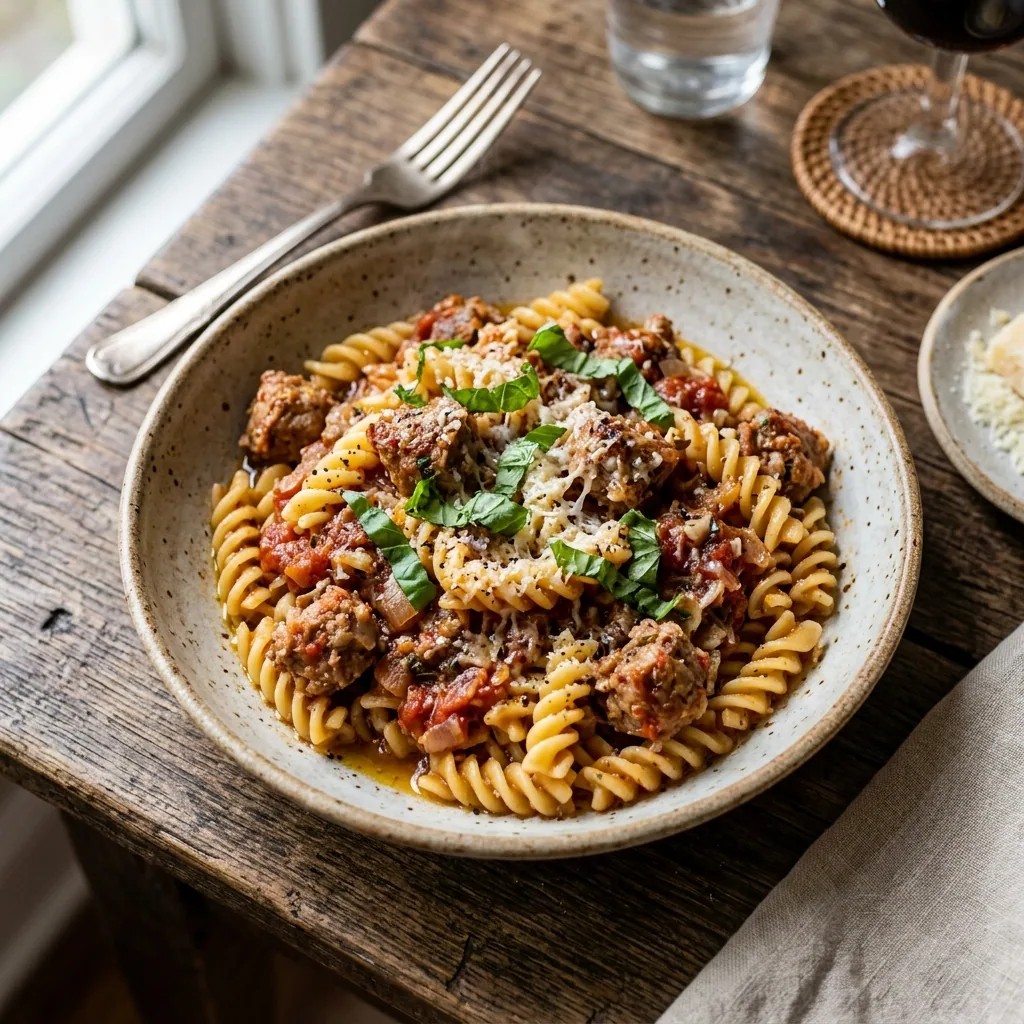
The foundation of a truly exceptional sausage ragu lies in the patient development of flavor, primarily through the browning of the sausage meat and the slow simmering of the aromatics. When you remove the sausage meat from its casings, you expose a larger surface area to the pan. This is crucial for achieving a rich Maillard reaction – the chemical process responsible for browning and creating complex, savory notes. Ensure your pan is adequately heated before adding the sausage meat, and resist the urge to stir too frequently initially. Allow the meat to develop a deep brown crust. Similarly, the finely chopped onion, garlic, carrot, and celery (the soffritto) need time to soften and sweeten. Sautéing them gently after the sausage has browned, perhaps in the rendered fat, allows their sugars to caramelize, adding depth and sweetness to the ragu without the harshness of raw alliums. The addition of tomato paste and its subsequent cooking is another critical step. Toasting the tomato paste for a minute or two deepens its flavor, reducing its raw acidity and intensifying its umami. Finally, the red wine deglazes the pan, lifting all those flavorful browned bits (fond) from the bottom and incorporating them into the sauce. Allowing the wine to reduce significantly concentrates its flavor and cooks off the harsh alcohol, leaving behind a subtle fruity complexity that complements the richness of the sausage.
Troubleshooting
- Ragu is too thin: Simmer uncovered for longer to allow excess liquid to evaporate. Alternatively, you can create a slurry of 1 tablespoon cornstarch mixed with 2 tablespoons cold water and stir it into the simmering ragu until thickened.
- Ragu is too oily: Skim off excess fat from the surface using a spoon or ladle. If the oiliness persists, you can try chilling the ragu; the fat will solidify on top and be easier to remove.
- Ragu lacks depth of flavor: Ensure you achieved a good sear on the sausage meat and properly caramelized the soffritto. You can also add a splash of Worcestershire sauce or a pinch of anchovy paste during simmering for an umami boost.
- Sausage meat is dry and crumbly: This often happens if the sausage meat is overcooked before the sauce has had time to meld. Ensure you brown the meat initially but don’t cook it through completely before adding liquids. The long simmer will finish cooking it tenderly.
Substitutions
- Pork and Beef Sausages: You can use all pork sausages or all beef sausages. For a spicier kick, consider using hot Italian sausages. The flavor profile will change slightly, becoming more or less rich depending on the fat content and seasoning of the chosen sausages.
- Pinot Noir: A dry red wine like Merlot, Sangiovese, or even a Cabernet Sauvignon can be used. If you prefer not to use alcohol, substitute with an equal amount of low-sodium beef broth and add an extra teaspoon of tomato paste for richness.
- Fennel Seeds: For a different aromatic note, try caraway seeds for a slightly earthier flavor, or omit entirely if you dislike anise notes.
- Vegetables: While onion, carrot, and celery form the classic soffritto, you could add finely diced bell peppers (red or yellow) for sweetness or mushrooms for an earthy, umami boost.
Pro tips
- Use high-quality sausages for the best flavor.
- Allow the sauce to simmer longer for deeper flavors.
- Serve with freshly grated parmesan for an extra touch.
Try this sausage ragu recipe and savor the comforting flavors it brings. Feel free to experiment with your favorite herbs and spices!
More from Pasta Sauces →
Frequently asked questions
What is the best type of sausage to use for ragu?
For this recipe, a mix of pork and beef sausages provides a balanced richness. Italian-style sausages, whether sweet or hot, are excellent choices due to their inherent seasoning and fat content, which contribute significantly to the ragu’s flavor.
Can I make sausage ragu ahead of time?
Yes, sausage ragu often tastes even better the next day as the flavors meld. Allow it to cool completely before refrigerating. Reheat gently on the stovetop or in the oven.
How long does sausage ragu typically need to simmer?
A minimum simmer time of 45 minutes to an hour is recommended after adding the liquids. For the most tender meat and deeply developed flavors, simmering for 2-3 hours is ideal.
What can I serve with sausage ragu?
Sausage ragu is incredibly versatile. It’s traditionally served with pasta like pappardelle, tagliatelle, or rigatoni. It’s also delicious spooned over polenta, mashed potatoes, or used as a filling for lasagna.