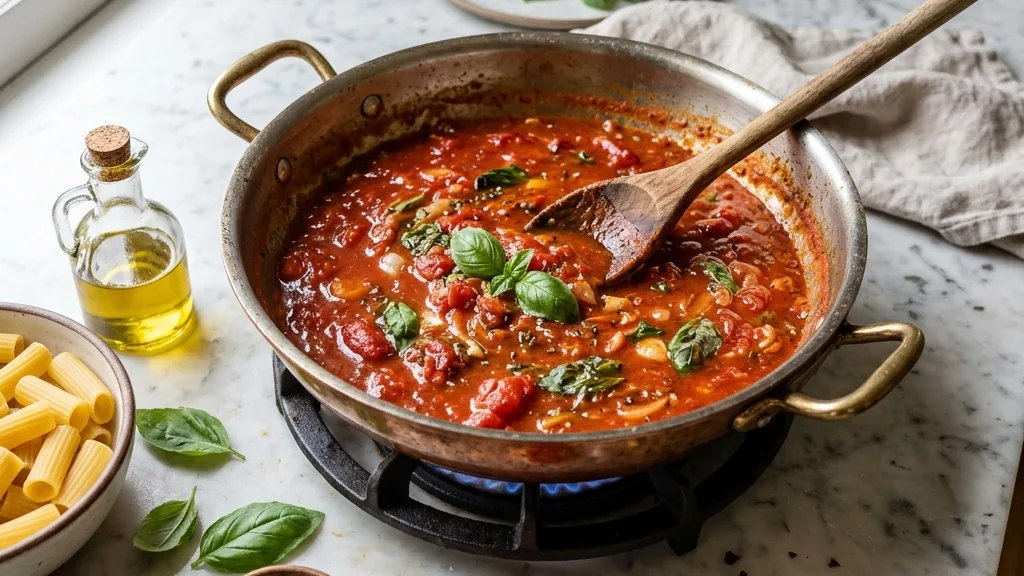
Quick answer: Here is how to make the pasta sauce in one breath: sweat a diced onion slowly in olive oil for 6 to 8 minutes, add garlic only in the last 30 to 60 seconds, pour in a 28-ounce can of hand-crushed whole tomatoes, season the salt in layers, and simmer uncovered for 25 to 30 minutes. Finish the cooked pasta right in the sauce with a splash of starchy pasta water. That sequence, not any secret ingredient, is what separates a bright, glossy sauce from a flat one.
If you’ve ever wondered how to make the pasta sauce that restaurants seem to nail and home cooks somehow don’t, the honest answer is that it isn’t a secret ingredient. It’s a handful of small decisions, made in the right order, with good canned tomatoes. This basic tomato sauce is one of the most-made recipes in any pasta repertoire. The version below is the one that survived the most rounds of testing.
Most recipes hand you an ingredient list and walk away. This one does something different: it gives you the recipe, then explains exactly why each step matters, so you can make it taste right even when your tomatoes, your stove, or your mood are a little different. Every number here comes from actually cooking it, not from copying another blog.
The recipe
This makes enough simple tomato sauce for about 1 pound of pasta, roughly 4 servings. Total time is about 40 minutes, most of it hands-off simmering.
Ingredients
- 1 can (28 oz) whole peeled tomatoes, San Marzano-style if you can find them
- 3 tablespoons extra-virgin olive oil
- 1 small yellow onion, finely diced
- 3 cloves garlic, thinly sliced or minced
- A pinch of red pepper flakes (optional)
- A few fresh basil leaves
- Salt, to taste
- A pinch of sugar, only if needed
Method
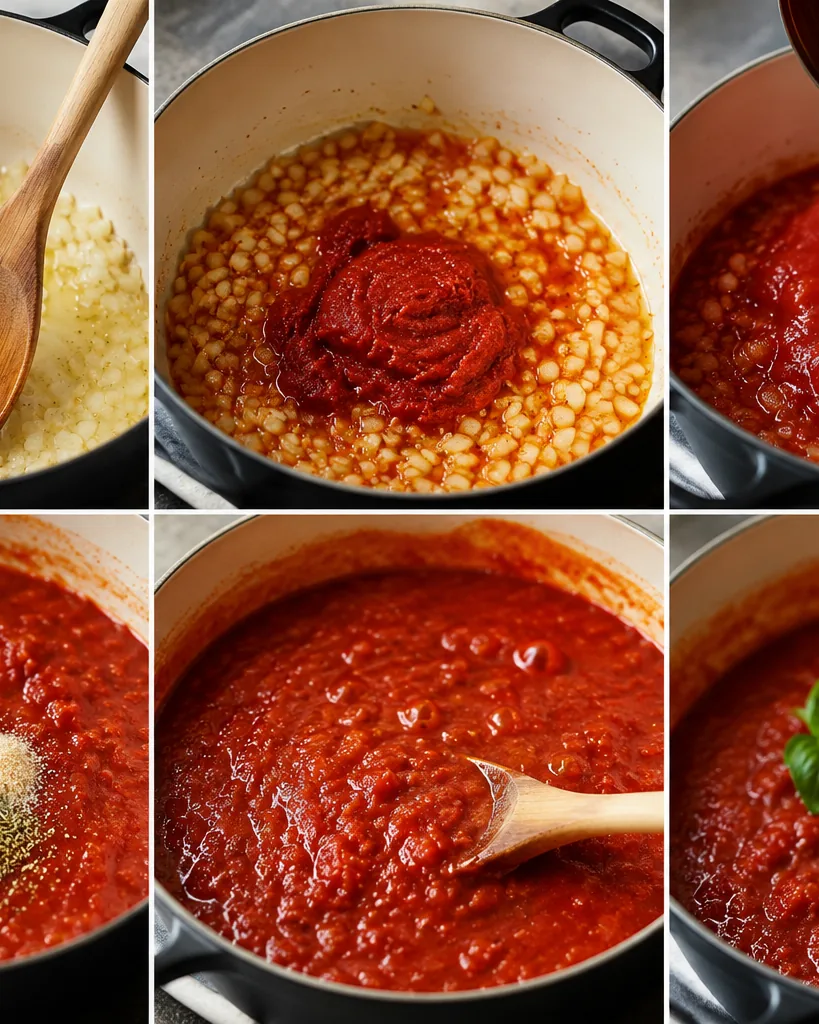
- Warm the olive oil in a wide pan over medium-low heat. Add the onion and a pinch of salt, and cook gently for 6 to 8 minutes, until soft, translucent, and sweet. Don’t rush this.
- Add the garlic and red pepper flakes and cook just 30 to 60 seconds, until fragrant but not colored.
- Crush the tomatoes by hand into the pan, juices and all. Add another pinch of salt.
- Bring to a gentle simmer and cook uncovered for 25 to 30 minutes, stirring now and then, until thickened and the raw tomato edge is gone.
- Taste. Adjust salt. Add a tiny pinch of sugar only if it tastes sharp. Tear in the basil at the end.
- Toss with just-cooked pasta in the pan with a splash of pasta water (see below).
The ingredients that actually matter
You can fuss over a sauce all day, but a few choices decide most of the outcome before you even turn on the stove.
The tomatoes come first. The canned tomatoes matter more than any fancy step. Whole peeled San Marzano-style tomatoes crushed by hand consistently beat pre-crushed cans: less metallic, more natural sweetness. The San Marzano tomato, grown in volcanic soil near Naples, is prized for exactly that low-acid, sweet character. Genuine ones carry a protected DOP designation under European Union law, the same kind of origin protection the EU gives to Parmigiano-Reggiano, so the label is a real quality signal, not just marketing. If you can’t find true San Marzanos, look for whole peeled plum tomatoes from a brand you trust, and crush them yourself.
Good olive oil, real garlic, a plain onion. A simple tomato sauce, the kind Neapolitans would recognize as the base of a marinara, leans on just a few things, so each one shows. Use an extra-virgin olive oil you’d happily taste off a spoon, the North American Olive Oil Association notes that “extra virgin” is the highest grade, pressed without heat or chemicals, so it carries the most flavor. Choose fresh garlic rather than the jarred kind, and an ordinary yellow onion. You don’t need much; you need it handled well.
The technique that makes it taste better
This is where a good sauce and a flat one part ways. None of it is hard, but the order and the timing are everything.
Sweat the onions, slowly. The single biggest difference between a flat sauce and a bright one is patience with the onions: six to eight minutes until they go translucent and sweet, not the two minutes most people give them. Rushed onions stay sharp and raw-tasting, and no amount of simmering fully fixes it.
Add garlic late. A common mistake is dumping the garlic in with the onions. It scorches and turns bitter long before the onions are done. Add it only in the last 30 to 60 seconds, just until it smells nutty, never browned. Burnt garlic is the most common reason a homemade sauce tastes harsh, and it can’t be undone once it happens.
Salt in layers. The sugar debate is overblown. Add a pinch only if the tomatoes taste sharp, and check first; a good can usually needs none. What it almost always needs is salt added in layers, a little with the onions, a little with the tomatoes, and a final adjustment at the end, rather than one big hit of salt at the finish. Layered salt seasons the whole sauce from the inside; salt dumped in late just sits on top and tastes harsh.
Simmer for the right amount of time. Low-and-slow is not required: for a weeknight sauce, 25 to 30 minutes uncovered is plenty. The hour-long simmer is better for a meat sauce, not a simple tomato one, where a long cook just dulls the fresh tomato flavor you want to keep. Uncovered is the key word, it lets the sauce reduce and concentrate instead of staying watery.
Why this works
Every step in this recipe is doing a specific job, and understanding them is what lets you fix a sauce on the fly instead of following the steps blindly.
Sweating the onion slowly draws out its water and converts some of its sharp compounds into sweeter ones, which is why a properly sweated onion tastes mellow while a rushed one tastes raw. Adding garlic late protects its delicate aromatic oils, which scorch and turn acrid at the higher heat the onions can take. Crushing the tomatoes by hand instead of blending them keeps a little texture and avoids whipping in air, which can make a sauce taste thin and overly bright.
The uncovered simmer is really just controlled evaporation: as water leaves the pan, the sugars and savory compounds in the tomato concentrate, and the sauce thickens to a clingy consistency without anything added. And salting in layers matters because salt needs time and heat to dissolve and spread evenly. A pinch early seasons the fat and the onion; a pinch with the tomatoes seasons the body of the sauce; the final taste-and-adjust corrects whatever the specific can of tomatoes needed. That is the whole reason two cooks can follow the same recipe and get different results: the one who tastes and adjusts is seasoning the sauce in front of them, not a sauce from a book.
The overlooked detail, the one almost no recipe mentions, is the size of the pan. A wide, shallow pan reduces a sauce far faster and more evenly than a tall, narrow pot, because it gives the water more surface to escape from. A 12-inch skillet or saute pan will get you a properly thick sauce in 25 minutes, while the same sauce in a small saucepan can still be watery at 40. If your sauce never seems to thicken no matter how long you wait, the culprit usually isn’t the recipe, it’s the pan. It is the kind of small, unglamorous variable that decides the result, and it is exactly what gets left out of recipes written by people who never actually stood over the pot.
Easy variations
Once the base is in your hands, it bends in a dozen directions:
- Butter, not oil (the Marcella Hazan way). The famous Marcella Hazan tomato sauce, the one that went viral after years as a quiet favorite in the NYT recipe pages, uses a 28-ounce can of tomatoes, 5 tablespoons of butter, and a halved onion simmered about 45 minutes, then the onion is discarded. It’s almost embarrassingly simple and tastes silky and round.
- Arrabbiata. Lean into the red pepper flakes for a spicy version with real heat.
- Pink or vodka-style. Stir a few tablespoons of cream or mascarpone into the finished sauce for a softer, richer plate.
- Herby. A little dried oregano early, or fresh basil and parsley at the end, changes the whole mood of the sauce.
Troubleshooting: fixing common problems
Most sauce problems have a quick fix. Here are the go-to fixes:
| Problem | Likely cause | The fix |
|---|---|---|
| Too acidic / sharp | Tomatoes are naturally tart | A pinch of sugar, a knob of butter, or a few more minutes of simmering |
| Too watery | Covered pan or short simmer | Simmer uncovered longer to reduce; don’t add water |
| Bitter / harsh | Burnt garlic | Next time add garlic last; for now, balance with a little sugar and salt |
| Bland / flat | Under-salted or rushed onions | Salt in layers and taste; finish with olive oil and fresh basil |
| Too sweet | Too much sugar | A splash of red wine vinegar or a squeeze of lemon to rebalance |
How to sauce the pasta properly
This is the step home cooks skip most, and it’s the one that makes a plate look and taste restaurant-made. Don’t drain your pasta, sauce it, and call it done. Marry them.
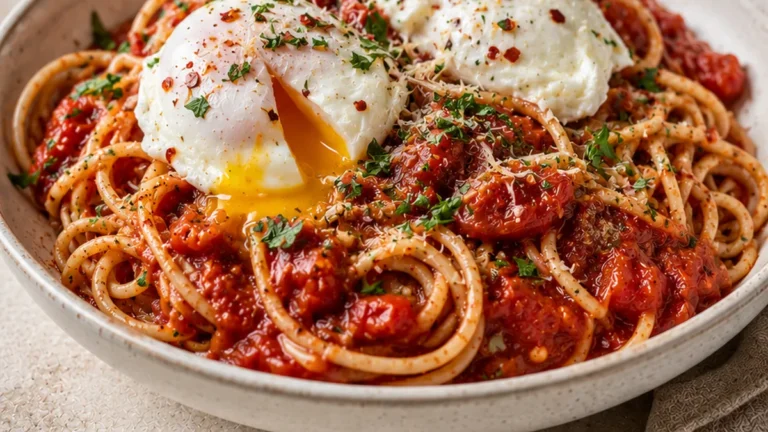
First, salt your pasta water well, about 1 to 1.5 tablespoons of salt per 4 quarts, roughly the salinity of a mild broth. Cook the pasta a minute short of the package time. Before draining, scoop out about half a cup of the starchy pasta water. Then add the drained pasta straight into the pan of sauce, pour in a splash of that pasta water, and toss over heat for 1 to 2 minutes. The starch in the water emulsifies with the oil and tomato so the sauce turns glossy and actually clings to every strand instead of sliding off into the bottom of the bowl.
It’s the same finishing move that pulls together richer dishes too, from a baked classic like our million dollar spaghetti to a weeknight wild mushroom tagliatelle. Learn it once and every pasta you make improves.
Storage and make-ahead
This sauce is a great one to make in advance; the flavor actually settles and improves overnight. Cool it, then store it airtight in the fridge. USDA food-safety guidance for cooked dishes is a useful rule of thumb here: keep it refrigerated and use it within about 4 to 5 days, and don’t leave it sitting at room temperature for more than 2 hours. It also freezes beautifully for up to about 3 months, so a double batch with half frozen in portions makes sense. Reheat gently on the stove, adding a splash of water if it has thickened too much, and re-taste for salt before serving, cold storage can mute the seasoning.
Frequently asked questions
Do I need to add sugar to pasta sauce?
Usually not. A good can of tomatoes is naturally sweet enough. Taste first, and only add a small pinch of sugar if the sauce tastes sharp or acidic. If you do, add it a little at a time so you don’t overshoot into sweet.
Can I use fresh tomatoes instead of canned?
You can in peak summer, when tomatoes are ripe and full of flavor, but you’ll need to peel them and cook them down longer to drive off the extra water. For most of the year, good canned whole tomatoes give a more consistent, sweeter sauce than out-of-season fresh ones.
How long should pasta sauce simmer?
A simple tomato sauce needs only 25 to 30 minutes uncovered, just long enough to lose the raw edge and thicken. Long, hour-plus simmers are for meat sauces; a plain tomato sauce simmered too long loses its fresh brightness.
Why is my sauce watery?
Almost always because it was covered or didn’t simmer long enough. Keep the pan uncovered and let it reduce, the water cooks off and the sauce concentrates. Never thin a watery sauce with more liquid; cook it down instead.
What pasta shape goes best with this sauce?
A simple tomato sauce clings well to long shapes like spaghetti and linguine, and to ridged short shapes like rigatoni and penne that catch sauce in their grooves. Match a lighter sauce to thinner pasta and a thicker, reduced sauce to sturdier shapes.
Can I make this sauce ahead for a crowd?
Yes, and it’s one of the best reasons to make it. Because the flavor improves after a night in the fridge, cook a double or triple batch the day before a dinner, cool it, and refrigerate it. On the day, reheat it gently, cook the pasta fresh, and marry the two in the pan just before serving. Make-ahead sauce plus just-cooked pasta is the closest a home cook gets to restaurant timing.
The bottom line
Learning how to make the pasta sauce that tastes like a trattoria’s comes down to respecting a few small steps: sweat the onions until they’re sweet, add garlic only at the end, use good hand-crushed tomatoes, season in layers, simmer uncovered for 25 to 30 minutes, and finish the pasta right in the pan with a little starchy water. None of it is complicated, and none of it takes special equipment, just attention at the right moments. Make it once paying attention to the timing, and it stops being a recipe you follow and becomes one you simply know.
References: San Marzano tomato (DOP); Marinara sauce; Marcella Hazan; storage timing per general USDA refrigeration guidance.