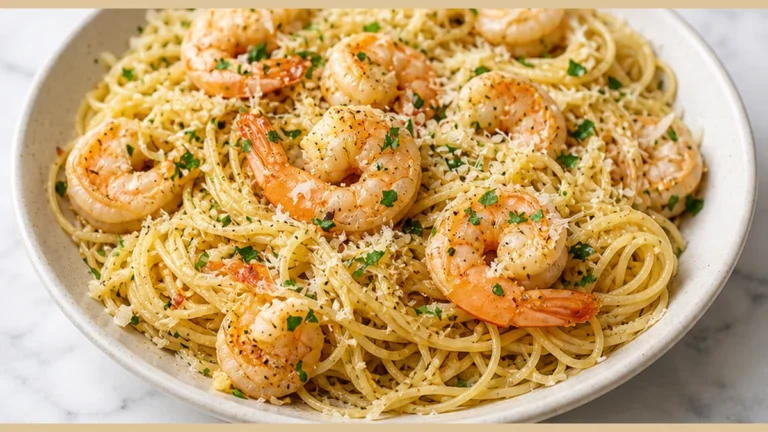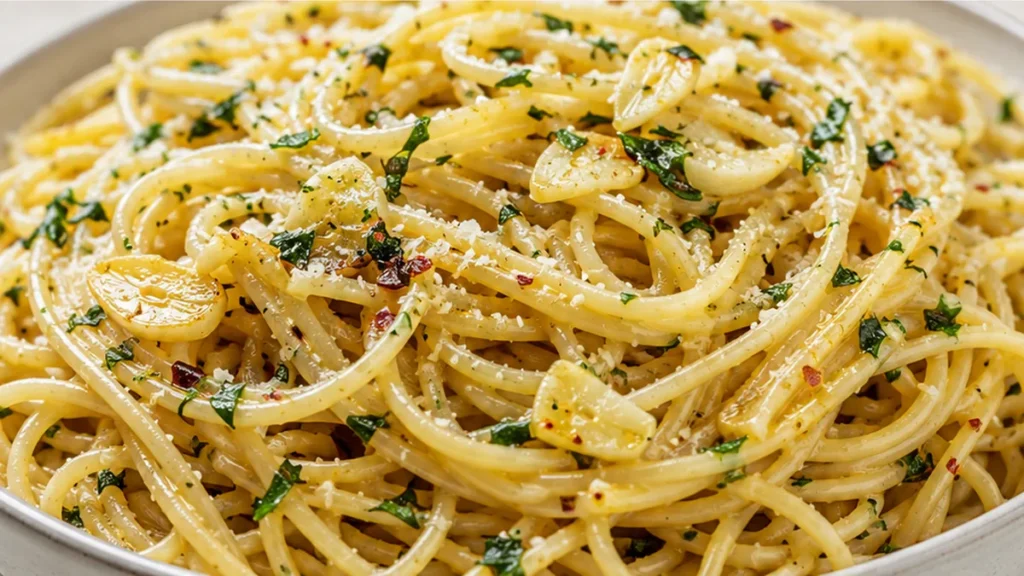
Spaghetti aglio olio is a simple dish made with garlic, olive oil, and chili flakes. This classic Italian recipe highlights the beauty of minimal ingredients.
Key takeaways
- Emulsion is key for a silky sauce.
- Control heat to prevent garlic bitterness.
- Use reserved pasta water for the right consistency.
- Adjust seasoning to taste for balance.
Garlic Lover’s Aglio e Olio Pasta
Ingredients
- 1 lb spaghetti
- 1 tsp salt (divided)
- 20 cloves garlic, peeled and sliced thin
- ¼ tsp freshly cracked black pepper
- ½ tsp cracked red pepper
- ½ cup olive oil
- ½ cup grated Parmesan cheese
- 2 tbsp Italian parsley, minced
- 2 tbsp lemon juice
- ¼ cup pasta water (reserved from cooking)
Instructions
- Bring a large pot of generously salted water to a rolling boil.
- Add spaghetti and cook according to package directions until al dente (about 8-10 minutes). Reserve about 1/4 cup of the starchy pasta water before draining.
- While the pasta cooks, heat the olive oil in a large skillet over medium-low heat. Add the sliced garlic, black pepper, 1/2 tsp salt, and red pepper flakes.
- Sauté the garlic and spices gently for about 2 minutes until the garlic is fragrant and lightly golden.
- Add the drained spaghetti directly to the skillet with the garlic oil. Toss thoroughly to coat every strand.
- Pour in the reserved pasta water, lemon juice, grated Parmesan cheese, and minced parsley. Toss everything together until the cheese melts into the oil.
Video
Notes
– Don’t burn the garlic! Keep heat on medium-low and sauté until fragrant, not brown.
– Reserve that starchy pasta water – it’s the key to a silky sauce.
– Toss vigorously to emulsify the oil, pasta water, and cheese. Nutrition information is an estimate, calculated automatically. Values vary with brands, substitutions and portion sizes.
The technique that makes it
The key to a successful spaghetti aglio olio lies in the technique of emulsion and heat control. As you cook the garlic in olive oil, it’s crucial to maintain a gentle heat to avoid burning the garlic, which can introduce bitterness. The sliced garlic should be cooked until golden, allowing its natural oils to infuse the oil without becoming overly crisp. This creates a flavorful base. When you combine the reserved pasta water with the garlic oil, the starches from the pasta help emulsify the sauce, resulting in a silky texture that clings to the spaghetti. The addition of Parmesan cheese further enhances this emulsion, creating a cohesive dish that balances the garlic’s intensity with the cheese’s creaminess.
Troubleshooting
- Garlic is bitter: If your garlic turns bitter, it likely cooked too long or at too high a heat. Next time, reduce the heat and remove it from the pan once golden.
- Dry pasta: If the pasta appears dry after mixing, add more reserved pasta water gradually until you achieve the desired consistency.
- Too salty: If the dish is overly salty, you can balance it by adding a splash of lemon juice or a bit of sugar to counteract the saltiness.
- Not enough flavor: If the dish lacks flavor, consider adding more garlic or increasing the amount of red pepper flakes to enhance the overall taste.
Substitutions
- Spaghetti: You can substitute with linguine or fettuccine for a different texture while maintaining the flavor profile.
- Parmesan cheese: Pecorino Romano can be used for a sharper, saltier flavor that complements the garlic.
- Olive oil: For a different flavor, use avocado oil, which has a high smoke point and a mild taste.
- Italian parsley: Fresh basil can be used instead for a different herbal note that pairs well with garlic and lemon.
Pro tips
- Use good quality olive oil; its flavor is prominent.
- Don’t burn the garlic! Keep heat on medium-low and sauté until fragrant, not brown.
- Reserve that starchy pasta water – it’s the key to a silky sauce.
- Toss vigorously to emulsify the oil, pasta water, and cheese.
Enjoy this simple yet profoundly satisfying classic. It’s a testament to how minimal ingredients can create maximum flavor.
Frequently asked questions
Can I use garlic powder instead of fresh garlic?
While garlic powder can be used in a pinch, it won’t provide the same depth of flavor as fresh garlic. Fresh garlic offers a more robust and aromatic profile that is essential for this dish.
How can I make this dish vegetarian?
This recipe is already vegetarian, but ensure that the Parmesan cheese is made without animal rennet if you want it to be strictly vegetarian. Look for vegetarian-certified Parmesan alternatives.
What type of olive oil should I use?
Use extra virgin olive oil for the best flavor, as it has a richer taste and higher quality than regular olive oil. It enhances the dish and complements the garlic beautifully.
Can I add protein to this dish?
Yes, you can add grilled chicken, shrimp, or even sautéed mushrooms to the dish for added protein. Just be sure to adjust cooking times accordingly to ensure everything is cooked perfectly.
More from Easy Pasta Recipes →