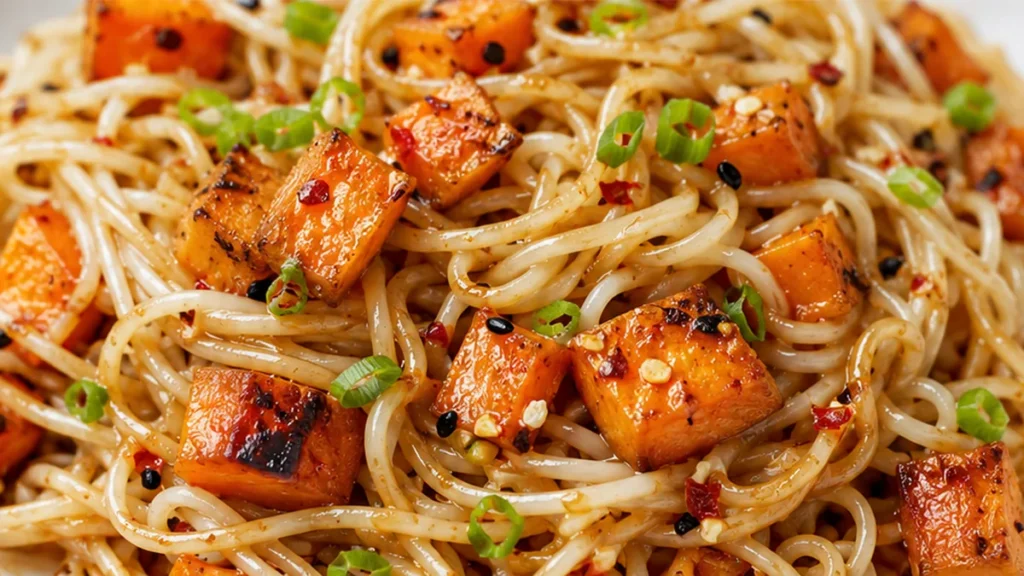
The secret to truly irresistible tahini noodles lies in balancing rich tahini with sweet honey and savory soy sauce, creating a sauce that perfectly coats every strand. This recipe improves a simple noodle dish with the addition of honey-roasted sweet potatoes, transforming it into a complete and deeply flavorful meal. These tahini noodles are designed for ease without compromising on taste, making them ideal for busy weeknights or a satisfying weekend lunch. The combination of textures and flavors ensures a memorable dining experience that you’ll want to revisit often.
Key takeaways
- Achieve a silky, emulsified tahini sauce by whisking tahini with soy sauce and gradually adding warm water.
- Roast sweet potatoes until tender and caramelized for optimal flavor and texture.
- Don’t overcook the noodles; rinse rice noodles immediately after cooking to prevent sticking.
- Taste and adjust sauce seasoning before tossing with noodles for balanced flavor.
Sticky Honey Tahini Noodles: New Obsession!
Ingredients
- 2 small sweet potatoes, sliced into 1/4 inch rounds
- 2 tablespoons extra virgin olive oil
- 1 tablespoon honey
- Crushed red pepper flakes
- Kosher salt
- 8 ounces rice noodles (or long cut pasta)
- 1/2 cup tahini
- 1/2 cup low sodium soy sauce or tamari
- 2 tablespoons toasted sesame oil
Instructions
- Preheat the oven to 425 degrees F. On a rimmed baking sheet, combine the sweet potatoes, 2 tablespoons olive oil, 1 tablespoon honey, crushed red pepper flakes, and a pinch each of salt and pepper. Arrange in an even layer. Transfer to the oven and roast for 25-30 minutes, tossing halfway through cooking, until the potatoes are caramelized.
- Meanwhile, bring a large pot of water to a boil. Cook the noodles according to package directions.
- Combine in a food processor the tahini, soy sauce, sesame oil, 2 tablespoons honey, and 1/4 cup water. Pulse until combined and smooth, adding additional water as needed to thin the sauce. Pour the sauce over the hot noodles, tossing to combine.
- Divide the noodles between bowls. Top with sweet potatoes. Enjoy warm or at room temp.
Notes
The Technique: Achieving Creamy, Emulsified Tahini Sauce
The magic of these tahini noodles lies in creating a smooth, emulsified sauce. Tahini, which is ground sesame seeds, contains oil. When combined with liquids like soy sauce and water (or noodle cooking water), it can sometimes separate, resulting in a greasy or clumpy sauce. The key to a silky sauce is to build the emulsion properly. Start by combining the tahini with the soy sauce and toasted sesame oil in a bowl. Whisk vigorously. The salt in the soy sauce helps to break down the tahini’s structure, allowing the oil to disperse more evenly. Gradually whisk in a small amount of warm water, a tablespoon at a time. Warm water helps to loosen the tahini and encourages the oil and water components to bind together, creating a stable emulsion. Continue adding water until you reach your desired sauce consistency – it should be pourable but thick enough to coat the noodles. Don’t be afraid to add a little extra water if the sauce seems too thick. The sweetness from the honey and the slight bitterness of the tahini balance each other, while the olive oil and honey on the sweet potatoes add a caramelized depth.
Troubleshooting
- Sauce is too thick or clumpy: Whisk in more warm water, one tablespoon at a time, until smooth. Ensure you are whisking vigorously to encourage emulsification.
- Sauce is too thin and watery: This can happen if too much water is added too quickly. Gently simmer the sauce over low heat for a minute or two, whisking constantly, to allow some of the water to evaporate and the sauce to thicken. Alternatively, whisk in another tablespoon of tahini.
- Sweet potatoes are mushy: Ensure your sweet potato slices are uniform in thickness (around 1/4 inch) and avoid overcrowding the pan when roasting. Roasting at a sufficient temperature (around 400°F or 200°C) will help them caramelize rather than steam.
- Noodles are sticky or clumped: Rinse cooked rice noodles immediately under cool water to prevent sticking. If using pasta, ensure you use plenty of water and stir occasionally while cooking.
Substitutions
- Sweet Potatoes: Butternut squash or kabocha squash can be substituted for sweet potatoes. The roasting time may vary slightly, and the flavor profile will be nuttier and less sweet.
- Honey: Maple syrup or agave nectar can be used instead of honey. This will alter the sweetness slightly and may affect the caramelization of the sweet potatoes.
- Soy Sauce/Tamari: Coconut aminos offer a soy-free alternative, resulting in a slightly sweeter and less salty sauce. Adjust seasoning as needed.
- Rice Noodles: Soba noodles, whole wheat spaghetti, or even zucchini noodles can be used. Cooking times and textures will differ significantly.
Pro tips
- For extra crisp sweet potatoes, ensure they are in a single layer on the baking sheet and avoid overcrowding.
- If your tahini sauce is too thick, gradually add warm water, a tablespoon at a time, until it reaches your desired consistency. Tahini can be quite dense, and a little extra liquid goes a long way to make it perfectly pourable.
- Don’t overcook the rice noodles; they can become mushy quickly. Cook them just until al dente for the best texture.
This sweet and savory tahini noodle dish is a delightful fusion of flavors and textures. Enjoy it as a comforting meal any day of the week, and feel free to customize with your favorite additions. Bon appétit!
Frequently asked questions
My tahini sauce is separating, what did I do wrong?
Separation often occurs when the tahini and liquid components don’t fully emulsify. Ensure you are whisking vigorously and adding warm water gradually, one tablespoon at a time. Using the salt from the soy sauce helps break down the tahini, aiding emulsification.
Can I make the tahini sauce ahead of time?
Yes, the tahini sauce can be made a day or two in advance and stored in an airtight container in the refrigerator. It may thicken considerably when chilled. Gently warm it and whisk in a little water to reach the desired consistency before serving.
My sweet potatoes aren’t getting crispy, how can I fix this?
Ensure your oven is preheated to the correct temperature (around 400°F/200°C) and that the sweet potato slices are not overcrowded on the baking sheet. Overcrowding causes them to steam rather than roast and caramelize.
What kind of noodles work best for this recipe?
Rice noodles are ideal for their neutral flavor and ability to absorb sauce. However, other long pasta like spaghetti or linguine, or even soba noodles, can work. Adjust cooking times according to the noodle package instructions.
More from Creamy Pasta Recipes →