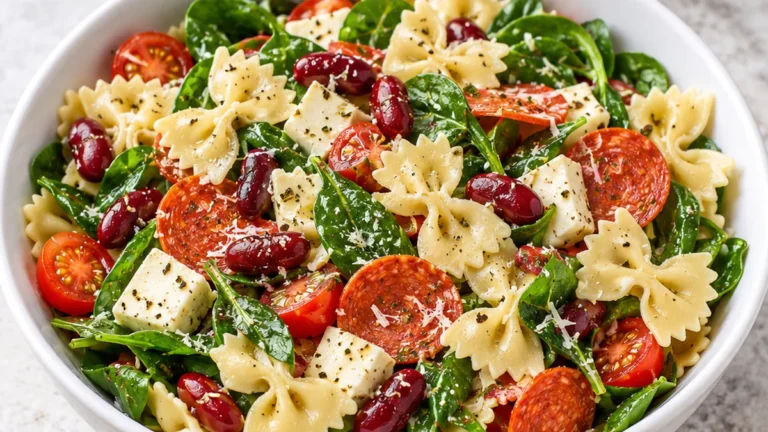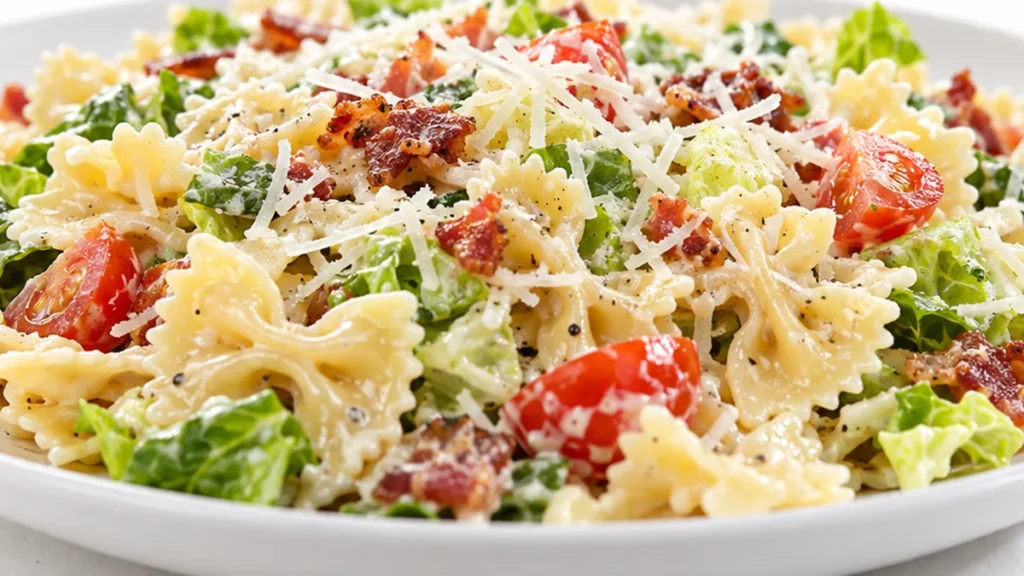
This is the ultimate caesar pasta salad, combining fresh ingredients and a creamy dressing. It’s a straightforward recipe for any occasion.
Key takeaways
- Achieving a stable emulsion is crucial for the dressing’s creaminess.
- Cooking pasta al dente prevents it from becoming mushy.
- Ingredient swaps can elevate the flavor profile of the salad.
- The combination of pasta and Caesar flavors offers a unique dining experience.
The Ultimate Caesar Pasta Salad
Ingredients
- 3 cups mini bow-tie pasta (uncooked)
- 12 strips bacon (crumbled)
- 2/3 cup cherry tomatoes (diced)
- 2.25 oz black olives (sliced)
- 3/4 cup Caesar Dressing
- 1 cup curly romaine lettuce (chopped)
- 1/2 cup Parmesan cheese (shredded)
- Small seasoned croutons (optional)
- Black pepper (optional)
Instructions
- Bring a large pot of salted water to a boil.
- Cook pasta until al dente, about 6 minutes.
- Drain pasta and rinse with cold water. Place in a large bowl.
- Cook bacon until crisp, then crumble into small pieces.
- Add crumbled bacon, diced tomatoes, sliced olives, and Caesar dressing to the pasta.
- Toss gently to coat all ingredients with dressing. Add more dressing if needed.
- Stir in chopped romaine lettuce and shredded Parmesan cheese.
- Finish with black pepper and croutons, if desired. Serve chilled.
Understanding the Creamy Emulsion in Caesar Dressing
The key to achieving a luscious, creamy Caesar dressing lies in the emulsion process. An emulsion is a mixture of two liquids that typically do not mix, such as oil and vinegar. For a classic Caesar dressing, a ratio of about 3:1 oil to vinegar is recommended. This means for every 3 parts of oil, use 1 part of vinegar. The emulsifying agent, usually egg yolk or mustard, helps to stabilize this mixture, creating a smooth and cohesive dressing. To create the perfect emulsion, whisk the ingredients vigorously or use a blender to incorporate air, which helps bind the oil and vinegar together.
Common Issues and Their Solutions
When preparing the ultimate Caesar pasta salad, several common issues may arise that can affect the final dish. Here are some potential problems and their solutions:
- Problem: Dressing separates after preparation.
Solution: Ensure that the emulsion is stable by whisking or blending thoroughly. If it separates, re-emulsify by whisking in a bit of warm water. - Problem: Pasta becomes mushy.
Solution: Cook pasta al dente, usually 1-2 minutes less than package instructions. Rinse under cold water after cooking to stop the cooking process. - Problem: Salad is too salty.
Solution: Use low-sodium ingredients, such as low-sodium Worcestershire sauce and cheese, and taste as you go to adjust seasoning.
Ingredient Swaps for a Unique Twist
While the traditional Caesar pasta salad is delightful, consider these ingredient swaps for a different flavor profile:
- Swap: Romaine lettuce for kale.
Result: Kale adds a heartier texture and a slightly bitter flavor, which can complement the creamy dressing. - Swap: Grilled chicken for shrimp.
Result: Shrimp provides a seafood twist, enhancing the salad’s overall flavor and adding a different protein source. - Swap: Parmesan cheese for feta.
Result: Feta introduces a tangy flavor that contrasts nicely with the creamy dressing.
Unique Features of Caesar Pasta Salad
One distinctive aspect of Caesar pasta salad is its ability to combine the rich, umami flavors of traditional Caesar salad with the heartiness of pasta. This dish allows for a satisfying meal that is not only filling but also packed with flavor. The addition of toasted croutons or nuts can enhance the texture, providing a delightful crunch that contrasts with the creaminess of the dressing. Moreover, the versatility of this dish means you can easily customize it with seasonal vegetables or proteins, making it suitable for various occasions.
How to Properly Store Your Caesar Pasta Salad for Maximum Freshness
When it comes to storing the ultimate caesar pasta salad, proper techniques can significantly extend its shelf life while maintaining flavor and texture. Ideally, store the salad in an airtight container in the refrigerator. This helps to prevent the pasta from absorbing too much moisture and becoming mushy. The salad can generally be stored for up to three days. To preserve the crunchiness of the croutons, consider storing them separately and adding them just before serving. This method ensures that they remain crispy and do not become soggy from the dressing.
Scaling the Recipe: How to Adjust Portions for Gatherings
Scaling your caesar pasta salad recipe for larger gatherings requires some careful consideration of ingredient ratios. A common approach is to increase each ingredient proportionally; however, certain components, like the dressing, may need slight adjustments. For instance, while you might double the pasta, the amount of dressing may not need to be exactly doubled to avoid overwhelming the salad. Aim for a balance where the flavors remain vibrant. A good rule of thumb is to start with a 1:2 ratio of dressing to pasta and adjust based on taste.
Choosing the Right Ingredients Based on Seasonality
The quality and freshness of ingredients can greatly influence the overall taste of the ultimate caesar pasta salad. Seasonal ingredients tend to be more flavorful and nutritious. For example, in the summer, ripe cherry tomatoes and fresh basil can enhance the salad, while in the winter, you might opt for roasted vegetables for a heartier version. Pay attention to the quality of your lettuce, as fresh, crisp romaine will provide the best texture and flavor contrast against the creamy dressing.
Equipment Considerations for Perfectly Mixed Salad
The equipment you use can impact the final texture and presentation of your caesar pasta salad. A large mixing bowl is essential for combining all components without mashing the pasta. Using a salad spinner can help dry the lettuce thoroughly after washing, which is crucial to prevent dilution of the dressing. Additionally, consider using a food processor for the dressing to achieve a smooth emulsion, but be cautious not to over-process, which can lead to a thinner consistency than desired. The right tools can enhance your preparation and ensure a delightful final dish.
Understanding the Ideal Timing for Preparation and Serving
When it comes to the ultimate caesar pasta salad, timing plays a crucial role in ensuring the best flavor and texture. Preparing the salad too far in advance can lead to soggy pasta and wilted greens. Ideally, the pasta should be cooked al dente, which means it should retain a slight firmness. This can be achieved by boiling the pasta for about 8-10 minutes, depending on the type used. After cooking, rinse the pasta under cold water to halt the cooking process and cool it down quickly. For optimal freshness, assemble the salad no more than 1-2 hours before serving. This allows the flavors to meld without compromising the texture of the ingredients. If you need to prepare it ahead of time, consider keeping the dressing separate until just before serving. This method preserves the crispness of the lettuce and the integrity of the pasta, ensuring that each bite is as delightful as intended.
Adapting the Recipe for Seasonal Ingredients
Seasonality can significantly influence the flavor profile and freshness of your ultimate caesar pasta salad. For instance, during the summer months, fresh tomatoes, cucumbers, and basil can enhance the salad, providing a burst of flavor and color. In contrast, winter might call for heartier greens like kale or spinach, which can withstand the rich caesar dressing without wilting. When adapting this recipe based on seasonal availability, it’s essential to consider the balance of flavors and textures. For example, if using firmer vegetables, you might want to slightly increase the dressing quantity to ensure every bite is flavorful. Additionally, incorporating seasonal proteins, such as grilled chicken in the summer or roasted chickpeas in the fall, can elevate the dish while maintaining its caesar roots. Always aim for a balance between the creamy dressing, the pasta, and the seasonal vegetables to create a harmonious dish.
Choosing the Right Equipment for Consistent Results
The equipment used in preparing the ultimate caesar pasta salad can greatly affect the final outcome. A high-quality pot for boiling pasta is essential; it should be large enough to allow the pasta to move freely while cooking. This prevents clumping and ensures even cooking. A colander is necessary for draining the pasta, but it’s also beneficial to have a bowl of ice water ready for shocking the pasta post-cooking. This step not only stops the cooking process but also helps maintain the pasta’s color and texture. When it comes to mixing the salad, using a large mixing bowl allows for easier tossing of ingredients without crushing the delicate greens. A salad spinner can be a great investment as it dries washed greens quickly, reducing moisture that can lead to a soggy salad. Lastly, a good quality whisk or immersion blender is vital for achieving the perfect emulsion in your caesar dressing, ensuring it clings beautifully to the pasta and greens.
Understanding the Impact of Ingredient Quality on Flavor
The quality of ingredients plays a crucial role in the overall flavor profile of the ultimate caesar pasta salad. Fresh, high-quality ingredients can elevate the dish significantly. For instance, using homemade or artisanal pasta can enhance the texture and taste, resulting in a more satisfying experience. Similarly, fresh romaine lettuce adds a crispness that complements the creamy dressing. When selecting cheese, opt for freshly grated Parmigiano-Reggiano over pre-packaged options; the latter often lacks the depth of flavor and can be overly salty. Additionally, the freshness of the garlic and lemon juice is essential; using freshly squeezed lemon juice instead of bottled juice can brighten the salad and enhance its overall flavor. In terms of seasonality, consider sourcing local produce when possible, as it tends to be fresher and more flavorful. This attention to ingredient quality not only improves the taste but also contributes to a more enjoyable dining experience.
Preparing for a Crowd: Scaling Up Your Caesar Pasta Salad
When preparing the ultimate caesar pasta salad for a larger gathering, understanding how to scale the recipe is vital. Start by maintaining the same ratios of pasta to dressing and vegetables to ensure consistent flavor and texture. For instance, if the original recipe calls for 250 grams of pasta, simply multiply that by the number of servings needed, while keeping the dressing ingredients proportional. It’s also important to consider that larger batches may require adjustments in preparation techniques; for instance, mixing may take longer, and you might need to use a larger bowl or multiple bowls to ensure even distribution of the dressing. Additionally, when scaling up, consider the chilling time; a larger volume of salad may take longer to cool in the refrigerator. Finally, be mindful of presentation; serving in a large bowl can make it visually appealing, but consider garnishing individual servings for a more elegant touch. This approach ensures that everyone enjoys the fresh and creamy flavors of the salad, regardless of the portion size.
Pro tips
Pro tip: Best served immediately while hot!
Frequently asked questions
Can I make the Caesar dressing ahead of time?
Yes, you can prepare the Caesar dressing in advance. Store it in an airtight container in the refrigerator for up to three days. Just give it a good whisk or shake before using, as it may separate over time.
What type of pasta works best for Caesar pasta salad?
Short pasta shapes like rotini, penne, or farfalle are ideal for Caesar pasta salad. They hold onto the dressing well and provide a nice bite. Avoid long pasta shapes, as they may not mix as well with the other ingredients.
How can I make this salad vegetarian?
To make a vegetarian version of the ultimate Caesar pasta salad, simply omit the anchovies from the dressing and replace the Parmesan cheese with a vegetarian alternative. Nutritional yeast can also add a cheesy flavor without dairy.
Is it possible to make this dish gluten-free?
Yes, you can easily make this dish gluten-free by using gluten-free pasta. There are many varieties available that mimic the texture of traditional pasta, ensuring everyone can enjoy this Caesar pasta salad.
More from Easy Pasta Recipes →