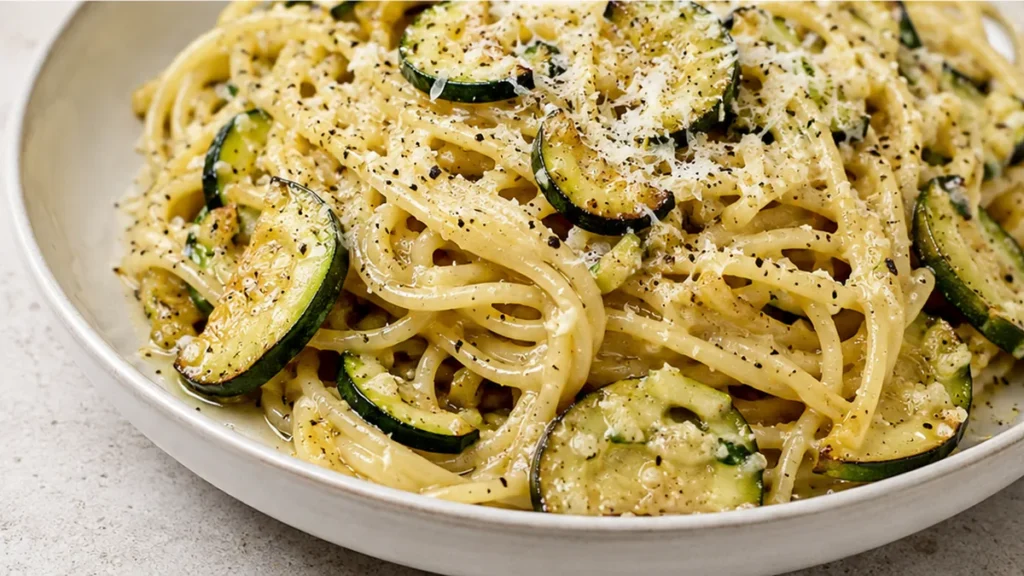
The secret to a truly exceptional zucchini cacio e pepe lies in harnessing the starchy pasta water and the gentle browning of butter. This recipe improves a classic with tender zucchini, creating a balanced and flavorful meal. Crafting the perfect zucchini cacio e pepe involves a delicate dance between heat and ingredients, ensuring a luscious sauce without clumping. Reserving ample pasta water is key to achieving that restaurant-quality emulsification.
Key takeaways
- The starchy pasta water is essential for emulsifying the sauce.
- Control the heat when adding cheese to prevent clumping and greasiness.
- Brown the butter gently for nutty depth without burning.
- Sauté zucchini thinly to avoid excess moisture in the final dish.
Zucchini Cacio e Pepe: Brown Butter Dream
Ingredients
- 1 pound pasta
- 2 tablespoons extra virgin olive oil
- 2 zucchini or yellow summer squash, sliced
- 1-2 cloves garlic, chopped
- kosher salt
- 8 tablespoons salted butter
- 2 teaspoons freshly cracked black pepper
- 1 cup freshly grated parmesan cheese
- 1/2 cup freshly grated pecorino cheese
- fresh basil
Instructions
- Bring a large pot of salted water to a boil and cook pasta according to package directions until al dente. Just before draining, reserve 1 1/4 cups of the pasta cooking water. Drain.
- Meanwhile, heat the olive oil in a large skillet over medium heat. Add the zucchini, garlic, and season with salt. Cook until the zucchini is golden, about 5 minutes. Remove from the skillet to a plate.
- Working in the same skillet, add the pepper and cook for 30 seconds, until toasted. Add 4 tablespoons butter, then the pasta, 1 cup pasta cooking water, the parmesan, and pecorino. Toss vigorously for 1-2 minutes to melt the cheese. Add the remaining 1/4 cup water, the zucchini, and season with salt. Toss well.
- Melt 4 tablespoons butter in a skillet over medium heat, cook until the butter browns, about 3-4 minutes.
- Plate the pasta and spoon the browned butter over each serving. Top with fresh basil for garnish. Enjoy immediately!
Notes
The Technique That Makes It: Emulsifying the Sauce
The magic of Cacio e Pepe, even with the addition of zucchini, lies in creating a creamy, emulsified sauce without cream. This is achieved by carefully managing heat and starch. As the pasta cooks, its starch leaches into the boiling water. This starchy water is the key emulsifier. When combined with the rendered fat from the butter and the cheeses, it forms a cohesive sauce that coats the pasta beautifully. The initial sauté of the zucchini and garlic in olive oil builds a flavor base. Crucially, the butter should be browned gently to develop nutty notes without burning. When adding the pasta to the pan with the zucchini, it’s essential to add a ladleful of the hot pasta water. This hot, starchy liquid, along with the cheeses, will create the emulsion. The residual heat of the pasta and the pan is usually sufficient to melt the cheeses and create the sauce. Avoid high heat at this stage, as it can cause the cheese to clump and become greasy rather than creamy.
Troubleshooting
- Sauce is too thin: Add more cheese gradually, stirring constantly, or let the pasta sit in the pan off the heat for a minute to allow the starch to thicken the sauce.
- Sauce is clumpy or greasy: This usually means the heat was too high when adding the cheese. Remove the pan from the heat immediately and stir vigorously, adding a splash more of the hot pasta water to help re-emulsify.
- Pasta is sticking together: Ensure you use plenty of water to cook the pasta and stir it frequently. Adding a bit of olive oil to the sauce can also help prevent sticking.
- Zucchini is watery: Slice the zucchini thinly and don’t overcrowd the pan when sautéing. Cook in batches if necessary to allow for proper searing rather than steaming.
Substitutions
- For salted butter: Use unsalted butter and add an extra pinch of kosher salt to taste. The result will be a slightly less rich but equally delicious sauce.
- For Parmesan cheese: You can use all Pecorino Romano, but be aware it has a sharper, saltier flavor. You can also substitute half of the Parmesan with Grana Padano for a milder, nuttier profile.
- For fresh basil: Fresh parsley offers a bright, herbaceous counterpoint that works well, though it lacks the distinct aroma of basil.
- For zucchini: Thinly sliced yellow squash or even pre-cooked, drained spaghetti squash can be used for a similar texture and mild flavor.
Pro tips
- Reserve 1 1/4 cups of pasta water: this is crucial for the creamy sauce. The starch in the water helps emulsify the cheese and butter.
- Toast the pepper: cooking the black pepper for a short time in the skillet before adding other ingredients really brings out its aromatic qualities.
- Don’t overheat the cheese: when adding the Parmesan and Pecorino, ensure the heat is not too high. Vigorously tossing off the direct heat helps melt the cheese smoothly without it becoming stringy or clumpy.
- Doneness of zucchini: cook the zucchini until golden-brown, but still with a slight bite. Overcooked zucchini will become mushy in the pasta.
This zucchini cacio e pepe offers a delightful twist on a Roman classic, proving that simple ingredients can yield extraordinary results. Give it a try for your next weeknight meal or a special occasion!
Frequently asked questions
How do I get a creamy sauce without cream?
The creaminess comes from the starch released from the pasta into the cooking water. This starchy water, combined with the fat from the butter and the emulsifying properties of the grated cheeses, creates a smooth, cohesive sauce when stirred vigorously off the heat.
My sauce is clumpy, what did I do wrong?
High heat is the enemy of cheese sauces. If the pan is too hot when you add the Parmesan and Pecorino, the proteins seize up and form clumps. Remove the pan from the heat immediately and stir vigorously to smooth it out.
Can I use pre-grated cheese?
While possible, pre-grated cheese often contains anti-caking agents that can hinder proper emulsification, leading to a less smooth sauce. For the best texture, always use freshly grated Parmesan and Pecorino Romano.
How can I make the zucchini less watery?
Slice the zucchini thinly and sauté it in a single layer, possibly in batches, to ensure it sears rather than steams. This evaporation process concentrates its flavor and prevents it from releasing too much liquid into the sauce.
More from Creamy Pasta Recipes →