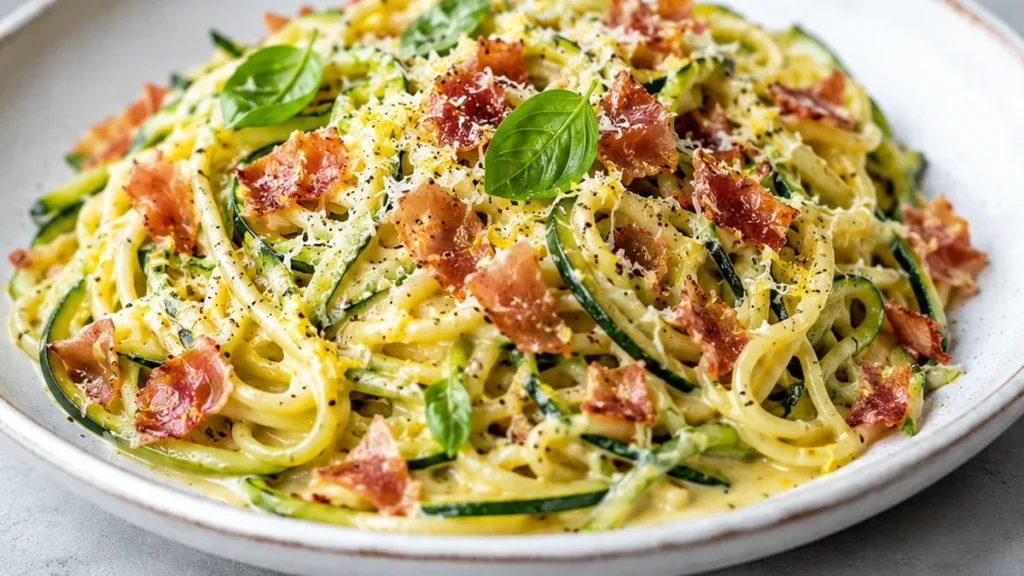
The secret to a truly exceptional zucchini carbonara lies in mastering the emulsion of the egg and cheese sauce, ensuring it’s silky smooth and not scrambled. This recipe offers a fresh, bright take on the classic, incorporating fresh zucchini and rich burrata to rounds out the dish. Zucchini carbonara is perfect for those seeking a lighter yet indulgent pasta, ideal for a weeknight dinner or a special occasion. Its balance of textures and flavors makes it a standout.
Key takeaways
- Achieve a silky, emulsified sauce by tempering eggs with hot pasta water and controlling heat.
- Render prosciutto until crisp for maximum flavor and fat to enrich the sauce.
- Grate or thinly slice zucchini to ensure it cooks quickly and integrates into the sauce.
- Balance richness with fresh lemon zest and basil for brightness.
Zucchini Carbonara: Creamy, Crispy, Irresistible!
Ingredients
- 3 ounces prosciutto, torn
- 4 cloves garlic, smashed
- olive oil, for drizzling
- 2 zucchini, or yellow summer squash, grated or cut into thin strands
- 2 large eggs, at room temperature
- 3/4 cup freshly grated parmesan cheese
- 1/4 cup grated pecorino cheese
- 1/4 cup fresh basil, chopped
- 2 tablespoons fresh thyme leaves
- 2 teaspoons lemon zest
- 12 ounces pasta (e.g., spaghetti, fettuccine)
- 1/2 teaspoon red chili flakes (optional)
- 4 ounces fresh burrata cheese, torn
Instructions
- Preheat the oven to 400° F. Line a baking sheet with parchment paper and arrange the prosciutto in an even layer. Add the garlic and toss with olive oil. Bake 8-10 minutes, until the prosciutto is crisp and the garlic roasted.
- Meanwhile, place the zucchini in a colander. Toss with a tiny pinch of salt.
- Whisk together the eggs, parmesan, pecorino, basil, thyme, chili flakes, lemon zest, salt, and pepper in a large serving bowl.
- Bring a large pot of salted water to a boil. Boil the pasta until al dente. Before draining, scoop out about 1 cup of the pasta water, then drain directly over the zucchini. This will heat the zucchini.
- Immediately add the hot pasta to the egg/cheese mixture, tossing quickly (to ensure the eggs do not scramble) until the eggs thicken and create a sauce. Thin the sauce with a bit of the reserved pasta water, until it reaches your desired consistency. Be careful when adding the water, the zucchini will naturally release some water into the sauce. Season with salt and pepper.
- Serve topped with freshly torn burrata, prosciutto, and herbs. Enjoy!
Notes
The Technique That Makes It: Emulsion and Temperature Control
The magic of a truly great carbonara, even this zucchini-infused version, lies in creating a silky, emulsified sauce without scrambling the eggs. This is achieved through careful temperature management and the rapid incorporation of hot pasta into the egg and cheese mixture. The key is to temper the eggs with a little hot pasta water or rendered fat before combining everything. This gently raises the egg temperature, preventing them from cooking into curds. The residual heat from the pasta is sufficient to cook the eggs into a creamy sauce, coating each strand beautifully. The prosciutto, rendered until crisp, provides a crucial salty, savory foundation and its rendered fat contributes to the sauce’s richness and helps bind the emulsion. The zucchini, when grated or cut into thin strands, adds moisture and a subtle sweetness that balances the richness of the cheese and eggs, and it cooks quickly in the residual heat, integrating seamlessly into the sauce.
Troubleshooting
- Problem: Sauce is too thick or clumpy. Fix: This usually means the eggs cooked too quickly. Immediately add a tablespoon or two of hot pasta water while vigorously stirring to loosen the sauce and create a smoother emulsion. You can also gently reheat over very low heat, stirring constantly.
- Problem: Sauce is too thin or watery. Fix: The pasta water might have been too cool, or not enough cheese was used. Return the pan to very low heat and stir continuously. The cheese will help thicken the sauce as it melts. If still too thin, you can whisk in a little more grated Parmesan off the heat.
- Problem: Eggs are scrambled. Fix: The heat was too high when the eggs were added. Remove the pan from the heat immediately and vigorously stir in a few tablespoons of cool pasta water to bring down the temperature and try to salvage the sauce. This is difficult to fully correct, but adding more cheese can help mask the texture.
- Problem: Dish lacks flavor. Fix: Ensure you’ve used good quality, freshly grated Parmesan and Pecorino. The saltiness of the prosciutto is also key; make sure it’s rendered properly. A final seasoning adjustment with salt and pepper, and perhaps a touch more lemon zest, can brighten the flavors.
Substitutions
- Prosciutto: Pancetta or good quality bacon can be used. The flavor profile will be slightly different, with bacon offering a smokier note.
- Parmesan/Pecorino: A blend of other hard, salty Italian cheeses like Grana Padano can be substituted. Ensure they are well-aged for maximum flavor.
- Fresh Basil/Thyme: Dried herbs can be used, but use about one-third the amount of fresh. The flavor will be less vibrant. Parsley is also a good fresh herb alternative.
- Zucchini: Yellow squash or even finely shredded summer vegetables like pattypan squash can be used. For a non-vegetable option, omit entirely or add finely diced pancetta for extra richness.
Pro tips
- For a perfect carbonara sauce, ensure your eggs are at room temperature. This helps them temper gently with the hot pasta, preventing scrambling. – When adding pasta water, do so gradually. Sometimes the zucchini releases more moisture than expected, so less pasta water might be needed initially.
- Internal temperature for cooked eggs in the sauce should reach 160°F (71°C) to ensure safety, though the residual heat usually handles this.
This zucchini carbonara recipe offers a delightful blend of freshness and indulgence. Experiment with different fresh herbs or a touch of red pepper flakes for an extra kick. Enjoy your culinary creation!
Frequently asked questions
Can I make this carbonara ahead of time?
No, carbonara is best served immediately. The sauce is an emulsion that relies on the heat of the pasta and is prone to breaking or becoming clumpy if left to sit or reheated.
Why are my eggs scrambling instead of making a sauce?
This happens when the pan is too hot when the eggs are added. Temper the eggs with a little hot pasta water first, or remove the pan from the heat entirely before tossing the pasta with the egg mixture.
What kind of pasta works best for zucchini carbonara?
Long pasta shapes like spaghetti, fettuccine, or linguine are ideal as they hold the creamy sauce well. The strands allow the sauce to coat them evenly.
Can I use pre-grated cheese?
It’s highly recommended to use freshly grated Parmesan and Pecorino cheese. Pre-grated cheeses often contain anti-caking agents that can prevent them from melting smoothly into the sauce, resulting in a less creamy texture.
More from Creamy Pasta Recipes →