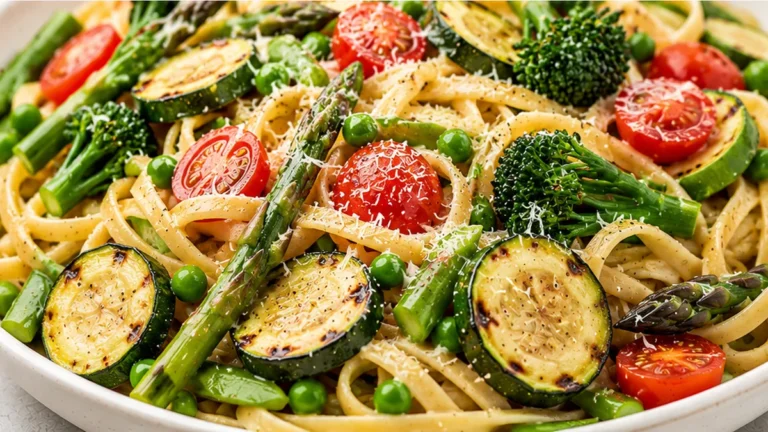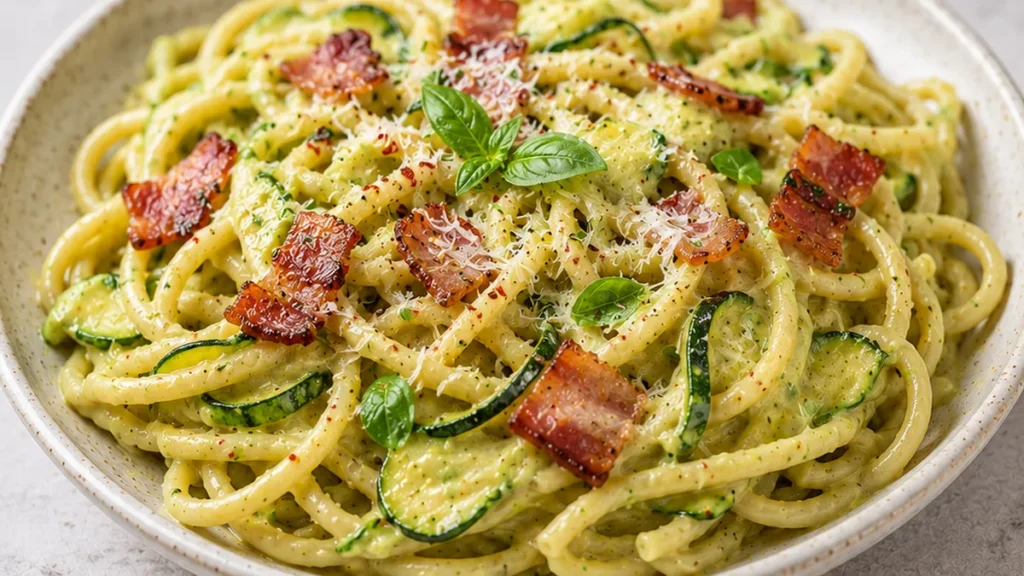
This avocado carbonara recipe offers a fresh, creamy twist on the traditional Italian dish, perfect for those seeking a lighter yet incredibly flavorful pasta experience. Utilizing ripe avocados, this recipe achieves a silky-smooth sauce without heavy cream, making it a delightful option for any weeknight meal. The addition of zucchini ribbons and crispy bacon improves the texture and depth of flavor in this unique avocado carbonara. I remember the first time I experimented with this dish, doubting if avocado could truly stand in for eggs and cheese, but the result was a revelation – a naturally fresh and rich sauce that truly impressed. It’s a wonderful way to enjoy a comforting pasta dish with a healthy, green boost.
Key takeaways
- The avocado provides natural creaminess and acts as an emulsifier for the sauce.
- Work quickly and control heat to prevent the egg from scrambling and the avocado from browning.
- Reserve pasta water is essential for achieving the correct sauce consistency.
- Zucchini ribbons should be added at the end to maintain a slight crispness.
Creamy Avocado Zucchini Carbonara
Ingredients
- 1 pound bucatini pasta
- 6 slices thick cut bacon, chopped
- 2 ripe, small to medium avocado, halved
- 1 egg
- 1/4 cup fresh basil, plus more for serving
- kosher salt and pepper
- 2 small zucchini, cut into ribbons
- 2 tablespoons chopped fresh thyme or oregano
- 1 teaspoon crushed red pepper flakes, or to taste
- 1 cup grated parmesan cheese, plus more for serving
Instructions
- Cook bucatini pasta according to package directions until al dente, reserving 1 cup pasta water.
- Blend avocado, egg, basil, salt, and pepper with 1/2 cup pasta water until creamy.
- Cook bacon until crisp. Add pasta, zucchini, thyme, and red pepper flakes; cook 5 minutes.
- Stir in avocado sauce and parmesan. Cook 3-5 minutes, adding pasta water to thin. Season and add fresh herbs.
- Serve with extra parmesan and basil.
Notes
– Reserve extra pasta water! It’s your secret weapon for thinning the sauce to perfect consistency if it gets too thick.
– For a richer flavor, ensure your bacon is cooked until truly crisp, rendering out most of its fat.
– If you have leftover pasta, store it in an airtight container in the fridge for up to 2 days. Reheat gently in a skillet with a splash of water or broth to revive the sauce’s creaminess. Avoid microwaving for best texture. Nutrition information is an estimate, calculated automatically. Values vary with brands, substitutions and portion sizes.
The Technique That Makes It
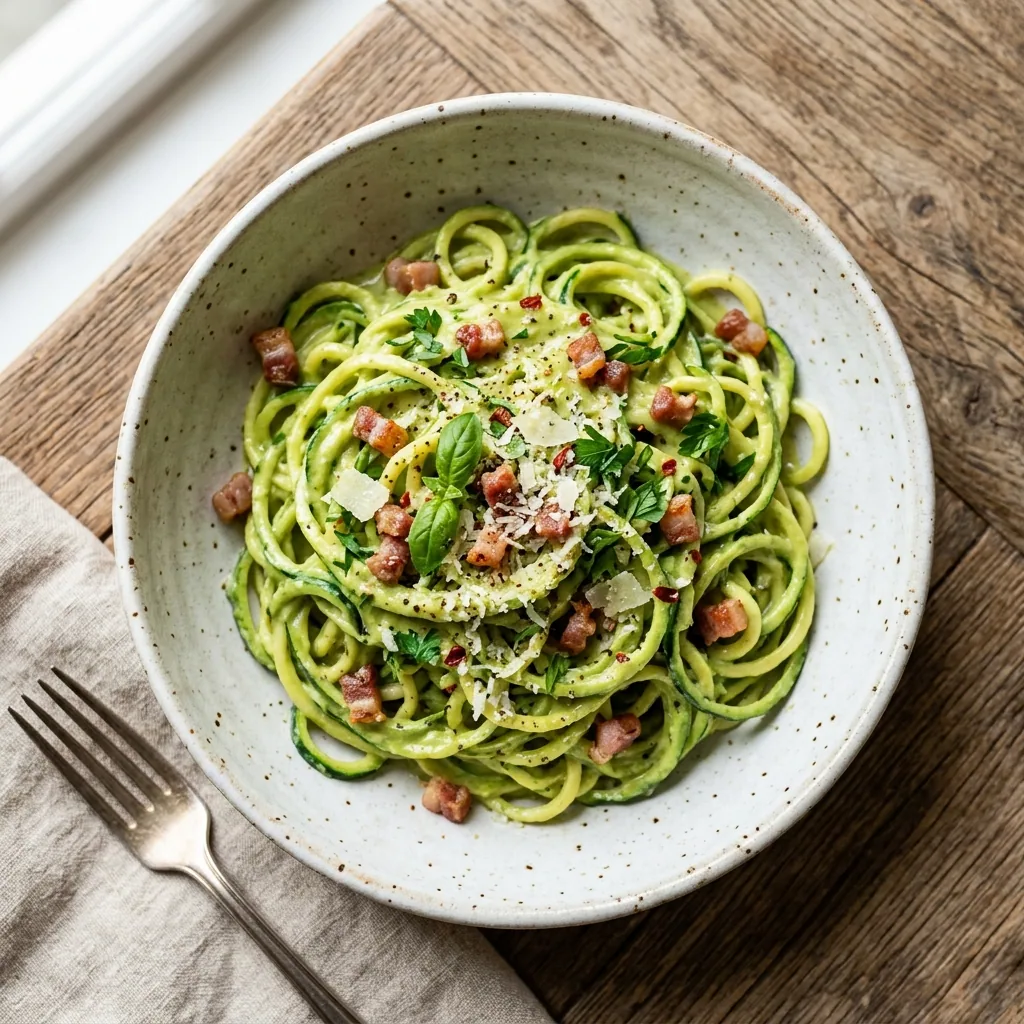
The success of this avocado carbonara hinges on emulsification and temperature control. Traditional carbonara relies on the heat of the cooked pasta to gently cook the egg and cheese mixture, creating a creamy sauce without scrambling the eggs. In this avocado variation, the ripe avocado acts as a natural emulsifier, contributing to the sauce’s luxurious texture and creaminess. The key is to create the sauce base in a separate bowl, whisking together the avocado, egg, Parmesan, and herbs. Then, the hot, drained pasta is added to this mixture, along with a small amount of the reserved pasta water. The residual heat from the pasta and the starchy water will gently cook the egg and bind the avocado and cheese into a smooth, cohesive sauce. It’s crucial to work quickly and avoid overheating, as this can cause the egg to curdle and the avocado to turn an unappealing brown. The zucchini ribbons are added at the very end, allowing them to wilt slightly from the residual heat without becoming mushy, preserving a hint of freshness and texture.
Troubleshooting
- Problem: Sauce is too thick or clumpy. Fix: Gradually whisk in more reserved pasta water, one tablespoon at a time, until the desired creamy consistency is achieved. The starch in the water helps to loosen the sauce.
- Problem: Sauce is too thin and watery. Fix: This can happen if too much pasta water was added. While difficult to fully correct, you can try gently warming the sauce over very low heat (off the heat, using residual pan warmth is best) while stirring vigorously to encourage some evaporation and thickening. Adding a touch more Parmesan can also help absorb excess liquid.
- Problem: Egg appears scrambled or curdled. Fix: This indicates the mixture was too hot when the egg was added, or it was cooked too aggressively. Unfortunately, scrambled egg cannot be fully reversed. For future attempts, ensure the pasta is drained well but not excessively cooled before tossing, and use residual heat rather than direct high heat to emulsify the sauce.
- Problem: Avocado has turned brown. Fix: Avocado can oxidize quickly. To minimize this, add lemon juice (if not using in the original recipe) to the avocado flesh as soon as it’s mashed, and toss it with the other sauce ingredients immediately. Ensure the dish is served promptly after preparation.
Substitutions
- Bacon: Pancetta or guanciale can be used for a more traditional flavor. For a vegetarian option, smoked tofu or shiitake mushrooms, sautéed until crispy, can provide a similar smoky, savory element.
- Bucatini: Spaghetti, linguine, or fettuccine are excellent substitutes. The key is to use a pasta shape that holds sauce well.
- Parmesan Cheese: Pecorino Romano offers a sharper, saltier flavor profile. Grana Padano is a good alternative, providing a similar nutty taste. Ensure any substitute is a hard, aged cheese for best melting and flavor.
- Avocado: While avocado is the star here, a small amount of heavy cream or a tablespoon of mascarpone cheese can be added to the egg mixture to boost creaminess if avocado is unavailable, though the flavor profile will change significantly.
Pro tips
- Don’t rinse your pasta after draining; the starches help the sauce cling better.
- Reserve extra pasta water! It’s your secret weapon for thinning the sauce to perfect consistency if it gets too thick.
- For a richer flavor, ensure your bacon is cooked until truly crisp, rendering out most of its fat.
- If you have leftover pasta, store it in an airtight container in the fridge for up to 2 days. Reheat gently in a skillet with a splash of water or broth to revive the sauce’s creaminess. Avoid microwaving for best texture.
This avocado carbonara is a testament to how simple ingredients can create extraordinary flavors. Experiment with different herbs or a squeeze of lime for an extra zing. Enjoy this fresh and satisfying take on a classic!
More from Creamy Pasta Recipes →
Frequently asked questions
What is the best type of avocado for this recipe?
Use ripe, but not overly soft, Hass avocados. They have a creamy texture and rich flavor that is ideal for emulsifying into a sauce. Avoid avocados that are stringy or have brown spots, as these can affect the final taste and texture of the carbonara.
How do I prevent the sauce from being too greasy?
Ensure you render the bacon fat properly and drain off excess fat before adding it to the pasta. The avocado and egg mixture should emulsify with the starchy pasta water, creating a creamy sauce that binds to the pasta without relying solely on bacon fat.
Can I make this recipe ahead of time?
No, this avocado carbonara is best enjoyed immediately after preparation. The avocado can brown, and the sauce’s creamy emulsion is most stable when freshly made. Reheating can cause the egg to scramble and the texture to break down.
Is it necessary to use bucatini pasta?
While bucatini is recommended for its ability to hold sauce, other long pasta shapes like spaghetti or linguine will work well. The key is the starchy pasta water released during cooking, which helps create the creamy sauce. Choose a pasta that you enjoy and that holds sauce well.