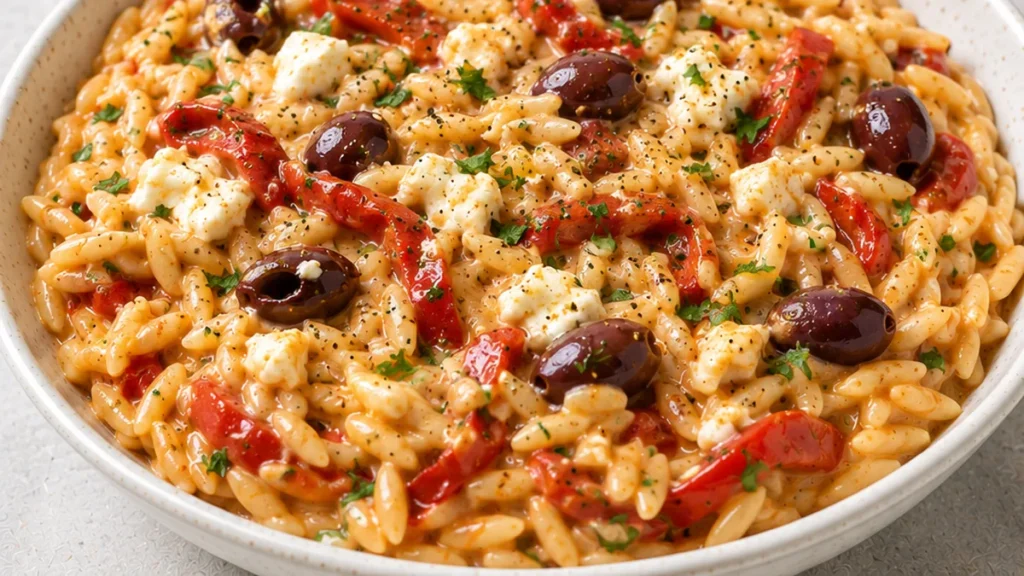
This creamy goat cheese and roasted red pepper risoni pasta is a delightful weeknight meal that tastes sophisticated yet is incredibly easy to make. It combines the comforting texture of small pasta shapes with the bold flavors of smoky peppers and tangy cheese. The beauty of this risoni pasta recipe lies in its simplicity and speed. In less than 30 minutes, you can have a restaurant-worthy dish on your table, perfect for busy evenings or when you crave something special without the fuss.
Key takeaways
- Cook risoni to al dente in salted water.
- Sauté onions and garlic for flavor base.
- Stir goat cheese off heat for creaminess.
- Adjust seasoning to taste.
Creamy Goat Cheese Risoni Recipe
Ingredients
- 250 g risoni pasta (or other very small pasta like ditalini)
- 2 tsp cooking salt, for cooking the pasta
- 2 tbsp extra virgin olive oil
- 1 red onion, halved then cut into 5mm slices
- 2 garlic cloves, finely minced
- 310 g jar chargrilled sliced red capsicum/peppers
- 2 cups tomato passata or puree
- 1/2 cup sliced Kalamata olives
- 1/4 tsp cooking salt
- 1/4 tsp black pepper
Instructions
- Boil risoni: Cook risoni in salted boiling water until just under al dente (8 mins). Reserve 1/2 cup pasta water before draining.
- Sauté aromatics: Heat olive oil in a skillet over high heat. Add sliced red onion, cook 2 mins until softening. Add minced garlic and roasted red peppers, cook 2 mins more.
- Simmer sauce: Stir in tomato passata and Kalamata olives. Bring to a simmer, then reduce heat to medium and cook for 5 minutes.
- Combine: Add drained risoni, salt, pepper, and reserved pasta water to the skillet. Stir well.
- Melt cheese: Add most of the goat cheese (save some for garnish) and stir until melted and creamy.
- Finish & serve: Stir in fresh basil or parsley. Serve immediately, garnished with reserved goat cheese and extra herbs.
Notes
The technique that makes it
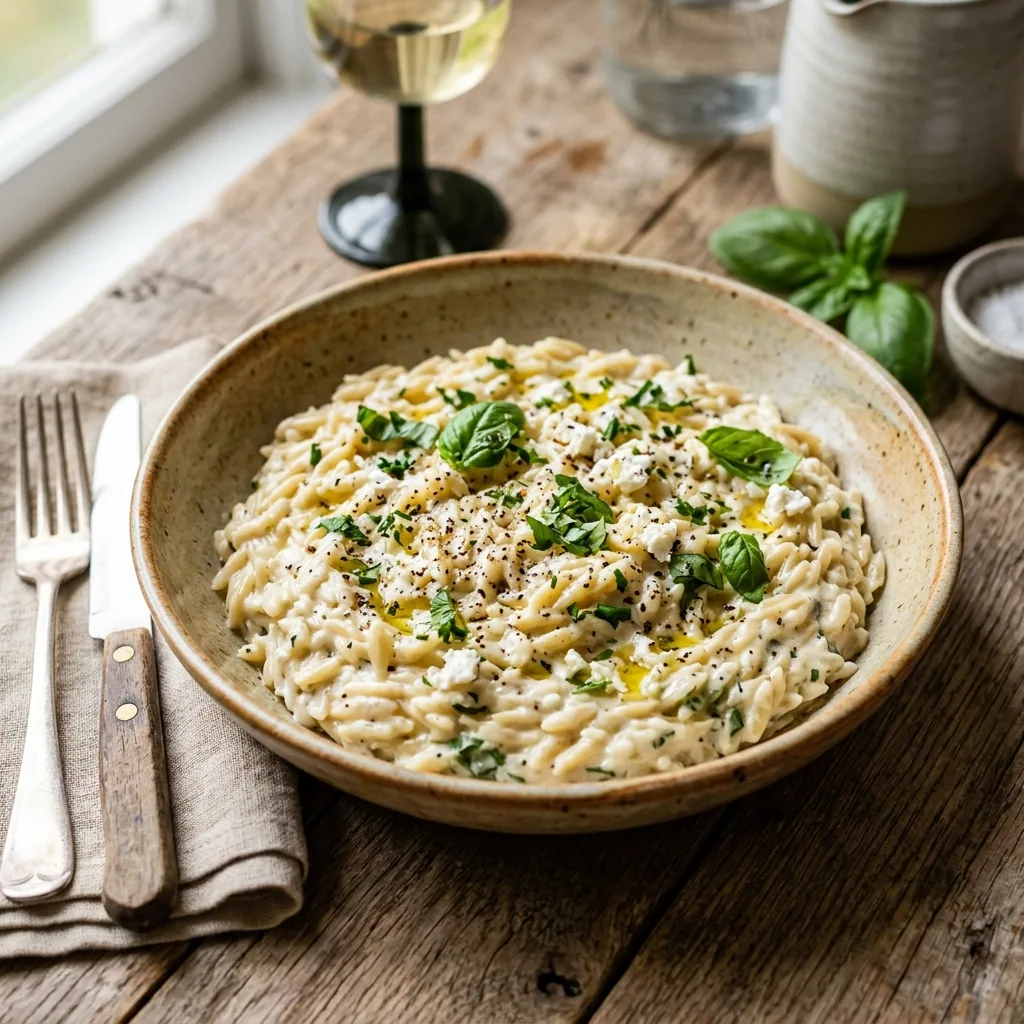
The success of this Creamy Goat Cheese Risoni hinges on properly cooking the risoni and building layers of flavor. Risoni, a small, rice-shaped pasta, can easily become mushy if overcooked. It’s crucial to cook it in generously salted boiling water until it’s just al dente – tender but with a slight bite. The starch released during cooking is essential for the creamy texture, so avoid rinsing the pasta after draining. The sautéing of the red onion and garlic is the first flavor-building step. Cooking the onion slowly until softened and slightly caramelized develops its natural sweetness and mellows its sharpness. Adding the minced garlic towards the end of this process prevents it from burning, which would impart a bitter taste. Incorporating the chargrilled capsicum, olives, and tomato passata creates the sauce base. The chargrilling of the capsicum adds a smoky depth that complements the sweetness of the onion and the tang of the tomato. Simmering this mixture allows the flavors to meld and the sauce to thicken slightly. Finally, the goat cheese is stirred in off the heat. This prevents the cheese from splitting or becoming oily. The residual heat of the sauce is sufficient to melt the goat cheese, creating a luxurious, creamy coating for the risoni.
Troubleshooting
- Problem: Risoni is mushy.
Fix: Ensure you cooked the risoni in plenty of boiling, salted water and only to the al dente stage. Avoid overcooking by tasting a piece frequently in the last few minutes of the recommended cooking time. - Problem: Sauce is too thin.
Fix: Simmer the sauce uncovered for a few extra minutes after adding the passata, capsicum, and olives to allow excess liquid to evaporate. Alternatively, you can stir in a teaspoon of cornstarch mixed with a tablespoon of cold water and simmer gently until thickened. - Problem: Goat cheese is lumpy or oily.
Fix: Remove the sauce from the heat entirely before stirring in the goat cheese. Use a whisk to incorporate it smoothly. If it still appears slightly separated, a gentle rewarming over very low heat, stirring constantly, can sometimes help emulsify it. - Problem: The dish lacks flavor.
Fix: Taste and adjust seasoning at the end. Add more salt and freshly ground black pepper as needed. Consider adding a pinch of red pepper flakes with the garlic for a subtle heat, or a splash of balsamic vinegar to brighten the flavors.
Substitutions
- Risoni pasta: Orzo or other small pasta shapes like ditalini or acini di pepe can be used. The cooking time will vary, so follow package directions and cook to al dente.
- Red onion: A shallot or a sweet onion can be substituted. Shallots will offer a milder, more delicate flavor, while sweet onions will enhance the overall sweetness.
- Kalamata olives: Green olives (like Castelvetrano or Manzanilla) or even sun-dried tomatoes (oil-packed, drained and chopped) can be used. This will change the briny or savory profile of the dish.
- Goat cheese: Cream cheese or a soft feta can be used for a creamy element. Cream cheese will yield a milder, richer creaminess, while feta will provide a saltier, tangier profile.
Pro tips
- Reserve pasta water: This starchy liquid is key to creating a luscious, emulsified sauce that clings to the pasta.
- Don’t overcook the risoni: It will continue to cook in the sauce, so aim for just under al dente.
- Ingredient swap: If you don’t have Kalamata olives, chopped green olives or even a tablespoon of capers can work. For a vegan version, omit goat cheese and use a dairy-free cream cheese alternative.
- Storage: Leftovers can be stored in an airtight container in the fridge for up to 3 days. Reheat gently on the stovetop with a splash of water or milk to loosen the sauce.
Enjoy this versatile and delicious risoni pasta dish that’s sure to become a family favorite. Experiment with different herbs or add a pinch of chili flakes for a spicy kick!
More from Creamy Pasta Recipes →
Frequently asked questions
Can I use a different cheese instead of goat cheese in risoni?
Yes, you can substitute goat cheese with other creamy cheeses like cream cheese, feta, or even a mild blue cheese for a different flavor profile. Ricotta can also work for a lighter creaminess. Adjust the amount based on the cheese’s saltiness and your preference.
How do I know when the risoni is cooked?
Risoni should be cooked al dente, meaning it has a slight bite to it. It will absorb liquid as it cooks, so taste a few grains towards the end of the cooking time. It should be tender but not mushy. Aim for about 10-12 minutes of simmering.
Can I make this creamy goat cheese risoni ahead of time?
While best served fresh, you can prepare the risoni base ahead. Cook the risoni and stir in the goat cheese and broth. Refrigerate and reheat gently on the stovetop with a splash of extra liquid (water or broth) to loosen it up. Add fresh herbs at the end.
What can I serve with creamy goat cheese risoni?
This risoni is a versatile dish. Serve it as a main course with a side salad and crusty bread. It also makes a great side dish for grilled chicken, fish, or roasted vegetables. A sprinkle of toasted pine nuts or fresh parsley adds a nice finish.