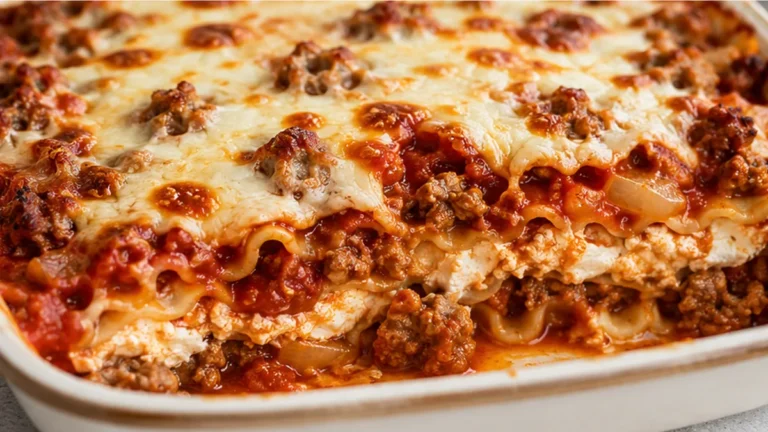
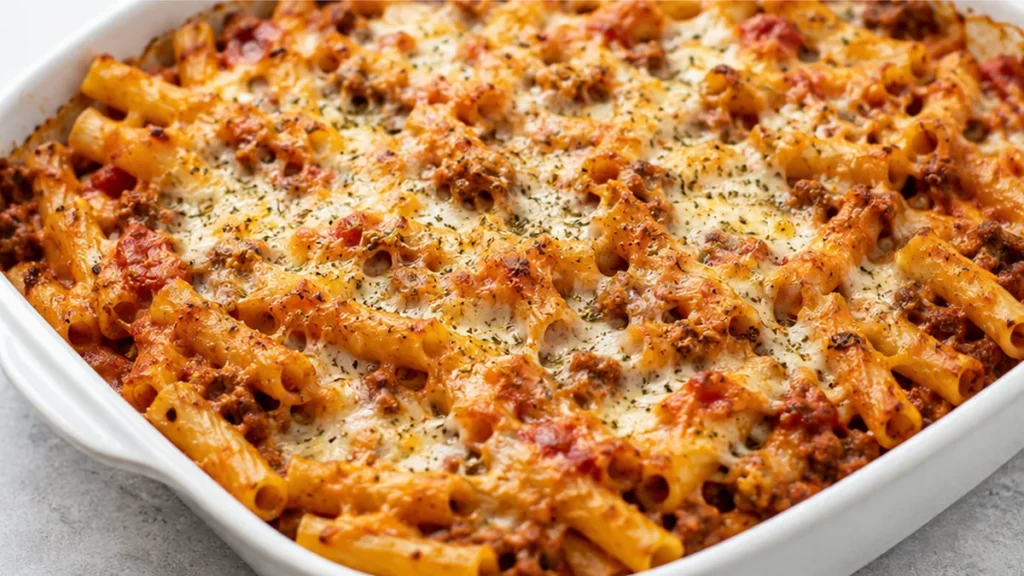
Baked mostaccioli, a beloved Italian-American classic, offers a comforting and satisfying meal perfect for any family gathering or weeknight dinner. The key to its success lies in balancing savory meat sauce with a rich, creamy cheese layer, creating a dish that’s both flavorful and incredibly easy to prepare. Quality Italian sausage makes a huge difference in the depth of flavor for this baked mostaccioli, making it truly stand out. This recipe ensures every bite is packed with deliciousness, proving that simple ingredients can create extraordinary meals.
Key takeaways
- Layering flavors by sautéing aromatics and tomato paste is key.
- Ensure the sauce has enough time to simmer and thicken.
- The egg in the ricotta mixture acts as a binder for a creamy, set filling.
- Resting the baked mostaccioli before serving allows it to set properly.
Cheesy Baked Mostaccioli: Comfort Food!
Ingredients
- 8 oz mostaccioli pasta
- 1/2 tbsp cooking oil
- 1 lb mild Italian sausage
- 1 small yellow onion, diced
- 2 cloves of garlic, minced
- 1 tbsp Italian seasoning
- 1/2 tsp garlic powder
- 1/2 tsp salt
- 1/4 tsp freshly cracked black pepper
- 3 oz tomato paste
- 28 oz crushed tomatoes
- 14.5 oz diced tomatoes
- 1 tsp granulated sugar
- 15 oz ricotta cheese
- 2 cups shredded mozzarella cheese, divided
- 1/2 cup grated parmesan cheese, divided
- 1/4 cup fresh parsley, chopped
- 1 large egg
Instructions
- Preheat oven to 350°F. Cook mostaccioli pasta in salted boiling water until al dente. Drain and set aside.
- In a large skillet, brown Italian sausage with cooking oil over medium heat. Add diced onion and minced garlic; sauté until fragrant.
- Stir in Italian seasoning, garlic powder, salt, black pepper, tomato paste, crushed tomatoes, diced tomatoes, and sugar. Simmer for 3 minutes.
- In a bowl, combine ricotta, 1/2 cup shredded mozzarella, 1/4 cup grated parmesan, chopped parsley, salt, black pepper, and egg for the cheese filling.
- Assemble in a 9×13-inch casserole dish: layer half of the pasta with meat sauce, then the cheese filling, then the remaining pasta with meat sauce.
- Sprinkle with 1 cup shredded mozzarella and 1/4 cup grated parmesan cheese. Bake for 25-30 minutes, or until bubbly and golden.
Notes
The Technique That Makes It: Layering Flavors and Textures
Achieving the Perfect Sauce Consistency
The foundation of this baked mostaccioli is a rich, flavorful tomato sauce. The key here is the combination of tomato paste, crushed tomatoes, and diced tomatoes. The tomato paste, when sautéed briefly with the aromatics (onion and garlic) and seasonings, undergoes a process called the Maillard reaction, developing deeper, more complex flavors than simply adding it raw. This also helps to thicken the sauce. Simmering the sauce allows the flavors to meld and the liquid to reduce slightly, preventing a watery final dish. The addition of sugar balances the acidity of the tomatoes, ensuring a pleasant taste profile.
The Creamy, Cheesy Core
The ricotta mixture is crucial for the creamy texture that defines baked mostaccioli. Mixing the ricotta cheese with one cup of the mozzarella, the parmesan, the egg, and parsley creates a luscious filling. The egg acts as a binder, helping the ricotta mixture set and preventing it from becoming too loose during baking. The combination of cheeses provides both creaminess and a savory depth. Properly combining these ingredients ensures an even distribution of flavor and texture throughout the pasta layers.
The Art of Baking
Baking is where all the elements come together. The initial bake allows the pasta to cook through in the sauce and the flavors to meld. Covering the dish with foil for the first part of the baking prevents the top from browning too quickly and drying out, while also steaming the pasta and ensuring it cooks evenly. Uncovering it towards the end allows the mozzarella and parmesan cheeses to melt and achieve that desirable golden-brown, bubbly topping. The resting period after baking is essential; it allows the cheese and sauce to set, making the dish easier to serve and preventing it from being soupy.
Troubleshooting
- Problem: Watery sauce. Fix: Ensure the sauce simmers uncovered for at least 10-15 minutes to allow excess moisture to evaporate before assembling the casserole. Also, make sure you are using crushed and diced tomatoes, not whole tomatoes, as they contain less liquid.
- Problem: Dry or undercooked pasta. Fix: Ensure the pasta is cooked al dente (slightly firm) before baking, as it will continue to cook in the oven. Also, make sure there is enough sauce to coat the pasta; add a little extra crushed tomatoes or water if needed.
- Problem: Bland flavor. Fix: Taste and adjust seasonings (salt, pepper, Italian seasoning) in the sauce and ricotta mixture before assembling. Don’t be afraid to add a pinch more salt or a dash of red pepper flakes for a little heat.
- Problem: Ricotta mixture is too loose. Fix: Ensure the egg is well incorporated and that you’ve used the correct amount of cheese. If it still seems too thin, you can add another tablespoon of parmesan cheese to help thicken it.
Substitutions
- Pasta: Penne or ziti can be substituted for mostaccioli. The result will be very similar in texture and how it holds sauce.
- Italian Sausage: Ground beef or ground turkey can be used instead of Italian sausage. The flavor profile will be milder, and you may need to add more seasonings to compensate.
- Ricotta Cheese: Cottage cheese (drained well) can be used as a substitute. The texture will be slightly grainier, but the creaminess will be comparable.
- Mozzarella Cheese: Provolone or a blend of Italian cheeses can be used. This will alter the meltability and flavor slightly, offering a sharper or nuttier taste.
Pro tips
- Don’t overcook the mostaccioli pasta; it should be al dente as it will continue to cook in the oven. – For a richer flavor, brown the Italian sausage well to develop a good sear before adding other ingredients. – To ensure even cooking and melting, spread the cheese filling and final mozzarella layer evenly across the casserole.
- Leftovers can be stored in an airtight container in the refrigerator for up to 3-4 days, or frozen for up to 2 months. Reheat in the oven at 350°F (175°C) until warmed through.
This Baked Mostaccioli is a timeless dish that brings warmth and flavor to any table. Enjoy crafting this comforting casserole and watch it become a new family favorite. Don’t hesitate to experiment with different cheeses or a touch of spice to make it your own!
Frequently asked questions
Can I make this baked mostaccioli ahead of time?
Yes, you can assemble the baked mostaccioli up to 24 hours in advance. Store it covered in the refrigerator. You may need to add an extra 10-15 minutes to the covered baking time to ensure it heats through completely.
What kind of tomatoes are best for the sauce?
Using a combination of crushed tomatoes and diced tomatoes provides the best texture and flavor balance for the sauce. Crushed tomatoes create a smoother base, while diced tomatoes add small pieces of tomato for texture.
How do I prevent the pasta from getting mushy?
Cook the mostaccioli only until al dente (slightly firm to the bite) before layering it with the sauce and cheese. It will finish cooking in the oven, and overcooking it beforehand will lead to a mushy texture.
Can I use different types of cheese?
Absolutely. While mozzarella and parmesan are classic, feel free to experiment. Provolone adds a sharper flavor, and a sprinkle of Pecorino Romano can offer a saltier, more intense cheese taste.
More from Baked Pasta Recipes →