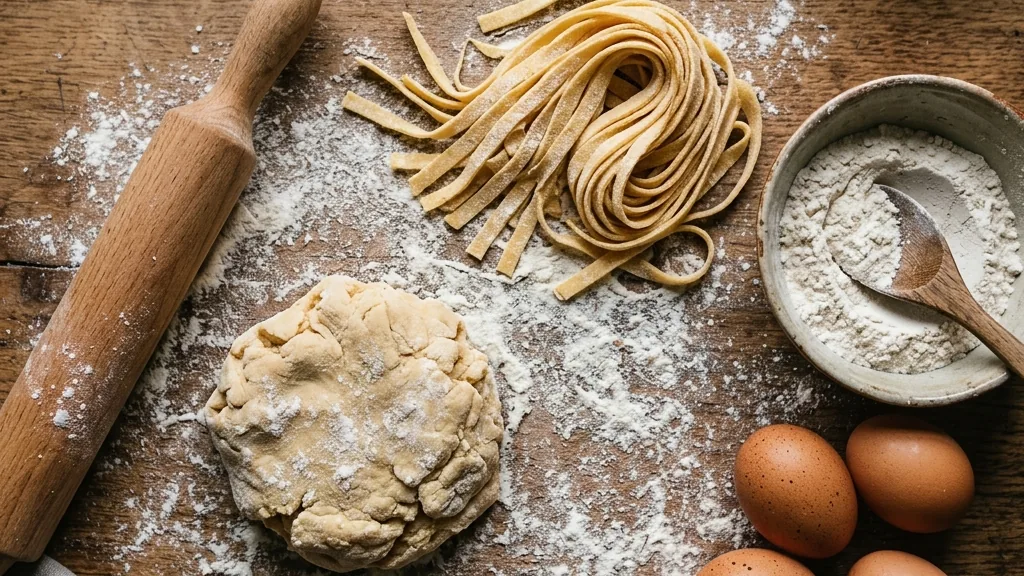
Learning how to make homemade pasta is one of those kitchen skills that looks intimidating and turns out to be almost embarrassingly simple. At its core, fresh pasta is nothing more than flour and eggs brought together, kneaded, rested, and rolled thin. There is no special machine required to start, no obscure ingredient, and no real way to ruin it that a little flour or water cannot fix. This guide walks you through the exact ratio, the timing that matters, and the small details that separate silky, tender noodles from tough or sticky ones.
Once you have made it a couple of times, you will be able to turn out a batch faster than a trip to the store, and the difference in taste and texture is the kind of thing that quietly ruins boxed pasta for you forever.
What You Need
The short ingredient list is part of the magic. For classic egg pasta you need just two things, plus a few optional helpers.
- Flour: Italian Tipo 00 flour is the gold standard. It is finely milled soft wheat that feels like baby powder and gives a smooth, tender result, as King Arthur Baking explains in its pasta guide. Plain all-purpose flour works well too and produces a slightly chewier noodle. Many cooks blend in some semolina (semola) for extra bite and structure.
- Eggs: Large eggs, ideally at room temperature. The yolks bring richness and color; the whites bring structure.
- A pinch of salt and, if your dough feels dry, a teaspoon of water or olive oil.
For tools, all you truly need is a clean work surface, a fork, and a rolling pin. A pasta machine makes rolling faster and more even, but it is optional. A bench scraper and a tray dusted with semolina are nice to have.
The Flour-to-Egg Ratio
The whole recipe lives in one easy ratio: about 100 g of flour per large egg. Scale it to how many people you are feeding.
| Servings | Flour | Eggs |
|---|---|---|
| 2 | 200 g | 2 large eggs |
| 3 to 4 | 300 g | 3 large eggs |
| 4 to 6 (richer) | 300 g | 3 large eggs plus 1 extra yolk |
For 300 g of 00 flour, the cracked eggs should weigh roughly 185 g in total, so do not be afraid to adjust by adding an extra yolk or a splash of water if your dough looks too dry. Flour absorbs differently depending on humidity and brand, so treat the numbers as a confident starting point rather than an unbreakable law.
Step by Step: Making the Dough
1. Build the well
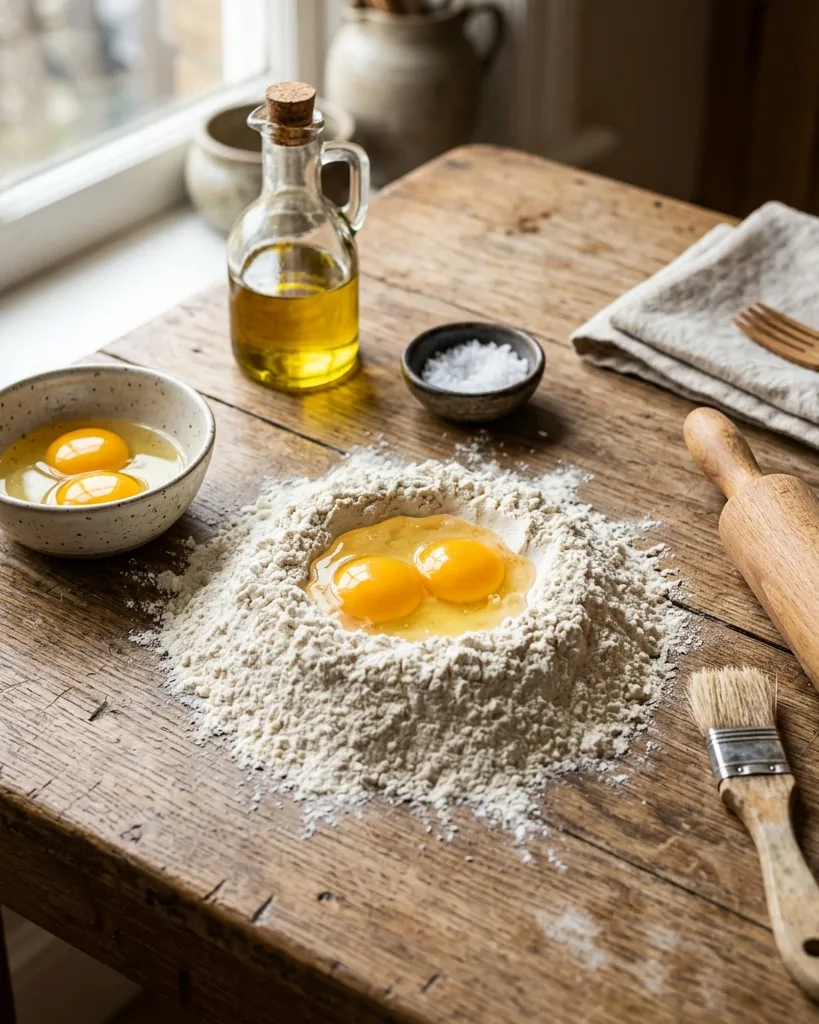
Mound the flour on a clean work surface or in a wide bowl and make a deep well in the center. Crack the eggs into the well and add your pinch of salt.
2. Beat and bring together
With a fork, beat the eggs gently and start pulling in flour from the inside walls of the well a little at a time. When it gets too thick to stir, switch to your hands and bring everything into a shaggy, rough ball. Scrape up any dry bits.
3. Knead until smooth
Knead the dough for 8 to 10 minutes. Push it away with the heel of your hand, fold it back, turn a quarter, and repeat. It will go from craggy to smooth and elastic, and when you press it gently it should spring back. This step develops the gluten that gives pasta its bite, so do not cut it short.
4. Rest the dough
Wrap the dough tightly in plastic or cover it with a bowl and let it rest at room temperature for at least 30 minutes. Resting relaxes the gluten so the dough rolls out easily instead of snapping back. Thirty minutes is the minimum; up to two hours is even better. If you want to rest it longer than an hour, refrigerate it and bring it back to room temperature before rolling.
Rolling and Cutting
Once rested, cut the dough into two to four pieces and keep the ones you are not using covered so they do not dry out. Flatten a piece into a rough rectangle and dust it lightly with flour.
If you are using a pasta machine, run the dough through the widest setting about ten times, folding it in half each time. This final bit of kneading makes the sheet smooth and even. Then stop folding and pass it through once on each setting, stepping down one notch at a time, until you reach the thickness you want. Aim for the second-to-last setting for ribbon cuts like tagliatelle, and thinner for filled pasta such as ravioli, where you want to see your hand through the sheet.
No machine? Roll by hand with a long rolling pin on a floured surface, working from the center outward and rotating the dough until it is thin and even. It takes some muscle, but generations of cooks made beautiful pasta this way before machines existed, and resources like this beginner’s pasta guide show how forgiving the hand method really is.
To cut, dust the sheet, roll it loosely, and slice to your desired width, then unfurl the ribbons and dust them with semolina so they do not stick. For shapes and a sauce to match, our guide on how to make the pasta sauce pairs perfectly with a fresh batch.
Cooking Fresh Pasta
This is where homemade pasta surprises first-timers: it cooks in a flash. Bring a large pot of water to a rolling boil and salt it generously, using roughly 10 g of salt per liter of water so the pasta seasons from the inside. Drop in the fresh pasta and cook for just 2 to 3 minutes, compared with the 8 to 12 minutes a dried box needs.
Fresh pasta is done almost as soon as it floats and turns tender with a gentle bite. Taste a strand to be sure, then drain, saving a cup of the starchy cooking water to loosen your sauce. If you want to nail the texture, our notes on how to cook pasta al dente apply to fresh noodles too, just on a much shorter clock.
Troubleshooting Common Problems
| Problem | Likely cause | Fix |
|---|---|---|
| Dough is dry and crumbly | Too much flour or not enough egg | Add water or beaten egg a few drops at a time |
| Dough is sticky and wet | Too much liquid for the flour | Knead in more flour a tablespoon at a time |
| Sheet tears while rolling | Under-kneaded or under-rested | Knead longer, then rest at least 30 minutes |
| Cooked pasta is tough | Too much flour or too little rest | Use less flour, rest the dough fully, roll thinner |
| Noodles stick together | Not enough dusting | Dust cut pasta with semolina, which does not absorb |
Why Semolina Beats Flour for Dusting
A small but game-changing tip: dust your cut pasta and your tray with semolina rather than regular flour. Fine flour absorbs into the moist dough and can make the surface gummy, while coarse semolina stays on the surface like tiny ball bearings, keeping strands separate and preventing the dreaded clump. Keep a small bowl of it within reach while you work, and your finished nests will stay loose and ready to cook.
Storing Homemade Pasta
Fresh pasta is best the day you make it, but it keeps well with a little planning.
- Refrigerate: Dust cut pasta with semolina, form loose nests on a tray, cover, and use within one to two days.
- Freeze: Freeze the nests on a tray until solid, then transfer to a bag and keep for up to a month. Cook straight from frozen, adding a minute to the time.
- Dry: Hang ribbons or set nests on a rack until fully brittle, then store airtight. Dried homemade pasta will need a slightly longer boil, closer to the timing of store-bought.
Egg Pasta Versus Eggless Semolina Pasta
Not all fresh pasta uses eggs. There are two great traditions, and it helps to know the difference so you can pick the right one for the dish.
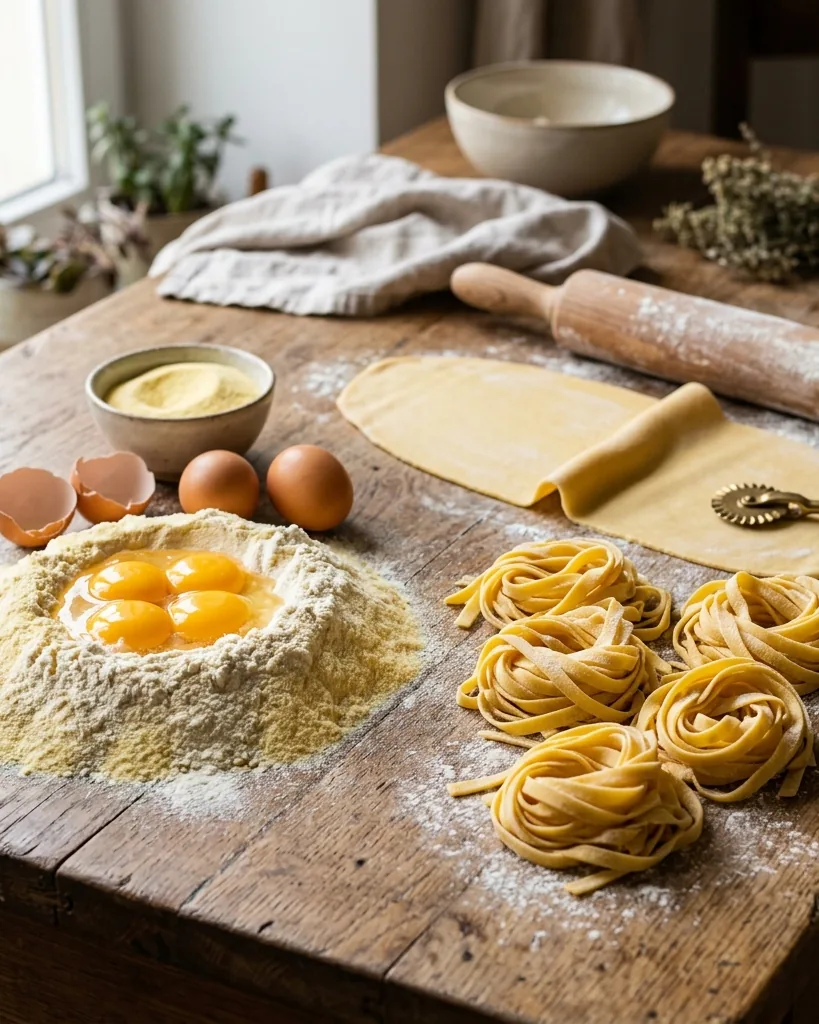
Egg pasta, the kind this guide focuses on, is rich, tender, and golden. It is the classic of northern Italy and is ideal for ribbon cuts like tagliatelle and for filled shapes like ravioli, where the silky sheet holds a filling beautifully.
Eggless pasta is made from durum wheat semolina and water. It is firmer, chewier, and a little nutty, and it is the tradition of southern Italy and the base of most dried supermarket pasta. Semolina-and-water dough is the better choice for sturdy hand-shaped pasta such as orecchiette and cavatelli, which need a firmer dough to hold their form. You can even blend the two approaches, using part 00 flour and part semolina, to land somewhere between tender and toothsome.
Pasta Shapes You Can Cut by Hand
Once you have a smooth sheet, a whole menu opens up without any special equipment. A knife and a steady hand are enough for most ribbon and rustic shapes.
- Tagliatelle: ribbons about a quarter-inch wide, the everyday partner for meat ragu.
- Fettuccine: slightly narrower ribbons, classic with creamy sauces.
- Pappardelle: broad ribbons close to an inch wide, made for hearty, chunky sauces.
- Maltagliati: literally “badly cut,” irregular scraps that are perfect for soups and for using up trimmings.
- Farfalle: small rectangles pinched in the middle into bow ties.
Roll the sheet a touch thicker for ribbons that will see a robust sauce, and thinner for delicate shapes. The same dough becomes a dozen different dinners depending only on how you cut it.
A Note on Egg Safety and Storage
Because fresh pasta contains raw egg, a little food-safety care keeps it wholesome. The USDA recommends keeping eggs refrigerated at or below 40 F and using fresh egg pasta or its dough within a day or two when stored in the fridge. The FDA likewise advises refrigerating eggs promptly and not leaving egg-based foods at room temperature for more than two hours.
In practice, that means wrapping your rested dough if you are not rolling it right away, refrigerating cut pasta you plan to cook within a day, and freezing anything you want to keep longer. Cooking pasta in boiling water brings it well past the temperature that matters for safety, so the main thing is simply not to let raw dough sit out warm for hours.
Five Tips for a Perfect First Batch
- Weigh your flour. A kitchen scale and the 100 g-per-egg ratio remove almost all the guesswork that trips up beginners.
- Trust the rest. The 30-minute rest is not optional padding; it is what makes the dough roll out willingly.
- Keep unused dough covered. Pasta dough dries out fast, and a dry edge cracks when you roll it.
- Go thinner than you think. Fresh pasta puffs slightly as it cooks, so a sheet that looks almost too thin is usually just right.
- Salt the water well. About 10 g of salt per liter seasons the pasta itself, and no amount of sauce makes up for bland noodles.
Frequently Asked Questions
What is the best flour for homemade pasta?
Italian Tipo 00 flour is the classic choice for silky, tender pasta because it is so finely milled. All-purpose flour is an easy and reliable substitute that gives a slightly chewier noodle, and a blend of 00 flour with some semolina adds extra structure and bite. Any of the three will make excellent pasta.
How long should I knead and rest pasta dough?
Knead for 8 to 10 minutes until the dough is smooth and elastic and springs back when pressed, then let it rest, wrapped, for at least 30 minutes. The kneading builds gluten for bite, and the rest relaxes it so the dough rolls out without snapping back. Resting up to two hours gives even better results.
Can I make pasta without a machine?
Yes. A long rolling pin and a floured surface are all you need. Roll from the center outward, rotating the dough until it is thin and even, then cut by hand. It takes more effort than a machine, but the results are just as good and it is how pasta was made for centuries.
How long does fresh pasta take to cook?
Only 2 to 3 minutes in well-salted boiling water, far less than the 8 to 12 minutes dried pasta needs. Fresh pasta is usually done within a minute of floating to the surface, so taste a strand early and drain as soon as it is tender with a gentle bite.
Why is my homemade pasta tough?
Tough pasta usually means too much flour worked in, not enough resting time, or rolling the sheets too thick. Use a lighter hand with the flour, rest the dough for the full 30 minutes so the gluten relaxes, and roll thinner than feels natural. The dough should be supple, not stiff.
Do I need a pasta machine?
No. A pasta machine makes rolling faster and gives a very even sheet, which is helpful for filled pasta, but it is not required. A long rolling pin, a floured surface, and a little patience produce excellent ribbons and rustic shapes. Start by hand, and invest in a machine only if you find yourself making pasta often.
Can I make homemade pasta ahead of time?
Absolutely. Cut pasta keeps in the refrigerator for a day or two when dusted with semolina and loosely nested, freezes for up to a month, or can be dried fully and stored airtight. Freezing is the most reliable for make-ahead meals: cook the nests straight from frozen and just add about a minute to the cooking time.
What to Serve With Fresh Pasta
Fresh egg pasta has a delicate texture that rewards sauces which cling rather than drown. Simple butter-and-sage, a light tomato sauce, a classic ragu, or a creamy cheese sauce all let the pasta shine, and the starchy cooking water you saved is the secret to bringing any of them together into a glossy coat. Match the cut to the sauce: ribbons for smooth and creamy, broad pappardelle for chunky and meaty, and filled ravioli with little more than browned butter so the filling stays the star. Because the noodles cook in two to three minutes, have your sauce ready in the pan before the pasta goes into the water, and finish the two together for a restaurant-quality plate at home.
The Bottom Line
Homemade pasta comes down to a handful of dependable habits: weigh your flour against the 100 g-per-egg ratio, knead for a full 8 to 10 minutes, rest the dough for at least 30 minutes, roll it thin, and cook it for just 2 to 3 minutes in well-salted water. Get those five things right and the rest is detail you can adjust to taste. Your first batch may not be flawless, but it will still be better than anything from a box, and each time you make it the dough will feel a little more familiar under your hands. Pick a quiet afternoon, clear some counter space, and give it a try; fresh pasta is far more forgiving than its reputation suggests.