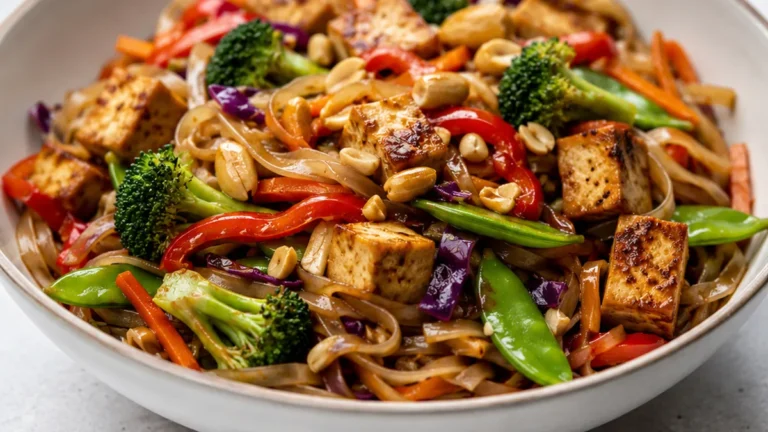
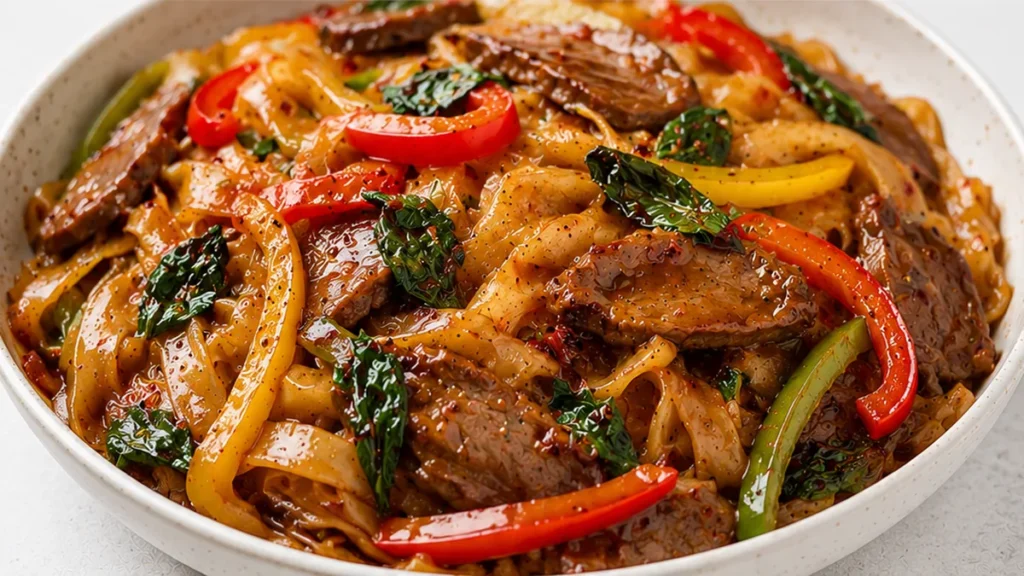
Thai beef noodles, particularly this 30-minute version, are a fantastic solution for those busy weeknights when you crave something flavorful and satisfying without spending hours in the kitchen. This recipe delivers on all fronts: tender flank steak, bright bell peppers, and chewy rice noodles coated in a rich, aromatic sauce that perfectly balances sweet, savory, and spicy notes. Mastering the quick stir-fry is the key to these Thai beef noodles, a fast weeknight meal with an authentic taste. It’s a dish that appeals to nearly everyone, making it ideal for family dinners or a casual gathering with friends.
Key takeaways
- Slice flank steak thinly against the grain for tenderness.
- Cook rice noodles until just al dente to avoid mushiness.
- Use high heat when stir-frying beef to sear and lock in juices.
- Taste and adjust sauce seasonings before serving for balanced flavor.
30-Minute Thai Basil Beef Noodles
Ingredients
- 6 ounces Pad Thai/wide rice noodles
- 1/3 cup tamari or soy sauce
- 1/4 cup Thai chili sauce
- 2 tablespoons fish sauce
- 2 tablespoons rice vinegar
- 1 tablespoon lemongrass paste (optional)
- black pepper and chili flakes
- 3 tablespoons sesame oil (or olive oil)
- 1 pound flank steak, thinly sliced
- 2 bell peppers, thinly sliced
Instructions
- Soak the rice noodles according to packaged directions, then drain.
- In a bowl, combine the tamari/soy sauce, Thai chili sauce, fish sauce, rice vinegar, lemongrass, black pepper, and chili flakes to make the sauce.
- Add the sesame oil, beef, and bell peppers to a large skillet set over medium heat. Cook until the beef becomes crispy, about 5 minutes.
- Add the noodles and sauce, tossing to combine. Cook until the noodles are warmed through and begin soaking up the sauce, about 1 minute.
- Remove from the heat and toss again.
- Serve the noodles immediately.
Notes
The Technique That Makes It: Achieving Tender Beef and Perfectly Cooked Noodles
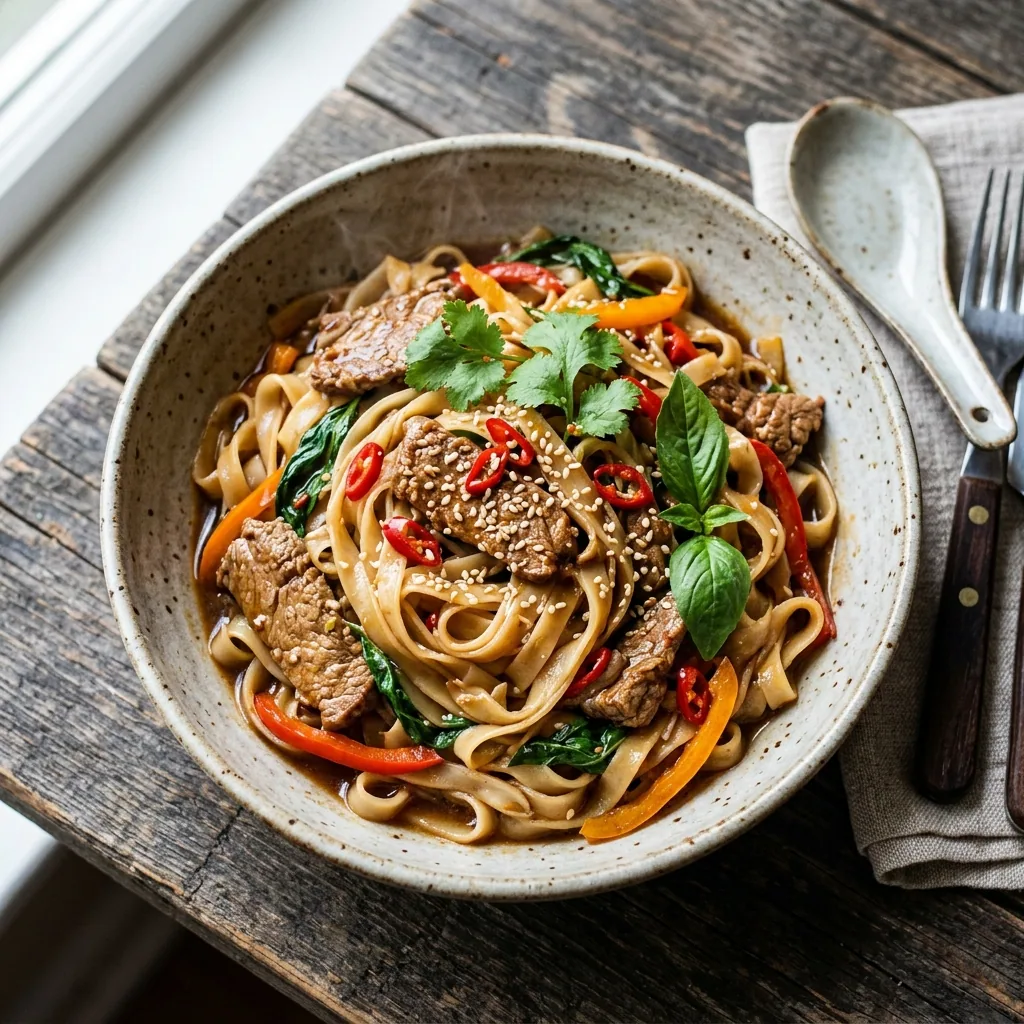
The key to exceptional Thai basil beef noodles lies in two critical techniques: properly preparing the beef and cooking the rice noodles to the ideal al dente texture. For the beef, thinly slicing flank steak against the grain is paramount. This breaks up the long muscle fibers, resulting in more tender bites. Marinating the beef briefly in a portion of the sauce mixture (tamari/soy sauce, Thai chili sauce, fish sauce, rice vinegar, lemongrass paste if using) helps to tenderize it further and infuse it with flavor. Avoid over-marinating, as the acidity can start to ‘cook’ the beef, making it mushy. When stir-frying, a very hot wok or skillet is essential. This high heat sears the beef quickly on all sides, locking in juices and preventing it from becoming tough and rubbery. Cook the beef in batches if necessary to avoid crowding the pan, which lowers the temperature and leads to steaming instead of searing.
For the rice noodles, the most common pitfall is overcooking, leading to a mushy, sticky texture. Follow package directions carefully, but err on the side of slightly undercooking, as they will continue to cook briefly in the hot wok with the sauce and vegetables. Soaking the noodles in hot water before a brief boil, or boiling them directly, are common methods. The goal is for them to be pliable and tender but still possess a slight chew. Rinsing the cooked noodles under cool water immediately after draining can help stop the cooking process and prevent them from sticking together, especially if you’re not adding them to the wok immediately.
Troubleshooting
- Beef is tough or rubbery: This is usually due to slicing the beef with the grain, overcooking it in the wok, or crowding the pan. Always slice against the grain, cook quickly over high heat, and cook in batches if needed.
- Noodles are mushy or sticky: Overcooking the noodles is the primary cause. Cook them until just al dente, and rinse briefly with cool water after draining to stop the cooking and separate them.
- Sauce is too thin: Ensure your wok is hot enough to evaporate excess liquid. If it remains thin, you can create a slurry of 1 teaspoon cornstarch mixed with 2 tablespoons cold water and stir it into the simmering sauce in the wok until thickened.
- Flavors are unbalanced: Taste and adjust seasoning before serving. You might need more fish sauce for umami, rice vinegar for acidity, chili sauce for heat, or a touch of sugar to balance the flavors.
Substitutions
- Flank Steak: Skirt steak, sirloin steak, or even thinly sliced chicken breast or firm tofu can be substituted. Adjust cooking times accordingly; chicken and tofu will cook faster.
- Rice Noodles: Linguine, spaghetti, or fettuccine can be used if rice noodles are unavailable. Cook them according to package directions until al dente. The texture will be different but still enjoyable.
- Lemongrass Paste: If you can’t find lemongrass paste, you can omit it or finely mince 1 tablespoon of fresh lemongrass (use only the tender lower part) or add 1 teaspoon of lemon zest for a citrusy note.
- Bell Peppers: Other crisp vegetables like snow peas, snap peas, broccoli florets, or sliced onions can be used. Add them to the wok based on their cooking time, adding harder vegetables first.
Pro tips
- To ensure your flank steak is perfectly tender, slice it against the grain as thinly as possible. Freezing the steak for 15-20 minutes before slicing makes this task much easier.
- Don’t overcrowd your skillet when cooking the beef. If necessary, cook the steak in two batches to ensure it crisps up rather than steams, which is crucial for the texture of these Thai beef noodles.
- Leftovers can be stored in an airtight container in the refrigerator for up to 3 days. Reheat gently in a skillet with a splash of water or broth to loosen the noodles and prevent them from drying out.
This 30-minute Thai Basil Beef Noodles recipe is a testament to how much flavor you can achieve in a short amount of time. Give it a try and enjoy a quick, delicious meal!
More from Easy Pasta Recipes →
Frequently asked questions
How thin should I slice the flank steak?
Slice the flank steak about 1/8-inch thick. For best results, partially freeze the steak for about 30 minutes before slicing, which makes it easier to achieve thin, uniform cuts against the grain.
Can I prepare the sauce ahead of time?
Yes, the sauce can be mixed and stored in an airtight container in the refrigerator for up to 3 days. This saves time during the cooking process, allowing you to focus on stir-frying.
What if I don’t have Pad Thai noodles?
You can substitute with other wide, flat noodles like fettuccine or linguine. Cook them until al dente according to package directions. While the texture will differ slightly, they will absorb the sauce well.
How do I prevent the noodles from sticking together?
After draining the cooked noodles, rinse them briefly under cool water. Toss them with a teaspoon of sesame oil or a neutral cooking oil before adding them to the wok. This helps keep them separated.