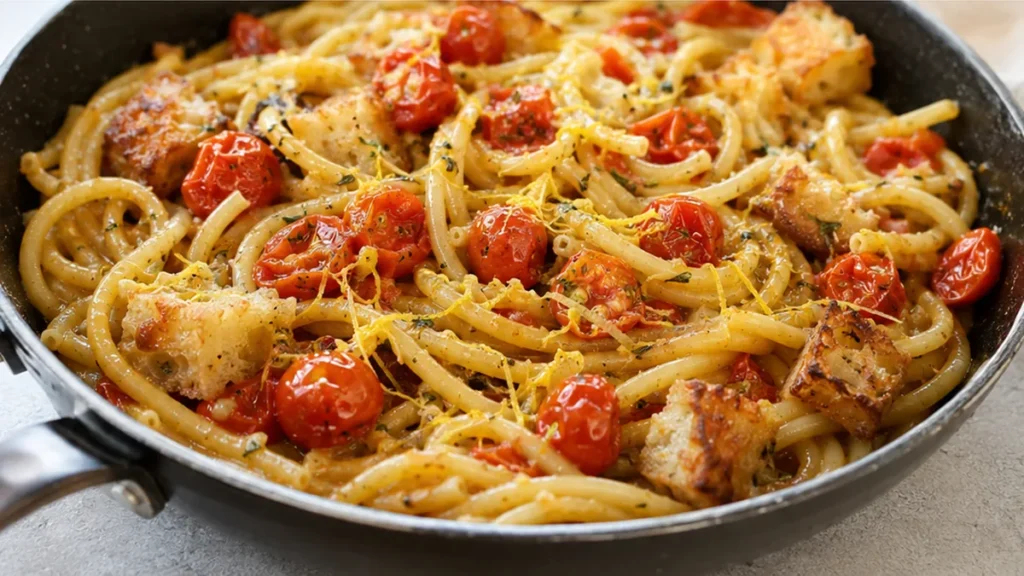
This skillet pasta recipe brings the vibrant flavors of summer right to your table with minimal fuss. The beauty of this skillet pasta lies in its simplicity and the freshness of its ingredients, making it an ideal choice for busy weeknights or a relaxed weekend meal. The tomatoes transform quickly, bursting with sweet juices that coat every strand of pasta. It’s a celebration of seasonal produce, combining sweet cherry tomatoes, aromatic garlic and herbs, and a delightful crunch from lemony toasted breadcrumbs. This skillet pasta dish is designed for those who appreciate fresh, flavorful food without spending hours in the kitchen.
Key takeaways
- The key is to let the cherry tomatoes burst in the skillet to create a natural sauce base.
- Finishing the pasta in the skillet allows it to absorb the sauce and helps emulsify the liquids.
- Don’t overcrowd the pan; ensure enough space for even cooking and sauce development.
- Stirring in the cheese and fresh herbs at the end adds richness and brightness.
Skillet Summer Pasta with Burst Tomatoes
Ingredients
- 1 cup finely torn ciabatta bread
- 1/4 cup extra virgin olive oil
- crushed red pepper flakes
- zest of 1 lemon
- 1 pound bucatini pasta, or other long cut pasta
- 3 cups cherry tomatoes
- 4 cloves garlic, smashed
- 2 tablespoons fresh thyme leaves
- 1 tablespoon chopped fresh oregano
- 1/3 cup white wine, such as Pinot Grigio or Sauvignon Blanc
- 1/2 cup grated Manchego cheese
- 1/4 cup fresh basil leaves, chopped
- 4 ounces burrata cheese
Instructions
- In a large skillet set over medium heat, add 2 tablespoons olive oil. When the oil shimmers, add the bread and a pinch of red pepper flakes. Cook, stirring occasionally until golden and toasted all over, about 5 minutes. Remove from the heat and stir in the lemon zest. Slide bread crumbs onto a plate. Wipe the skillet clean.
- Bring a large pot of salted water to a boil. Add the pasta and cook according to package directions until al dente. Just before draining, remove 1 cup of the pasta cooking water. Drain.
- Meanwhile, place the same skillet used for the bread over high heat and add the remaining olive oil. When the oil shimmers, add the tomatoes, garlic, thyme, and oregano, and a pinch each of salt, pepper, and red pepper flakes. Cook until the tomatoes begin to pop, about 4-5 minutes. Pour in the wine, cook 1 minute.
- Add the pasta and a splash of the pasta cooking water to the skillet, tossing to combine. Remove from the heat and add the Manchego cheese and basil, toss to combine. If needed, thin the pasta sauce with a little of the reserved cooking water.
- Divide the pasta among bowls and top with burrata and bread crumbs. Serve immediately.
Notes
The technique that makes it
The magic of this skillet summer pasta lies in the controlled release of moisture and flavor from the cherry tomatoes and the subsequent emulsification with the pasta cooking water and olive oil. As the tomatoes cook in the skillet, their skins begin to soften and eventually burst, releasing their juices. This creates a natural sauce base. The smashed garlic cloves, when gently heated, infuse the oil with their aromatic compounds without burning, which would impart a bitter taste. The white wine acts as a deglazing agent, lifting any flavorful bits from the bottom of the pan and adding acidity and complexity to the sauce. Crucially, the starch released from the bucatini as it finishes cooking in the skillet helps to thicken the sauce, binding the olive oil, tomato juices, and wine into a cohesive, glossy emulsion. This one-skillet method ensures all the flavors meld together beautifully, and the pasta absorbs the sauce as it finishes cooking. The addition of breadcrumbs at the end provides a delightful textural contrast, soaking up some of the sauce while offering a slight crunch.
Troubleshooting
- Problem: Sauce is too watery.
Fix: Continue to simmer the sauce uncovered over medium-low heat, stirring occasionally, to allow more liquid to evaporate. The starch from the pasta will also help thicken it further as it sits. - Problem: Tomatoes aren’t bursting.
Fix: Increase the heat slightly and stir the tomatoes more frequently. You can also gently press some of them with the back of your spoon to encourage them to release their juices. Ensure they are ripe for optimal bursting. - Problem: Pasta is clumpy or sticking.
Fix: Make sure you use a large enough skillet to accommodate all the pasta and sauce ingredients comfortably. Stir the pasta frequently as it finishes cooking to prevent sticking, especially in the initial stages of sauce formation. - Problem: Garlic is burnt or bitter.
Fix: Ensure the garlic is only gently sautéed before adding the tomatoes. If it starts to brown too quickly, reduce the heat or add the tomatoes sooner to cool the pan. Using smashed cloves, rather than minced, also helps prevent rapid burning.
Substitutions
- Pasta: Spaghetti, linguine, or fettuccine can be used instead of bucatini. The cooking time may vary slightly, but the sauce will still coat these shapes well.
- Cheese: Pecorino Romano or a good quality Parmesan can replace Manchego for a sharper, saltier flavor profile.
- Tomatoes: Grape tomatoes can be substituted for cherry tomatoes. They will behave similarly in the pan, releasing their juices to form the sauce.
- Herbs: Fresh parsley or chives can be used in place of or in addition to basil and oregano for a different fresh herb note.
Pro tips
- Don’t overcrowd the skillet with tomatoes; give them space to burst and caramelize for maximum flavor. Use a wide skillet for best results.
- Reserve plenty of pasta water! Its starch helps emulsify the sauce, creating a silky texture that coats the pasta beautifully.
- For a richer flavor, consider adding a touch of good quality butter at the very end when tossing with cheese and basil.
This Skillet Summer Pasta is a testament to how simple, fresh ingredients can create truly memorable meals. Give it a try and enjoy the taste of summer in every bite!
Frequently asked questions
Why do the tomatoes need to burst?
Bursting cherry tomatoes release their natural juices and sugars, forming the flavorful, slightly sweet base of the sauce. This process is essential for creating a cohesive and delicious sauce without relying on heavy cream or butter, allowing the pasta to absorb the concentrated tomato flavor.
Can I use dried herbs instead of fresh?
While fresh herbs offer the best bright flavor, you can substitute dried herbs. Use about 1 teaspoon of dried thyme and 1/2 teaspoon of dried oregano, adding them with the garlic to allow them to rehydrate and release their flavor into the oil.
What if I don’t have white wine?
You can substitute the white wine with an equal amount of low-sodium vegetable broth or chicken broth. A splash of lemon juice or a tablespoon of white wine vinegar can also add the necessary acidity if you omit the wine entirely.
How do I get a creamy sauce without cream?
The creaminess comes from the emulsification of olive oil, tomato juices, and the starchy pasta water released as the pasta finishes cooking in the skillet. Stirring in the Manchego cheese and the final dollop of burrata also contributes significantly to the rich, creamy texture.
More from Easy Pasta Recipes →