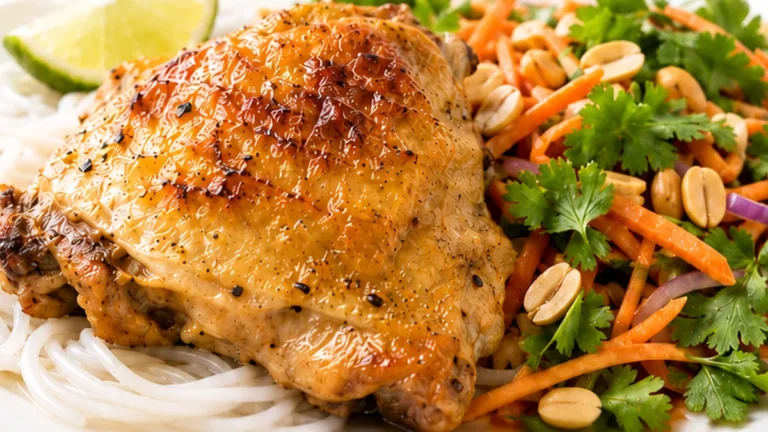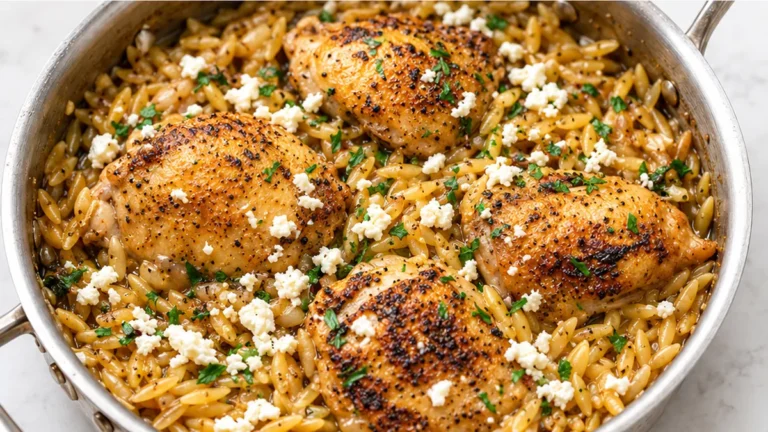

Chicken gnocchi succeeds when the broth reduces enough to coat the dumplings before the cream goes in. The gnocchi simmer directly in the skillet, releasing starch while the shallots and sun-dried tomatoes build the base. This creamy chicken and gnocchi keeps the method compact: brown the thin chicken first, simmer the gnocchi for 5 minutes, then finish with cream and spinach. I do not have personal kitchen experience, so I will not invent a first-hand cooking story; the reliable cue is a gentle final simmer and chicken at 165°F.
Key takeaways
- Pound the breasts to an even quarter-inch so they sear fast and reach 165F/74C without drying out.
- Pat the chicken bone-dry and don’t crowd the pan, or it steams instead of browning in the 280-330F Maillard range.
- Drop the heat to a bare simmer before adding the 36%-fat cream so the acidic sun-dried tomatoes don’t curdle it.
- Simmer the gnocchi right in the sauce for 3-5 minutes; its released starch is what makes the sauce thick and clinging.

Creamy Chicken Gnocchi That Drips With Sauce
Ingredients
- 1 tablespoon olive oil
- 1 lb chicken breasts, pounded thin, or thinly sliced as pictured
- 1 tablespoon seasoning of choice (I like the McCormick rotisserie chicken seasoning)
- 1 large shallot, thinly sliced or minced
- 1/4 cup sun-dried tomatoes packed in oil, drained (love DeLallo’s!), or similar (see notes)
- 12 ounces store-bought gnocchi (I use DeLallo gnocchi)
- 2 cups chicken broth (more as needed)
- 1/2 cup cream
- 1 cup packed spinach leaves, torn into smaller pieces
- salt and pepper, to taste
- fresh thyme, to taste
- grated Parmesan, to taste
Instructions
- Chicken.
- Warm the oil in a large, wide skillet over medium-high heat. Coat both sides of the chicken with the seasoning; depending on the blend, you may need more than 1 tablespoon, and the goal is an even coating. Put the chicken into the hot skillet and cook 3-4 minutes on each side until browned and cooked through to 165 degrees F. Transfer it out of the pan and set it aside.
- Shallots.
- Using the same skillet, add the oil, shallots, and sun-dried tomatoes. Sauté for 5 minutes, until the shallots soften and turn golden.
- Gnocchi.
- Pour in the broth and add the gnocchi. Let everything simmer for another 5 minutes, until the gnocchi become tender.
- Cream.
- Stir in the cream and spinach until combined. Maintain a gentle simmer for a few more minutes so the sauce can thicken further.
- Season.
- Season to taste with salt, pepper, and fresh thyme leaves, then return the chicken to the skillet.
- Serve portions of chicken with creamy gnocchi, spooning extra sauce over everything. Finish with grated Parmesan over the top or stir it into the sauce for additional flavor.
Notes
The one-pan order of operations that keeps the chicken juicy and the gnocchi pillowy
This dish lives or dies by sequence. You sear the chicken first, pull it out while it rests, then build the sauce in the same pan so every browned bit on the bottom dissolves into the broth. The gnocchi goes straight into the simmering liquid raw, no separate pot of water, which is what makes this a true one-pan meal. Because the chicken is pounded thin, it finishes in roughly three minutes per side, and that short window is exactly why the breast stays tender instead of turning to rope.
Thickness is the variable almost nobody controls. Pounding a breast to an even quarter-inch does two things at once: it removes the thick-center-thin-edge problem that leaves you with dry ends and raw middle, and it gives you more flat surface pressed against the hot pan for browning. Serious Eats makes the same case for this exact reason, that even thickness equals even cooking and thin breasts cook faster so they dry out less (source). Pull the chicken at 165 degrees F (74 degrees C) measured at the thickest point, the USDA minimum for all poultry (source). At that thinness it carries no resting requirement for safety, so slice and return it to the sauce at the end.
Getting real browning on thin chicken when the pan wants to steam instead
The flavor in the finished sauce starts with the fond, the brown layer the chicken leaves behind. That browning is the Maillard reaction, and it needs a surface temperature in the range of 280 to 330 degrees F (140 to 165 degrees C) to actually run (source). Below that you get pale, gray, boiled-tasting meat and a weak fond. Three mistakes stall it on thin cutlets.
- Wet chicken. Surface moisture has to boil off before the pan can climb into Maillard range, so every drop of water you leave on the breast is time spent steaming. Pat both sides bone-dry with paper towel before the seasoning goes on.
- A crowded pan. Each cutlet dumps steam. Pack them edge to edge and that steam has nowhere to go, the pan temperature crashes, and nothing browns. Sear in two batches if your pan is under 12 inches.
- Moving it too soon. The crust releases itself when it is ready. If the chicken sticks when you try to flip, it is not done browning; give it another 30 to 45 seconds and it will lift cleanly.
Add the shallot and sun-dried tomatoes to the empty pan before you deglaze. The residual oil clinging to the tomatoes carries fat-soluble flavor, and a tablespoon of sun-dried tomato is dense enough in lycopene that even that small amount is nutritionally meaningful (source).
Why the cream breaks around sun-dried tomatoes, and how to keep it glossy
A cream sauce splits when the milk proteins clump together, and acid plus high heat is the classic trigger. Sun-dried tomatoes are acidic, so they stack the deck against you the moment the cream hits a ripping-hot pan. The reason heavy cream behaves and half-and-half or milk does not is fat content: cream carries at least 36 percent milkfat, and that fat physically coats the proteins so heat and acid cannot bond them into curds (source). Lower-fat dairy has too little fat to do that shielding job and breaks almost on contact.
Three failure-to-fix pairs cover nearly every broken batch of this sauce:
- Grainy, separated sauce the second cream goes in. Cause: the pan was at a hard boil. Fix: pull it down to a bare simmer before the cream, and keep it there. Low and slow is the safest route with any dairy sauce (source).
- Sauce looks curdled but tastes fine. Cause: it is usually fat beading out, not true protein curdling. Fix: kill the heat and whisk hard, or whisk in a splash of cold broth to re-emulsify.
- Sauce too thin to coat. Cause: not enough reduction, or too much broth. Fix: let it simmer uncovered a few extra minutes; the starch the gnocchi sheds will also thicken it as they cook.
- Sauce too thick and claggy. Cause: gnocchi starch plus over-reduction. Fix: loosen with broth a tablespoon at a time, which is exactly why the recipe says more broth as needed.
Cooking gnocchi directly in the sauce without turning it to glue
Store-bought potato gnocchi is the easiest thing in this pan to ruin, because its whole danger is overcooking. Cooked in plain water, gnocchi signals doneness by floating, and once it surfaces it needs only one to two more minutes (source). Push past that and the potato dumpling absorbs water, swells, and collapses into paste. In this recipe you are simmering it in broth instead of boiling it in water, so watch the clock rather than the float: give it three to five minutes in gently bubbling liquid and start checking at three.
There is a hidden benefit to cooking it in the sauce. The surface starch that gnocchi releases does not wash away into a drain here; it dissolves into the broth and thickens it, which is a large part of why this sauce clings and drips the way it does. That is something true of this dish and very few others: the starch you would normally throw out is doing the thickening. The trade-off is timing. Add the gnocchi too early and it overcooks while the chicken is still out of the pan; add it when the sauce is built and simmering, and fold the sliced chicken and spinach in during the final minutes.
Spinach is the last thing in because it needs almost no heat. A packed cup of leaves collapses to a fraction of its volume in under a minute of residual heat, and wilting it concentrates the nutrients per bite rather than destroying them (source). Stir it through, let it slump, and it is done.
Smart swaps and what each one costs you
This recipe is built to flex, but every substitution changes the result in a predictable direction.
- Chicken thighs for breasts. Expected result: more forgiving, juicier meat that shrugs off a minute of overcooking. Trade-off: you lose the thin, fast-searing cutlet, and boneless thighs need a few minutes longer in the pan.
- Half-and-half for cream. Expected result: a lighter sauce. Trade-off: with less than 36 percent fat it is far likelier to curdle against the acidic tomatoes, so it demands a genuine simmer and off-heat whisking (source).
- Fresh cherry tomatoes for sun-dried. Expected result: brighter, fresher, less concentrated. Trade-off: you lose the intense sweet-savory punch and the clinging oil, and you add water to the pan, so reduce a little longer.
- Cauliflower gnocchi for potato. Expected result: lower-carb and lighter. Trade-off: it is softer, breaks down faster, and sheds far less thickening starch, so your sauce will stay thinner and you will lean harder on reduction.
The seasoning blend is the one swap with no real cost. A rotisserie-style blend is just salt, paprika, garlic, onion, and herbs, so any poultry seasoning you like, or a simple mix of salt, pepper, garlic powder and smoked paprika, lands in the same place. Finish with fresh thyme off the heat so its oils stay volatile, and grate the Parmesan at the table where it melts into the hot sauce instead of clumping.
Why this gnocchi reheats worse than the cream chicken beside it, and the fix
This dish has two components that age at opposite rates, which is why leftovers rarely taste like night one. The cream sauce holds up: at roughly 36 to 40 percent milk fat, heavy cream is stable enough to warm back to glossy if you go slow (source). The gnocchi is the problem child. Once cooked, its gelatinised potato starch keeps absorbing the surrounding liquid as it sits, so by the next day the pieces have swollen, softened, and bled starch back into the sauce, thickening it to paste.
Store the whole thing together in a sealed container; cooked chicken is safe refrigerated for three to four days at 4C (40F) (source). Reheat gently, never at a boil. Put it in a wide pan over low-medium heat with a splash of chicken broth, and stir almost constantly. Moisture, movement, and low heat are what bring a cream sauce back together rather than breaking it into grainy fat and water (source). Target a serving temperature, not a simmer; the cream only needs to loosen, and the chicken only needs to warm through to 74C (165F).
If you know in advance you want make-ahead, cook the gnocchi a touch firmer and pull it from the sauce 30 seconds early. The extra starch it has in reserve is what lets it survive a reheat without collapsing. Avoid freezing the assembled dish: the cream can separate on thaw and the gnocchi turns mealy.
Doubling the batch and the burner math that keeps the pan from steaming
Scaling this recipe is less about ingredient ratios than about pan surface. The whole character of the dish depends on the chicken browning and the gnocchi getting a little colour, and both need direct contact with hot metal. Double the ingredients into the same 25cm (10-inch) skillet and you crowd it: the chicken packs in, releases water, and poaches grey instead of searing. The fix is to keep the surface-to-food ratio constant. Either move up to a 30cm (12-inch) or larger pan, or brown the chicken in two batches and set it aside, exactly as the single recipe does, just twice.
Broth scales differently from everything else. Gnocchi drinks liquid as it cooks in the sauce, and a bigger pile of gnocchi in a wider pan has more evaporation area, so a straight doubling of broth often runs dry before the pieces are tender. Add the second cup of broth, then keep more within reach and pour in splashes as needed rather than flooding at the start. The cream, by contrast, you can double cleanly; its job is richness and gloss, not cooking the gnocchi.
Equipment changes the result more than people expect. Stainless and cast iron build the browned fond that flavours the sauce; nonstick gives you tender chicken but a paler, thinner-tasting base, so lean harder on the seasoning and the sun-dried tomato oil. Induction and gas recover heat fast after you add cold broth; an electric coil lags, so give it a minute to climb back before adding the gnocchi. For four or more servings, a shallow braiser beats a deep pot: the wide floor keeps the gnocchi in a single layer where it can caramelise instead of stewing.
Pro tips
- Pound or slice the chicken thin so the stated 3-4 minutes per side can cook it evenly; verify 165°F at the center.
- Let the gnocchi simmer in the broth for the full 5 minutes so starch helps body the sauce.
- After adding cream, use only a low simmer; aggressive boiling can over-reduce the sauce.
- Refrigerate leftovers promptly and reheat gently until steaming throughout.
Chicken gnocchi is best served while the sauce is glossy and the gnocchi are tender. Finish with Parmesan and fresh thyme to taste, then serve immediately.
Frequently asked questions
Can I use milk instead of cream to lighten it?
You can, but expect trouble. Milk and half-and-half carry too little fat to shield their proteins from the sun-dried tomatoes’ acid and the pan’s heat, so they curdle easily. If you go lighter, drop to a gentle simmer first, whisk constantly, and consider stirring in a little extra Parmesan, whose fat helps stabilize the sauce.
Why did my gnocchi turn mushy?
It cooked too long. Store-bought potato gnocchi needs only three to five minutes in simmering liquid; past that it keeps absorbing water, swells, and collapses into paste. Start checking at three minutes, and remember it is finishing in sauce, not boiling water, so judge by texture and the clock rather than waiting for it to float.
Do I need to boil the gnocchi separately first?
No, and you shouldn’t for this recipe. Cooking it directly in the broth is the whole point: the starch it sheds dissolves into the liquid and thickens the sauce so it clings and drips. Boiling it separately washes that starch down the drain and leaves you with a thinner, less cohesive sauce.
Can I make this ahead and reheat it?
Partly. Cream sauces with cooked gnocchi don’t hold well because the dumplings keep soaking up liquid and soften overnight. For best results, reheat gently over low heat with a splash of broth to loosen the sauce and prevent the cream from breaking. If planning ahead, undercook the gnocchi slightly so it survives the second heating.
More from Baked Pasta Recipes →