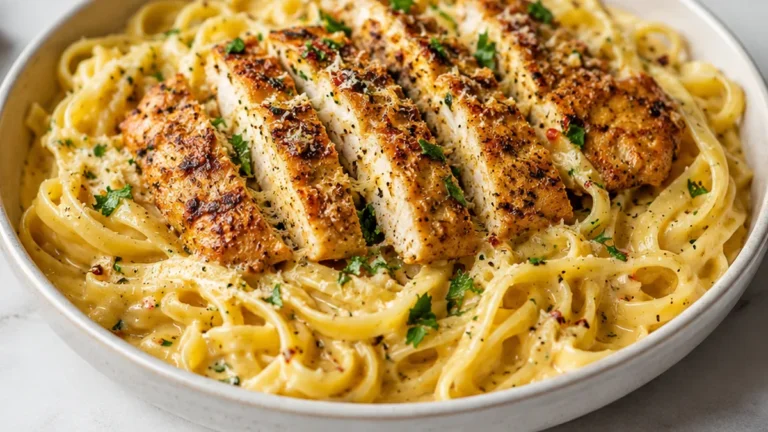
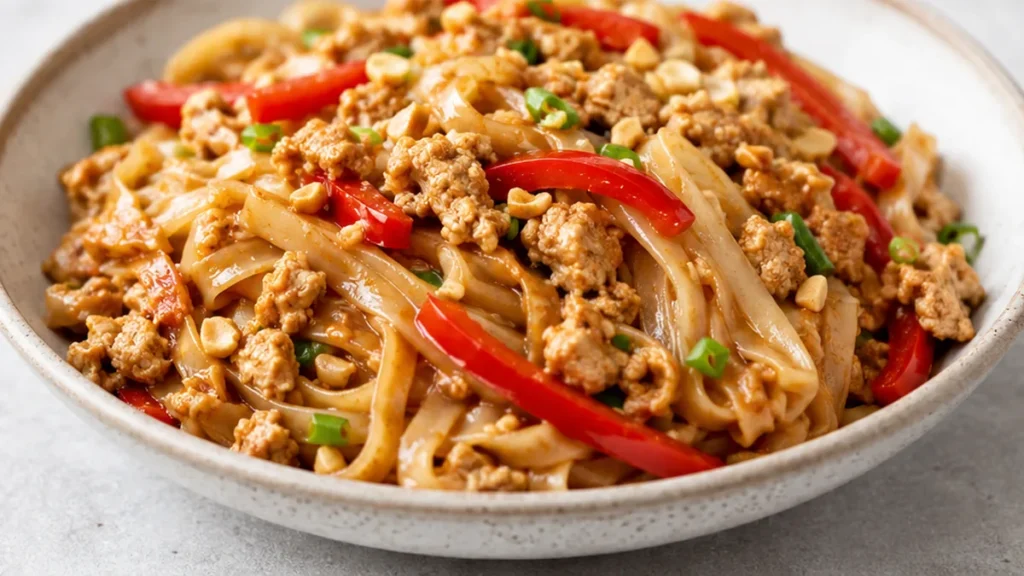
This chicken Pad Thai recipe brings the vibrant flavors of Thailand right to your kitchen in just 30 minutes. It’s an ideal choice for anyone craving a quick yet deeply satisfying meal, packed with tender chicken, savory sauce, and perfectly cooked noodles. The secret to this fast and flavorful chicken Pad Thai lies in efficient prep and high-heat cooking. Pad Thai at home can look intimidating because of the long ingredient list. However, with a good mise en place, this chicken Pad Thai comes together faster than takeout, proof that authentic flavors don’t have to be complicated. This recipe is designed to deliver maximum taste with minimal fuss, making it a new weeknight favorite.
Key takeaways
- Manage noodle hydration to prevent gumminess.
- Cook the sauce briefly to thicken and meld flavors.
- Incorporate butter at the end for richness and emulsification.
- Adjust sauce balance to personal preference before adding noodles.
30-Minute Garlic Butter Chicken Pad Thai!
Ingredients
- 6 ounces Pad Thai/wide rice noodles
- 1/3 cup tamari or soy sauce
- 3 tablespoons real maple syrup
- 2 tablespoons fish sauce
- 2 tablespoons rice vinegar
- black pepper and chili flakes, to taste
- 3 tablespoons sesame oil (or olive oil)
- 3/4 pound ground chicken
- 1 red bell pepper, thinly sliced
- 3 tablespoons salted butter
Instructions
- Soak the rice noodles according to packaged directions. Drain.
- To make the sauce. In a bowl, combine the tamari/soy sauce, maple syrup, fish sauce, rice vinegar, black pepper, and chili flakes.
- Add the oil, chicken, and red bell pepper to a large skillet set over medium heat. Cook until the chicken is browned all over, about 5 minutes. Add the butter, shallot, garlic, and a pinch of chili flakes and black pepper. Continue to cook the chicken in the butter until the garlic begins to turn golden, 1-2 minutes.
- Add the noodles and sauce, tossing to combine. Cook until the noodles are warmed through and begin soaking up the sauce, about 1 minute. Push the noodles to one side of the skillet and add the eggs to the other side. Let cook until the edges start to set, 1 minute. Roughly scramble the egg, then toss it with the noodles. Remove from the heat.
- Add the bean sprouts, cilantro, and green onions, and toss again.
- Serve warm noodles topped with basil, green onions, peanuts, and chili flakes. Add a squeeze of lime juice.
Notes
The technique that makes it
The key to a successful Pad Thai, even a quick 30-minute version, lies in managing the noodle texture and achieving a balanced sauce. Rice noodles, particularly wide ones, can easily become mushy if overcooked or soaked for too long. For this recipe, a brief soak in hot water is sufficient to soften them without making them gummy. The sauce, a blend of tamari/soy sauce, maple syrup, fish sauce, and rice vinegar, needs to be cooked down slightly to thicken and meld the flavors. This is achieved by adding it to the hot pan after the chicken and vegetables have begun to cook. The butter is introduced at the end, not just for flavor, but to emulsify with the sauce, creating a richer, glossier coating for the noodles and other ingredients. This final step helps bind everything together, preventing a watery sauce and ensuring each bite is flavorful.
Troubleshooting
- Problem: Noodles are sticky or clumpy.
Fix: Ensure noodles are not over-soaked. Rinse them briefly under cool water after draining to remove excess starch. Stir them frequently in the pan as the sauce is added to prevent sticking. - Problem: Sauce is too thin or watery.
Fix: Allow the sauce to simmer and reduce slightly in the pan for an extra minute or two before adding the noodles. The butter will also help thicken it as it emulsifies. - Problem: Chicken is dry or overcooked.
Fix: Cook the ground chicken thoroughly before adding the bell peppers. Avoid overcrowding the pan, which can lower the temperature and lead to steaming rather than searing. - Problem: Flavors are too salty or too sweet.
Fix: Taste and adjust the sauce balance before adding the noodles. Add a splash more rice vinegar for acidity if too sweet, or a touch more tamari/soy sauce if too bland. Chili flakes can add heat without altering the sweet/salty balance.
Substitutions
- Noodles: If wide rice noodles are unavailable, linguine or fettuccine can be used. The texture will be different, chewier, but they will absorb the sauce well.
- Chicken: Ground turkey or firm tofu (pressed and cubed) can be substituted for ground chicken. Tofu will require a longer sauté time to achieve browning.
- Tamari/Soy Sauce: Coconut aminos can be used for a gluten-free and soy-free option, though the flavor will be slightly less intense.
- Maple Syrup: Honey or brown sugar can be used as sweeteners. Honey will add a floral note, while brown sugar will provide a deeper molasses flavor.
Pro tips
- For best results, use fresh, good quality fish sauce; it makes a huge difference in the authentic flavor profile. Fish sauce can vary greatly in intensity.
- Ensure your skillet is hot before adding the chicken to get a good sear and prevent it from steaming, which affects texture. A hot pan is key for this chicken Pad Thai.
- If you prefer a spicier chicken Pad Thai, increase the amount of chili flakes in the sauce and for garnish. You can also add a touch of sriracha at the end.
- Leftover chicken Pad Thai can be stored in an airtight container in the refrigerator for up to 3 days. Reheat gently in a skillet over medium heat with a splash of water or broth to loosen the noodles and sauce.
This 30-minute Garlic Butter Chicken Pad Thai is a game-changer for quick, delicious meals. Enjoy creating this vibrant dish and feel free to adjust the spices to your preference. Happy cooking!
Frequently asked questions
My noodles are sticking together. What did I do wrong?
This usually happens if the noodles are over-soaked or not tossed enough with the sauce. Ensure you only soften the noodles briefly and rinse them with cool water. Keep stirring them in the pan as you add the sauce to coat them evenly and prevent clumping.
The sauce seems too thin. How can I thicken it?
Allow the sauce to simmer and reduce in the pan for an extra minute or two before adding the noodles. The final addition of butter will also help to thicken the sauce as it emulsifies, creating a richer consistency.
Can I use a different type of noodle?
Yes, while wide rice noodles are traditional, other flat pasta like linguine or fettuccine can work. The texture will be chewier, but they will still absorb the flavorful sauce well.
What if I don’t have fish sauce?
Fish sauce provides a unique umami depth. If you must omit it, you can try adding an extra teaspoon of tamari or soy sauce and a pinch of MSG (if you use it) to compensate for some of the savory flavor.
More from Chicken Pasta Recipes →