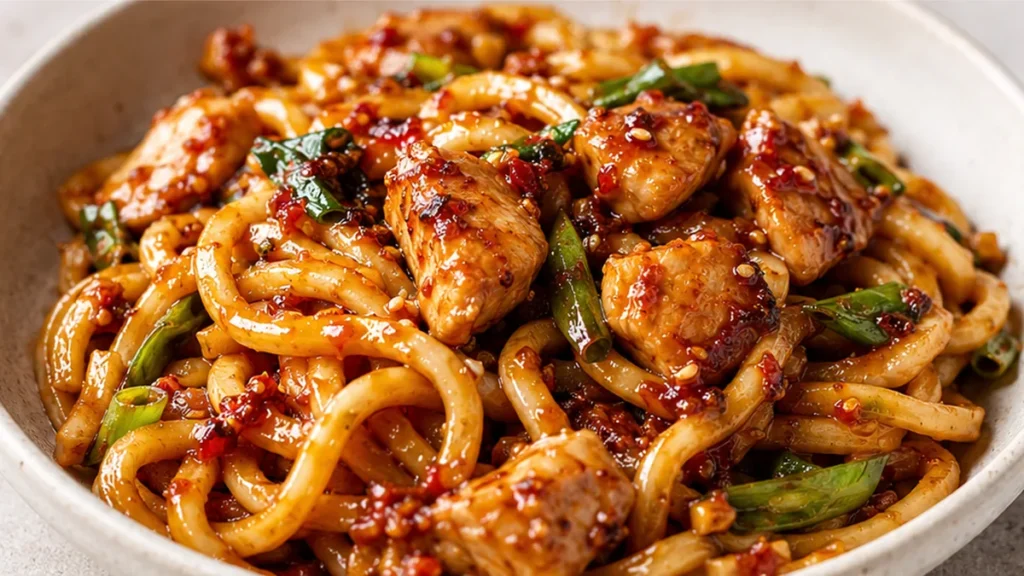
These Honey Garlic Chicken Udon Noodles are the answer to a flavorful meal that doesn’t compromise on time. This recipe takes a handful of accessible ingredients and transforms them into a dish that’s both comforting and exciting, perfect for busy weeknights. These chicken udon noodles are a good fit after a long day, since the meal comes together quickly. It truly feels like a takeout favorite, but made fresh in your own kitchen. The sticky, savory-sweet sauce coats every strand of the chewy udon and tender chicken, making it incredibly satisfying.
Key takeaways
- Achieve a stable, glossy sauce by thoroughly emulsifying the ingredients.
- Sear the chicken properly in a hot pan, cooking in batches if needed, for optimal flavor and texture.
- Avoid overcooking the udon noodles; they should be slightly al dente before saucing.
- Control the heat when simmering the sauce to prevent the honey from burning.
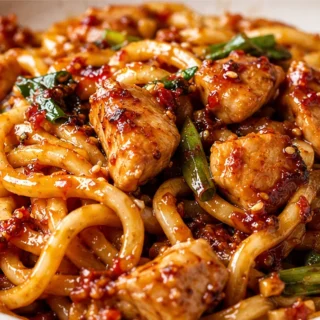
Honey Garlic Chicken Udon Noodles
Ingredients
- 8 ounces dried udon noodles
- 1/2 cup tamari or soy sauce
- 3-4 tablespoons chili paste
- 2 tablespoons rice vinegar
- 2 tablespoons lemon juice
- 2 tablespoons honey
- 2 tablespoons toasted sesame oil
- 6 cloves garlic, chopped
- 1 tablespoon fresh chopped ginger
- 1 pound thinly sliced chicken breasts, thighs, or ground chicken
- 1 tablespoon cooking oil
- Black pepper to taste
- Sesame seeds for garnish
Instructions
- Cook the udon noodles according to package directions until al dente. Drain and set aside.
- In a medium bowl, whisk together the soy sauce, chili paste, rice vinegar, lemon juice, honey, toasted sesame oil, chopped garlic, chopped ginger, and 1/4 cup water until well combined.
- Heat 1 tablespoon cooking oil in a large skillet or wok over medium-high heat. Add the chicken and season with black pepper. Cook for 5-7 minutes, stirring occasionally, until the chicken is cooked through and lightly browned.
- Pour the prepared sauce mixture into the skillet with the chicken. Bring to a low simmer and cook for 2-3 minutes, allowing the sauce to thicken slightly.
- Add the cooked udon noodles to the skillet. Toss everything together gently until the noodles and chicken are thoroughly coated with the sticky sauce.
- Serve the Honey Garlic Chicken Udon Noodles warm, garnished with sesame seeds. Enjoy immediately!
Notes
The Technique That Makes It: Achieving the Perfect Honey Garlic Sauce and Chicken Sear
The success of this Honey Garlic Chicken Udon hinges on two key techniques: creating a well-emulsified sauce and properly searing the chicken. The sauce combines liquids (tamari, rice vinegar, lemon juice, honey) with fats (sesame oil) and aromatics (garlic, ginger). Whisking these ingredients together thoroughly, especially after adding the sesame oil, helps to create a stable emulsion. This means the oil and water-based ingredients will blend together more seamlessly, preventing the sauce from separating during cooking and ensuring an even coating on the noodles and chicken. The heat control during the sauce’s brief simmer is crucial; too high, and the honey can burn, leading to a bitter flavor. Conversely, a gentle simmer allows the flavors to meld and slightly thicken the sauce without scorching.
For the chicken, achieving a good sear is vital for both texture and flavor. Whether using sliced chicken or ground, the cooking oil should be hot enough to create a Maillard reaction – the browning that develops complex, savory flavors. Overcrowding the pan will steam the chicken instead of searing it, resulting in a pale, less flavorful protein. Cooking the chicken in batches if necessary ensures each piece gets direct contact with the hot pan, developing that desirable golden-brown crust. This seared chicken then adds another layer of flavor and texture to the dish, complementing the chewy udon noodles and the glossy sauce.
Troubleshooting
- Sauce is too thin: Simmer the sauce uncovered for an additional 2-5 minutes over low heat, stirring constantly, until it reaches your desired consistency. Be cautious not to overcook, as the honey can burn.
- Chicken is dry: Ensure you are not overcooking the chicken. Thinly sliced chicken cooks very quickly. Remove it from the pan as soon as it’s cooked through, or even slightly before, as it will continue to cook in the residual heat of the sauce.
- Sauce separated or oily: Whisk the sauce vigorously again before adding it to the cooked noodles and chicken. If separation persists, try gently reheating the dish over low heat while whisking to help re-emulsify.
- Noodles are mushy: Cook the udon noodles according to package directions, but err on the side of slightly undercooking (al dente). They will finish cooking and absorb sauce when tossed with the chicken and sauce mixture.
Substitutions
- Tamari/Soy Sauce: Coconut aminos can be used for a gluten-free and slightly sweeter alternative. The overall saltiness will be slightly reduced.
- Honey: Maple syrup or agave nectar can be used as sweeteners. Maple syrup will impart a distinct maple flavor, while agave will be more neutral.
- Rice Vinegar: Apple cider vinegar or white wine vinegar can be substituted. These will provide a similar tanginess, though the flavor profile might be slightly different.
- Chicken: Firm or extra-firm tofu, pressed and cubed, can be pan-fried until golden for a vegetarian or vegan option (ensure tamari is used and omit any non-vegan garnishes). Shrimp or thinly sliced pork are also good protein alternatives.
Pro tips
- Spice level: Adjust the chili paste to your preference. For extra heat, add a pinch of red pepper flakes.
- Protein swap: Feel free to use thinly sliced pork, shrimp, or even tofu for a different twist on these chicken udon noodles.
- Storage: Leftovers can be stored in an airtight container in the refrigerator for up to 3 days. Reheat gently in a microwave or on the stovetop with a splash of water to loosen the sauce.
Give these Honey Garlic Chicken Udon Noodles a try for your next quick dinner. You’ll love how easy and delicious they are! Don’t forget to share your creations!
Frequently asked questions
Can I make the sauce ahead of time?
Yes, the honey garlic sauce can be prepared a day in advance and stored in an airtight container in the refrigerator. Whisk it well before using, as some separation may occur. You may need to gently warm it to help it combine fully before tossing with the noodles and chicken.
What kind of chicken is best for this recipe?
Thinly sliced chicken breast or thighs work well for quick cooking and even coating. Ground chicken is also a convenient option that integrates easily into the sauce. Ensure chicken is cooked through but not overcooked to maintain tenderness.
How can I make this dish spicier?
Increase the amount of chili paste used in the sauce. You can also add a pinch of red pepper flakes along with the garlic and ginger, or serve the finished dish with sriracha or extra chili paste on the side for individuals to adjust their spice level.
My udon noodles are sticking together, what did I do wrong?
Udon noodles can become sticky if they are overcooked or not rinsed after cooking. Ensure you cook them just until tender, drain them well, and consider a quick rinse under cold water if they seem gummy before adding them to the sauce.
More from Chicken Pasta Recipes →