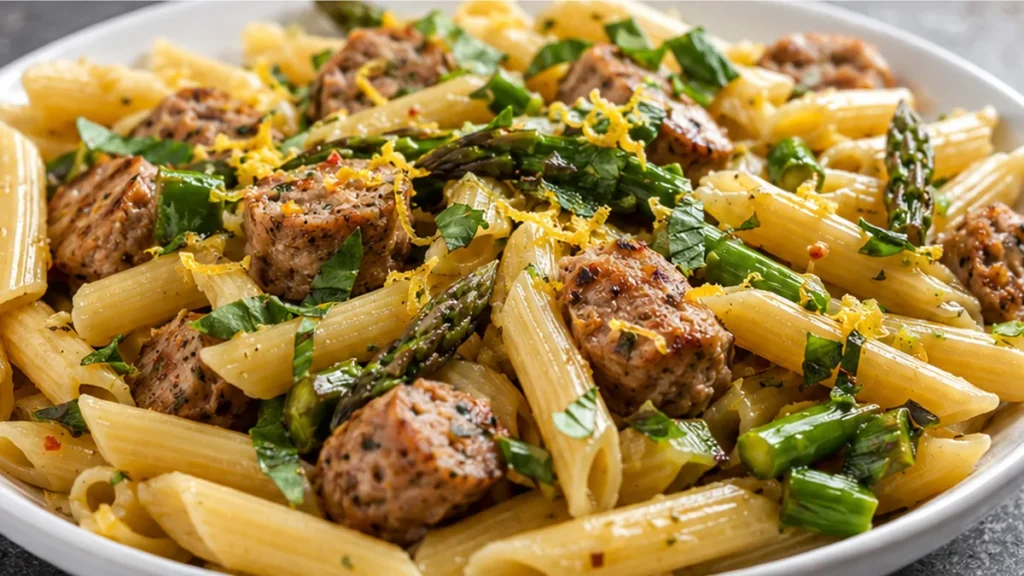
This lemon basil pasta is a vibrant, flavorful dish that brings together the best of fresh herbs and hearty proteins in one simple preparation. It’s designed for those busy weeknights when you crave something special without the extensive cleanup. The key to a truly outstanding lemon basil pasta lies in balancing the bright acidity of the lemon with the aromatic sweetness of fresh basil, complemented by the savory depth of spicy Italian chicken sausage. This recipe is not just a meal; it’s a refreshing culinary experience, perfect for spring or summer gatherings.
Key takeaways
- Vigorously whisk the dressing ingredients to create a stable emulsion.
- Add dressing to warm, not hot, pasta and toss immediately.
- Cook sausage over medium heat, breaking it up for even browning.
- Incorporate fresh basil at the end to preserve its color and flavor.
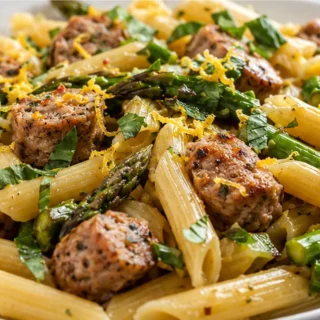
Zesty Lemon Basil Sausage Pasta
Ingredients
- 1 pound short-cut pasta
- 1/4 cup, plus 2 tablespoons extra virgin olive oil
- 2 tablespoons apple cider vinegar
- zest and juice of 1 lemon
- 1 cup fresh basil, chopped, plus more for serving
- 2 tablespoons chopped fresh chives
- 1/2 cup green olives (chopped)
- kosher salt and black pepper
- 1 pound ground spicy Italian chicken sausage
- 1 bunch asparagus, chopped
Instructions
- Bring a large pot of salted water to a boil. Boil the pasta to al dente, according to package directions. Drain.
- Meanwhile, mix together 1/4 cup olive oil, vinegar, lemon zest, lemon juice, basil, chives, and olives in a bowl, or pulse in the food processor. Season with salt and pepper.
- In the same pot used to cook the pasta, heat the remaining 2 tablespoons olive oil over medium-high heat. When the oil shimmers, add the chicken sausage and brown all over, about 5 to 8 minutes. Reduce the heat to low, add the asparagus. Cook another 5 minutes or until the asparagus is tender. Add the pasta and toss well to coat.
- Add the basil/olive sauce and toss. Remove from the heat and serve immediately topped with additional basil. Enjoy!
Notes
The Technique That Makes It: Emulsifying the Zesty Dressing
The magic of this lemon basil pasta lies in creating a vibrant, cohesive dressing that coats every strand of pasta and piece of sausage. This is achieved through proper emulsification. The base of our dressing is extra virgin olive oil, lemon juice, and apple cider vinegar. When these are whisked vigorously together, the oil and vinegar, which normally separate, form a temporary emulsion. The lecithin in the egg yolks (if you were to add them, which we are not in this recipe) is a powerful emulsifier, but even without it, vigorous whisking forces the oil into tiny droplets suspended within the acidic liquid. The lemon zest adds surface area for these droplets to cling to, and the finely chopped basil and chives further help to stabilize this emulsion, acting as physical barriers that prevent the oil and vinegar from coalescing too quickly. Adding the dressing to warm, not boiling hot, pasta allows the residual heat to gently warm the dressing, making it more fluid and easier to coat the pasta without breaking the emulsion. The starch released from the pasta also plays a crucial role, acting as a thickening agent that helps to bind the oil and vinegar, creating a richer, more stable sauce.
Troubleshooting
- Problem: Dressing is oily and separated.
Fix: Whisk the dressing vigorously again. If it still won’t emulsify, slowly whisk in a teaspoon of Dijon mustard or a tiny bit of the starchy pasta cooking water, which contains emulsifying starches. - Problem: Pasta is dry and the dressing doesn’t coat it well.
Fix: Ensure you are adding the dressing to warm, freshly drained pasta. Toss immediately. If it’s still too dry, add a tablespoon or two of the reserved pasta cooking water to help loosen and bind the sauce. - Problem: Sausage is dry or crumbly.
Fix: Ensure the sausage is cooked over medium heat, allowing it to brown properly without burning. Break it up as it cooks to ensure even cooking and prevent large, dry chunks. Don’t overcook it. - Problem: Basil has turned dark and unappealing.
Fix: Add the fresh basil towards the end of the cooking process, or toss it with the pasta and dressing just before serving. The heat from the pasta can quickly degrade the basil’s vibrant color and flavor.
Substitutions
- Spicy Italian chicken sausage: Substitute with regular spicy Italian pork sausage for a richer pork flavor, or mild Italian sausage if you prefer less heat. The texture will be similar, but the flavor profile will shift slightly.
- Asparagus: Swap with green beans or snap peas. These vegetables will offer a similar crisp–tender texture and fresh, green flavor, though the cooking time might need slight adjustment.
- Green olives: Use Kalamata olives for a fruitier, brinier profile, or omit entirely if you dislike olives. The olives add a salty, briny counterpoint to the lemon and basil.
- Apple cider vinegar: Use white wine vinegar or red wine vinegar. Both will provide the necessary acidity to balance the richness of the olive oil, though they will impart subtly different fruity notes.
Pro tips
- For the most vibrant lemon flavor, always use fresh lemon zest and juice. The zest carries the essential oils that give a true citrus punch.
- If your chicken sausage tends to stick, ensure your pot is thoroughly preheated and the olive oil is shimmering before adding the meat. Rushing the browning keeps the sausage from getting that beautiful crispness.
- Storage: Leftovers can be stored in an airtight container in the refrigerator for up to 3 days. Reheat gently on the stovetop with a splash of chicken broth or water to revive the sauce’s creaminess.
This One-Pot Lemon Basil Asparagus and Sausage Pasta is a testament to how simple ingredients can create extraordinary flavors. Enjoy this vibrant dish and let its fresh taste brighten your mealtime!
Frequently asked questions
Can I make the dressing ahead of time?
Yes, you can whisk the olive oil, lemon juice, vinegar, zest, and seasonings together ahead of time. However, it will likely separate. Simply whisk it vigorously again just before tossing it with the warm pasta and other ingredients to re-emulsify.
What if I don’t have spicy Italian sausage?
You can use mild Italian sausage or even regular ground chicken or pork. If using plain meat, consider adding a pinch of red pepper flakes to the sausage as it cooks to replicate the spice level of Italian sausage.
Is it okay to use dried basil?
While fresh basil is highly recommended for its bright flavor and color, you can substitute with dried basil. Use about 1 tablespoon of dried basil, added during the last few minutes of cooking the sausage, as dried herbs lose potency when heated for too long.
How can I make this dish richer?
For a richer sauce, you can add a tablespoon or two of grated Parmesan cheese to the pasta along with the dressing, or finish with a small knob of butter stirred into the warm pasta before adding the dressing. This will add creaminess and depth.
More from Chicken Pasta Recipes →