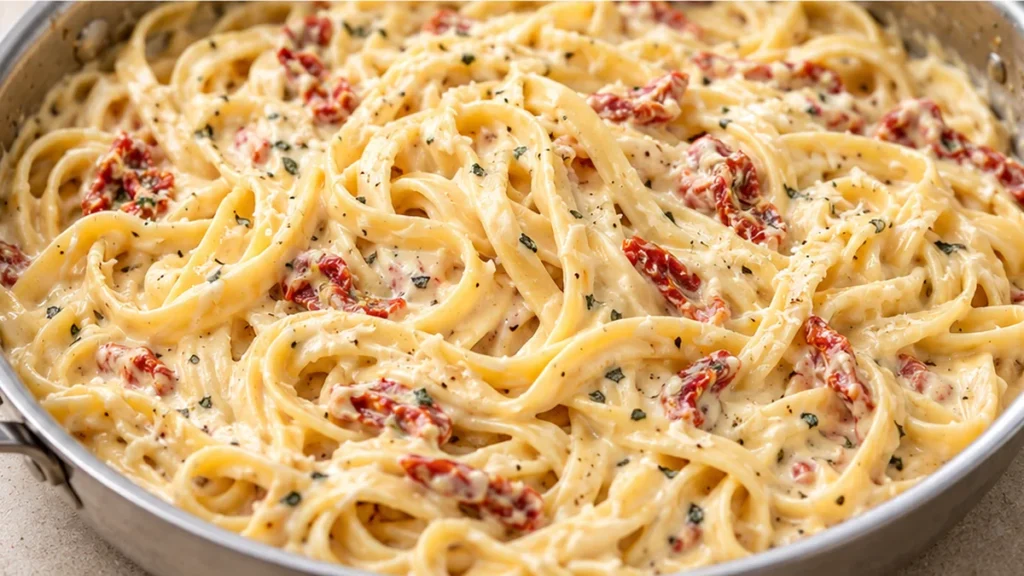
This creamy sun dried tomato pasta is a simple one-pot dish. It combines sun dried tomatoes, spinach, and garlic for a quick, satisfying meal.
Key takeaways
- Achieving a creamy emulsion requires careful temperature control and ingredient ratios.
- Adding pasta cooking water enhances sauce thickness and adherence.
- Common issues like thin or oily sauce can be easily fixed with simple adjustments.
- Substituting ingredients can alter flavor profiles while maintaining the dish’s integrity.
Creamy Sun Dried Tomato Pasta in One Pot!
Ingredients
Instructions
- Chop the sun dried tomatoes into small bite-sized pieces.
- Add the butter and garlic to a deep skillet or Dutch oven. Sauté the garlic over medium heat for about one minute, or until it is very fragrant.
- Add the fettuccine, sun dried tomatoes, dried basil, some freshly cracked pepper, and the chicken broth to the skillet. If needed, break the fettuccine in half to ensure it lays flat and is submerged in broth.
- Place a lid on the skillet, turn the heat up to high, and bring the broth to a boil. Once boiling, stir the pasta, replace the lid, and turn the heat down to low.
- Let the pasta simmer in the broth for 7-10 minutes, or until most of the broth is absorbed and the pasta is tender, stirring every couple of minutes.
- Keeping the heat on low, cut the cream cheese into chunks and stir it into the pasta. Once melted, add the milk and stir until smooth. Finally, add the grated Parmesan and stir until melted into the sauce.
Understanding the Creamy Emulsion in Pasta Dishes
The key to achieving a creamy texture in sun-dried tomato pasta lies in the emulsion of fats and liquids. When preparing this dish, using ingredients like heavy cream or cream cheese helps to create a stable emulsion. The ideal temperature for combining these ingredients is around 70°C (158°F). This ensures that the fats do not separate from the liquid, resulting in a smooth, cohesive sauce.
Additionally, incorporating the pasta cooking water, which contains starch, can further enhance the creaminess. The starch acts as a binding agent, helping to thicken the sauce and improve its adherence to the pasta. Aim for a pasta-to-sauce ratio of approximately 1:1.5 for the best results.
Common Issues and How to Fix Them
- Issue: Sauce is too thin.
- Fix: If the sauce lacks thickness, gradually add more grated cheese or a tablespoon of cornstarch mixed with water to thicken it.
- Issue: Sauce is too oily.
- Fix: Balance the oiliness by adding a splash of chicken or vegetable broth, which will dilute the oil without compromising flavor.
- Issue: Flavor is lacking.
- Fix: Enhance the flavor by incorporating freshly cracked black pepper, crushed red pepper flakes, or a squeeze of lemon juice to brighten the dish.
Ingredient Swaps and Their Effects
- Swap: Heavy cream for half-and-half.
- Effect: This will result in a lighter sauce with less richness, suitable for those looking to reduce calorie intake.
- Swap: Sun-dried tomatoes for roasted red peppers.
- Effect: This will change the flavor profile to a sweeter, smokier taste, while still providing a vibrant color.
- Swap: Parmesan cheese for nutritional yeast.
- Effect: This swap makes the dish vegan while imparting a cheesy flavor, although it may lack the creaminess of dairy.
Unique Characteristics of Creamy Sun-Dried Tomato Pasta
What sets creamy sun-dried tomato pasta apart from other pasta dishes is its unique combination of tangy, sweet, and savory flavors. The sun-dried tomatoes contribute a concentrated flavor that is both sweet and slightly tart, which pairs beautifully with the richness of the cream. This dish also benefits from the addition of fresh herbs like basil or parsley, which add a burst of freshness and color, making it visually appealing and delicious.
How to Make Creamy Sun Dried Tomato Pasta Ahead of Time
Preparing creamy sun dried tomato pasta in advance can save time on busy weeknights. To make it ahead, cook the pasta and sauce separately, then combine them just before serving. Store the sauce in an airtight container in the refrigerator for up to three days. When ready to serve, reheat the sauce gently on the stove, adding a splash of pasta water to restore creaminess. This method helps maintain the texture of the pasta and prevents it from becoming mushy. If you plan to freeze the dish, it’s best to freeze the sauce alone, as pasta can become gummy when thawed. To reheat, thaw overnight in the refrigerator and warm on the stove.
Adjusting Portions for Gatherings
Scaling the creamy sun dried tomato pasta recipe for larger gatherings is straightforward. The key is to maintain the ratios of ingredients. For instance, if you double the pasta, increase the sauce ingredients proportionally to ensure the dish remains creamy and flavorful. A general guideline is to use 75-100 grams of pasta per person, adjusting based on appetite and side dishes. When cooking for a crowd, consider using a larger pot or a Dutch oven to accommodate the increased volume. This not only prevents overflow but also ensures even cooking. If you’re preparing a smaller batch, remember that the cooking time may decrease slightly, so monitor the pasta closely.
Choosing the Right Equipment for Optimal Results
The choice of cooking equipment can significantly affect the outcome of creamy sun dried tomato pasta. A heavy-bottomed pot or a Dutch oven is ideal for even heat distribution, which helps prevent the sauce from scorching. Non-stick pans can also be beneficial, particularly when preparing the creamy sauce, as they facilitate easy stirring and reduce the risk of sticking. If you have an immersion blender, it can be used to blend the sun dried tomatoes into a smoother sauce, enhancing the creaminess. Additionally, using a pasta pot with a built-in strainer can streamline the cooking process, making it easier to drain the pasta without losing any valuable cooking water.
Seasonal Variations and Ingredient Quality
The quality of ingredients can greatly influence the success of creamy sun dried tomato pasta. Fresh, high-quality sun dried tomatoes will provide a more intense flavor compared to lower-quality options. During peak tomato season, consider using fresh tomatoes, roasting them, and then blending them into the sauce for a vibrant taste. Seasonal herbs, such as basil or parsley, can also elevate the dish, adding freshness and color. Additionally, the choice of cream can vary; using a higher-fat content cream will yield a richer sauce, while lighter creams can make the dish less indulgent. Adjusting these elements with the seasons can keep the dish exciting and ensure it reflects the best of what’s available.
Understanding the Impact of Ingredient Quality on Flavor
The quality of ingredients plays a crucial role in the overall flavor profile of creamy sun dried tomato pasta. Sun dried tomatoes, for instance, can vary significantly in taste based on their source and preparation. High-quality sun dried tomatoes, preferably those packed in oil, will impart a richer, more concentrated flavor compared to lower-quality options. When selecting sun dried tomatoes, look for those that are plump and vibrant in color, indicating they were properly processed. Additionally, using fresh herbs and high-quality olive oil will enhance the dish’s flavor, creating a more balanced and aromatic profile.
Scaling the Recipe Without Compromising Texture
When scaling the creamy sun dried tomato pasta recipe, maintaining the right ratios of ingredients is essential to ensure the dish’s texture and flavor remain consistent. For every additional serving, increase the pasta quantity by approximately 75-100 grams, depending on the desired portion size. Additionally, adjust the cream and sun dried tomatoes in proportion; for instance, if you increase the pasta by 100 grams, add about 50-70 ml of cream and 50-100 grams of sun dried tomatoes. Remember to monitor the cooking time, as larger batches may require slight adjustments to ensure even cooking and sauce consistency.
Optimal Serving Suggestions for Creamy Sun Dried Tomato Pasta
Serving creamy sun dried tomato pasta can be enhanced by pairing it with complementary sides and garnishes. A light arugula salad dressed with lemon vinaigrette provides a refreshing contrast to the richness of the pasta. Additionally, consider serving the dish with garlic bread or a crusty baguette to soak up the delicious sauce. For a finishing touch, sprinkle freshly grated Parmesan cheese and a drizzle of high-quality olive oil over the pasta just before serving. These additions not only elevate the dish but also create a more rounded dining experience.
Understanding the Impact of Cooking Time on Creamy Sun Dried Tomato Pasta
The cooking time of the pasta plays a crucial role in achieving the perfect texture and creaminess in this dish. Overcooking can lead to mushy pasta, which will not hold the creamy sauce well. Aim for al dente, which means the pasta should be firm to the bite. Typically, this means cooking the pasta for about 8 to 10 minutes in boiling water. The residual heat from the pasta after draining will continue to cook it slightly, allowing it to absorb some of the creamy sauce without becoming overly soft.
Additionally, the timing of when you add the sun dried tomatoes and cream is essential. Adding them too early can cause the cream to curdle if exposed to high heat for too long. Instead, mix in the cream when the pasta is nearly done, allowing it to warm gently and create a smooth emulsion with the starches released from the pasta. This careful timing ensures a rich and creamy sauce that clings perfectly to each piece of pasta.
Choosing the Right Sun Dried Tomatoes for Optimal Flavor
The type of sun dried tomatoes you use can significantly influence the overall flavor of your creamy sun dried tomato pasta. There are generally two types available: oil-packed and dry-packed. Oil-packed sun dried tomatoes are softer and have a more intense flavor due to the oil infusion, making them ideal for creamy sauces. They can be chopped and added directly to the dish without any additional preparation.
On the other hand, dry-packed sun dried tomatoes need to be rehydrated before use. To do this, soak them in hot water for about 20 minutes, then drain and chop. While they offer a more concentrated flavor, they may require more seasoning to balance their intensity. When selecting your sun dried tomatoes, look for those that are vibrant in color and have a rich aroma. The quality of these tomatoes can make a noticeable difference in your dish, enhancing the overall taste profile of your creamy sun dried tomato pasta.
Pro tips
Pro tip: Best served immediately while hot!
Frequently asked questions
Can I use fresh tomatoes instead of sun-dried tomatoes?
Yes, you can use fresh tomatoes, but they will provide a different flavor and texture. Sun-dried tomatoes have a concentrated flavor that is not easily replicated with fresh tomatoes. If using fresh, consider roasting them first to intensify their flavor.
How can I make this dish vegan?
To make creamy sun-dried tomato pasta vegan, substitute heavy cream with coconut cream or a plant-based cream alternative. Use nutritional yeast instead of cheese for a cheesy flavor, and ensure the pasta is egg-free.
What type of pasta works best for this recipe?
For creamy sun-dried tomato pasta, fettuccine or penne are excellent choices as they hold sauces well. However, any pasta shape can work depending on your preference.
Can I prepare the sauce in advance?
Yes, you can prepare the sauce in advance. Store it in the refrigerator for up to three days. When reheating, add a splash of pasta water to restore the creamy texture.
More from Creamy Pasta Recipes →