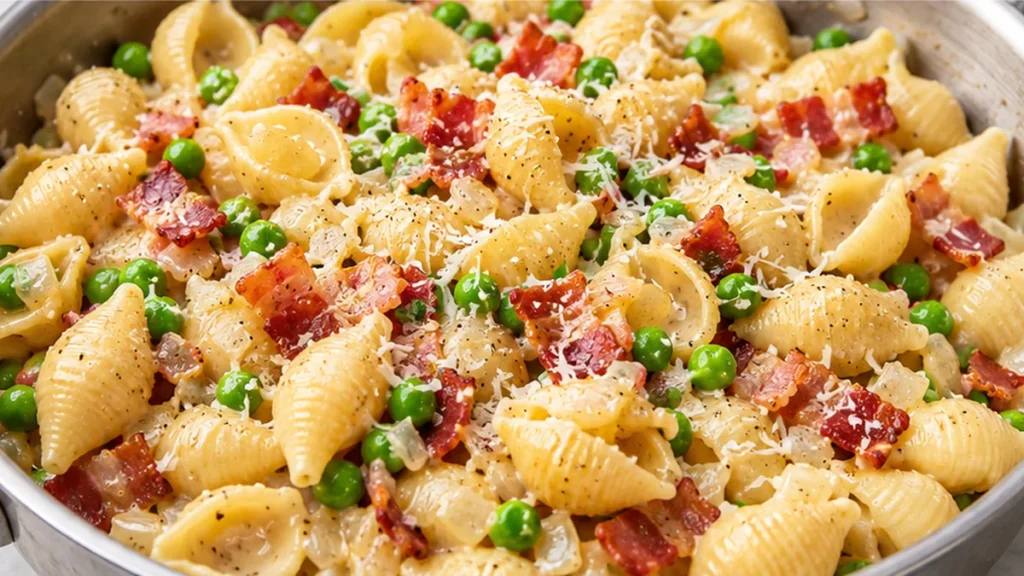
This creamy pasta combines bacon and peas for a rich flavor. It’s a straightforward recipe that delivers comfort in every bite.
Key takeaways
- Emulsification is key for a creamy texture in pasta.
- Add cream after combining with pasta to prevent separation.
- High-fat cream yields the best results for richness.
- Ingredient swaps can significantly alter flavor and texture.

Creamy Pasta with Bacon & Peas That’ll Make You Swoon!
Ingredients
Instructions
- Bring a pot of water to a boil for the pasta. Once boiling, add the pasta and continue to boil until the pasta is tender (7-10 minutes). Reserve about a half cup of the starchy pasta water before draining the pasta in a colander.
- While the pasta is boiling, cook the bacon. Add the bacon to a large skillet and cook over medium heat until brown and crispy. Transfer the cooked bacon to a paper towel lined plate with a slotted spoon. Drain most of the bacon grease from the pan, leaving about 2 Tbsp.
- While the bacon is cooking, finely dice the onion. Add the diced onion to the remaining bacon grease and sauté until tender (about 5 minutes).
- Add the frozen peas and about ¼ cup of the reserved pasta water to the skillet. Continue to cook and stir until the peas have heated through.
- Add the drained pasta to the skillet, stir to combine, and remove from the heat.
- Top the pasta with Parmesan, salt, pepper, crushed red pepper, and crumbled bacon. Stir to combine. Taste and adjust the salt and pepper to your liking.
Understanding the Creamy Texture of Pasta Dishes
The hallmark of a great creamy pasta is its velvety texture, achieved through proper emulsification. This involves combining fat and liquid to create a stable mixture. In this recipe, the cream and the rendered fat from the bacon work together to form an emulsion that coats the pasta evenly. Maintaining a temperature around 85°C (185°F) helps to keep the cream from separating, ensuring a luxurious mouthfeel without curdling.
Common Mistakes in Achieving the Right Creaminess
One frequent issue when preparing creamy pasta is ending up with a sauce that is too thin or watery. This can result from adding the cream too early or not allowing the sauce to reduce sufficiently. To avoid this, incorporate the cream after the pasta has been added to the pan, allowing it to thicken with the residual heat. Additionally, using high-quality, full-fat cream is crucial, as lower-fat alternatives can lead to a less satisfying texture.
Ingredient Swaps That Affect Flavor and Texture
Substituting ingredients can yield different results in creamy pasta. For instance, replacing bacon with pancetta will provide a similar flavor profile but with a slightly different texture due to pancetta’s higher fat content. Alternatively, using frozen peas instead of fresh can save time and still deliver sweetness, but fresh peas offer a more vibrant flavor. Each swap can impact the dish’s overall richness and depth, so choose wisely based on your desired outcome.
Unique Characteristics of This Creamy Pasta Dish
What sets this creamy pasta with bacon and peas apart from other recipes is the balance of salty, smoky flavors from the bacon combined with the sweetness of peas. This dish achieves a harmonious blend that is both comforting and sophisticated, making it suitable for casual dinners or special occasions. The addition of freshly cracked black pepper enhances the dish’s flavor profile, providing a peppery kick that complements the creaminess.
How to Make Creamy Pasta Ahead of Time
Preparing creamy pasta in advance can be a great time-saver. To do this effectively, cook the pasta until it is just under al dente, as it will continue to cook when reheated. Allow the dish to cool before storing it in an airtight container in the refrigerator for up to three days. When ready to serve, reheat gently on the stove over low heat, adding a splash of cream or pasta water to restore its creamy consistency. Avoid microwaving, as it can lead to uneven heating and a grainy texture.
Scaling Up the Recipe for Gatherings
Scaling the creamy pasta recipe for larger gatherings requires attention to ingredient ratios and cooking times. When doubling or tripling the recipe, maintain the same proportions of pasta, cream, and other ingredients for consistent flavor. Keep in mind that cooking times may vary slightly; larger quantities may need additional time to heat through thoroughly. Using a larger pot can help distribute heat evenly, ensuring that the pasta cooks uniformly and the sauce stays creamy.
Choosing the Right Equipment for Perfect Creaminess
The choice of equipment can significantly influence the final texture of your creamy pasta. A heavy-bottomed saucepan is ideal for making the sauce, as it provides even heat distribution and prevents scorching. Additionally, using a pasta pot with a built-in strainer allows for easy draining without losing any precious sauce. If you have a high-powered blender, you can use it to create an ultra-smooth sauce by blending cooked ingredients before combining them with the pasta.
Pairing Suggestions for Creamy Pasta
When serving creamy pasta, consider pairing it with light and refreshing sides to balance the richness of the dish. A simple arugula salad with lemon vinaigrette complements the flavors beautifully, while grilled vegetables add a smoky contrast. For wine pairings, opt for a crisp white wine, such as Sauvignon Blanc or Pinot Grigio, which can cut through the creaminess and enhance the overall dining experience.
Understanding the Impact of Ingredient Quality on Flavor
The quality of ingredients significantly affects the flavor profile of creamy pasta. Fresh ingredients, such as garden peas and high-quality bacon, impart a more vibrant taste compared to their frozen or processed counterparts. For instance, using artisanal pasta can enhance the dish’s overall texture and flavor, as it often has a firmer bite and better sauce adherence. Additionally, the type of cream used can alter the richness; heavy cream provides a luxurious mouthfeel, while half-and-half yields a lighter sauce. When selecting ingredients, consider their seasonality as well. Fresh peas in spring offer a sweet, bright flavor that frozen peas cannot replicate, making them the ideal choice for this dish.
Batch Scaling for Larger Gatherings
Scaling this creamy pasta recipe for larger gatherings can be straightforward, but it requires careful consideration of cooking times and ingredient ratios. When doubling or tripling the recipe, maintain the same ratios of pasta to sauce for consistent flavor and texture. However, be aware that larger quantities may require longer cooking times, especially for the pasta, as it may need additional time to reach al dente. It’s also advisable to prepare the sauce in batches to ensure even coating and prevent it from becoming too thick. Serving larger portions can benefit from the addition of a sprinkle of fresh herbs or a drizzle of olive oil to enhance presentation and flavor.
Make-Ahead Strategies for Creamy Pasta
Preparing creamy pasta ahead of time can be a lifesaver for busy weeknights or gatherings. To make this dish in advance, cook the pasta until just under al dente, then cool it quickly in ice water to stop the cooking process. Store the pasta and sauce separately in airtight containers. When ready to serve, reheat the sauce gently on the stove, adding a splash of reserved pasta water to loosen it up, and then toss in the pasta until heated through. This method preserves the dish’s creamy texture and prevents the pasta from becoming mushy. Note that if the pasta is stored with the sauce, it may absorb moisture and lose some creaminess.
Essential Equipment for Perfect Creaminess
The right equipment can significantly influence the outcome of your creamy pasta dish. A heavy-bottomed saucepan is ideal for making the sauce, as it distributes heat evenly and prevents scorching. A good quality pasta pot with a strainer insert simplifies the cooking and draining process. Additionally, using a high-powered blender can help achieve an ultra-smooth sauce if you choose to puree any components, such as peas or cream. A pasta fork or tongs is essential for tossing the pasta with the sauce, ensuring even coverage without breaking the noodles. Investing in these tools will streamline your cooking process and enhance the overall quality of the dish.
Why the choice of pasta shape matters for creamy pasta
The shape of the pasta can significantly influence the overall texture and creaminess of the dish. For creamy pasta, shapes like fettuccine, penne, or rigatoni are ideal because their surfaces and hollow centers can capture and hold onto the sauce. This ensures that each bite is flavorful and creamy. On the other hand, thinner pasta like angel hair may not hold the sauce as effectively, leading to a less satisfying experience. The recommended cooking time for fettuccine, for instance, is typically around 8-10 minutes, depending on the brand and thickness. Cooking pasta al dente is crucial, as it will continue to cook slightly when mixed with the sauce. This balance ensures the pasta maintains its structure and provides a delightful bite, enhancing the dish’s overall appeal.
How to store and reheat creamy pasta without losing its texture
Storing creamy pasta requires special attention to maintain its texture and flavor. When storing leftovers, it’s best to keep the pasta and sauce separate if possible. This prevents the pasta from becoming overly saturated and mushy. Store in an airtight container in the refrigerator for up to three days. When reheating, add a splash of milk or cream to the pasta to help restore its creamy consistency. Heat gently on the stove over low heat, stirring frequently to avoid sticking or burning. Microwaving is an option, but it can lead to uneven heating; if you choose this method, cover the dish and heat in short intervals, stirring in between. Avoid reheating multiple times, as this can further degrade the texture.
Pro tips
Pro tip: Best served immediately while hot!
Frequently asked questions
Can I use a different type of pasta?
Yes, while this recipe works well with spaghetti or fettuccine, you can substitute with any pasta shape you prefer. Just ensure to adjust the cooking time according to the pasta type to maintain the right texture.
What can I use instead of bacon?
If you’re looking for a vegetarian option, you can use smoked tofu or tempeh to mimic the smoky flavor of bacon. Alternatively, turkey bacon offers a leaner substitute while still providing a similar taste.
How do I store leftovers of creamy pasta?
Store any leftover creamy pasta in an airtight container in the refrigerator for up to three days. Reheat gently on the stove or in the microwave, adding a splash of cream or milk to restore the sauce’s consistency.
Can I make this dish ahead of time?
While it’s best enjoyed fresh, you can prepare the bacon and peas ahead of time. Combine them with the pasta and sauce just before serving to ensure the creaminess is maintained and the dish doesn’t dry out.
More from Creamy Pasta Recipes →