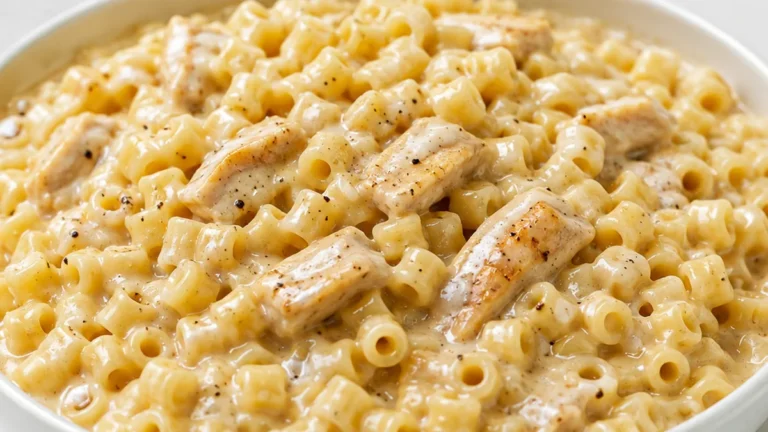
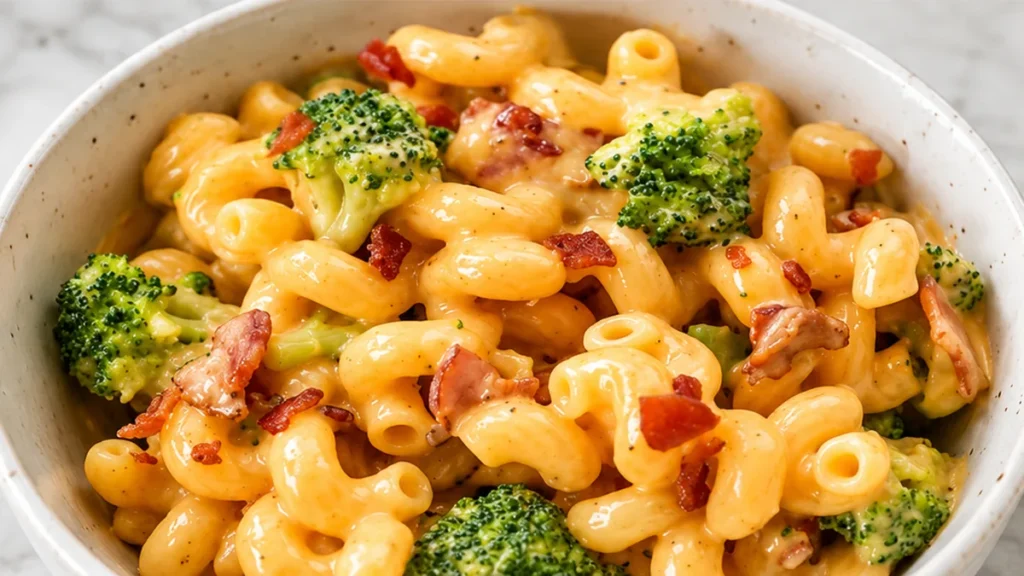
This one pot bacon broccoli mac is a simple, comforting dish. Made with pasta, cheese, and broccoli, it’s perfect for a quick weeknight dinner.
Key takeaways
- Use a combination of sharp cheddar and mozzarella for a creamy texture.
- Add cheese gradually at low heat to prevent graininess.
- Incorporate broccoli towards the end of cooking to maintain its texture.
- Experiment with ingredient swaps for unique flavors and health benefits.
One-Pot Bacon Broccoli Mac & Cheese for Cozy Nights!
Ingredients
Instructions
- Prepare the ingredients before beginning. Thaw the broccoli florets and chop them into small bite-sized pieces. Slice the bacon into small pieces. Shred the cheddar cheese.
- Cook the pasta according to the package directions (boil 7-10 minutes, or until al dente). Drain the pasta in a colander and set it aside.
- Return the pot to the stove, add the bacon, and cook over medium to medium-low heat until the bacon is brown and crispy (about 5 minutes). Use a slotted spoon to remove the bacon from the pot, leaving the grease behind.
- Add the evaporated milk, smoked paprika, Dijon, hot sauce, and salt to the pot with the bacon grease. Stir to combine and allow it to heat through.
- Once the evaporated milk is hot, turn the heat to low and begin whisking in the shredded cheddar, one handful at a time. Wait until the cheese is fully melted before adding the next handful. Adjust seasoning if needed.
- Return the cooked pasta, crispy bacon (crumbled if desired), and chopped broccoli to the pot with the cheese sauce. Stir to combine. Serve immediately.
Understanding the Creaminess of Mac and Cheese
The key to achieving that perfect creamy texture in mac and cheese lies in the choice of cheese and the method of combining it with the pasta. A blend of sharp cheddar and creamy mozzarella can create a rich flavor profile while ensuring the sauce remains smooth. The addition of a starch, released from the pasta during cooking, helps to emulsify the cheese sauce, creating a cohesive and creamy consistency. Aim for a pasta-to-sauce ratio of about 1:1.5 for optimal creaminess.
Common Mistakes and How to Avoid Them
One frequent issue when making one-pot bacon broccoli mac is ending up with a grainy sauce. This can occur if the cheese is added too quickly or at too high a temperature. To prevent this, reduce the heat and add the cheese gradually, stirring continuously. Another common problem is overcooking the broccoli, leading to mushiness. To fix this, add the broccoli to the pot during the last few minutes of cooking, allowing it to steam while the pasta finishes cooking.
Ingredient Swaps and Their Effects
Swapping ingredients can yield different results in flavor and texture. For example, using a different type of cheese like gouda instead of cheddar will impart a smokier flavor, but it may not melt as smoothly. Alternatively, substituting turkey bacon for pork bacon can reduce fat content, but may alter the flavor profile significantly. If you’re looking to make it vegetarian, omitting the bacon and adding more vegetables like bell peppers can enhance the dish without sacrificing volume.
Unique Features of This One-Pot Dish
This one-pot bacon broccoli mac stands out because it combines the comforting elements of mac and cheese with the nutritional benefits of broccoli. The broccoli not only adds a pop of color but also provides essential vitamins and minerals, making this dish a more balanced meal. The one-pot method simplifies cleanup and allows for better flavor integration, as the pasta absorbs the flavors of the bacon and cheese sauce during cooking.
How to Adjust Cooking Times for Different Pasta Types
The choice of pasta can significantly affect the cooking time and texture of your one-pot bacon broccoli mac. For example, traditional elbow macaroni typically cooks in about 8-10 minutes, while whole wheat or gluten-free pasta may take slightly longer. To ensure the pasta is perfectly al dente, consider the following: check the package instructions for cooking times, and subtract a minute or two since the pasta will continue to cook even after being removed from heat. Additionally, if using larger pasta shapes like shells or penne, increase the cooking time by 2-3 minutes to achieve the desired texture.
Scaling the Recipe for Large Gatherings
This recipe is versatile and can easily be scaled up or down depending on the number of servings needed. To double the recipe, simply double all the ingredients while maintaining the same cooking times. However, be cautious with the size of your pot; if it becomes too crowded, the pasta may not cook evenly. For larger gatherings, consider using a wider, deeper pot to allow for better heat distribution. If scaling down, remember that cooking times may slightly decrease, so keep an eye on the pasta to avoid overcooking.
Choosing the Right Equipment for Optimal Results
The equipment you use can greatly influence the outcome of this one-pot dish. A heavy-bottomed pot or Dutch oven is ideal as it distributes heat evenly and prevents sticking. Non-stick pans can also work well, but make sure they are large enough to accommodate all the ingredients without overcrowding. Additionally, using a lid while cooking helps trap steam, which can enhance the cooking process and ensure the pasta cooks evenly. If you are using a high-powered burner, consider reducing the heat to avoid rapid boiling, which can lead to unevenly cooked pasta.
Seasonal Variations and Ingredient Quality Considerations
Using seasonal ingredients can elevate the flavor profile of your one-pot bacon broccoli mac. Fresh broccoli in the spring has a sweeter taste and tender texture, while winter broccoli may be more robust and earthy. Additionally, consider incorporating seasonal herbs or spices to enhance the dish—thyme or rosemary can add depth during the colder months. Always opt for high-quality bacon and cheese, as these ingredients are the backbone of your mac and cheese. Freshly grated cheese melts better and provides a creamier texture compared to pre-shredded varieties, which often contain anti-caking agents that can affect meltability.
Understanding the Creaminess of Your One-Pot Bacon Broccoli Mac
The creaminess of mac and cheese is often a delicate balance between the right type of cheese, the amount of liquid, and the cooking time. In this recipe, using a combination of sharp cheddar and creamy mozzarella can elevate the dish significantly. The cheese should ideally be at room temperature to melt evenly. When adding the liquid, typically milk or cream, ensure you start with a lower amount and gradually increase based on the desired consistency. A good rule of thumb is to use about 250 ml of liquid for every 100 grams of pasta. This ratio allows the pasta to absorb the liquid while cooking, leading to a creamy texture without being overly soupy.
Make-Ahead and Storage Considerations for One-Pot Bacon Broccoli Mac
This dish can be prepared in advance, making it an excellent option for meal prep. To make ahead, cook the mac and cheese as directed but stop just before adding the cheese. Allow it to cool completely, then store it in an airtight container in the refrigerator for up to three days. When ready to serve, reheat on the stovetop, adding a splash of milk to restore creaminess. However, be cautious: reheating can sometimes make the pasta mushy if not done carefully. For optimal texture, consider reheating gently over medium-low heat and stirring frequently. Freezing is also an option, but be aware that the texture may change after thawing. It’s best to consume frozen portions within two months.
Scaling Your One-Pot Bacon Broccoli Mac for Larger Gatherings
Scaling this recipe for larger gatherings can be straightforward, but it requires some adjustments to ensure even cooking and flavor balance. For each additional serving, consider increasing the pasta by 75 grams and adjusting the liquid proportionally. It’s essential to maintain the same cheese ratio to ensure the dish retains its creamy quality. A common mistake when scaling is to overcrowd the pot, which can lead to uneven cooking. If making a significantly larger batch, consider using a larger pot or making multiple smaller batches. Additionally, keep in mind that cooking times may vary slightly; always check the pasta for doneness a minute or two earlier than the package suggests.
Understanding the Role of Broccoli in Flavor and Texture
Broccoli adds a unique flavor and texture to your one pot bacon broccoli mac. The key to achieving the best results lies in the timing of when you add the broccoli to the dish. If added too early, it can become overly soft and lose its vibrant color. Aim to add the broccoli florets during the last 3-5 minutes of cooking. This allows them to steam lightly while still retaining some crunch and their bright green hue. Additionally, the natural bitterness of broccoli balances the richness of the cheese sauce, creating a harmonious flavor profile. For optimal results, consider using fresh broccoli instead of frozen, as fresh vegetables tend to have better texture and flavor. The ideal cooking temperature for the broccoli is around 85°C (185°F), which allows them to soften without becoming mushy.
Choosing the Right Cheese for Maximum Creaminess
The choice of cheese significantly impacts the creaminess and flavor of your one pot bacon broccoli mac. While cheddar is a classic choice, consider blending different cheeses for a more complex flavor. For instance, mixing sharp cheddar with creamy mozzarella can enhance the texture and meltability of the cheese sauce. Aim for a ratio of about 1:1 for cheddar and mozzarella to maintain a balance of flavor and creaminess. Additionally, incorporating a touch of cream cheese can elevate the richness, providing a velvety texture that coats the pasta beautifully. Be cautious with cheese types that are too waxy, as they may not melt well and can lead to a grainy sauce. The ideal melting temperature for cheese is around 70°C (160°F), so add your cheese gradually and stir continuously to ensure a smooth and creamy sauce.
Pro tips
Pro tip: Best served immediately while hot!
Frequently asked questions
Can I use gluten-free pasta for this recipe?
Yes, gluten-free pasta can be used as a substitute. However, cooking times may vary, so it’s essential to follow the package instructions for best results.
How can I make this dish spicier?
To add some heat, consider incorporating diced jalapeños or a sprinkle of cayenne pepper into the dish. Adjust the amount according to your spice preference.
Can I prepare this dish ahead of time?
Yes, you can prepare it ahead of time. Cook the dish, then let it cool before storing it in the refrigerator. Reheat gently on the stove, adding a splash of milk if needed to restore creaminess.
What is the best way to store leftovers?
Store leftovers in an airtight container in the refrigerator for up to three days. Reheat on the stovetop or in the microwave, adding a bit of milk to maintain creaminess.
More from Creamy Pasta Recipes →