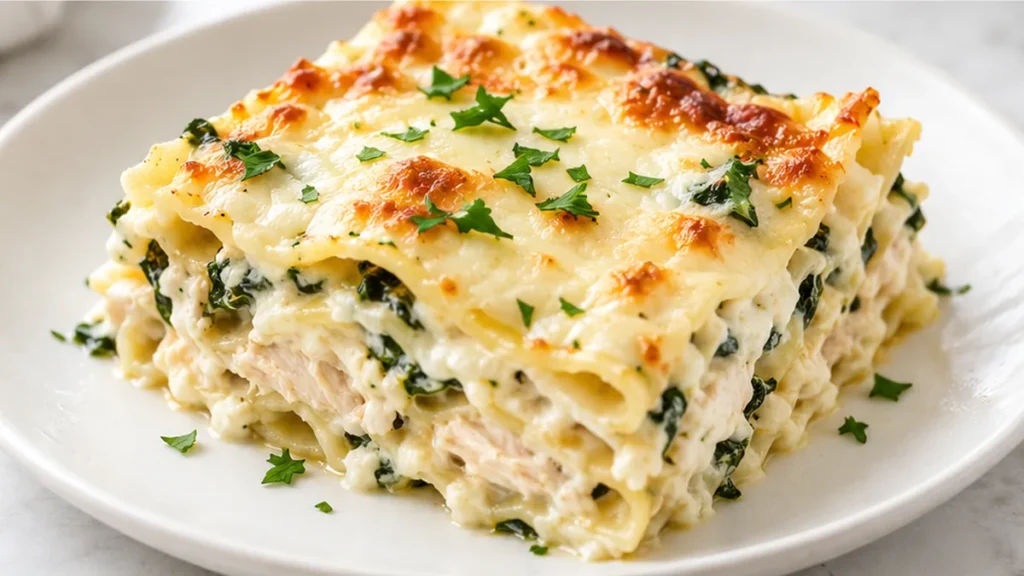
This creamy white chicken lasagna combines layers of chicken, spinach, and a rich white sauce. It’s a straightforward recipe that delivers satisfying flavors.
Key takeaways
- The sauce must be creamy and thick to coat the noodles properly.
- Choose chicken thighs for richer flavor or mix with breasts for balance.
- Layering is key; start and end with sauce to prevent sticking.
- Let the lasagna rest after baking to achieve perfect slices.

Creamy White Chicken Lasagna
Ingredients
Instructions
- In a medium bowl combine the ricotta, mozzarella, parmesan, egg, and black pepper. Mix until well combined and set aside.
- Remove the skin from the rotisserie chicken and shred the meat using two forks.
- Bring a large pot of water to a boil over high heat. Add ½ Tbsp of salt and the lasagna noodles, boiling until tender.
- Preheat the oven to 375°F. In a large skillet, melt the butter over medium heat. Add the diced onion and sauté for 4 minutes until translucent.
The Importance of Sauce Consistency in Creamy White Chicken Lasagna
The sauce is a crucial element in creamy white chicken lasagna, typically made from a blend of béchamel and cheese. A well-executed béchamel sauce requires careful attention to ratios and cooking times. The ideal consistency should be smooth and pourable, yet thick enough to cling to the lasagna layers. The classic ratio for béchamel is 1:1:10, meaning 1 part flour to 1 part butter to 10 parts milk. Cooking the roux for at least 2-3 minutes before adding milk helps eliminate the raw flour taste and contributes to a silky texture.
Choosing the Right Chicken for Flavor
The choice of chicken significantly impacts the overall flavor of the dish. Using boneless, skinless chicken breasts is common, but incorporating thighs can enhance the dish’s richness due to their higher fat content. Cooking the chicken with aromatics like garlic and onions before layering it in the lasagna allows the flavors to meld. A recommended internal cooking temperature for chicken is 75°C (165°F) to ensure it is fully cooked and safe to eat.
Layering Techniques for Optimal Texture
Layering is essential for achieving the perfect texture in creamy white chicken lasagna. Start with a layer of sauce to prevent the noodles from sticking to the bottom of the dish. Alternate layers of noodles, chicken, sauce, and cheese, ensuring that the top layer is generously covered with cheese to create a golden crust when baked. This not only enhances the visual appeal but also adds a delightful crunch. To prevent sogginess, use oven-ready noodles as they absorb moisture during baking, allowing for a better texture.
Common Issues and Their Solutions
One common issue is a watery lasagna, which can occur if the chicken is not properly drained or if the sauce is too thin. To fix this, ensure that the chicken is well-cooked and any excess moisture is removed before layering. Additionally, allowing the lasagna to rest for at least 15 minutes after baking helps the layers set, preventing it from falling apart when served. Another frequent problem is uneven cooking; using a baking dish that is too large can lead to uneven heat distribution. A dish that is appropriately sized ensures even cooking and browning.
How to Make Creamy White Chicken Lasagna Ahead of Time
Preparing creamy white chicken lasagna in advance can save time on busy days. To make it ahead, assemble the lasagna completely but do not bake it. Cover it tightly with plastic wrap or aluminum foil and store it in the refrigerator for up to 24 hours. When ready to bake, remove the cover and bake it directly from the fridge, adding an extra 10-15 minutes to the cooking time to ensure it’s heated through. Alternatively, you can freeze the assembled lasagna for up to three months. Thaw it overnight in the refrigerator before baking, ensuring even cooking and avoiding a soggy texture.
Scaling the Recipe for Larger Gatherings
Scaling your creamy white chicken lasagna recipe is straightforward. To double the recipe, simply multiply each ingredient by two. Use a larger baking dish, such as a 9×13 inch (23×33 cm) or even a half-sheet pan. Keep in mind that the baking time may increase; check for doneness by ensuring the internal temperature reaches at least 75°C (165°F). For smaller gatherings, you can halve the recipe, but it’s often easier to prepare a full batch and enjoy leftovers. Leftover lasagna can be stored in the fridge for up to four days or frozen for longer storage.
Choosing the Right Equipment for Perfect Results
The equipment you use can significantly affect the outcome of your creamy white chicken lasagna. A high-quality, heavy-duty baking dish ensures even heat distribution, which is crucial for thorough cooking. Avoid using glass dishes for broiling or high-heat baking, as they can shatter. If you prefer a crispy top, consider using a broiler-safe pan. Additionally, a food processor can make quick work of chopping vegetables and blending sauces, saving you prep time. Invest in a good set of measuring cups and spoons to ensure accuracy in your ingredients, which is vital for achieving the desired creamy texture.
Pairing Suggestions for Creamy White Chicken Lasagna
Pairing your creamy white chicken lasagna with the right sides and beverages can elevate the meal. A fresh green salad with a light vinaigrette complements the richness of the lasagna, providing a refreshing contrast. Garlic bread is another classic choice, perfect for soaking up any leftover sauce. For beverages, consider a crisp white wine like Pinot Grigio or a light-bodied red such as Chianti, which can balance the creaminess of the dish. Seasonal variations can also enhance the meal; for example, in the fall, adding roasted butternut squash to the lasagna can provide a sweet, nutty flavor that pairs beautifully with a side of sautéed spinach.
Understanding the Role of Dairy in Creamy White Chicken Lasagna
The combination of dairy products in creamy white chicken lasagna is crucial for achieving the desired creaminess and flavor. The balance between heavy cream, ricotta, and mozzarella creates a rich texture that binds the ingredients together. Heavy cream, with its fat content of around 36%, contributes to the luxurious mouthfeel. On the other hand, ricotta, which typically contains about 10-12% fat, adds a lightness and a slightly grainy texture that contrasts beautifully with the smoothness of the cream. To maintain the perfect consistency, it is essential to avoid overcooking the sauce, as this can lead to curdling. The ideal temperature for simmering the sauce is around 85-90°C (185-194°F), which allows the flavors to meld without compromising the dairy’s integrity.
Optimal Ingredient Ratios for a Balanced Flavor Profile
To create a well-rounded flavor in creamy white chicken lasagna, it’s essential to consider the ratios of chicken, cheese, and sauce. A good starting point is using approximately 400 grams of cooked chicken for every 500 grams of cheese and 1 liter of sauce. This ratio ensures that the chicken flavor shines through without being overwhelmed by the cheese. Additionally, incorporating herbs such as basil or thyme can elevate the dish’s profile. For those who prefer a more pronounced herb flavor, increasing the amount to about 10 grams of fresh herbs can provide a fragrant lift. However, be cautious not to exceed this amount, as too much can overpower the delicate balance of flavors.
Adapting to Seasonal Ingredients for Enhanced Taste
Seasonal ingredients can significantly impact the flavor and overall quality of creamy white chicken lasagna. For instance, using fresh, in-season vegetables like spinach or zucchini can add a burst of flavor and nutrition. When incorporating vegetables, aim for about 200-300 grams for each layer. The key is to sauté them lightly before adding them to the lasagna; this not only enhances their flavor but also reduces moisture, preventing the dish from becoming soggy. Additionally, consider the quality of chicken; using organic or free-range chicken can enhance the overall taste, as these birds often have a richer flavor profile compared to conventionally raised options. Adjusting your ingredient choices based on what’s fresh and available can lead to a more vibrant and delicious dish.
Understanding the Impact of Ingredient Quality on Flavor and Texture
The quality of ingredients significantly influences the final taste and texture of creamy white chicken lasagna. Fresh, high-quality chicken breast or thighs can impart a richer flavor compared to frozen or lower-quality meat. Similarly, using fresh herbs rather than dried ones can enhance the aroma and taste. The type of cheese used also plays a critical role; for instance, using a combination of fresh mozzarella and aged Parmesan can create a more complex flavor profile. Furthermore, the freshness of the dairy products, such as ricotta and cream, affects the creaminess and overall mouthfeel of the lasagna. When selecting ingredients, aim for organic or locally sourced options whenever possible, as they tend to have superior taste and nutritional value. Additionally, seasonal vegetables can add unique flavors to the dish, making it more vibrant and enjoyable.
Optimal Serving and Pairing Techniques for Creamy White Chicken Lasagna
When serving creamy white chicken lasagna, presentation and pairing can elevate the dining experience. To serve, allow the lasagna to rest for about 10-15 minutes after baking. This resting period helps the layers set, making it easier to cut and serve without falling apart. For pairing, consider light, crisp salads with acidic dressings to balance the richness of the lasagna. A simple arugula salad with lemon vinaigrette complements the dish well. Additionally, a glass of white wine, such as a Pinot Grigio or Sauvignon Blanc, can enhance the flavors without overpowering them. If you prefer a non-alcoholic option, a sparkling water with a splash of lemon can provide a refreshing contrast. The key is to choose sides and drinks that provide a balance to the creamy texture and rich flavors of the lasagna, creating a harmonious meal.
Pro tips
Pro tip: Best served immediately while hot!
Frequently asked questions
Can I use store-bought sauce for creamy white chicken lasagna?
Yes, store-bought alfredo or béchamel sauces can be used as a shortcut. However, homemade sauce often provides a fresher taste and better texture. If using store-bought, consider enhancing it with fresh herbs or additional cheese.
How do I prevent my lasagna from being watery?
To prevent a watery lasagna, ensure that all ingredients are well-drained, especially the chicken. Use a thicker béchamel sauce and allow the dish to rest after baking to absorb excess moisture.
Can I make creamy white chicken lasagna ahead of time?
Yes, you can assemble the lasagna ahead of time and refrigerate it for up to 24 hours before baking. Just be sure to cover it tightly with foil to prevent drying out. Add a few extra minutes to the baking time if baking straight from the fridge.
What type of cheese works best in this lasagna?
A combination of mozzarella and ricotta cheese is ideal for creamy white chicken lasagna. Mozzarella provides stretch and melt, while ricotta adds creaminess. For extra flavor, consider adding parmesan cheese to the mix.
More from Baked Pasta Recipes →