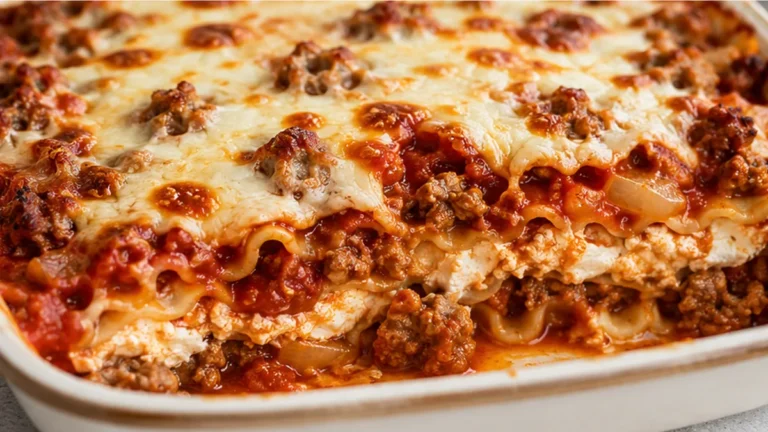
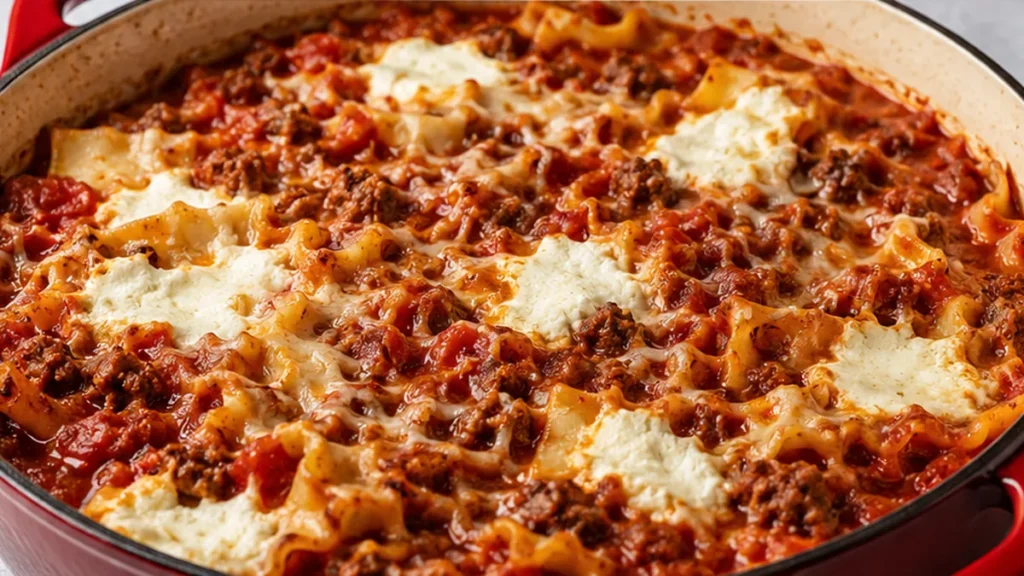
Dutch oven lasagna simplifies a beloved classic, transforming a multi-pot endeavor into an easy one-pot meal. This recipe ensures all the rich, layered flavors you expect from traditional lasagna, but with significantly less cleanup. The beauty of Dutch oven lasagna lies in its ability to build deep, complex flavors by simmering the meat sauce and cooking the noodles directly in the same vessel. Lasagna in a Dutch oven may seem risky for the noodles, but the steam trapped by the heavy lid creates an ideal environment for them to cook. It’s truly a game-changer for busy weeknights, offering all the comfort without the usual fuss. This Dutch oven lasagna is perfect for anyone seeking a hearty, satisfying meal that truly delivers on taste and convenience.
Key takeaways
- Browning meats and aromatics builds foundational flavor.
- Deglazing with wine captures fond for deeper taste.
- Noodles cook directly in the sauce, requiring adequate liquid and even heat.
- Ricotta mixture adds creaminess; egg yolks help bind it.
Dutch Oven Lasagna: One-Pot Comfort!
Ingredients
- 1 pound spicy Italian sausage
- 1 pound ground beef or chicken
- 1 yellow onion, chopped
- 1 cup chopped carrots
- 1/2 cup chopped celery
- 2 tablespoons Italian seasoning
- 1 cup red wine
- 2 cans (28 ounces) crushed tomatoes
- Salt, pepper, and chili flakes, to taste
- 2 cups whole milk ricotta cheese
- 1/4 cup heavy cream or milk
- 2 large egg yolks
- 1/2 cup grated Parmesan cheese
- 9-12 broken lasagna noodles
- 2 cups shredded mozzarella cheese, divided
- 1 cup sliced provolone cheese
- 1/4 cup fresh basil leaves, plus more for garnish
Instructions
- In a Dutch oven set over medium heat, add the sausage, ground beef, onion, carrots, celery, and Italian seasoning. Brown all over for 10 minutes. Add the red wine, deglazing the bottom of the pot. Add the crushed tomatoes and 1 cup water. Season with salt, pepper, and chili flakes.
- Simmer for 10 minutes, until thickened just slightly.
- Meanwhile, in a separate bowl, mix the ricotta cheese, heavy cream or milk, egg yolks, and grated Parmesan cheese. Preheat oven to 375°F.
- To the sauce, add 1/2 cup water. Stir in the broken lasagna noodles. Remove from the heat and add 1 cup shredded mozzarella cheese. Then, gently stir/swirl in the ricotta mixture, not fully mixing.
- Top with the remaining 1 cup shredded mozzarella cheese, provolone cheese, and fresh basil leaves. Cover and bake for 30 minutes or until the noodles are soft. Remove the lid and bake for another 15 minutes.
- Let sit for 10 minutes before serving. Top with more fresh basil, and enjoy!
Notes
The technique that makes it
The magic of this Dutch oven lasagna lies in its ability to build deep flavor and achieve tender pasta without a separate boiling step. Browning the Italian sausage and ground beef initiates the Maillard reaction, creating complex savory notes. Deglazing with red wine captures these browned bits (fond) and adds acidity and depth. The crushed tomatoes and aromatics (onion, carrots, celery) then simmer together, allowing their flavors to meld and the vegetables to soften, forming a rich sauce base. Crucially, the broken lasagna noodles hydrate directly in this simmering sauce. This method relies on sufficient liquid from the tomatoes and wine, and controlled heat to ensure the noodles cook through evenly without becoming mushy or sticking. The ricotta mixture, enriched with egg yolks and Parmesan, provides a creamy, tangy counterpoint that bakes into a luscious layer. The final layering with mozzarella and provolone creates a beautifully browned, bubbly crust.
Troubleshooting
- Problem: Lasagna is watery. Fix: Ensure your crushed tomatoes are not overly watery. If they are, let the sauce simmer uncovered for a bit longer to reduce before adding noodles. Also, make sure the ricotta mixture isn’t too thin; the egg yolks help bind it.
- Problem: Noodles are undercooked or hard. Fix: Ensure there’s enough liquid in the pot for the noodles to absorb. Stir the mixture gently halfway through the simmering time to prevent sticking and ensure even cooking. You may need to add a splash more liquid (water or broth) if it looks too dry.
- Problem: Bottom is scorched, top is undercooked. Fix: This indicates uneven heat distribution. Ensure you are using medium-low heat after the initial browning and simmering. Stirring the bottom layer gently before adding subsequent layers can also help. If using a very hot burner, consider using a heat diffuser.
- Problem: Sauce is bland. Fix: Don’t skimp on the initial browning of the meats and aromatics. Season generously with salt and pepper throughout the cooking process, tasting and adjusting as you go. The red wine also adds a significant flavor boost; ensure it’s reduced slightly to concentrate its taste.
Substitutions
- Spicy Italian sausage: Substitute with sweet Italian sausage or a mix of ground pork and beef. The flavor profile will be milder but still delicious.
- Red wine: Use beef broth or a dark beer (like a stout or porter) for a similar depth of flavor. A splash of balsamic vinegar can add acidity if omitting wine entirely.
- Lasagna noodles: If you don’t have broken noodles, you can use whole lasagna sheets, but you’ll need to boil them first according to package directions until al dente. This deviates from the one-pot method but is a viable alternative.
- Ricotta cheese: Cottage cheese (full-fat, well-drained) can be used as a substitute, though the texture will be slightly different and less creamy.
Pro tips
- For the ultimate Dutch oven lasagna, brown your meats well to develop a deep, rich fond at the bottom of the pot before deglazing with wine. This adds a crucial layer of flavor to your sauce.
- If your sauce seems too thick before adding the noodles, add a splash more water or broth to ensure the noodles have enough liquid to cook through evenly. The noodles will absorb a lot of liquid.
- When swirling in the ricotta mixture, avoid overmixing. You want distinct pockets of creamy cheese throughout the lasagna, which adds a wonderful textural contrast. Gently fold it in rather than stirring vigorously.
- For food safety, ensure ground meat reaches an internal temperature of 160°F (71°C). While the lasagna bakes, this temperature will be easily achieved.
This Dutch oven lasagna proves that convenience doesn’t mean sacrificing flavor. Give it a try for your next family dinner and discover a new favorite one-pot meal. Share your variations and tips in the comments!
Frequently asked questions
Can I make this ahead of time?
Yes, you can assemble the lasagna in the Dutch oven up to a day in advance. Store it covered in the refrigerator. You may need to add a little extra liquid and increase the cooking time slightly when reheating to ensure the noodles are fully cooked and the dish is heated through.
What kind of Dutch oven is best for this recipe?
A heavy-bottomed Dutch oven, typically made of enameled cast iron, is ideal. Its excellent heat retention and distribution ensure even cooking and prevent scorching, which is crucial for the noodles cooking directly in the sauce.
How do I prevent the noodles from sticking to the bottom?
Ensure there is sufficient liquid from the tomatoes and wine to cover the noodles adequately. Stirring the mixture gently about halfway through the simmering process helps prevent sticking and ensures the noodles cook evenly.
Can I use no-boil lasagna noodles?
Yes, the recipe specifically calls for broken lasagna noodles, which function similarly to no-boil noodles. They are designed to absorb liquid and cook directly in the sauce, eliminating the need for pre-boiling.
More from Baked Pasta Recipes →