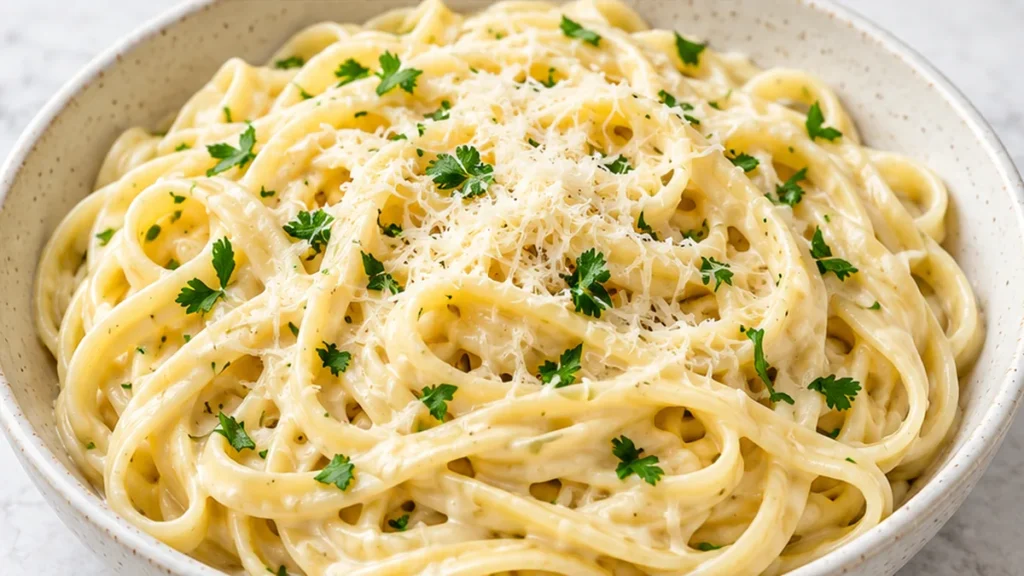
You can create creamy dreamy fettuccine alfredo in just 15 minutes. The key is using starchy pasta water to achieve a rich, smooth sauce without heavy cream.
Key takeaways
- Emulsifying the sauce properly is key for a creamy texture.
- Gradually add cheese to prevent clumping.
- Reserve enough pasta water to adjust sauce consistency.
- Using high-quality ingredients enhances flavor significantly.

Creamy Dreamy Fettuccine Alfredo in 15 Minutes!
Ingredients
- 1 lb fettuccine pasta
- 1 stick salted butter
- 1 tsp salt
- 1 tsp black pepper (ground)
- 2 garlic cloves (finely minced)
- ¾ cup pasta water (reserved from the fettuccine)
- 1 ¼ cup Parmesan cheese (grated & divided)
- ½ tbsp fresh parsley (minced)
Instructions
- Put salted water on to boil and boil fettuccine noodles for 10-12 minutes until al dente.
- Meanwhile, you can melt butter in a large sauté pan with salt, pepper, and finely minced garlic. Cook on medium low heat for 2-3 minutes until fragrant.
- Once your pasta is cooked, strain it, but reserve at least 3/4 cup of the pasta water! This is an important step! I like to keep my cooked pasta off to the side in the now-empty boiling pot with a clean, damp kitchen towel over the top.
- Add ¼ cup pasta water to the garlic and butter mixture and whisk to combine. Let it bubble and thicken for 3-4 minutes.
Video
Notes
Understanding the Emulsion in Fettuccine Alfredo
Fettuccine Alfredo relies on a stable emulsion of fat and liquid to create its signature creamy texture. The key to achieving this lies in the proper incorporation of butter and reserved pasta water. The starch released from the pasta during cooking acts as a natural thickener, helping to bind the sauce. Aim for a pasta water temperature around 70°C (158°F) when adding it to the sauce to ensure a smooth emulsion.
Common Mistakes and How to Avoid Them
One common mistake is adding the cheese too quickly, which can lead to clumping. To avoid this, incorporate the cheese gradually while stirring continuously. Another issue is not reserving enough pasta water; if the sauce is too thick, it won’t coat the pasta properly. Always reserve at least ¾ cup of pasta water before draining. Lastly, using low-quality cheese can affect the flavor and texture; opt for freshly grated Parmesan for the best results.
Ingredient Swaps and Their Effects
While traditional Fettuccine Alfredo uses Parmesan cheese, you can substitute Pecorino Romano for a sharper flavor. If you’re looking for a lighter sauce, consider replacing half of the butter with olive oil, but this will alter the creaminess. For a vegan version, use cashew cream and nutritional yeast instead of cheese and butter, resulting in a different texture but a rich flavor profile. Each swap brings its own unique twist to the dish.
Unique Characteristics of Fettuccine Alfredo
This dish is notably different from other creamy pasta sauces due to its simplicity and reliance on just a few ingredients. Unlike carbonara, which includes eggs, or a cream sauce that may use flour as a thickener, Fettuccine Alfredo is purely based on butter, cheese, and pasta water. This minimalist approach highlights the quality of the ingredients, making it essential to use high-quality Parmesan and fresh pasta for the best flavor and texture.
How to Scale Your Creamy Dreamy Fettuccine Alfredo for Larger Gatherings
Scaling a recipe can be tricky, especially when it comes to achieving the same creamy texture and flavor balance. When doubling or tripling the recipe, maintain the ratio of ingredients: for every pound of fettuccine, use one stick of butter and 1¼ cups of Parmesan cheese. Adjust the garlic and seasoning to taste, but be cautious with salt as it can intensify with larger batches. Monitor the pasta water; you may need slightly more to achieve the desired creaminess. Remember, cooking time for pasta remains roughly the same, but the sauce may require extra attention to ensure even heating and emulsification.
Understanding the Role of Ingredient Quality in Fettuccine Alfredo
The quality of your ingredients plays a crucial role in the final flavor of your fettuccine Alfredo. Fresh, high-quality Parmesan cheese will yield a richer, creamier sauce compared to pre-grated varieties, which often contain anti-caking agents that can affect melt quality. Opt for fresh garlic rather than jarred for a more robust flavor. Additionally, using good-quality salted butter enhances the overall taste. Seasonal changes can also influence ingredient quality; fresh herbs like parsley should be vibrant and fragrant, while pasta should be cooked al dente to hold up against the creamy sauce.
Equipment Considerations for Perfect Fettuccine Alfredo
The equipment you use can significantly affect the outcome of your fettuccine Alfredo. A large, heavy-bottomed skillet or sauté pan is ideal for evenly distributing heat, preventing hot spots that can scorch the sauce. A non-stick surface can help with easy stirring and cleanup, but stainless steel pans can provide a better sear for the garlic. Ensure you have a reliable pasta pot with a colander for draining, as the reserved pasta water is essential for achieving the desired consistency in the sauce. Using a whisk can help to emulsify the sauce effectively, creating a smooth finish.
Serving Suggestions and Pairings for Fettuccine Alfredo
Fettuccine Alfredo is a versatile dish that pairs well with various accompaniments. For a classic pairing, serve it with grilled chicken or sautéed shrimp for added protein. A simple side salad with a light vinaigrette can balance the richness of the pasta. Consider incorporating seasonal vegetables like asparagus or peas for color and freshness. For a more indulgent experience, a sprinkle of freshly cracked black pepper or a drizzle of truffle oil can elevate the dish. Finally, a glass of white wine, such as Chardonnay, complements the creamy flavors beautifully.
Understanding the Impact of Fresh vs. Dried Fettuccine on Flavor and Texture
The choice between fresh and dried fettuccine significantly affects the overall flavor and texture of your creamy dreamy fettuccine alfredo. Fresh fettuccine, typically made from eggs and flour, has a rich flavor and a tender, delicate texture that absorbs the sauce beautifully. It cooks faster than dried pasta, usually requiring only 2-3 minutes in boiling water. In contrast, dried fettuccine, made from durum wheat semolina, offers a firmer bite and a more robust flavor, which can stand up to the richness of the Alfredo sauce. However, it generally takes 8-10 minutes to achieve the perfect al dente texture. When making this dish, consider the cooking time and how each type of pasta will interact with the sauce. For the best results, use fresh pasta if available, but ensure to adjust your cooking time accordingly to prevent overcooking.
Batch Scaling: Adjusting Ingredients for Larger Gatherings
Scaling your creamy dreamy fettuccine alfredo recipe for larger gatherings requires careful adjustments to maintain the sauce’s consistency and flavor. A common ratio for scaling is to increase the pasta by 50% for every additional 4 servings. For instance, if you start with 1 lb. of fettuccine for 4 servings, use 1.5 lbs. for 6 servings. When it comes to the sauce, it’s essential to maintain a balance between butter, cheese, and pasta water. For every additional 0.5 lb. of pasta, increase the butter by 2 tablespoons and the Parmesan cheese by 1/4 cup. This ensures the sauce remains creamy and coats the pasta evenly. Remember to reserve more pasta water as you scale up, as it helps achieve the desired sauce consistency. Always taste and adjust seasoning as needed, since larger batches can sometimes dilute flavor.
Make-Ahead Strategies for Creamy Dreamy Fettuccine Alfredo
Preparing creamy dreamy fettuccine alfredo in advance can save time without compromising flavor. To make this dish ahead of time, cook the fettuccine until just under al dente, then shock it in ice water to stop the cooking process. Toss the pasta with a little olive oil to prevent sticking. For the sauce, prepare it as directed but store it separately from the pasta. When ready to serve, reheat the sauce gently, adding reserved pasta water to restore its creamy texture. Combine with the pasta and heat through. While the dish can be stored in the refrigerator for up to three days, note that the texture may change slightly upon reheating. For optimal flavor and creaminess, it’s best enjoyed fresh, but these strategies can help you prepare in advance while ensuring a delicious result.
How to Achieve the Perfect Creamy Texture in Fettuccine Alfredo
The secret to a successful creamy dreamy fettuccine alfredo lies in achieving the right emulsion between the fat and liquid. Start by using a combination of butter and reserved pasta water to create a rich sauce. The key is to gradually add the pasta water to the melted butter while stirring vigorously to create a smooth, creamy consistency. Aim for a ratio of about ¾ cup of pasta water to 1 stick of butter, adjusting as necessary based on the thickness of your sauce. The heat should be kept low to prevent the sauce from breaking; ideally, it should be around 60-70°C (140-160°F). This gentle heat allows the cheese to melt without clumping, ensuring a velvety finish.
Additionally, freshly grated Parmesan cheese is crucial for achieving that creamy texture. Pre-grated cheese often contains anti-caking agents that can affect the sauce’s smoothness. Use a microplane for grating to ensure fine shavings that melt easily into the sauce. Incorporating the cheese gradually while stirring helps to maintain the emulsion and prevents separation.
Understanding the Role of Seasoning in Balancing Flavor
Seasoning is vital in fettuccine alfredo, as it enhances the overall flavor profile of the dish. The use of salt is essential not only for taste but also for enhancing the natural flavors of the butter and cheese. When cooking the fettuccine, ensure the water is salted adequately, typically around 1 tablespoon per 4 liters of water. This step ensures that the pasta absorbs flavor as it cooks.
Black pepper adds a subtle heat and depth to the dish. Freshly ground pepper is recommended, as it provides a more robust flavor compared to pre-ground varieties. The pepper should be added to taste, but approximately 1 teaspoon is a good starting point. For those looking to add a twist, consider incorporating nutmeg, which can complement the creamy sauce beautifully. Just a pinch can elevate the dish while remaining subtle enough not to overpower the classic flavors.
Pro tips
– When making fettuccine alfredo, ensure your pasta water is well-salted; it’s the only chance to season the pasta from within. – If the sauce seems too thick, gradually add more reserved pasta water a tablespoon at a time until it reaches your desired consistency. – For an extra layer of flavor, try toasting the garlic lightly in the butter before adding other ingredients. – I always recommend using a microplane for the Parmesan cheese; it melts more smoothly and incorporates better into the sauce.
This simple yet elegant fettuccine alfredo proves that incredible flavor doesn’t require a lengthy ingredient list or complex techniques. Enjoy this timeless classic!
Frequently asked questions
Can I use a different type of pasta for this recipe?
While fettuccine is traditional, you can use other pasta shapes like linguine or tagliatelle. However, the cooking time may vary, and the sauce may cling differently.
How can I make this dish healthier?
To make a lighter version, reduce the amount of butter and replace it with olive oil. You can also use whole grain or legume-based pasta for added fiber and nutrients.
What is the best way to store leftovers?
Store leftovers in an airtight container in the refrigerator for up to 3 days. Reheat gently on the stove, adding a splash of pasta water to restore creaminess.
Can I make this dish vegan?
Yes, you can create a vegan version by using cashew cream and nutritional yeast instead of butter and cheese. The flavor will differ but can still be delicious.
More from Creamy Pasta Recipes →