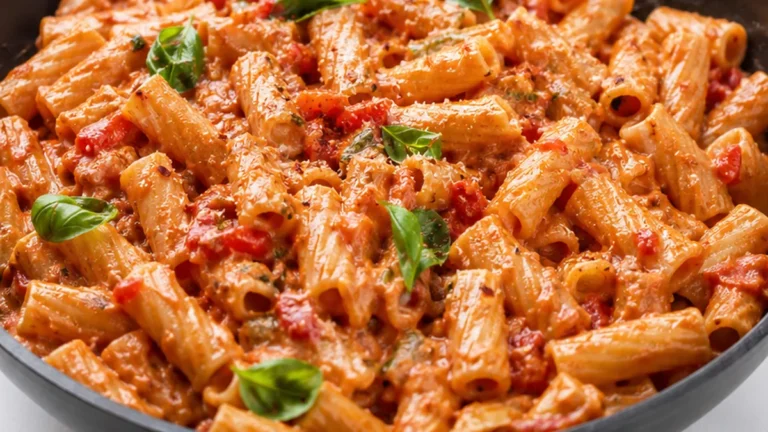
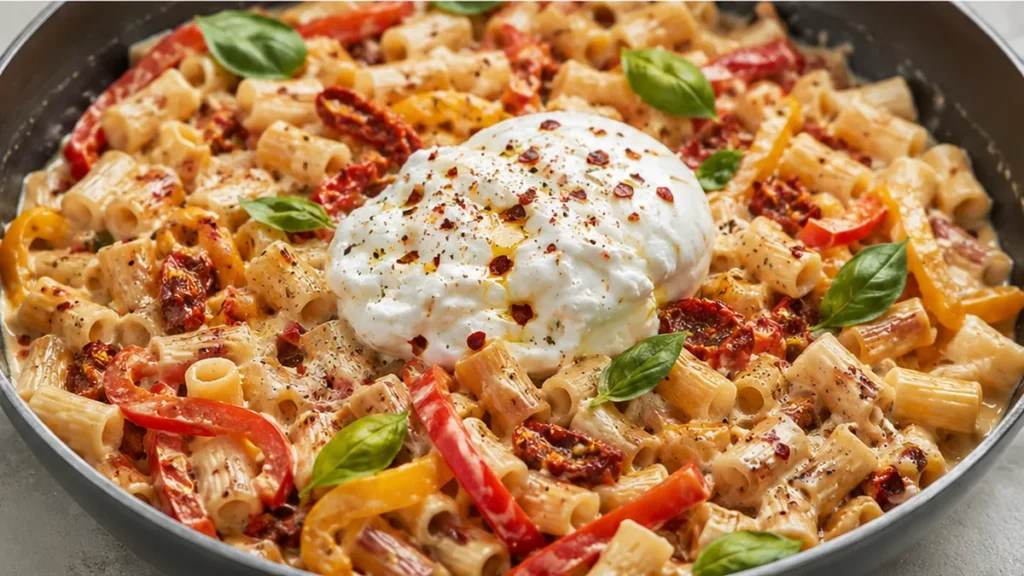
The secret to a truly effortless yet decadent burrata pasta lies in the one-pot method, ensuring every strand of pasta is coated in a rich, flavorful sauce with minimal cleanup. This burrata pasta recipe combines the bright tang of sun-dried tomatoes with the luxurious creaminess of fresh burrata. Using the oil from the sun-dried tomatoes as the base infuses a deeper flavor right from the start, making this dish special without extra effort. It’s a perfect weeknight meal that feels incredibly indulgent.
Key takeaways
- The one-pot method relies on pasta starch to create a creamy sauce.
- Control heat when adding burrata to prevent separation.
- Seasoning throughout the cooking process is key for flavor development.
- Finishing with red wine vinegar brightens the overall taste.

Creamy One-Pot Burrata Pasta
Ingredients
- 1 (8 ounce) jar oil-packed sun-dried tomatoes
- 2 small bell peppers, thinly sliced
- 2 small shallots, sliced
- 4 cloves garlic, chopped
- 1 tablespoon dried basil
- 1 teaspoon dried oregano
- 1 teaspoon dried dill
- chili flakes
- kosher salt and black pepper
- 1 pound short cut pasta
- 4 cups water
- 1 (8 ounce) ball burrata cheese
- 1 cup fresh spinach
- 1 tablespoon red wine vinegar
- fresh basil for garnish
Instructions
- Drain the oil from the sun-dried tomato jar into a large pot or skillet with sides. Set the tomatoes aside.
- Set the pot over medium-high heat. Add the bell peppers, shallots, garlic, basil, oregano, dill, chili flakes, salt, and pepper. Cook until the peppers deeply soften and the garlic is fragrant, about 5 minutes. Add 4 cups water. Bring to a boil, add the pasta, and cook, stirring often, until the pasta is al dente, about 7 minutes.
- Stir in the red wine vinegar, fresh spinach, and sun-dried tomatoes. Break the burrata over the pasta. Remove from the heat and let sit for 2-3 minutes, then gently stir until the cheese is melty.
- Serve immediately topped with lots of fresh basil. Enjoy!
Notes
The Technique That Makes It: One-Pot Emulsification
The magic of this creamy burrata pasta lies in the one-pot cooking method, which leverages the starches released from the pasta to create a luscious, emulsified sauce. As the pasta cooks in the water, it releases amylose, a type of starch. This starch, when agitated and combined with the fats from the oil-packed sun-dried tomatoes and the eventual melting burrata, forms a stable emulsion. The key is to manage the liquid and heat correctly. Starting with the aromatics (shallots, garlic) and sun-dried tomatoes in the pot allows their flavors to meld and the oil to infuse the base. Adding the water and pasta together ensures that the starch release happens directly in the sauce base. The final addition of burrata and spinach off the heat is crucial. The residual heat is enough to melt the burrata into a creamy sauce and wilt the spinach without overcooking them, preventing a greasy or broken sauce. Stirring gently after adding the burrata helps to fully incorporate it into the starchy liquid, creating that signature creamy texture.
Troubleshooting
- Problem: Sauce is too thin or watery. Fix: Ensure you’ve allowed the pasta to cook fully and release its starches. If still thin after adding the burrata, simmer gently for another minute or two, stirring constantly, to further reduce the liquid and thicken the sauce. You can also stir in a teaspoon of cornstarch slurry (1 tsp cornstarch mixed with 1 tbsp cold water) and simmer until thickened.
- Problem: Sauce is greasy or separated. Fix: This usually happens if the burrata is added over too high heat or stirred too vigorously. Remove the pot from the heat immediately when adding the burrata. Stir gently until just combined. The oil from the sun-dried tomatoes can also contribute; ensure you’re not adding excessive oil from the jar.
- Problem: Pasta is gummy or overcooked. Fix: Use the recommended amount of water and avoid stirring too frequently once the pasta is added, as this can break the pasta and release too much starch, leading to gumminess. Cook until al dente, as it will continue to soften slightly from residual heat.
- Problem: Flavors are bland. Fix: Ensure you’ve seasoned adequately with kosher salt and black pepper throughout the cooking process, especially after the water has reduced. The chili flakes, basil, oregano, and dill are crucial; don’t skimp on them. A splash of red wine vinegar at the end brightens all the flavors.
Substitutions
- Burrata Cheese: Substitute with fresh mozzarella (though it won’t be as creamy) or a high-quality ricotta cheese stirred in at the end for a different creamy texture. The result will be less rich and decadent than with burrata.
- Sun-Dried Tomatoes: Use roasted red peppers (jarred or homemade) for a similar sweet pepper flavor, though the texture and concentrated flavor will differ. You could also use fresh tomatoes, but they will require longer cooking to break down and release flavor.
- Short Cut Pasta: Penne, rigatoni, or fusilli work well as they hold sauce effectively. Avoid long pasta like spaghetti, as it’s harder to manage in a one-pot method and may not cook evenly. The shape impacts sauce adherence.
- Fresh Spinach: Arugula can be used for a peppery bite, or kale (massaged with a little oil and salt) for a heartier green. These substitutions will alter the final flavor profile and texture.
Pro tips
- For the creamiest sauce, ensure you stir the pasta frequently during cooking to release starches that thicken the sauce. If the sauce seems too thick, add a splash of reserved pasta water.
- To achieve perfectly melty burrata, break it over the hot pasta and let it rest off the heat for a few minutes before gently stirring. This allows the cheese to soften beautifully without fully dissolving.
- This burrata pasta stores well in the refrigerator for up to 3 days. Reheat gently on the stovetop with a splash of water or broth to loosen the sauce and maintain creaminess.
This one-pot burrata pasta is a simple yet elegant dish, perfect for satisfying your comfort food cravings. Experiment with adding different vegetables or a pinch of red pepper flakes for an extra kick. Enjoy this delightful meal!
Frequently asked questions
Can I make this pasta ahead of time?
This dish is best enjoyed immediately as the creamy sauce can thicken and the texture of the burrata may change upon reheating. If you must make it ahead, store components separately and combine just before serving, or reheat very gently on the stovetop with a splash of water or broth.
What kind of pasta is best for this recipe?
Short-cut pasta shapes like penne, rigatoni, or fusilli are ideal because their nooks and crannies capture the creamy sauce beautifully. They also tend to cook well in a one-pot method, releasing starches effectively for sauce emulsification.
My sauce looks oily, what went wrong?
This can happen if too much oil from the sun-dried tomato jar is added, or if the burrata is overheated. Ensure you drain the tomatoes well and add the burrata off the heat, stirring gently until just melted into the sauce.
Can I add other vegetables to this dish?
Yes, you can add other quick-cooking vegetables like mushrooms or zucchini, sliced thinly. Add them with the bell peppers and shallots to ensure they cook through, or stir in ingredients like peas or corn in the last few minutes of pasta cooking.
More from Creamy Pasta Recipes →