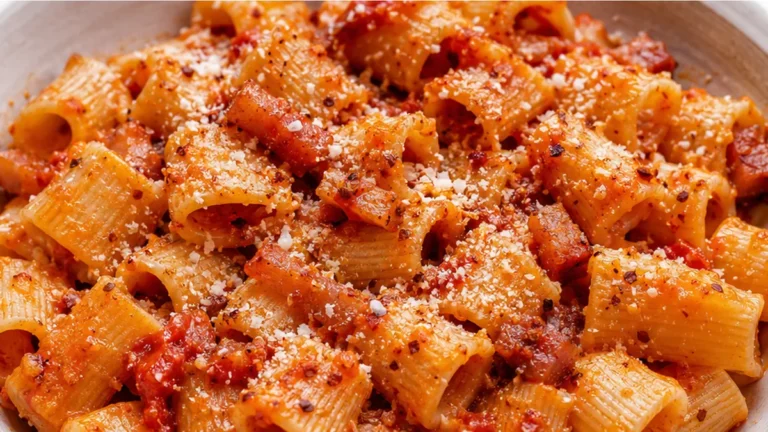
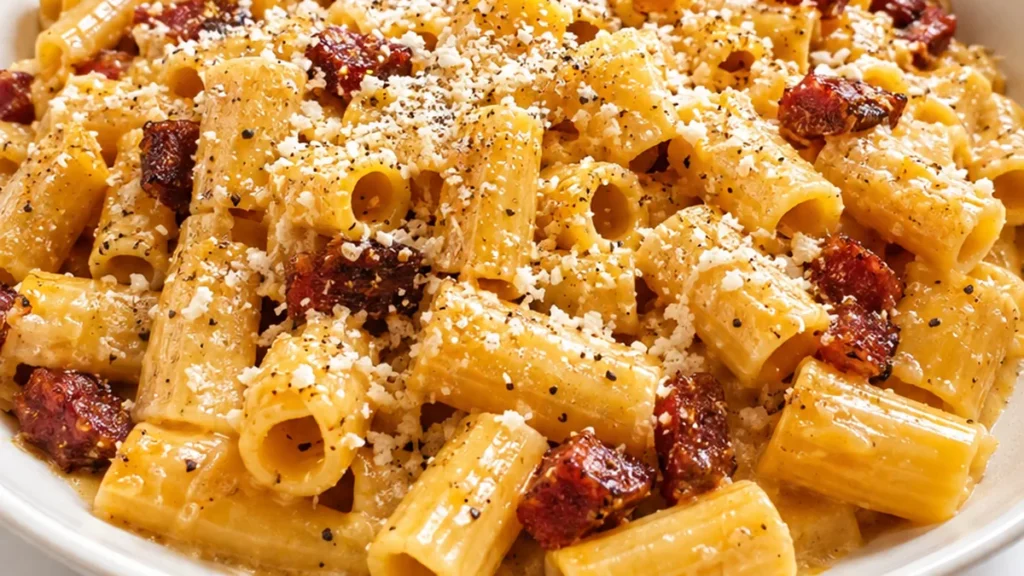
Pasta Carbonara is more than just a dish; it’s an art form, a testament to how a few simple, high-quality ingredients can create something extraordinary. The magic lies in the perfect emulsion of eggs, Pecorino Romano, guanciale fat, and starchy pasta water, creating a sauce so silken it coats every strand. Mastering this classic Roman pasta dish means understanding the delicate balance of heat and timing to achieve that signature creamy texture without scrambling the eggs. This authentic Pasta Carbonara recipe focuses on traditional techniques, using guanciale for its unique flavor and rendered fat, Pecorino Romano for its sharp, salty bite, and whole eggs plus yolks for richness. Forget cream; the true Carbonara is made with soul and technique. Follow these steps closely, and you’ll unlock a level of flavor and satisfaction that will redefine your pasta night.
Key takeaways
- Keep the pan between 65 and 70 C when the eggs go in, tempering the yolks with hot pasta water so the sauce turns custardy instead of scrambled
- Guanciale renders more fat than pancetta and carries a spiced, unctuous flavor, so render it slowly from a cold pan and save every drop
- Starchy pasta water is the emulsifier that binds fat and egg into a glossy sauce, so cook the mezze rigatoni in minimal water and reserve a cup
- Serve the instant it coats the spoon, because the custard keeps setting in a warm bowl and there is no cream to fall back on
Ingredients for pasta carbonara
- 12 ounces (340 grams) uncooked pasta (mezze rigatoni)
- 2 large eggs
- 4 large egg yolks
- 2 ounces (60 g) freshly-grated Pecorino Romano cheese
- fine sea salt
- freshly-cracked black pepper
- 8 ounces (225 g) guanciale (diced into ½-inch cubes)
How to make pasta carbonara
- Cook the guanciale. Heat a large sauté pan over medium-low heat. Add the guanciale and cook, stirring occasionally, until golden brown and crispy, about 10 minutes. Transfer the guanciale to a bowl, leaving the rendered fat in the pan.
- Bloom the black pepper. Add 1 teaspoon freshly-ground black pepper to the hot grease in the pan, then turn off the heat.
- Boil the pasta. Meanwhile, bring a large pot of lightly-salted water to a boil. Add the pasta and cook for 8 minutes, stirring occasionally, until al dente.
- Mix the sauce. Whisk the eggs, egg yolks, and Pecorino Romano cheese in a large heatproof bowl. Gradually whisk in the rendered guanciale fat. Remove ½ cup of starchy pasta water, then gradually whisk it into the egg mixture.
- Combine pasta and sauce. Transfer the cooked pasta directly into the bowl with the egg mixture using tongs or a spider strainer. Add the crispy guanciale. Toss continuously until the egg sauce coats the pasta.
- Finish with steam. Place the bowl over the pot of still-hot pasta water (like a double boiler). Toss constantly until the sauce slightly thickens from the steam. Immediately remove from heat and serve.
- Serve warm, garnished with extra Pecorino Romano and a twist of black pepper.
Why guanciale beats pancetta in this exact carbonara ratio
Guanciale is the single ingredient that separates this pasta carbonara from a bacon-and-egg imitation, and the reason is fat. Guanciale is cured pork jowl, and America’s Test Kitchen confirms it carries a higher ratio of fat to lean meat than pancetta, which comes from the belly. That extra fat matters because the 8 ounces called for here render roughly 3 to 4 tablespoons of liquid fat, and that rendered fat is the flavor base and part of the emulsion. Pancetta gives a cleaner, purer pork note but leaves you a drier pan. The half-inch cubes are deliberate: small enough to crisp on every face, large enough to stay chewy at the center rather than shattering into dust.
Guanciale is also cured for months with rosemary, sage, and often clove, so it brings a warm spiced edge that renders straight into the sauce. Render it from a cold pan over medium heat, not high, so the fat leaves slowly and the exterior turns amber and crisp before the lean streaks scorch. Pull the cubes when they stop sizzling loudly, around the 8 to 10 minute mark, and keep every drop of fat in the pan.
The 65 to 70 C window where your egg sauce lives or curdles
The egg yolks in carbonara set into a curd between 65 and 70 degrees Celsius (149 to 158 degrees Fahrenheit), the coagulation range the American Egg Board publishes for yolk protein, and that narrow band is why sauces scramble. Whole egg protein starts firming even earlier, at 62.2 C (144 F). Your goal is to push the two eggs, four yolks, and Pecorino Romano just to the edge of that window so they thicken into custard, then stop before they seize into scrambled clumps. A dry skillet floor runs well past 100 C, so egg poured onto it sets instantly.
Two moves keep you safe. First, temper: whisk a splash of hot, starchy pasta water into the egg-and-cheese mixture before it meets the pork, raising the eggs gently rather than shocking them. Second, finish off direct heat. Toss the drained pasta with the rendered guanciale and fat, let the pan cool for fifteen seconds, then stir the egg mixture through, adding pasta water a tablespoon at a time until the sauce coats a spoon and leaves a clean trail. Residual pan heat does the cooking. If you want a near-foolproof route, Serious Eats popularized nesting the mixing bowl over the still-simmering pasta pot as a double boiler, since steam heat is gentler than a flame.
Pasta water is the emulsifier, and mezze rigatoni is why it works here
Starch dissolved in the pasta water is what binds fat and egg into one glossy sauce instead of a greasy puddle with cheese lumps, and this recipe’s mezze rigatoni loads that water more than most shapes. Extruded tube pasta sheds a lot of surface starch, and its ridges and hollow center trap sauce that a smooth strand would let slide off. To concentrate the starch, cook the 12 ounces in only enough water to cover, salted to about the level of a good soup rather than seawater, since Pecorino Romano and guanciale are already salty. Reserve at least a full cup before draining.
The starch works because its molecules coat the fat droplets and hold them suspended in the water phase, the same physics behind a smooth cacio e pepe. Add the water gradually while tossing; too much at once thins the custard and you lose the cling. If your sauce breaks and goes oily, it is usually too hot and too dry, so pull it off heat and beat in a tablespoon of the reserved water to bring it back. For more on this technique across Roman pastas, see our guide to building a glossy emulsified pasta sauce.
Four carbonara failures and the exact fix for each
Most carbonara disasters trace to one of four specific causes, and each has a direct fix. The failures below cover the mistakes that ruin this egg-and-guanciale sauce most often, from scrambled curds to a puddle that never thickens. Match your symptom to its cause rather than guessing.
Scrambled, grainy sauce: the pan was above 70 C when the eggs went in. Fix: cool the pan 15 to 20 seconds off heat first, temper the eggs with hot pasta water, and stir constantly.
Thin, watery sauce that never coats: too much pasta water or not enough yolk contact. Fix: this recipe’s four yolks plus two whole eggs is already yolk-heavy for body, so add water a tablespoon at a time and keep tossing until it tightens.
Clumpy cheese that won’t melt in: Pecorino Romano hit direct heat or was pre-grated with anti-caking agents. Fix: grate the 2 ounces fresh and fine, and whisk it into the eggs off heat.
Greasy, broken sauce: guanciale fat separated because there was no starch to hold it. Fix: beat in reserved starchy water off the heat to re-emulsify.
Smart swaps and what each one costs you
Every substitution in carbonara trades one quality for another, so choose by what you can accept losing. This dish is unusually swap-sensitive because it has only six components and no sauce to hide behind. The trades below are the ones worth making when the authentic ingredient is out of reach.
Pancetta for guanciale: easier to find in American markets and gives a purer pork flavor, but renders less fat and loses the spiced, unctuous edge. Keep the half-inch dice.
Parmigiano-Reggiano for part of the Pecorino Romano: a 50/50 blend, as many Roman cooks and Serious Eats favor, softens the sheep’s-milk sharpness, but you sacrifice the tangy bite that defines Roman carbonara.
Spaghetti or penne for mezze rigatoni: both work, but a long strand acts like a mop for the sauce while smooth penne grips less; ridged tubes stay closest to this recipe’s texture.
Extra whole egg for a yolk: spares you leftover whites but yields a looser, wetter sauce, since yolks build the tight, custardy body this ratio is built around.
The one habit that separates this dish from every other pasta
Carbonara is the rare pasta you must serve the instant it is done, because the sauce keeps cooking in the bowl. Unlike a tomato ragu or a baked pasta that improves as it rests, this custard sits inside the 65 to 70 C coagulation window even after it leaves the heat, so residual warmth from the pasta and bowl will push a perfect silky sauce into a firm, grainy one within a minute or two. Plate it into warmed bowls the moment it coats the spoon and bring it to the table immediately.
That fragility is also why there is no cream, no garlic, and no onion in an authentic version. The creaminess is an illusion built entirely from egg yolk, rendered guanciale fat, Pecorino Romano, and starchy water. Finish each bowl with a heavy crack of black pepper, a spice so central to Roman cooking it was once demanded as ransom, and a last shower of cheese. Compare its structure to the other Roman classics in our breakdown of the four classic Roman pastas.
Reheating carbonara without scrambling yesterday’s sauce
Reheat carbonara over gentle heat with a splash of liquid, never in a microwave on full power, because the egg-and-Pecorino emulsion sets permanently above roughly 70C (158F) and separates into curds and grease once it has already cooled and gelled. The safest method: put the leftover mezze rigatoni in a nonstick skillet with 2 to 3 tablespoons of water or milk, set the burner to low, and toss constantly for 2 to 3 minutes until the sauce loosens and coats again. Aim for a target below 65C (149F).
Storage matters as much as the reheat. Sealed in an airtight container, this dish keeps 2 to 3 days in the fridge at or below 4C (40F), and the guanciale softens as it sits, losing the crisp edge it had at the table. Freezing is a poor choice here; the emulsion breaks on thaw and the pasta turns mealy. Chef Luca Marchiori and outlets such as Serious Eats both note that carbonara is built to be eaten immediately, so cook only what you will serve. If you must prep ahead, render the guanciale and grate the 2 ounces of Pecorino Romano in advance, then keep the raw eggs and yolks separate until the pasta is draining. Bring refrigerated components to room temperature before the final toss so the residual heat does not shock cold egg into scrambling.
Doubling the eggs and guanciale for a table of eight
Scaling carbonara is not linear: keep the ratio of 2 whole eggs plus 4 yolks to 12 ounces of pasta, but cook in two batches rather than one giant pan once you pass 1.5 pounds of dry pasta. A single 12-inch skillet holds enough residual heat to emulsify one portion; overload it and the sauce cools too far before it thickens, or overheats in the crowded center and curdles at the edges. For eight servings you want roughly 24 ounces (680 g) pasta, 4 whole eggs, 8 yolks, 4 ounces (120 g) Pecorino Romano, and a full pound of guanciale.
Render the guanciale in stages so each cube gets contact with the pan and browns evenly through the Maillard reaction rather than steaming. Reserve more starchy pasta water than you think, close to a full cup per batch, because larger volumes of egg need more warm liquid to reach that glossy, pourable consistency. Work off the heat: pull the pan, add the beaten egg mixture, and toss hard for 60 to 90 seconds, adding water a splash at a time. The J. Kenji Lopez-Alt approach of tempering the eggs with a ladle of hot water before they hit the pasta pays off most when scaling, since a bigger egg mass is slower to warm and more prone to sitting in a cold clump. Serve each batch as it finishes; carbonara does not hold on a warming tray, and a crowd is better fed in two quick waves than one lukewarm bowl.
Pro tips
- Use high-quality guanciale if possible; its rendered fat is key to the sauce’s flavor.
- Ensure your Pecorino Romano is finely grated for smooth integration into the sauce.
- Do NOT scramble the eggs: the sauce thickens from residual heat and steam, not direct cooking.
- Always reserve at least ½ cup of starchy pasta water; it’s essential for emulsifying the sauce.
Mastering this authentic Pasta Carbonara is a rewarding culinary achievement. Enjoy this taste of Rome!
More from Baked Pasta Recipes →