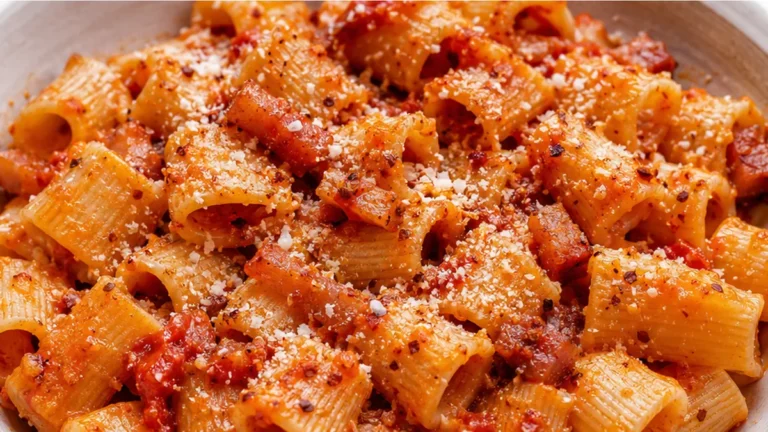
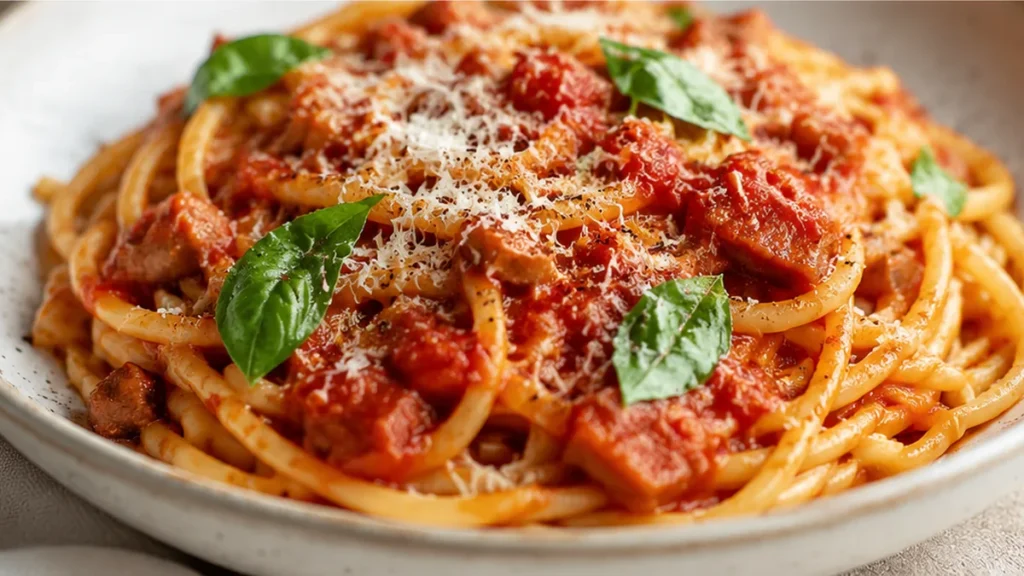
Bucatini Amatriciana is a classic Roman pasta dish. This bucatini amatriciana recipe focuses on authentic ingredients like guanciale and Pecorino Romano for a true taste of Italy.
Key takeaways
- Render guanciale slowly to create a flavorful fat base.
- Use starchy pasta water to emulsify the sauce for a glossy finish.
- Balance the richness of the pork with the acidity of the tomatoes.
- Don’t overcook the bucatini; it should have a slight chew.
Bucatini Amatriciana: Your New Favorite Pasta!
Ingredients
- 1 pound bucatini pasta
- 1/4 cup chopped guanciale, pancetta, or chopped unsmoked bacon
- 2 sprigs fresh rosemary
- 1/2 teaspoon crushed red pepper
- 3 cans (14 ounce) San Marzano cherry or regular tomatoes
- freshly cracked black pepper
- 1/4 cup freshly grated Pecorino Romano
- fresh basil, for serving (optional)
Instructions
- Bring a large pot of salted water to a boil and cook pasta according to package directions until al dente. Just before draining, reserve 1 cup of the pasta cooking water. Drain.
- Heat a large skillet over medium heat and cook the guanciale until just crisp and the fat has rendered, about 5-7 minutes. Add the rosemary and red pepper flakes, and cook until fragrant, about 1 minute.
- Slowly add the tomatoes, stirring to combine and breaking them up with a spoon. Simmer for 10 minutes.
- Add the cooked pasta to the skillet and toss well, adding a splash of the reserved pasta cooking water, if necessary, to create a silky sauce.
- Remove the pan from the heat and stir in the grated Pecorino Romano cheese. Season to taste with black pepper, and salt, if needed.
- Divide the pasta among plates and serve immediately topped with fresh basil and additional cheese, if desired.
Notes
The Technique That Makes Bucatini Amatriciana Sing
The soul of Bucatini Amatriciana lies in rendering the guanciale and building a flavorful base. Guanciale, cured pork jowl, is crucial for its unique, rich fat content that melts beautifully. When rendered slowly over medium-low heat, it releases its fat, which then becomes the cooking medium for the crushed red pepper and rosemary. This fat infusion is key to the sauce‘s depth. Avoid high heat, which will burn the pork and create a bitter taste. The goal is to achieve a crispy guanciale and a fragrant, rendered fat. The tomatoes are then added to this flavorful fat, and their acidity cuts through the richness, creating a balanced sauce. Simmering allows the flavors to meld and the sauce to thicken slightly. Crucially, the pasta water, rich in starch, is used to emulsify the sauce. When you toss the cooked bucatini with the sauce and a splash of pasta water, the starch helps to bind the fat and tomato, creating a cohesive, glossy coating rather than a watery separation.
Troubleshooting Bucatini Amatriciana
- Problem: Sauce is too oily. Fix: If the rendered guanciale fat overwhelms the sauce, carefully spoon out some of the excess fat before adding the tomatoes. You can also add a little more tomato or a splash of pasta water to help emulsify and balance the oil.
- Problem: Sauce is too acidic or bland. Fix: Taste the sauce after simmering. If too acidic, a tiny pinch of sugar can round out the flavor. If bland, ensure you’ve properly rendered the guanciale and consider adding a touch more crushed red pepper for a gentle heat that enhances other flavors.
- Problem: Guanciale is burnt or too crispy. Fix: Render the guanciale over lower heat. If it’s already burnt, unfortunately, you may need to start over with fresh guanciale to avoid bitterness. For slightly too crispy, it can still work, but aim for a golden crisp rather than dark brown.
- Problem: Pasta is sticky. Fix: Ensure you use plenty of salted boiling water and stir the pasta occasionally as it cooks. Don’t rinse the pasta after draining; the starch on the surface helps the sauce adhere. Add pasta directly to the sauce pan with a splash of pasta water.
Substitutions for Bucatini Amatriciana
- Guanciale: Use high-quality pancetta (preferably unsmoked, diced) or thick-cut, unsmoked bacon. The result will be slightly less rich and may have a different cured flavor profile, but still delicious.
- San Marzano Tomatoes: Substitute with good quality canned whole peeled tomatoes (crushed by hand) or even fresh, ripe cherry tomatoes (halved and cooked down). The texture and sweetness might vary slightly.
- Pecorino Romano: Freshly grated Parmigiano-Reggiano can be used. It offers a slightly milder, nuttier flavor compared to the sharper, saltier Pecorino Romano.
- Rosemary: While rosemary is traditional, a small sprig of thyme can offer a complementary herbaceous note. Use sparingly to avoid overpowering the other ingredients.
Pro tips
- Render the guanciale slowly: This ensures maximum flavor extraction and perfectly crispy bits. Don’t rush this step.
- Use good quality San Marzano tomatoes: Their natural sweetness and acidity are crucial for the sauce’s depth. Generic canned tomatoes leave the sauce without that vibrant tang.
- Reserve pasta water: This starchy water helps emulsify the sauce, making it cling beautifully to the bucatini. Add it gradually until the sauce reaches your desired consistency.
- For storage, leftovers of bucatini amatriciana can be refrigerated in an airtight container for up to 3 days. Reheat gently on the stovetop with a splash of water or broth to loosen the sauce, or in the microwave.
This Bucatini Amatriciana recipe is a testament to the beauty of simple, high-quality ingredients transformed into an extraordinary meal. Enjoy the rich, savory, and slightly spicy flavors of this Italian classic. Buon appetito!
Frequently asked questions
What is guanciale and why is it important?
Guanciale is cured pork jowl, prized for its rich fat content that renders beautifully. It provides a unique depth of flavor and a distinct savory quality to Amatriciana that is hard to replicate with other pork products like pancetta or bacon.
Can I make Bucatini Amatriciana without rosemary?
Yes, while rosemary adds a traditional aromatic note, you can omit it if you don’t have it. The core flavors will still come from the rendered pork, tomatoes, and chili. Some might add a tiny pinch of dried oregano for a subtle herbaceousness.
My sauce is too thin, how can I thicken it?
To thicken a thin Amatriciana sauce, ensure you’ve simmered the tomatoes long enough for some liquid to evaporate. Adding a little more starchy pasta water and vigorously tossing the pasta with the sauce will help emulsify and thicken it. A longer simmer time is usually the best solution.
Is Bucatini the only pasta shape that works?
Bucatini is traditional because its hollow center traps sauce beautifully. However, other thick, long pasta shapes like spaghetti or perciatelli will also work well. Even shorter, robust shapes like rigatoni can hold the chunky sauce effectively.
More from Italian Regional Recipes →