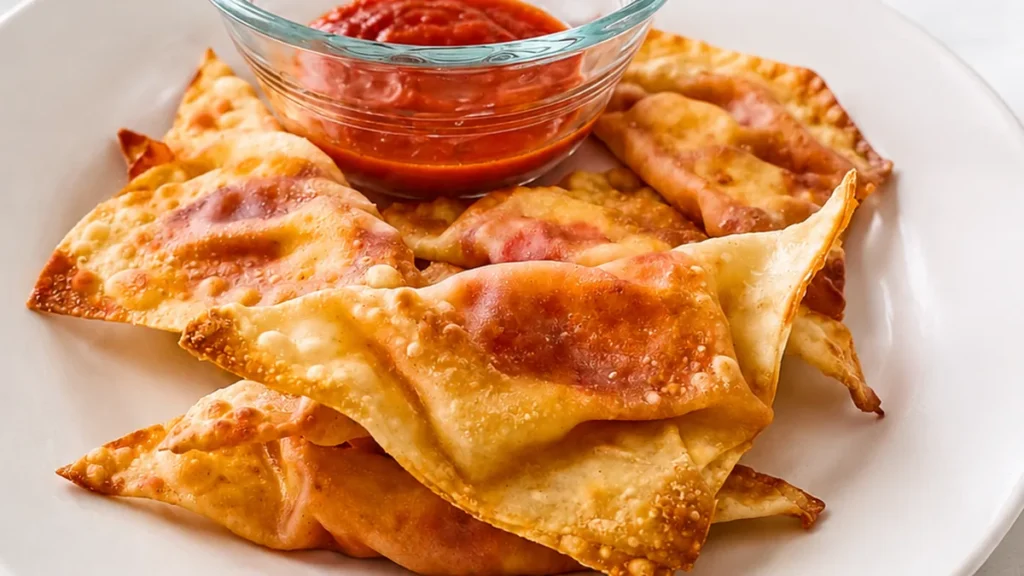
Pizza Gyoza are the ultimate party hack! Crispy wonton wrappers are filled with gooey mozzarella, zesty pizza sauce, and savory pepperoni, then baked to golden perfection. This recipe takes all the beloved flavors of pizza and transforms them into an easy-to-eat, bite-sized appetizer that’s perfect for any gathering. Forget complicated assembly; these little pockets of joy are surprisingly simple to make, making them ideal for both beginner cooks and seasoned entertainers looking for a fun, new snack.
Key takeaways
- Use low-moisture mozzarella, never fresh, so the filling melts and stretches instead of flooding and softening the wrapper.
- Keep sauce to about half a teaspoon per gyoza and seal a dry rim with water or egg wash to stop blowouts.
- Cook at 190 to 200 degrees C with a light oil coat, watching color closely, since thin wrappers burn in under two minutes.
- Serve within a couple of minutes: low-moisture mozzarella firms up fast and loses its stretch as it cools.
Viral Pizza Gyoza: The Ultimate Party Hack!
Ingredients
- Wonton or Gyoza wrappers
- Mozzarella cheese sticks (or mozzarella cheese)
- Pasta or pizza sauce
- Mini pepperoni pieces (or cooked sausage or other pizza topping)
- Cooking spray or oil
Instructions
- Preheat oven to 350°F (175°C). Slice mozzarella cheese sticks thinly or grate cheese.
- Lay out the gyoza wrappers on a baking sheet lined with parchment paper.
- Spoon about 1 teaspoon of pizza sauce onto the center of each wrapper.
- Top the sauce with a few slices of mozzarella cheese.
- Add a few pieces of mini pepperoni on top of the cheese.
- Dip your finger in water and lightly moisten the edges of each wrapper.
- Fold each wrapper into a triangle, pressing firmly to seal the edges. For a decorative look, create an accordion pleat along the sealed edge.
- Lightly spray both sides of the filled gyoza with cooking spray or brush with oil.
Video
Notes
Pizza gyoza works because a thin wheat wrapper crisps far faster than pizza dough while sealing molten mozzarella and sauce into a single two-bite package. The whole appeal rests on one temperature gap: fat in low-moisture mozzarella starts flowing at 33 to 37 degrees C, yet the wrapper needs a surface hot enough for the Maillard reaction, roughly 150 degrees C, to turn golden. Get those two events to line up and the cheese pulls into strands the instant you bite. Miss the timing and you either scorch the wrapper or serve a cold, chalky center. Everything below is about controlling that gap.
Quick answer: Pizza gyoza are wonton or gyoza wrappers folded around mozzarella, pizza sauce, and pepperoni, then crisped in an air fryer, oven, or skillet until golden. Use low-moisture mozzarella, not fresh, so the filling melts without flooding the wrapper. Keep the sauce to about half a teaspoon per piece, seal the edges with water or egg wash, and cook at roughly 190 to 200 degrees C for 8 to 12 minutes. Serve within five minutes while the cheese still stretches.
Why fresh mozzarella floods the wrapper and low-moisture keeps it crisp
Choose low-moisture mozzarella for pizza gyoza because water content decides whether the wrapper stays crisp or turns to paste. Under United States Food and Drug Administration standards, low-moisture mozzarella holds 45 to 52 percent water, while fresh mozzarella can reach 60 percent or higher. That extra water has nowhere to go inside a sealed wrapper: it turns to steam, softens the wheat skin from the inside, and leaks out any weak seam. Fresh mozzarella also melts into a soupy puddle rather than a stretch, because it exudes moisture as it heats.
Low-moisture part-skim mozzarella melts near 50 degrees C and flows cleanly, which is exactly the behavior you want packed against a hot wrapper. If you can find whole-milk low-moisture blocks, the higher fat melts into an even, stretchy layer instead of the rubbery sheets part-skim can form once it browns. The cheese-stick format most people reach for is already low-moisture, so it is a sound default. Shred or cube it small so it melts fully before the wrapper burns.
The half-teaspoon sauce rule that stops soggy centers
Limit pizza sauce to about half a teaspoon per gyoza, because sauce is the single biggest source of blowouts and sogginess in this recipe. Pizza and pasta sauces are largely water, and inside a sealed wrapper that water becomes steam under pressure. Too much and the seam bursts mid-cook, spilling sauce that scorches against the pan or air fryer basket. A restrained smear coats the cheese for flavor without saturating the dough.
Thicker is safer than thinner. A concentrated pizza sauce or a spoonful reduced in a pan for two to three minutes carries the same flavor at a fraction of the moisture. If your only option is a loose pasta sauce, drain it in a fine sieve for ten minutes first. Keep the sauce in the center of the wrapper, never near the edge, so the sealing surface stays dry and the fold actually grips. Wet edges are the reason seals fail.
Sealing wheat wrappers so the seam does not blow open
Seal each wrapper with water or an egg wash on a completely dry rim, because a clean seam is what keeps molten cheese inside instead of on your pan. Store-bought gyoza and wonton wrappers are thin sheets of wheat flour and water, and they bond when their surface starch is briefly hydrated and pressed. Run a wet fingertip or a light egg wash around the outer 1 centimeter, fold, then press from the filling outward to push out trapped air. Air pockets expand with heat and split seams.
Egg wash, a yolk beaten with a teaspoon of water, grips more aggressively than plain water and is worth it for cheese-heavy fillings. Do not soak the rim; a soggy edge tears rather than bonds. Keep the stack of wrappers under a damp towel while you work, since gyoza wrappers dry out and crack within minutes of exposure. Press the pleats or crimp with a fork tine for extra mechanical hold along the seam.
Overfilling is the other seam-killer
One rounded teaspoon of total filling per wrapper is the ceiling. Overstuffing stretches the wheat thin, leaves no dry margin to seal, and guarantees a blowout as the cheese expands. If the wrapper will not close easily, remove filling rather than forcing it.
Air fryer, oven, or skillet: matching heat to a thin wheat shell
Cook pizza gyoza at 190 to 200 degrees C and watch for color, because the wrapper is thin enough to go from golden to burnt in about ninety seconds. In an air fryer, arrange them in a single layer with space between each, mist both sides with oil, and run 375 to 400 degrees F, that is 190 to 200 degrees C, for 8 to 10 minutes, flipping at the halfway mark. Crowding traps steam and gives you pale, leathery spots instead of even crunch.
An oven wants 200 to 220 degrees C on a lightly oiled sheet for 10 to 12 minutes, turning once. A skillet borrows the classic gyoza move: crisp the bottoms in a thin film of oil for two to three minutes, then serve, since these have no raw meat to steam through. In every method, oil is not optional. A light coat of cooking spray or brushed oil is what conducts heat into the wrapper and drives browning; dry wrappers stay chalky and tough.
Rest ninety seconds, then eat fast
The interior cheese sits far hotter than the wrapper suggests and can scald. Give them roughly 90 seconds, then serve. Low-moisture mozzarella resolidifies as it cools, so pizza gyoza that sit ten minutes lose the stretch entirely and firm into a chewy plug. This is one dish where timing the serve matters as much as the cook.
Five topping swaps and what each one costs you
Swap the pepperoni freely, but account for grease and moisture, because both fight the crisp wrapper. Rendered pork fat from too much cured meat pools inside and steams the dough. Mini pepperoni is ideal precisely because it is small and pre-portioned; if you use full slices, blot them on paper towel first to shed surface oil. Here is how common substitutions actually behave:
Cooked crumbled sausage instead of pepperoni: richer and meatier, but you must fully cook and drain it first, or the released fat blows the seam.
Chopped cooked mushrooms: a good vegetarian route, but salt and saute them dry beforehand, because raw mushrooms are over 90 percent water and will flood the filling.
Wonton wrappers instead of gyoza wrappers: thinner and squarer, so they crisp faster and burn sooner; drop the cook time by a minute or two.
Cheddar or provolone blended with the mozzarella: more browning and sharper flavor, at the cost of some of mozzarella’s signature stretch.
Diced bell pepper or olives: pat them dry; any surface moisture you add is moisture the wrapper has to fight.
For sauce and cheese fundamentals worth borrowing here, a well-built homemade New York style pizza sauce reduces down thick enough to behave inside a wrapper, and the browning science holds regardless of format.
What makes pizza gyoza unlike any real dumpling or real pizza
Unusually, pizza gyoza have no raw protein and no dough to prove, which changes the entire cooking logic versus true gyoza. Traditional gyoza use a crisp-steam-crisp method specifically to cook raw pork through while browning the base. Here the filling is already cooked and the only job of heat is to melt cheese and color the wrapper, so you skip the steaming step entirely and cook straight to crisp. That is why these are genuinely a five-minute assembly job rather than a project.
They also sidestep pizza’s hardest variable, the crust. On a real pizza, mozzarella browns into 5 to 15 millimeter blisters over dough that needs its own long bake; roughly 75 percent of United States mozzarella production goes toward exactly that application, per dairy-science reviews in the Journal of Dairy Science. In a gyoza wrapper you get the melt-and-stretch payoff with none of the fermentation or oven-floor management, which is what makes this such an efficient party format.
The notes below capture the concrete numbers that decide this dish.
For folding technique that keeps seams tight, our step-by-step guide to folding gyoza wrappers pairs well with these fillings, and if you want to batch ahead, the method for freezing and reheating filled dumplings applies directly to cheese-stuffed versions.
Pro tips
- For best results, don’t overfill the wrappers to ensure they seal properly.
- If wrappers start to dry out before you can seal them, keep a damp cloth over the ones you’re not actively working on.
- Ensure the oven is fully preheated to 350°F (175°C) for even cooking and crisping.
- For extra flavor, try adding a pinch of garlic powder or Italian seasoning with the pepperoni.
These Baked Pizza Gyoza are a guaranteed hit! Enjoy them hot and fresh for a delightful bite of pizza goodness.
More from Baked Pasta Recipes →