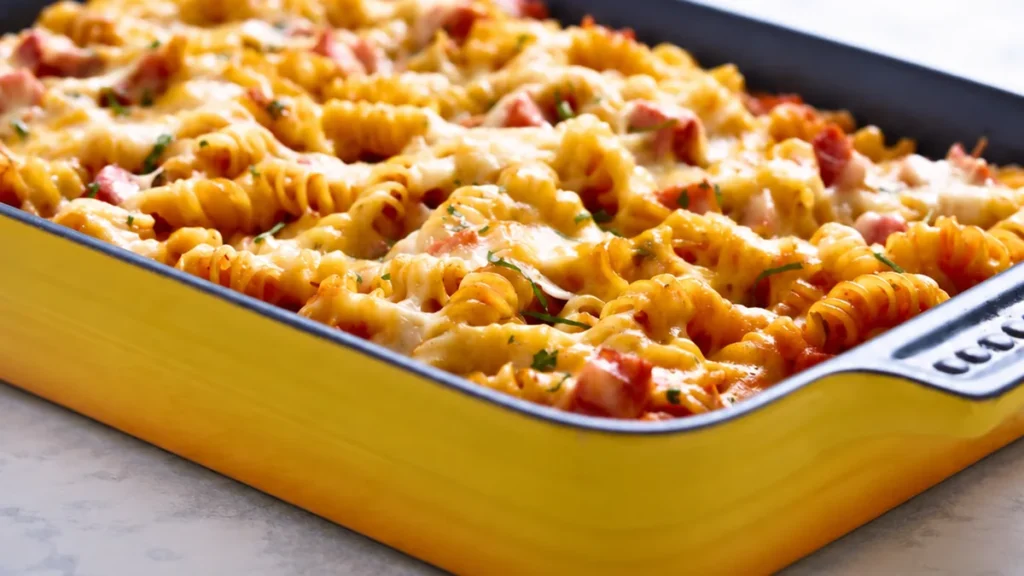
This Mexican ham pasta bake is a one-pan meal requiring forty-five minutes to prepare and cook. Diced ham and salsa provide the flavor base, while melted cheese binds the cooked pasta.
Key takeaways
- Pull the pan off the heat before folding in cheese and salsa; acid plus heat above 82C is what curdles the sauce.
- Boil the pasta two to three minutes short of al dente so it finishes in the oven instead of turning to mush.
- Shred cheese from a block, not pre-shredded, so the anti-caking starch does not leave the Mornay grainy.
- Hold back the salt: ham, cheese and salsa are all sodium-heavy, so season last and add cilantro only after baking.
Spicy Mexican Ham Pasta Bake That Will Wow Your Family!
Ingredients
- 1 pound pasta (such as fusili, rotini, penne or elbow macaroni)
- ¾ cup Monterey Jack cheese (shredded)
- ¾ cup cheddar cheese (shredded)
- 2 tablespoons butter or olive oil
- 2 tablespoons flour
- 2 cups milk
- ½ cup chunky salsa
- 1 cup ham (diced)
- 1 tablespoon cilantro (chopped)
Instructions
- Cook pasta until half way (about 6 minutes), drain and set aside.
- Combine both cheeses (Monterey Jack and cheddar) and set aside.
- In a saucepan, melt butter over medium heat. Whisk in flour and cook for 2 minutes until lightly browned.
- Gradually whisk in milk, bring to a boil, and cook for 1 minute until thickened.
- Remove from heat, stir in 1 cup of the cheese mixture until smooth. Add the cooked pasta, diced ham, and chunky salsa. Stir to combine.
- Pour the mixture into a baking dish. Sprinkle with the remaining cheese and chopped cilantro.
- Bake in a preheated oven at 350℉ (175℃) for 30 minutes, or until bubbly and golden.
Video
Notes
How the salsa can split your Mornay sauce, and the 82C rule that stops it
Stirring chunky salsa straight into a hot, freshly finished Mornay sauce is the fastest way to end up with a grainy, curdled pasta bake. Salsa is acidic, usually sitting around pH 4, and acid destabilizes the casein proteins that hold the fat and water in your cheese sauce together. Heat compounds the problem: Monterey Jack and cheddar both break above roughly 82C (180F), when the proteins seize and squeeze out fat. The fix is order and temperature. Build your bechamel with the 2 tablespoons butter, 2 tablespoons flour and 2 cups milk, bring it to a gentle simmer, then pull the pan off direct heat before you fold in the shredded cheese and the half cup of chunky salsa. Off the burner the residual heat, around 70C, melts the cheese cleanly without pushing it past the break point.
Serious Eats notes a classic bechamel runs 1.5 tablespoons of flour per cup of milk; this recipe’s 1 tablespoon per cup gives a deliberately looser, more pourable sauce, which matters because the salsa adds water and the pasta will drink some up in the oven.
Boiling the fusilli two minutes short so it survives the second bake
Pasta destined for a bake should come out of the pot firmer than you would ever serve it plain, roughly two to three minutes shy of the box’s al dente time. Bon Appetit’s test kitchen boils pasta for a baked dish just five minutes before draining, on the logic that the oven is a second full cooking. Once your fusilli, rotini, penne or elbow macaroni goes under the cheese sauce and into the heat, it keeps hydrating from the sauce’s milk and the salsa’s liquid. If you boil it soft first, you get mush; if you pull it early, it finishes in the dish with a bite intact. Salt the boiling water generously, because this is the pasta’s one real chance to absorb seasoning from the inside. Kenji Lopez-Alt makes the same point about baked ziti: fully cooked pasta buried in sauce and baked is being asked to survive a second cooking it was never built for. Drain, do not rinse, and dress it with sauce immediately so the starch on the surface grabs.
Why pre-shredded cheese sabotages the melt, and what Monterey Jack actually contributes
The 3/4 cup Monterey Jack and 3/4 cup cheddar are not interchangeable fillers; they do different jobs. Monterey Jack, per Wisconsin Cheese, is high in moisture and fat and low in acidity, which is the exact profile for a clean, stretchy melt starting around 90F as the fat softens. Sharp cheddar carries flavor but is drier and more acidic, so it is likelier to turn grainy if overheated. Together they balance stretch against taste. Shred your own from a block. Bagged pre-shredded cheese is dusted with potato starch or cellulose to stop clumping, and that coating keeps it from melting into a smooth Mornay, leaving a slightly gritty sauce. If your sauce does turn grainy, it has broken: pull it off the heat, add a splash of warm milk, and whisk hard, or blend it briefly to re-emulsify.
Three swaps and what each one costs you
Pepper Jack for the Monterey Jack: adds real heat and keeps the same clean melt, since it is the same base cheese. Trade-off: it can overwhelm the salsa’s flavor, so drop to a milder salsa if you use it.
Olive oil for the butter in the roux: works fine as the fat that coats the flour and prevents lumps. Trade-off: you lose a little of the round dairy richness butter gives the sauce.
Turkey ham or leftover rotisserie chicken for the diced ham: lighter and lower in sodium. Trade-off: less of the salty, smoky backbone, so taste before adding any extra salt.
The sodium trap: three salty ingredients stacking in one dish
This bake hides a seasoning problem in plain sight. The 1 cup of diced ham, the shredded cheddar and Monterey Jack, and the half cup of salsa are all salt-heavy on their own, and they compound. Spicy Southern Kitchen’s ham mac and cheese cuts added salt from a full teaspoon to just over half a teaspoon precisely because the cheeses and cured meat already carry so much sodium. The move here is to hold back. Season the bechamel lightly or not at all, build the whole dish, then taste after everything is combined and adjust. Pasta water is your one safe place to salt aggressively, since only about 3 percent of that sodium actually ends up in the noodles. If your ham is a particularly salty deli variety, a quick rinse and pat-dry before dicing takes the edge off without hurting the texture.
Common failures and the actual cause behind each
Sauce curdles when the salsa goes in: the pan was too hot and the salsa’s acid hit boiling dairy. Take it off the heat first.
Finished bake is dry and stiff: the sauce was too thick or the bake ran long. This recipe’s looser 1 tablespoon flour per cup ratio is intentional; do not thicken it further, and cover with foil if it browns before the center is hot.
Pasta turns to mush: it was boiled to full doneness instead of pulled two to three minutes early.
Grainy, oily cheese sauce: pre-shredded cheese with anti-caking starch, or cheese cooked past 82C.
Cilantro at the finish line, never in the oven
The 1 tablespoon of chopped cilantro is the one ingredient that must not go into the bake. Cilantro’s signature aroma comes from heat-labile aldehyde compounds that break down fast under heat, which is why Cook’s Illustrated treats the leaves strictly as a late garnish rather than a cooking herb. Bake cilantro and you get a dull, faintly soapy note instead of the bright citrus lift it is there to provide. Scatter it over the top after the dish comes out of the oven and has cooled for a minute or two. That short rest matters for another reason: the Mornay sauce keeps setting as it cools, so a five-minute wait firms the whole bake enough to serve in clean portions instead of a soupy slide across the plate.
Baking it today versus the day after: how the sauce sets and reheats
A pasta bake made with this mornay base holds beautifully for three to four days refrigerated, but the starch and cheese behave differently once cooled. As the dish drops below 60C the amylose in the fusilli retrogrades, pulling moisture out of the sauce and firming the whole casserole into a sliceable block. That is normal, not a mistake. The trap is reheating it dry. Cover the portion, add a splash of milk (roughly one tablespoon per cup of leftovers), and warm it at 160C for 15 to 20 minutes, or microwave in 90-second bursts with a stir between each. The half cup of chunky salsa keeps working in your favour here: its acidity and moisture slow the surface from drying out faster than the interior. Freezing works too, though the texture shifts. Freeze it before the second bake if you can, in a sealed dish, for up to two months; the Monterey Jack survives freezing better than the cheddar, which can turn slightly grainy on the thaw. Thaw overnight in the fridge rather than at room temperature to keep the ham safe, since diced cured ham combined with dairy sits squarely in the danger zone if left out. One detail specific to this recipe: the cilantro you stirred in at the end loses almost all its aroma after a day, so scatter a fresh pinch over reheated portions to bring the dish back to life.
Doubling the recipe and choosing the right dish so the middle actually cooks
Scaling this bake to feed a crowd is mostly a question of dish depth, not cheese quantity. Two pounds of pasta with double the mornay will not fit a standard 23x33cm pan without piling more than 6cm deep, and at that depth the center never reaches a proper 74C while the edges scorch. Split a double batch across two dishes, or step up to a 25x38cm roasting pan and keep the layer under 5cm. When you double the sauce, resist doubling the flour blindly: a 2:2:2 ratio of butter, flour and cups of milk gives a pourable mornay, but four tablespoons of flour against four cups of milk can turn pasty, so hold back half a tablespoon and adjust. Material matters more than most cooks expect. Glass and ceramic heat slowly and hold heat, giving a gentle, even set that suits the delicate emulsion; metal pans transfer heat fast and can brown the cheese cap before the interior is hot, so drop the oven 10C if you switch to metal. A cast-iron skillet gives the most dramatic browned edges but the retained heat keeps cooking the pasta after you pull it, so undershoot slightly. Whichever vessel you choose, let the finished bake rest 8 to 10 minutes before serving. That pause lets the sauce reabsorb the free liquid the cheese released, so each spoonful holds together instead of sliding into a puddle on the plate.
Pro tips
- Use a mix of cheeses for the best flavor profile.
- Don’t overcook the pasta initially; it will finish cooking in the oven.
- For a spicier kick, add a pinch of chili powder or a dash of hot sauce to the cheese sauce.
- This dish can be assembled ahead of time and baked just before serving.
Enjoy this delightful Mexican Ham Pasta Bake! It’s a simple yet incredibly satisfying dish that’s sure to become a family favorite. Serve hot and savor the cheesy goodness!
More from Baked Pasta Recipes →