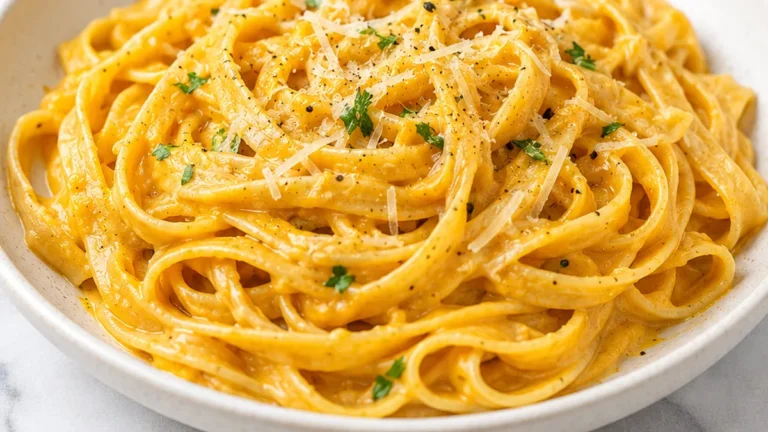
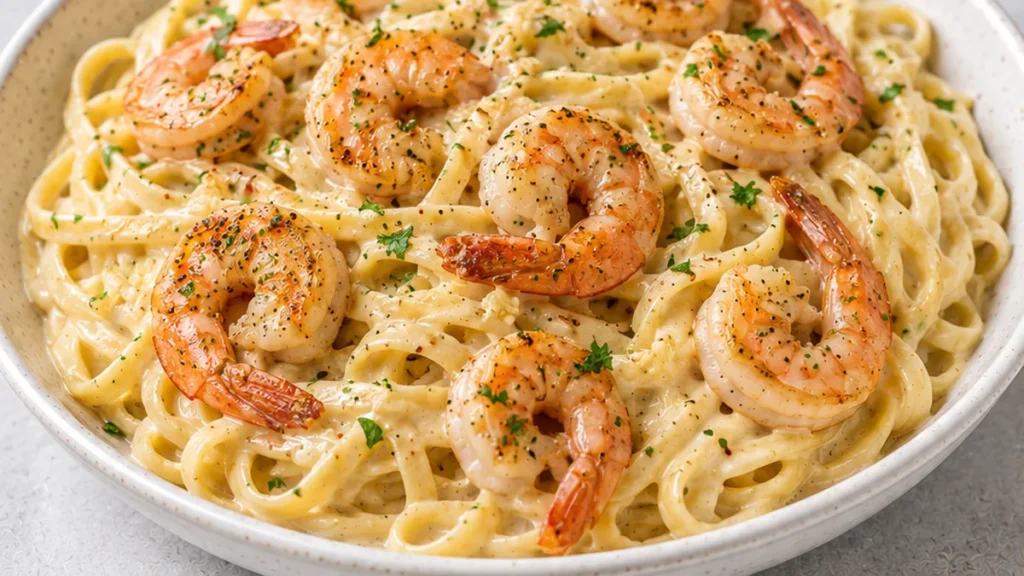
This prawn pasta recipe features succulent prawns in a rich garlic cream sauce, tossed with fettuccine. It is a quick meal for any night of the week. The pasta is cooked al dente.
Key takeaways
- Cook prawns briefly at the end to prevent toughness.
- Emulsify the sauce by gradually adding liquids and whisking in cheese over medium-low heat.
- Ensure garlic is fragrant, not burnt, by sautéing gently.
- Adjust sauce consistency by simmering or using a cornstarch slurry if needed.
Creamy Garlic Prawn Pasta
Ingredients
- 12 oz / 350g fettuccine (, or other long strand pasta of choice)
- 50 g / 3 tbsp unsalted butter (, separated)
- 500 g / 1 lb small or medium peeled prawns / shrimp (, raw or 1kg / 2 lb whole unpeeled)
- 4 garlic cloves (, finely minced with a knife)
- 1/2 cup Chardonnay or other dry white wine
- 1 1/4 cups heavy / thickened cream (full fat)
- 1/2 cup chicken broth (preferably low sodium)
- 3/4 cup (75 g) finely grated parmesan cheese
- 2 tbsp finely chopped parsley (, optional)
- Black pepper
Instructions
- Cook pasta in boiling salted water until 1 minute under al dente.
- Reserve 1 cup of pasta water before draining.
- Melt 1/3 butter in skillet over medium-high heat. Cook half the prawns for 1.5 minutes per side until pink. Remove and repeat with remaining butter and prawns.
- Add remaining butter to the skillet, then sauté minced garlic for 20 seconds until fragrant.
- Deglaze with white wine, simmering rapidly for 2 minutes until mostly evaporated.
- Add heavy cream, chicken broth, and Parmesan cheese. Stir until cheese melts and simmer for 1.5 minutes until slightly thickened.
- Add cooked prawns, drained pasta, and 1/4 cup pasta water to the skillet. Toss energetically over medium-high heat for 1-2 minutes until sauce clings to pasta, adding more pasta water if needed.
- Stir in parsley and black pepper. Taste and adjust seasoning. Serve immediately.
Notes
The technique that makes it
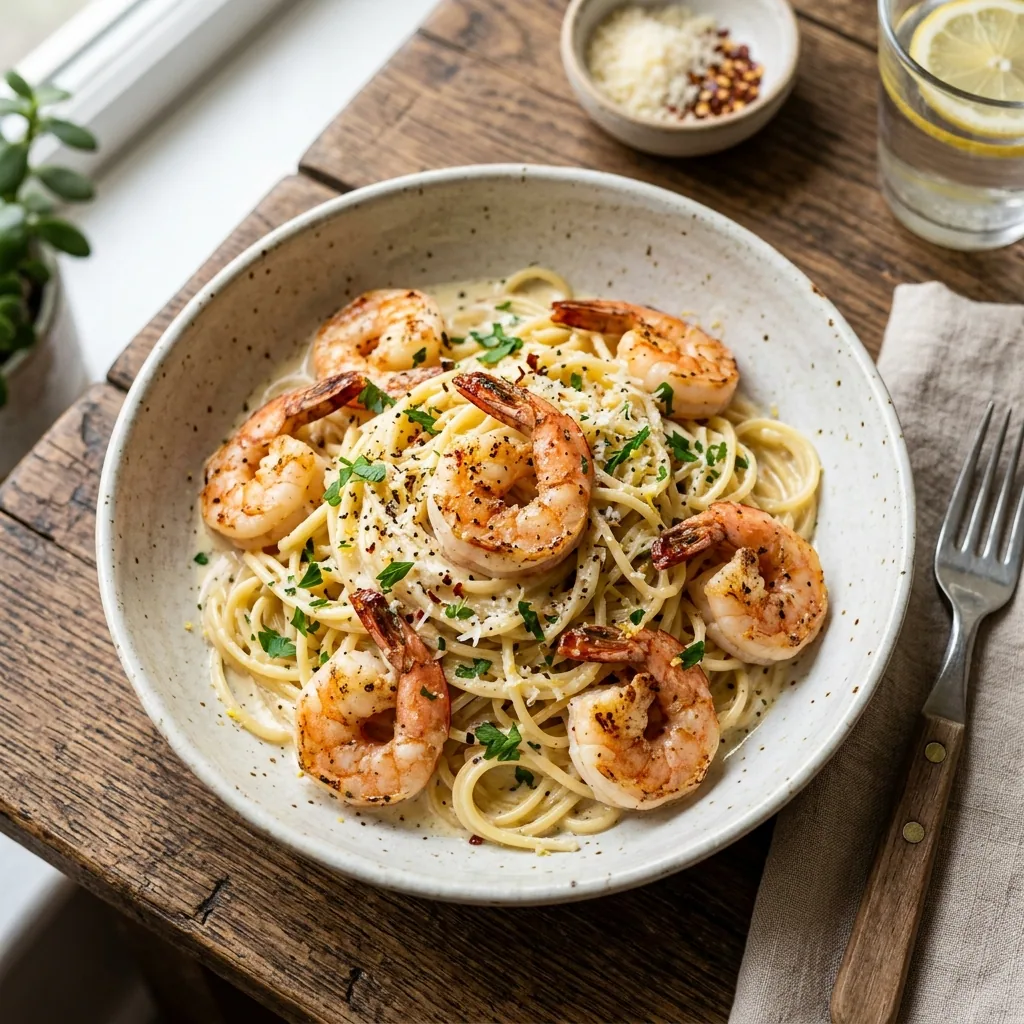
The success of this creamy garlic prawn pasta hinges on two key techniques: properly cooking the prawns and building a stable, emulsified sauce. Prawns cook very quickly; overcooking will result in a tough, rubbery texture. The best approach is to cook them just until they turn pink and opaque, which typically takes only 2-3 minutes. Adding them towards the end of the sauce preparation ensures they are perfectly cooked without becoming tough. The sauce itself relies on the emulsification of fats from the butter and cream with the liquid from the wine and broth. Deglazing the pan with white wine after sautéing the garlic helps lift flavorful browned bits (fond) from the bottom, adding depth. Gradually whisking in the cream and broth, and then finishing with the Parmesan cheese, helps create a smooth, cohesive sauce that clings beautifully to the pasta. The residual heat from the pasta and the pan will gently melt the Parmesan, further thickening and enriching the sauce without splitting.
Troubleshooting
- Sauce is too thin: Simmer the sauce gently, uncovered, for a few extra minutes to allow excess liquid to evaporate. You can also create a slurry with 1 teaspoon of cornstarch and 2 teaspoons of cold water, whisk it into the simmering sauce, and cook for 1-2 minutes until thickened.
- Prawns are tough/rubbery: This is due to overcooking. To avoid this next time, add the prawns to the sauce only during the last 2-3 minutes of cooking. Ensure the heat is medium-low when you add them.
- Sauce is broken or oily: This can happen if the sauce is overheated after adding the cream or cheese. Ensure you are using medium-low heat when incorporating these ingredients. If it breaks, try whisking in a tablespoon of cold water or broth off the heat to help re-emulsify.
- Garlic is burnt: Burnt garlic becomes bitter. Sauté the garlic over medium-low heat and stir constantly. Add it to the pan after the butter has melted and is just starting to foam, and cook only until fragrant, about 30-60 seconds, before adding the wine.
Substitutions
- Pasta: While fettuccine is ideal for its ability to hold creamy sauces, linguine, spaghetti, or even short pasta shapes like penne or fusilli will work. The cooking time may vary slightly.
- Prawns/Shrimp: Scallops can be substituted for prawns, but cook them for an even shorter time to prevent toughness, about 1-2 minutes per side. Cooked chicken or firm tofu can also be used, added earlier to heat through.
- White Wine: If you prefer not to use alcohol, you can omit the wine and increase the chicken broth by 1/2 cup. You can also add a splash of lemon juice at the end for acidity.
- Heavy Cream: Half-and-half can be used, but the sauce will be less rich and may require a bit more simmering to thicken. For a dairy-free option, use full-fat coconut milk (from a can, the thick cream part) and a splash of unsweetened almond milk, though this will alter the flavor profile.
Pro tips
- Reserve more pasta water than you think you’ll need; it’s liquid gold for achieving the perfect sauce consistency.
- Ensure your prawns are fully thawed if using frozen. Cook them in batches to avoid overcrowding the pan, which steams them instead of searing.
- Use freshly grated Parmesan for the best flavor and meltability. Pre-grated cheese often contains anti-caking agents that can make the sauce gritty.
- Storage: Leftovers can be stored in an airtight container in the refrigerator for up to 2 days. Reheat gently on the stovetop or in the microwave, adding a splash of milk or cream if the sauce seems too thick.
This creamy garlic prawn pasta is a testament to how simple ingredients can create a truly memorable meal. Enjoy this elegant dish any night of the week!
More from Creamy Pasta Recipes →
Frequently asked questions
Can I use shrimp instead of prawns for this creamy garlic pasta?
Absolutely! Shrimp are a fantastic substitute for prawns in this recipe. Ensure they are peeled and deveined. The cooking time will be similar, so watch for them to turn pink and opaque, which usually takes just a few minutes. The flavor profile will remain delicious.
How do I store leftover creamy garlic prawn pasta?
Allow the pasta to cool completely before storing. Transfer it to an airtight container and refrigerate for up to 2-3 days. Reheat gently on the stovetop with a splash of water or milk to loosen the sauce, or microwave until heated through. Avoid overcooking the pasta.
What side dishes go well with creamy garlic prawn pasta?
This rich pasta pairs wonderfully with a crisp green salad dressed with a light vinaigrette to cut through the creaminess. Garlic bread or crusty Italian bread is also excellent for soaking up any extra sauce. Steamed asparagus or broccoli are simple, healthy accompaniments.
How do I know when the prawns are cooked in the pasta?
Prawns cook very quickly. They are done when they turn pink and opaque throughout. If using pre-cooked prawns, simply warm them through for a minute or two at the end. Overcooked prawns will become tough and rubbery, so be mindful of the short cooking time.