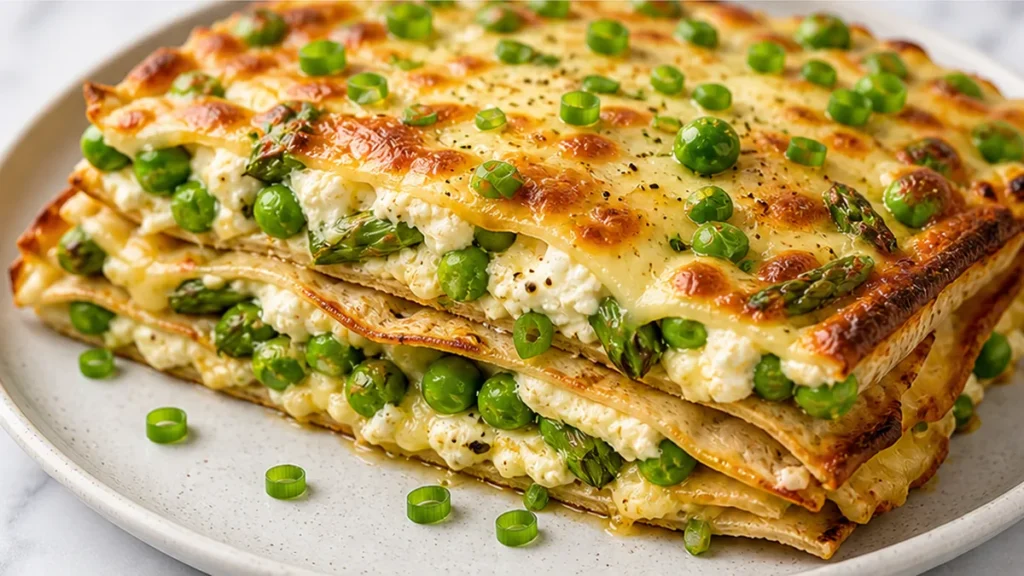
This quesadilla lasagna is a truly unique and delightful twist on a classic comfort food, perfect for those seeking a quick yet satisfying meal. By combining the familiar elements of a quesadilla with the layered structure of lasagna, this recipe offers an innovative approach that is both simple to prepare and incredibly flavorful. Ideal for a weeknight dinner or a fun weekend lunch, this asparagus quesadilla lasagna improves humble ingredients into a spectacular dish. Its ease of preparation makes it accessible for beginners, while its surprising taste profile will impress even seasoned foodies.
Key takeaways
- Blanching asparagus ensures tenderness and bright color.
- Layering with tortillas creates a unique quesadilla lasagna structure.
- Properly seasoned ricotta adds creaminess and binds ingredients.
- Bake until Gouda is melted for a cohesive dish.
Ultimate Asparagus Quesadilla Lasagna
Ingredients
- 1 whole wheat tortilla
- 5-6 asparagus stalks
- 1/2 cup frozen peas
- 1/2 cup ricotta cheese
- 1 tsp minced garlic
- 2 slices Gouda cheese
- Garnish: green onions
- Garnish: gorgonzola cheese
- Garnish: parsley
Instructions
- Grill the asparagus until tender-crisp and lightly charred. Cook the frozen peas until bright green.
- In a small bowl, mix the ricotta cheese with minced garlic. Season generously with salt and pepper.
- Lay half of the whole wheat tortilla flat. Spread the seasoned ricotta mixture evenly over it. Layer the grilled asparagus and cooked peas on top. Place the Gouda cheese slices over the vegetables. Fold the other half of the tortilla over the filling.
- Carefully grill the folded quesadilla in a lightly oiled pan or on a griddle until golden brown and the cheese is melted, about 3-4 minutes per side.
- Cut the grilled quesadilla into wedges, like a traditional lasagna.
- Stack the wedges attractively on a plate. Garnish generously with chopped green onions, crumbled gorgonzola cheese, and fresh parsley. Serve immediately!
Notes
The technique that makes it
The success of this Ultimate Asparagus Quesadilla Lasagna hinges on a few key techniques that ensure a cohesive and flavorful dish. Firstly, the preparation of the asparagus is crucial. Blanching or lightly steaming the asparagus stalks before incorporating them into the lasagna layers softens them to a tender-crisp texture, preventing them from becoming tough or stringy in the final bake. This also helps to retain their bright green color. Secondly, the layering itself is a departure from traditional lasagna. Instead of wide pasta sheets, we use a whole wheat tortilla. The tortilla acts as a binder and a base, absorbing some of the moisture from the ricotta and peas, and creating distinct strata within the quesadilla lasagna. Ensuring the tortilla is not overcooked initially (if pre-toasted) is important so it doesn’t become too brittle. The ricotta cheese mixture, seasoned with minced garlic, provides a creamy, rich element that complements the vegetables and cheese. It’s important to distribute this evenly to avoid dry pockets. Finally, the melting of the Gouda cheese is the final step that brings everything together. The quesadilla lasagna should be baked just until the Gouda is fully melted and slightly golden, creating a cheesy, unified top layer that holds the structure.
Troubleshooting
- Problem: Tortilla becomes tough or dry. Fix: Ensure the tortilla is not over-baked before assembly. A slight softening in a dry pan is sufficient. During baking, the moisture from the ricotta and vegetables will help keep it pliable.
- Problem: Asparagus is too fibrous. Fix: Trim the woody ends of the asparagus stalks before cooking. Blanching or steaming the stalks for 1-2 minutes until they turn bright green also helps tenderize them.
- Problem: Lasagna is watery. Fix: Ensure the ricotta mixture is not too wet. If using frozen peas, drain them thoroughly after thawing or cooking. Avoid adding extra liquid to the cheese mixture.
- Problem: Cheeses don’t melt evenly. Fix: Grate the Gouda cheese if possible for more even melting. Ensure the quesadilla lasagna is baked at the correct temperature until the cheese is fully molten.
Substitutions
- Tortilla: While a whole wheat tortilla is specified for its texture and nutritional profile, a regular flour tortilla or even a large corn tortilla can be used. Expect a slightly different texture and flavor profile.
- Asparagus: If asparagus is out of season or not preferred, green beans or broccoli florets can be substituted. They should be blanched or steamed similarly to asparagus.
- Ricotta Cheese: Cottage cheese (drained well) can be used as a substitute for ricotta, offering a tangier flavor. A dairy-free ricotta alternative would also work.
- Gouda Cheese: Any good melting cheese like Monterey Jack, mozzarella, or even a sharp cheddar can replace Gouda. The flavor profile will change, but the melting quality will remain.
Pro tips
- Grill the asparagus until it has nice char marks for added smoky flavor.
- Ensure your ricotta mixture is well-seasoned; salt and pepper are key!
- Use a good quality non-stick pan for grilling the quesadilla to prevent sticking and ensure an even golden-brown crust.
- Don’t overcrowd the pan when grilling; cook one quesadilla at a time for best results.
Enjoy this creative and delicious quesadilla lasagna, a perfect blend of familiar flavors with an exciting new presentation. Experiment with different cheeses or vegetables to make it your own!
More from Baked Pasta Recipes →
Read also on TastyBend: Cheez Its Nutrition Label: Complete Facts & Expert Analysis.
Frequently asked questions
Can I make Asparagus Quesadilla Lasagna ahead of time?
Yes, you can assemble the lasagna up to 24 hours in advance. Cover it tightly with plastic wrap and refrigerate. When ready to bake, remove the plastic wrap and bake as directed, adding a few extra minutes to the cooking time if necessary to ensure it’s heated through.
What can I substitute for asparagus in this lasagna?
If asparagus isn’t available, you can substitute with other green vegetables like broccoli florets, zucchini slices, or spinach. Ensure they are blanched or sautéed briefly before adding to the lasagna to remove excess moisture and achieve a tender texture.
How do I know when the Asparagus Quesadilla Lasagna is done?
The lasagna is done when the cheese is melted and bubbly, and the edges are golden brown. You should see the sauce simmering around the sides. An internal temperature of 165°F (74°C) indicates it’s fully cooked and heated through.
How should I store leftovers of this lasagna?
Leftover Asparagus Quesadilla Lasagna can be stored in an airtight container in the refrigerator for up to 3-4 days. Reheat individual portions in the oven or microwave until warmed through. It also freezes well for longer storage.