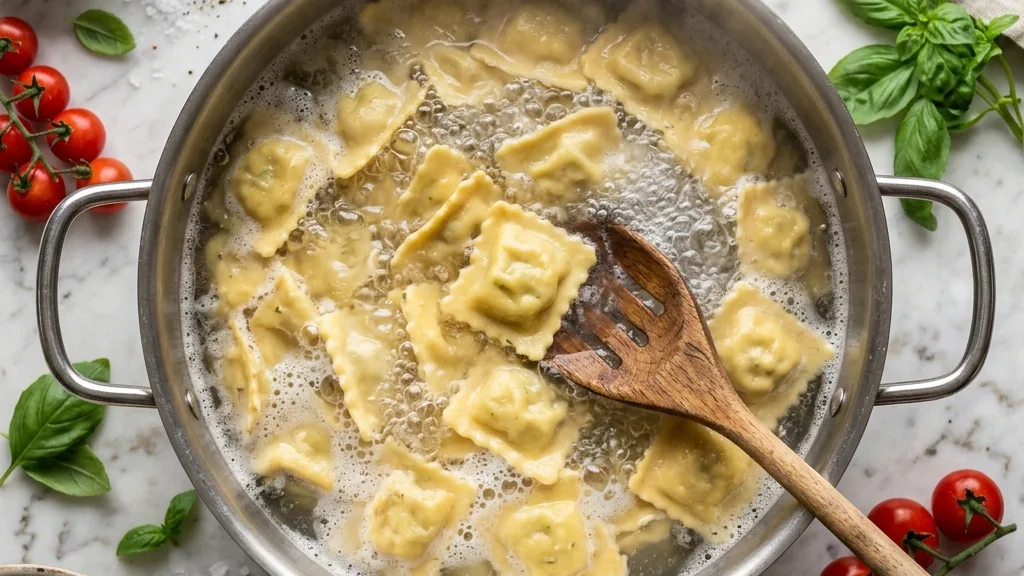
Knowing how to cook ravioli pasta well is mostly about two things: timing and a gentle touch. These little stuffed pockets are more delicate than a strand of spaghetti, so they reward a calm, gently bubbling pot and punish a violent, rolling boil that tears them open and spills the filling. The good news is that ravioli cook fast, the method is the same whether they are fresh or frozen, and a simple float-and-taste test tells you exactly when they are done. Here is everything you need to get tender, intact ravioli every single time.
What You Need Before You Start
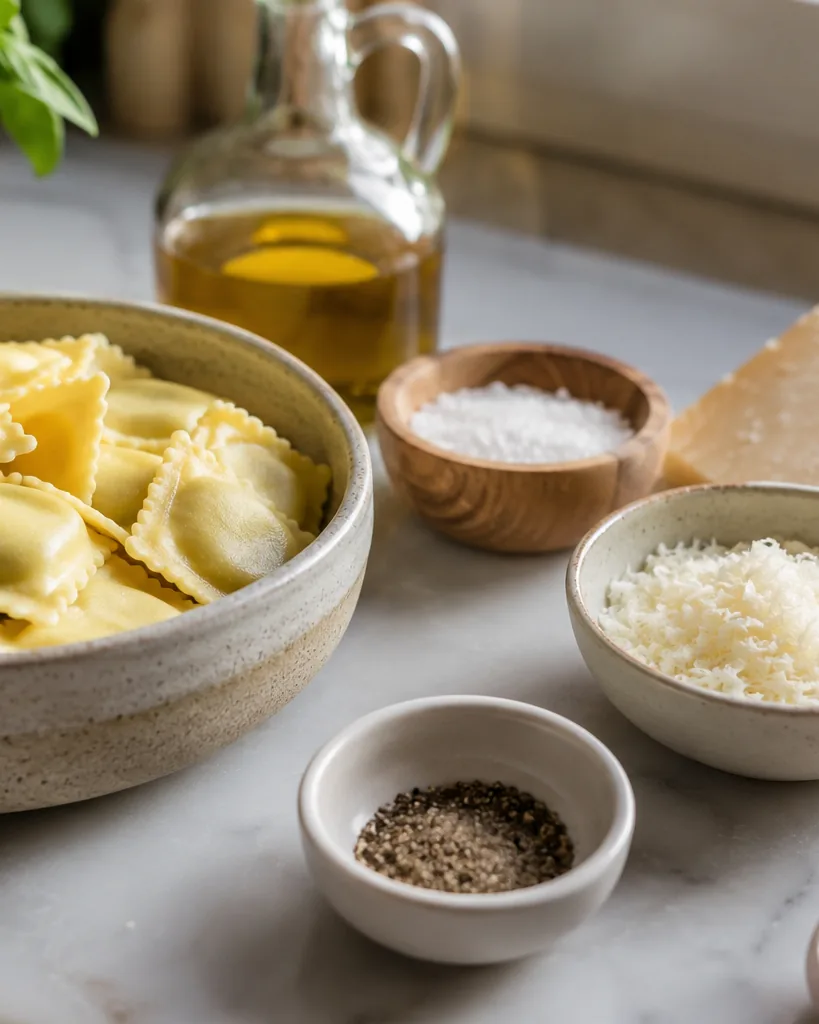
You do not need anything fancy, just a few basics that make the job easier and protect the delicate pasta. A large, wide pot gives the pieces room to move without crowding, which is the main cause of sticking and tearing. A slotted spoon or spider strainer lets you lift the cooked ravioli out gently instead of pouring them into a colander, where they can crush against each other. Keep a wooden spoon or silicone spatula handy for a single soft stir, a small measuring spoon for salt, and a heatproof cup nearby to scoop out a little starchy cooking water for your sauce. With those few tools and a box or batch of ravioli, you are ready to cook.
Quick Answer: Ravioli Cooking Times
If you only need the timing, here it is at a glance. Drop the ravioli into gently boiling, well-salted water and cook until they float and test tender.
| Type of ravioli | Cooking time | Notes |
|---|---|---|
| Fresh (homemade or refrigerated) | 3 to 4 minutes | Al dente around 4 to 5 minutes |
| Frozen | 5 to 6 minutes | Cook straight from the freezer, do not thaw |
| Dried or shelf-stable | Follow the package | Usually a little longer than fresh |
In every case, the ravioli rising to the surface is your first signal, not your final answer. Once they float, taste one to confirm it is cooked through with a slight bite before you drain the pot.
Step-by-Step: How to Boil Ravioli
1. Salt the water and bring it to a boil
Fill a large pot with water and salt it generously, using roughly 10 g of salt per liter. Salt is your only chance to season the pasta itself, so do not skip it. Bring the water to a full rolling boil first.
2. Bring it down to a gentle boil
This is the single most important step, and the one most people miss. Just before adding the ravioli, reduce the heat so the water settles from a violent, rolling boil to a gentle, steady simmer. A hard boil tosses the delicate pockets against each other and bursts their seams; a gentle boil cooks them through while keeping them intact.
3. Add the ravioli and stir once, gently
Slide the ravioli into the water and give them one soft stir with a wooden spoon or silicone spatula to keep them from sticking to each other or the bottom. If you are cooking a large amount, work in batches so the pot is not crowded and the water stays hot.
4. Cook and watch for the float
Cook for the time in the table above, 3 to 4 minutes for fresh and 5 to 6 minutes for frozen. As the ravioli finish, they float to the surface. That is the cue to start tasting.
5. Taste, then lift them out
Scoop one ravioli, let it cool a second, and bite it. It should be tender with a slight bite, never hard in the middle or mushy, and the filling should be hot. When they are ready, lift them out with a slotted spoon rather than dumping the pot into a colander, which can crush and split them. Save a little of the starchy cooking water to loosen your sauce.
Why You Should Never Use a Hard Rolling Boil
It feels natural to keep the burner cranked, but a rolling boil is the number-one cause of broken ravioli. The thin sheets of pasta around the filling are sealed at the edges, and aggressive bubbling stresses those seams until they split. A gentle boil reaches the same temperature your pasta needs, just without the turbulence. Think of it as the difference between a calm simmer that poaches the ravioli and a churning pot that beats them up. If you see seams starting to open or filling clouding the water, your heat is too high, so turn it down.
Cooking Frozen Ravioli
Frozen ravioli are wonderfully convenient, and the rule is refreshingly simple: do not thaw them. Tossing them straight from the freezer into gently boiling water keeps the pasta from turning gummy and the filling from leaking as it softens. They need only a minute or two longer than fresh, around 5 to 6 minutes, and the same float-and-taste test applies, a point echoed in step-by-step guides like this one on cooking fresh and frozen ravioli. Add them a few at a time so they do not drop the water temperature all at once, and stir gently to stop them clumping in the first thirty seconds.
Other Ways to Cook Ravioli
Boiling is the classic method, but it is not the only one. Once you are comfortable with the basics, these variations are worth a try:
- Baked ravioli: Layer frozen ravioli with sauce and cheese in a dish and bake until bubbling, much like a lasagna, with no boiling required.
- Pan-fried or air-fried: Cook ravioli first, then crisp them in a little oil or in the air fryer for a crunchy appetizer with a dipping sauce.
- Ravioli straight in sauce: A thin, brothy simmering sauce can cook fresh ravioli through, though boiling first gives you more control over texture.
Whichever route you take, the filling should end up hot and the pasta tender. For a foolproof first attempt, stick with the gentle-boil method and branch out from there.
Saucing Ravioli Without Wrecking Them
Ravioli are a complete little package of pasta and filling, so they need less sauce than you might think, and they need it handled gently. Have your sauce warm and ready in a wide pan before the ravioli finish cooking. Lift the drained ravioli straight into the pan, add a splash of the reserved pasta water, and toss with a soft folding motion rather than vigorous stirring. Lighter sauces tend to suit them best: browned butter with sage, a simple marinara, or a light cream sauce all let the filling shine without overwhelming it.
A heavy, chunky meat sauce can tear the pasta and bury the filling, so save those for sturdier shapes. A finish of grated cheese and a little black pepper is often all a good plate of ravioli needs.
How to Tell When Ravioli Are Done
Three signals together tell you ravioli are ready. First, they float, which means the pasta has cooked and trapped enough steam to rise. Second, the pasta edges look tender and slightly translucent rather than thick and pale. Third, and most reliable, a taste test shows the dough is cooked through with a gentle bite and the filling is piping hot.
If the center still tastes raw or chalky, give it another thirty seconds. Because the window between perfectly al dente and overcooked is short for filled pasta, it is better to start tasting the moment they float than to trust the clock alone, as experienced cooks writing about boiling fresh ravioli consistently advise. For more on hitting that ideal texture, our guide on how to cook pasta al dente applies to ravioli too.
A Word on Food Safety
Most ravioli are filled with cheese, meat, or vegetables, so a little food-safety awareness keeps things wholesome. The USDA recommends keeping frozen foods at 0 F, where ravioli stay safe to cook straight from the freezer. For fresh refrigerated ravioli, use them by the date on the package, and follow the FDA guidance not to leave perishable, filled pasta at room temperature for more than two hours. Thorough cooking is your safeguard: bringing ravioli to a gentle boil heats the filling well past the temperature that matters, which is exactly why the taste test checks that the center is hot, not just warm.
Troubleshooting
| Problem | Cause | Fix |
|---|---|---|
| Ravioli burst open | Boil too violent or overcooked | Use a gentle boil; pull them as soon as they test done |
| Ravioli stuck together | Overcrowded pot, no early stir | Cook in batches and stir gently in the first 30 seconds |
| Filling cold inside | Undercooked, especially frozen | Cook the full time; taste-test that the center is hot |
| Gummy or mushy texture | Overcooked | Start tasting the moment they float and drain promptly |
| Broke when draining | Dumped into a colander | Lift out with a slotted spoon instead |
Pairing Ideas to Get You Started
If you are not sure what to make, a few classic pairings never miss. Cheese ravioli love a bright marinara or a brown-butter-and-sage finish. Mushroom ravioli, like our mushroom ravioli, shine with a light cream or truffle-scented butter. Meat-filled ravioli can stand up to a slightly richer tomato sauce. Whatever you choose, keep the sauce light enough to complement the filling rather than compete with it, and remember that the ravioli themselves are already doing most of the work.
How Much to Cook Per Person
Filled pasta is more substantial than plain noodles because each piece carries cheese, meat, or vegetables, so you generally need less by weight than you would of spaghetti. As a rough guide, plan on about 120 to 150 g of fresh or frozen filled pasta per person as a main course, or roughly half that as a starter. Appetites vary, of course, and a rich filling fills people up faster than a light cheese one. When in doubt, cook a little extra, since leftovers reheat well and a few spare pieces are never a problem.
Cooking in batches that suit your pot also keeps the water hot and the pieces intact, so scaling up for a crowd is simply a matter of working through two or three rounds rather than overcrowding a single pot.
How to Choose Good Ravioli at the Store
Not all store-bought options are equal, and a little label reading goes a long way. You will usually find three formats:
- Fresh refrigerated: Found in the chilled section, these cook fastest and taste closest to homemade. Check the use-by date and look for a short, recognizable ingredient list.
- Frozen: The most convenient and longest-keeping option, ideal to keep on hand for a fast dinner. Look for pieces that move freely in the bag, a sign they were frozen properly and not thawed and refrozen into a solid clump.
- Dried or shelf-stable: Less common and firmer in texture, these keep in the pantry and follow their own package timing, usually a bit longer than fresh.
For the filling, cheese is the most forgiving and family-friendly, while meat, mushroom, butternut squash, and lobster fillings each pair best with a particular sauce. Whatever you buy, the cooking method in this guide stays the same; only the timing shifts slightly between fresh, frozen, and dried.
Storing and Reheating Leftovers
Cooked filled pasta keeps nicely, which makes it a great candidate for planned leftovers. Once cooled, store cooked pieces in an airtight container in the refrigerator and use them within three to four days, the same window the USDA suggests for most cooked leftovers. Tossing them with a thin coat of sauce or a little oil before refrigerating keeps them from sticking together.
To reheat, the gentlest methods work best. Warm the pieces in a covered pan with a splash of water or sauce over low heat, or microwave them in short bursts with a damp paper towel over the dish to keep them from drying out. Avoid boiling already-cooked pieces again, which turns them soft and pushes them toward bursting. Uncooked fresh pieces you are not ready to use can be frozen on a tray until solid, then bagged, and cooked later straight from frozen just like store-bought.
Frequently Asked Questions
How long do you cook fresh ravioli?
Fresh ravioli cook in about 3 to 4 minutes in gently boiling, salted water, reaching a perfect al dente around the 4 to 5 minute mark. They are ready shortly after they float to the surface, so taste one for a tender bite and a hot filling before draining.
Do you need to thaw frozen ravioli before cooking?
No. Cook frozen ravioli straight from the freezer in gently boiling water for about 5 to 6 minutes. Thawing first makes the pasta gummy and lets the filling leak, so it is always better to drop them in frozen and add a minute or two to the time.
Why do my ravioli keep bursting?
The usual culprit is too hard a boil. A violent, rolling boil stresses the sealed edges until they split. Bring the water to a boil, then reduce it to a gentle simmer before adding the ravioli, and remove them as soon as they test done to avoid overcooking, which also causes splitting.
How do you know when ravioli are cooked?
Look for three signs: the ravioli float to the surface, the pasta edges turn tender and slightly translucent, and a taste test confirms the dough is cooked through with a slight bite and the filling is hot. The taste test is the most reliable, so start checking the moment they float.
Can you cook ravioli without boiling?
Yes. You can bake frozen ravioli in sauce like a casserole, pan-fry or air-fry cooked ravioli for a crispy snack, or simmer fresh ravioli gently in a thin sauce. Boiling gives you the most control over texture, but these methods are great once you know the basics.
How much ravioli should I cook per person?
Plan on about 120 to 150 g of fresh or frozen filled pasta per person for a main course, or roughly half that as a starter. Because each piece is stuffed with cheese, meat, or vegetables, filled pasta is more filling than plain noodles, so you need less by weight. Cook a little extra if you want leftovers, which reheat well.
Should the water be boiling hard when I add ravioli?
No. Bring the water to a full boil to get it up to temperature, then turn the heat down to a gentle, steady simmer before adding the ravioli. A hard, rolling boil bursts the delicate seams and spills the filling, while a gentle boil cooks them through and keeps them whole.
The Bottom Line
Cooking ravioli well is simple once you know the rhythm: salt the water, bring it to a boil, then ease it back to a gentle simmer, add the pieces, and pull them out the moment they float and taste tender. Fresh need 3 to 4 minutes and frozen need 5 to 6, with no thawing required. Lift them out with a slotted spoon, dress them in a light sauce, and you have a restaurant-quality plate in under ten minutes. Keep the boil gentle, trust the float-and-taste test over the clock, and your ravioli will come out tender and intact every time.