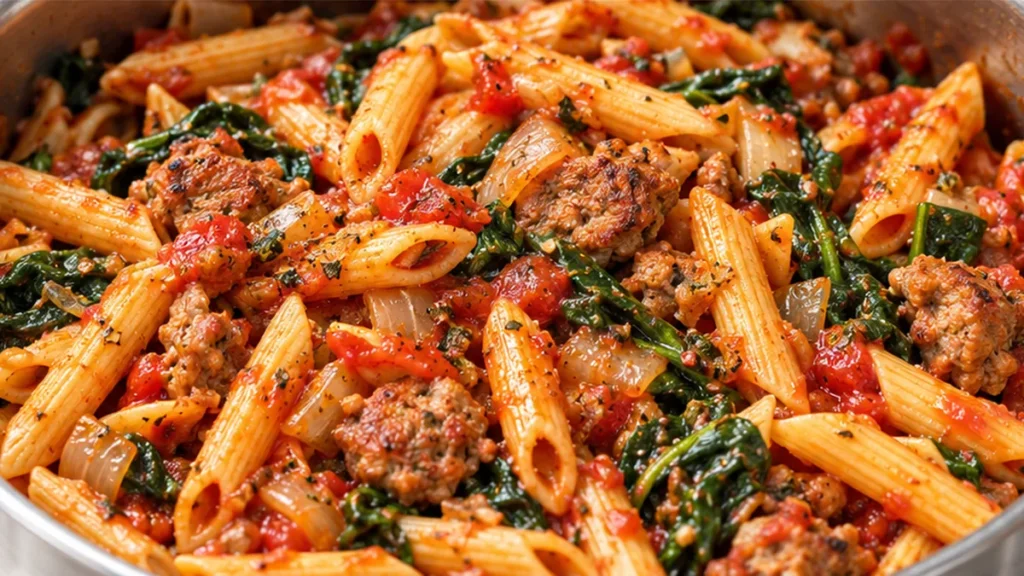
This sausage greens penne combines savory sausage with fresh greens for a hearty dish. It’s a straightforward recipe that highlights simple ingredients.
Key takeaways
- Use high-quality sausage for better flavor and texture.
- Balance the cooking times of different greens to maintain texture.
- Cook penne al dente for the best sauce adherence.
- Adjust seasoning gradually to avoid overpowering the dish.
Ultimate Sausage & Greens Penne
Ingredients
- 12 oz penne pasta
- 1 tbsp olive oil
- 3 links Italian sausage (about 12 oz.)
- 2 cloves garlic
- 1 yellow onion
- 1 28 oz. can crushed tomatoes
- 1 6 oz. can tomato paste
- 1 tsp dried basil
- 3/4 tsp salt
- 1/4 tsp black pepper
Instructions
- Cook penne pasta according to package directions until al dente, then drain.
- Heat olive oil in a large pot over medium heat, add sausage links, and cook for 5 minutes until slightly browned. Remove sausage.
- Mince garlic and dice onion. Sauté onion and garlic in the pot for 2-3 minutes until soft. Slice sausage into medallions and return to pot, cooking for 5 more minutes.
- Add crushed tomatoes, tomato paste, basil, salt, and black pepper to the pot. Stir well to combine.
- Stir in frozen broccoli and spinach until heated through. Add drained pasta and stir to combine everything.
- Serve hot, topped with optional feta cheese for an extra creamy kick!
Understanding the Role of Sausage in Flavor Development
The sausage is a key component in the ultimate sausage & greens penne, contributing not only protein but also a wealth of flavors. The type of sausage used can significantly impact the dish. For instance, Italian sausage, often seasoned with fennel and garlic, can provide a robust flavor profile. The Maillard reaction, which occurs when the sausage is browned, enhances the dish’s depth through caramelization, creating complex flavors that are essential for a satisfying meal. Cooking sausage at a temperature of around 190°C (375°F) allows for optimal browning without overcooking, ensuring that the meat remains juicy.
Balancing Greens for Optimal Texture and Nutritional Value
Incorporating greens into the penne not only adds color but also essential nutrients. Choosing the right greens is crucial; for example, kale and spinach have different cooking times and textures. Kale, which is tougher, benefits from a longer cooking time to become tender, while spinach wilts quickly. Aiming for a balance of textures, you might sauté kale for about 5-7 minutes before adding spinach, which requires just 2-3 minutes. This method ensures that both greens contribute their unique textures and flavors without becoming mushy.
Choosing the Right Pasta for Sauce Adherence
The penne pasta shape is particularly effective for holding onto sauces due to its tubular structure. This design allows the sauce to cling to the ridges and fill the hollow center, maximizing flavor with every bite. Cooking the pasta al dente is recommended, which typically means boiling for 8-10 minutes in salted water. This ensures the pasta maintains a firm texture, providing a satisfying bite that contrasts well with the softer sausage and greens. Additionally, reserving some pasta water can help adjust the sauce’s consistency, allowing it to better coat the penne.
Adjusting Seasoning for a Balanced Flavor Profile
Seasoning is an essential aspect of preparing the ultimate sausage & greens penne. The sausage itself is often well-seasoned, but it’s important to taste and adjust the seasoning of the entire dish. Adding salt gradually and tasting as you go can help prevent over-salting. Fresh herbs, such as basil or parsley, can be added at the end of cooking to brighten the flavors. A splash of lemon juice or a sprinkle of red pepper flakes can also enhance the overall flavor without overpowering the dish, allowing the natural flavors of the sausage and greens to shine.
Understanding the Impact of Ingredient Quality on Flavor
The quality of the ingredients used in your sausage and greens penne can significantly affect the overall flavor of the dish. Fresh, high-quality greens, such as kale or Swiss chard, will impart a vibrant taste and better texture compared to wilted or older greens. Similarly, the type of sausage matters; fresh sausage made from high-quality meat will provide a richer flavor profile than pre-packaged varieties. For instance, using Italian sausage with a higher fat content can enhance the dish’s richness, while leaner sausages might result in a drier texture. When selecting your ingredients, look for seasonal produce and artisanal sausages, as these options often provide superior taste and freshness.
Make-Ahead Strategies for Convenience
Preparing sausage and greens penne in advance can save time on busy weeknights. You can cook the sausage and sauté the greens ahead of time, storing them in an airtight container in the refrigerator for up to three days. When you’re ready to serve, simply reheat the mixture and combine it with freshly cooked penne. Alternatively, you can prepare the entire dish and freeze it for up to three months. When reheating, add a splash of water or broth to maintain moisture. This not only preserves the flavors but also ensures the pasta doesn’t dry out during reheating. Make-ahead strategies allow you to enjoy a homemade meal without the last-minute rush.
Scaling Up the Recipe for Gatherings
If you’re planning to serve a larger group, scaling up your sausage and greens penne is straightforward. To maintain the balance of flavors, increase the ingredients proportionally; for example, if doubling the recipe, use double the amount of sausage, greens, and pasta. However, be mindful of the cooking times, as larger quantities may require slightly longer to cook through, particularly for the pasta. Additionally, consider using a larger pot to ensure even cooking. A larger skillet may also be necessary to sauté the sausage and greens without overcrowding, which can lead to steaming rather than browning. Scaling up allows you to serve this comforting dish at gatherings without compromising quality.
Choosing the Right Equipment for Optimal Results
The tools you use in preparing sausage and greens penne can greatly influence the final outcome. A heavy-bottomed skillet or sauté pan is ideal for browning sausage, as it provides even heat distribution, preventing hot spots that can burn the meat. When cooking the pasta, a large pot with plenty of water ensures that the noodles cook evenly without sticking together. Invest in a good pasta strainer to facilitate draining and rinsing the penne effectively. If you’re using fresh greens, a sharp chef’s knife will help chop them finely, allowing for better integration into the dish. The right equipment not only improves efficiency but also enhances the overall texture and flavor of your meal.
Understanding the Role of Greens in Flavor and Texture
The choice of greens in sausage and greens penne significantly influences the final flavor profile and texture of the dish. For instance, using kale or Swiss chard provides a hearty texture that complements the sausage, while arugula or spinach contributes a milder, peppery taste. The cooking method also affects the greens; sautéing them briefly retains their vibrant color and nutrients, whereas overcooking can lead to a mushy texture. Aim for a cooking time of about 3-5 minutes for most greens to ensure they maintain their integrity without losing flavor.
Batch Scaling for Family Meals or Gatherings
When scaling the sausage and greens penne recipe for larger gatherings, it’s essential to maintain the ingredient ratios for balanced flavor and texture. For instance, if doubling the recipe, use a ratio of 500 grams of penne to 400 grams of sausage and 300 grams of greens. Cooking times may slightly increase, especially for the pasta, so monitor closely to prevent overcooking. Additionally, consider using a larger pot to ensure even cooking and mixing. This approach ensures that the dish retains its intended flavor, even in larger quantities.
Storage and Reheating Techniques for Optimal Enjoyment
Proper storage of sausage and greens penne can extend its shelf life while maintaining flavor. Store leftovers in an airtight container in the refrigerator for up to three days. When reheating, add a splash of water or broth to prevent the pasta from drying out. Microwave on medium power or reheat gently on the stovetop, stirring occasionally. Avoid reheating multiple times, as this can compromise texture and flavor. For longer storage, consider freezing the dish, where it can last up to three months. Thaw in the refrigerator before reheating for the best results.
Understanding the Impact of Seasonal Ingredients on Flavor
Seasonal ingredients can significantly enhance the flavor profile of your sausage and greens penne. Fresh, in-season greens such as kale or spinach not only provide optimal texture but also bring out the natural sweetness of the sausage. For example, spring offers tender asparagus and peas, which can be incorporated for a vibrant touch. In contrast, winter greens like collard greens or Swiss chard have a heartier texture and stronger flavor, which can complement the richness of the sausage. Additionally, using locally sourced sausages can introduce unique spices and herbs that reflect the region’s culinary traditions, further enhancing the dish’s overall taste. It’s essential to adjust cooking times based on the greens’ freshness; for instance, tender greens may require less cooking than their sturdier counterparts. Thus, understanding the seasonal availability of ingredients not only improves flavor but also supports sustainable cooking practices.
Optimizing Batch Size for Meal Prep
Scaling the sausage and greens penne recipe for larger gatherings or meal prep requires careful consideration of ingredient ratios and cooking techniques. When doubling or tripling the recipe, maintain the same proportions of sausage to pasta, typically one part sausage to two parts pasta, to ensure balanced flavor. However, cooking times may need adjustment; for instance, larger batches may require longer simmering to meld flavors effectively. It’s also advisable to cook pasta slightly under al dente, as it will continue to cook when reheated. For storage, consider using airtight containers, and allow the dish to cool before refrigerating to prevent moisture buildup. When reheating, adding a splash of broth or water can help restore the pasta’s original texture. This method not only saves time during busy weekdays but also enhances the flavors as they meld over time, making leftovers even more enjoyable.
Pro tips
Pro tip: Best served immediately while hot!
Frequently asked questions
What type of sausage should I use for the best flavor?
Italian sausage is a popular choice due to its rich spices, but you can also use chicken or turkey sausage for a lighter option. Each type will impart a different flavor, so choose according to your taste preference.
How do I ensure my greens are perfectly cooked?
To achieve the best texture, cook tougher greens like kale longer than softer greens like spinach. Sauté kale for about 5-7 minutes, then add spinach and cook for an additional 2-3 minutes.
Can I use a different type of pasta?
While penne is ideal for holding sauce, you can substitute with other shapes like rigatoni or fusilli. Just ensure they have a similar tubular structure to maximize sauce adherence.
What can I do if my dish is too salty?
If your dish turns out too salty, you can balance it by adding more pasta or greens, which will absorb some of the saltiness. Adding a splash of vinegar or lemon juice can also help to cut through the saltiness.
More from Healthy Pasta Recipes →