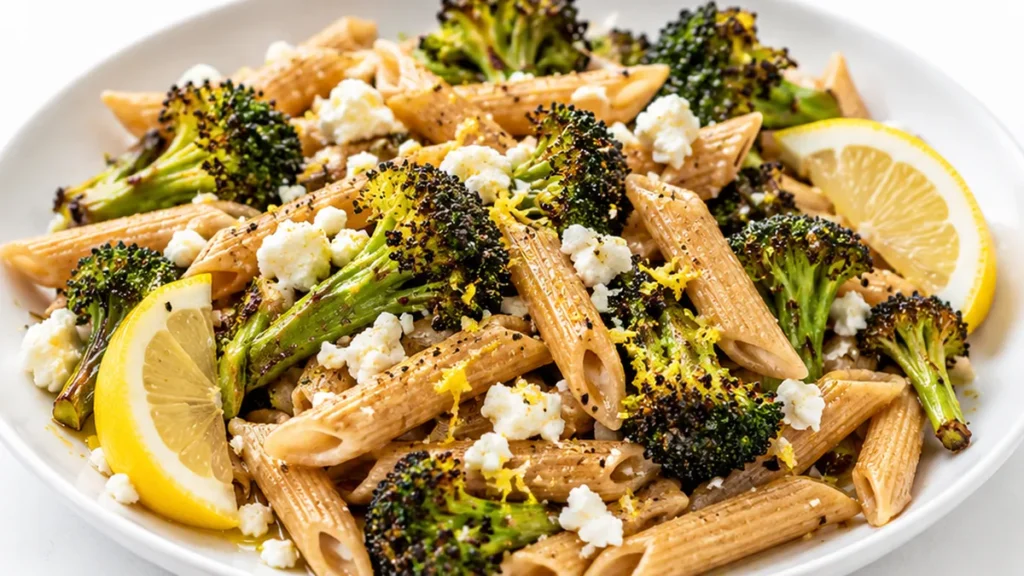
Crispy broccoli lemon feta pasta is a simple yet flavorful dish. This recipe features roasted broccoli and a zesty lemon-feta sauce for a satisfying meal.
Key takeaways
- Roasting broccoli enhances its flavor through the Maillard reaction.
- Use high-quality feta for better taste and creaminess.
- Cook pasta al dente to avoid mushiness and ensure a good texture.
- Maximize lemon flavor by using both zest and juice in the right proportions.
Crispy Broccoli Lemon Feta Pasta
Ingredients
- 1 lb broccoli crowns
- 1 tbsp olive oil
- 1 tsp steak seasoning
- 1 fresh lemon
- 8 oz whole wheat penne pasta
- 2 tbsp butter
- 1 oz crumbled feta cheese
Instructions
- Preheat your oven to 400°F (200°C). Cut the broccoli crowns into small, bite-sized florets. Spread them evenly in a single layer on a parchment-lined baking sheet. Drizzle with olive oil, sprinkle with steak seasoning, and toss until well coated.
- Roast the broccoli for 20-25 minutes, until the edges are nicely browned and crispy. Listen for that satisfying crunch!
- While the broccoli roasts, bring a pot of water to a boil for the pasta. Add the whole wheat penne and cook until al dente, about 8-10 minutes. Before draining, reserve about ½ cup of the starchy pasta water.
- Zest the lemon while the pasta cooks, then cut it into wedges for serving.
- Return the drained pasta to the pot (off the heat). Add the roasted broccoli, butter, about 1 teaspoon of lemon zest, and the juice from two lemon wedges. Stir gently to melt the butter and combine everything. Add a splash of the reserved pasta water if it seems dry.
- Top the pasta with the crumbled feta cheese and an extra pinch of steak seasoning, if you like. Serve immediately with the extra lemon wedges on the side.
The Role of Broccoli in Flavor and Texture
Broccoli serves as a crucial textural and flavor component in crispy broccoli lemon feta pasta. When roasted, it develops a caramelized exterior while maintaining a tender interior, a result achieved through the Maillard reaction. This reaction occurs around 140-165°C (284-329°F), where the sugars and proteins in the broccoli react to create complex flavors. The crispy texture contrasts beautifully with the creamy pasta, adding depth to each bite.
Understanding the Importance of Feta in the Dish
Feta cheese contributes a tangy and salty flavor that balances the freshness of lemon and the earthiness of broccoli. Opting for high-quality feta, preferably from sheep’s milk, enhances the dish’s overall taste. The cheese’s moisture content, typically around 50-60%, can affect the creaminess of the pasta. Crumbling it over the dish just before serving allows it to slightly melt, creating a delicious creamy element that binds the flavors together.
Common Pitfalls When Preparing the Pasta
One frequent mistake is overcooking the pasta, which can lead to a mushy texture. To achieve al dente pasta, cook it for 1-2 minutes less than the package instructions suggest, typically around 8-10 minutes for most dried varieties. Additionally, failing to reserve some pasta water can hinder the sauce’s ability to cling to the noodles. This starchy water, when added gradually, helps to emulsify the sauce, ensuring a cohesive and flavorful dish.
How to Achieve the Perfect Lemon Flavor
The zest and juice of the lemon are pivotal in brightening the dish. To maximize the lemon’s flavor, use a microplane to zest the fruit before juicing it, as the zest contains essential oils that impart a vibrant aroma. A typical ratio is the juice of one medium lemon (about 30-40 ml) to 1 teaspoon of zest. This combination not only enhances the dish’s flavor but also adds a refreshing quality that balances the richness of the feta and pasta.
How to Make Ahead and Store Your Crispy Broccoli Lemon Feta Pasta
Planning ahead can enhance your cooking experience, especially with a dish like crispy broccoli lemon feta pasta. To prepare it in advance, cook the pasta and roast the broccoli separately, ensuring both are cooled before storage. Store the pasta in an airtight container in the refrigerator for up to three days. The roasted broccoli can also be kept in a separate container, maintaining its crispness. When ready to serve, gently reheat the pasta and toss it with the broccoli and feta, adding a splash of lemon juice to revive the flavors.
Adjusting Portions for Different Serving Sizes
Scaling the recipe up or down is straightforward but requires attention to ingredient ratios. For instance, if doubling the recipe, ensure that the pasta-to-broccoli ratio remains consistent to maintain the dish’s balance. A good rule of thumb is to keep the pasta at about 60% of the total volume, with broccoli making up 30% and feta around 10%. This ensures that every serving retains the intended flavor profile and texture. Always taste and adjust the seasoning accordingly, especially when altering the quantities.
Choosing the Right Equipment for Optimal Results
The equipment you use can significantly affect the outcome of your crispy broccoli lemon feta pasta. A heavy-bottomed skillet or sauté pan is ideal for achieving that perfect crisp on the broccoli, as it distributes heat evenly. If using a non-stick pan, ensure it is well-heated before adding the broccoli to avoid steaming. Additionally, using a high-quality zester for the lemon can enhance the dish’s aromatic profile, while a sharp knife ensures clean cuts for the feta, allowing it to blend seamlessly into the pasta.
Seasonal Variations and Ingredient Quality Impact
The quality of ingredients can greatly influence the final dish, especially in a recipe that relies on fresh flavors like crispy broccoli lemon feta pasta. In spring and summer, opt for vibrant, locally sourced broccoli for a sweeter taste. During colder months, consider blanching the broccoli briefly before roasting to maintain its color and texture. Additionally, experimenting with different types of feta, such as sheep or goat cheese, can introduce new flavors and textures that complement the lemon and broccoli beautifully.
Understanding the Role of Cooking Time in Broccoli Texture
The cooking time for broccoli is critical to achieving the desired crispiness in your crispy broccoli lemon feta pasta. Overcooking can lead to a mushy texture, while undercooking may leave the broccoli too crunchy. Ideally, blanching broccoli for 2-3 minutes before roasting can maintain its vibrant color and crunch. For roasting, aim for a temperature of 200°C (400°F) for about 20 minutes, turning halfway through to ensure even cooking. This method encourages the Maillard reaction, enhancing flavor and texture. Keep a close eye on the broccoli as it cooks; it should be tender yet firm, maintaining its structure for the pasta dish.
The Impact of Ingredient Quality on Final Flavor
Ingredient quality significantly influences the overall taste of your crispy broccoli lemon feta pasta. Fresh, seasonal broccoli will have a sweeter, more vibrant flavor compared to older, out-of-season varieties. Similarly, high-quality feta cheese can elevate the dish, providing a creamier texture and a more pronounced tang. When selecting lemon, opt for organic varieties that are free from wax coatings, as they offer a more intense flavor. Additionally, using whole grain or artisan pasta can add depth to the dish, enhancing both texture and taste. Always taste your ingredients before cooking to ensure they will contribute positively to the final product.
Scaling the Recipe for Larger Gatherings
When scaling the crispy broccoli lemon feta pasta recipe for larger gatherings, consider adjusting the cooking times and temperatures accordingly. Doubling the recipe may require increasing the roasting time for the broccoli to ensure even cooking. If using multiple trays, rotate them in the oven to avoid uneven cooking. Additionally, when scaling the pasta, remember that larger quantities may need a bit more water to cook evenly. It’s also advisable to prepare the lemon-feta dressing in larger batches, as the flavors meld beautifully over time. Always taste and adjust seasoning as necessary when increasing the batch size.
Serving Suggestions to Enhance Your Dish
To enhance your crispy broccoli lemon feta pasta, consider serving it alongside a light, crisp salad or grilled protein like chicken or shrimp. A side of garlic bread can complement the flavors beautifully, providing a satisfying crunch. For a more robust meal, pair the dish with a light white wine, such as Sauvignon Blanc, which will harmonize with the lemon and feta flavors. Garnishing with fresh herbs like parsley or basil can add a pop of color and freshness, while a sprinkle of red pepper flakes can introduce a subtle heat. Presentation matters; serving the pasta in a large bowl with the broccoli arranged on top creates an inviting dish.
Understanding the Role of Cooking Techniques for Optimal Broccoli Texture
Cooking techniques significantly impact the texture and flavor of broccoli in your crispy broccoli lemon feta pasta. For the best results, consider roasting the broccoli at 200°C (400°F) for 20-25 minutes. This high heat allows for caramelization, enhancing the natural sweetness of the broccoli while achieving a crispy exterior. It’s essential to ensure that the florets are evenly coated with oil and spaced out on the baking sheet to prevent steaming. If the broccoli is crowded, it may become soggy instead of crispy. Additionally, tossing the broccoli halfway through cooking promotes even browning and a better texture. For a slightly charred flavor, you can broil the broccoli for the last few minutes. Remember to monitor closely to avoid burning. This technique not only elevates the dish’s flavor profile but also retains the vibrant green color, making your pasta visually appealing.
Adapting Your Dish for Seasonal Ingredients and Flavor Profiles
Seasonal ingredients can greatly influence the taste and quality of your crispy broccoli lemon feta pasta. In spring, fresh asparagus or peas can be added for a burst of color and flavor. In summer, consider incorporating cherry tomatoes for a juicy sweetness that complements the lemon and feta. During fall, roasted butternut squash can add a creamy texture and sweetness, while winter might call for hearty greens like kale or Swiss chard. When using seasonal ingredients, adjust cooking times accordingly; for example, asparagus cooks quicker than broccoli, so it should be added later in the roasting process. Additionally, the quality of your feta cheese can vary by season. Look for locally sourced options when available, as they often provide a fresher, creamier taste that enhances the overall dish. Adapting your recipe to include seasonal ingredients not only diversifies the flavor but also supports local agriculture and reduces environmental impact.
Pro tips
Pro tip: Best served immediately while hot!
Frequently asked questions
Can I use other cheeses instead of feta?
Yes, you can substitute feta with goat cheese or ricotta for a creamier texture. However, keep in mind that the flavor profile will change, with goat cheese offering a tangy taste and ricotta being milder.
How can I make this dish gluten-free?
To make crispy broccoli lemon feta pasta gluten-free, use gluten-free pasta alternatives made from rice, quinoa, or chickpeas. Ensure that all other ingredients, including the feta, are certified gluten-free.
Can I prepare this dish ahead of time?
Yes, you can prepare the broccoli and pasta in advance. Store them separately in airtight containers in the refrigerator. When ready to serve, reheat the broccoli and combine it with the pasta, adding lemon juice and feta just before serving to maintain freshness.
What can I add for extra protein?
For additional protein, consider adding grilled chicken, shrimp, or chickpeas. These options complement the dish well without overpowering the existing flavors, providing a satisfying and nutritious meal.
More from Healthy Pasta Recipes →