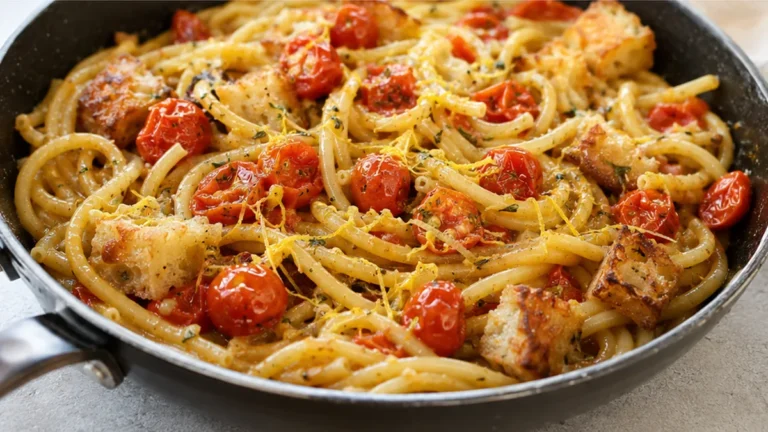
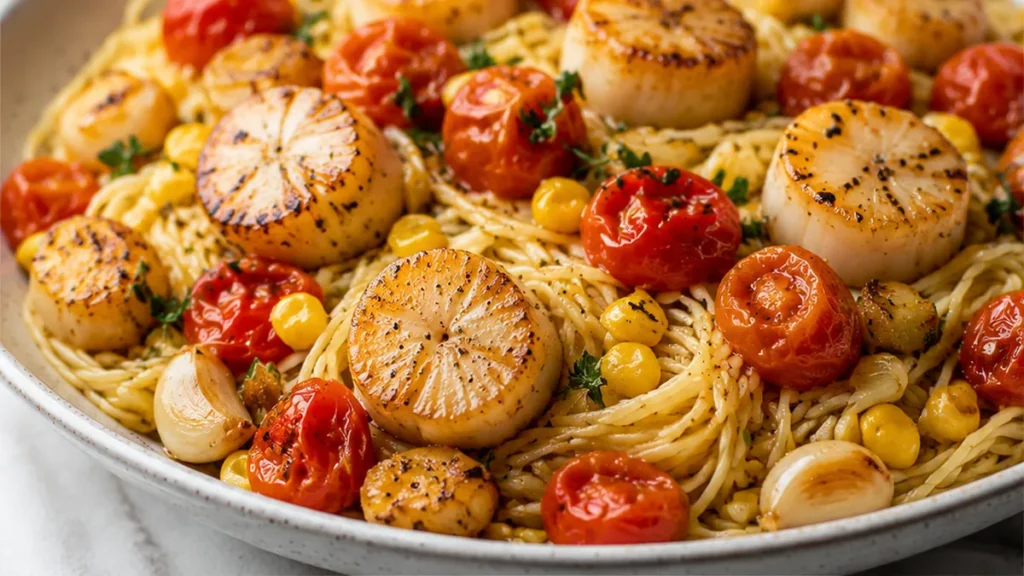
This scallop pasta recipe is a truly delicious and surprisingly simple dish that brings gourmet flavors right to your weeknight table. The combination of perfectly seared scallops, sweet burst cherry tomatoes, and fresh basil makes for a quick and satisfying meal.
Key takeaways
- Ensure scallops are completely dry before searing for a golden crust.
- Cook scallops in batches to avoid overcrowding and ensure proper searing.
- Allow tomatoes to soften and burst naturally to create the sauce base.
- Cook pasta al dente and reserve pasta water to finish in the sauce.
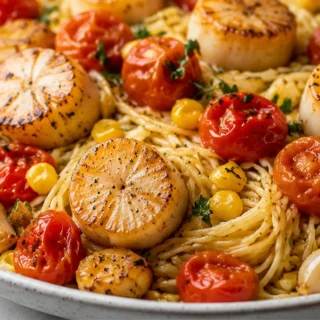
Seared Scallops & Burst Tomato Pasta
Ingredients
- 3/4 pound angel hair or linguine
- 4 tablespoons extra virgin olive oil
- 1 pound large scallops, patted dry
- kosher salt and black pepper
- 1 1/2 cups cherry tomatoes
- 4 cloves garlic, smashed
- 1 pinch crushed red pepper flakes
- 1 tablespoon fresh thyme leaves
- 4 tablespoons salted butter
- 2 ears corn, kernels removed from the cob
Instructions
- Bring a large pot of salted water to a boil. Cook the pasta according to package directions, until al dente. Just before draining, remove 1 cup of the pasta cooking water. Drain the pasta.
- Meanwhile, heat 2 tablespoons of olive oil in a large skillet over medium heat. Season the scallops with salt and pepper. When the oil shimmers, add the scallops and sear on both sides until browned, about 2-3 minutes. Remove the scallops from the skillet to a plate.
- To the same skillet, add the tomatoes, garlic, thyme, and a pinch each of salt, pepper, and red pepper flakes. Cook until the tomatoes begin to pop, about 4-5 minutes.
- Add the butter and corn, cook until just browned, another 2-3 minutes. Add the pasta and scallops, gently toss to combine. If needed, thin the sauce with a little of the pasta cooking water.
- Divide the pasta among plates. Enjoy!
Notes
The Technique: Achieving the Perfect Sear and Burst Tomatoes
The success of this Seared Scallops & Burst Tomato Pasta hinges on two key techniques: achieving a proper Maillard sear on the scallops and coaxing the cherry tomatoes to burst and create a flavorful sauce. For the scallops, the absolute critical step is ensuring they are completely dry. Moisture is the enemy of searing; it steams the scallops instead of browning them, preventing that coveted golden-brown crust and sweet, caramelized flavor. Patting them thoroughly with paper towels is non-negotiable. Next, the pan needs to be sufficiently hot, but not smoking excessively. Medium-high heat is ideal. Adding the scallops to the hot oil in a single layer, without overcrowding the pan, allows for even heat distribution and optimal browning. Resist the urge to move them for at least 1-2 minutes per side; this allows the crust to form. For the tomatoes, the heat control is important. Starting with medium heat allows the olive oil and garlic to gently infuse the oil before the tomatoes are added. As the tomatoes cook, their skins will begin to soften and split. Gentle agitation, like shaking the pan or stirring, encourages them to burst, releasing their sweet juices and forming the base of the sauce. Adding the butter towards the end helps to emulsify the sauce, adding richness and a glossy finish.
Troubleshooting
- Scallops are rubbery and pale: This usually means the pan wasn’t hot enough, or the scallops were overcrowded, leading to steaming. Ensure your pan is preheated over medium-high heat and sear scallops in batches if necessary, giving them space.
- Tomatoes are not bursting: The heat might be too low, or they haven’t cooked long enough. Increase the heat slightly to medium-high and allow them more time to soften and split. Gently pressing a few with the back of a spoon can help initiate the process.
- Sauce is too thin: Insufficient cooking time for the tomatoes, or not enough butter to help emulsify. Let the tomatoes cook down a bit longer, and ensure the butter is fully incorporated at the end to bind the sauce.
- Pasta is mushy: Overcooked pasta. Cook the pasta a minute less than the package directions, as it will finish cooking in the sauce. Reserve about a cup of the starchy pasta water before draining.
Substitutions
- Scallops: Large shrimp, peeled and deveined, or firm white fish like cod or halibut can be substituted. Cook times will vary; shrimp will cook faster, while fish may require slightly longer searing.
- Angel Hair/Linguine: Any long pasta like spaghetti or bucatini will work. For a different texture, short pasta shapes like penne or farfalle can also be used.
- Cherry Tomatoes: Grape tomatoes can be used, though they may take slightly longer to burst. Diced canned tomatoes (about 1 cup, drained) can be a quicker alternative, though the fresh flavor will be less pronounced.
- Corn: If corn is out of season, omit it or use frozen corn kernels, added during the last few minutes of cooking the tomatoes to heat through.
Pro tips
- For perfectly seared scallops, ensure they are thoroughly patted dry before cooking. Moisture prevents browning.
- Don’t overcrowd the pan when searing scallops; cook them in batches if necessary to achieve a good crust. Scallops should be cooked to an internal temperature of 145°F (63°C).
- If your sauce seems too thick, gradually add some reserved pasta water until it reaches your desired consistency. It’s a great way to emulsify the sauce.
This browned butter scallop and burst tomato basil pasta is a dish that truly impresses with minimal effort. Don’t hesitate to try this recipe for a delightful and elegant meal!
Frequently asked questions
Why do my scallops turn out rubbery?
Rubbery scallops often result from insufficient heat or overcrowding the pan. This causes them to steam rather than sear. Ensure your pan is hot before adding the scallops and cook them in a single layer without crowding, searing each side until golden brown.
How do I get the cherry tomatoes to burst?
The key is medium-high heat and patience. As the tomatoes cook in the infused olive oil, their skins will soften and split. Gently shaking the pan or stirring encourages them to burst, releasing their juices to form the sauce.
Can I use a different type of pasta?
Absolutely. While angel hair or linguine are recommended for their delicate texture, spaghetti, bucatini, or even short pasta shapes like penne will work well. Adjust cooking times accordingly.
What if I don’t have fresh thyme?
Dried thyme can be substituted, but use it sparingly as it’s more potent. Start with about 1/3 to 1/2 teaspoon of dried thyme. Add it with the garlic and red pepper flakes to allow its flavor to bloom in the oil.
More from Easy Pasta Recipes →