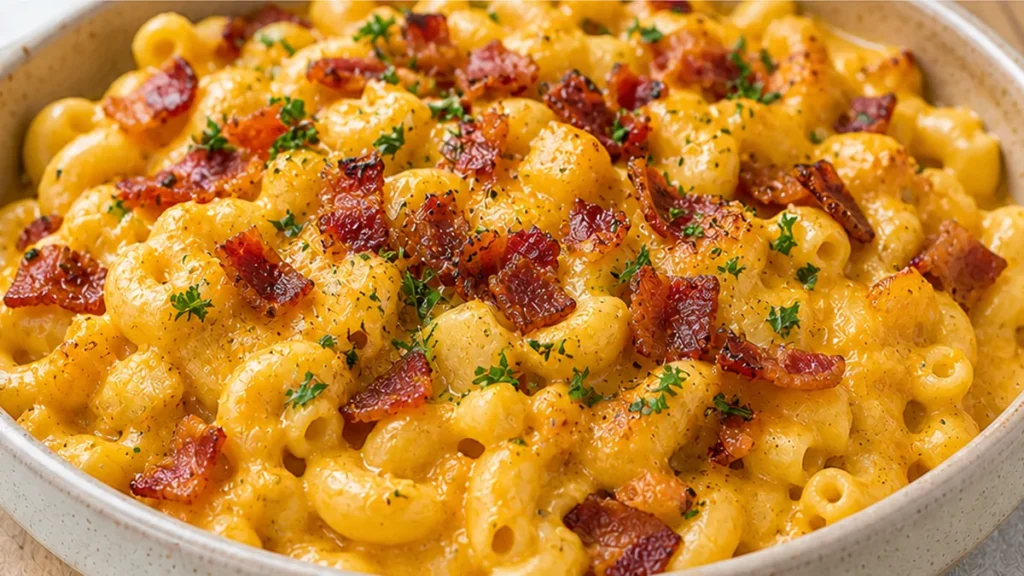
This butternut squash mac n’ cheese recipe offers a delightful twist on a classic comfort food. Combining the creaminess of butternut squash with savory bacon, sweet apples, and deeply caramelized onions, it’s a dish that promises a rich flavor experience. Perfect for a cozy evening or a special gathering, this squash mac improves the humble mac n’ cheese into something truly extraordinary. It’s designed to be approachable for home cooks while delivering restaurant-quality taste.
Key takeaways
- Achieve a smooth sauce by gently heating and gradually incorporating dairy.
- Cook pasta al dente to prevent mushiness.
- Adjust sauce consistency by simmering or thickening.
- Use substitutions cautiously for desired flavor and texture.

Creamy Butternut Squash Mac n’ Cheese with Bacon
Ingredients
- 1/2 box whole grain elbow macaroni (about 2.5 cups dry)
- 1 cup canned butternut squash puree
- 1/4 cup + 2 tablespoons evaporated milk
- 1/4 cup chicken or vegetable broth
- 1 oz low fat cream cheese
- 1 teaspoon salt
- 1/2 cup shredded cheddar cheese
- 1 tablespoon butter
- 1/2 cup onions, sliced thinly
- 1 large crispy apple, chopped or grated
Instructions
- Heat butter in a skillet over low heat. When melted, add onions and let caramelize for at least 30 minutes for the best flavor. Keep heat on low/low-medium.
- Cook the pasta according to directions. Drain and return to pan over low heat. Add butternut squash, chicken broth, evaporated milk, and cream cheese. When combined, add in salt.
- Add caramelized onions and chopped apple to the pasta. Stir to combine and add a tablespoon more broth or milk if needed.
- Just before serving, mix in cheese and stir until melted. Top each serving with bacon.
Notes
The technique that makes it
The success of this creamy butternut squash mac n’ cheese hinges on achieving a smooth, emulsified sauce that coats the pasta beautifully without becoming greasy or separated. The key lies in the gentle incorporation of the butternut squash puree and evaporated milk into the cheese base. Start by melting the butter in a saucepan over medium-low heat. Sauté the thinly sliced onions until they are softened and translucent, but not browned. This step builds a subtle aromatic foundation. Next, whisk in the butternut squash puree and evaporated milk. Heat this mixture gently, stirring constantly, until it is warmed through. Avoid boiling, as this can cause the milk solids to separate. Once warm, gradually add the low-fat cream cheese, stirring until it is completely melted and integrated into the squash mixture. This creates the creamy base. Then, slowly stir in the shredded cheddar cheese, a handful at a time, allowing each addition to melt before adding more. Continue stirring until the sauce is smooth and homogenous. The salt is added at this stage to enhance the flavors. Finally, combine the cooked whole grain elbow macaroni with the sauce. The residual heat from the pasta and the sauce will help to fully emulsify the mixture. The chopped apple, added at the very end, provides a textural contrast and a touch of sweetness that complements the savory cheese and squash.
Troubleshooting
- Sauce is too thin: If the sauce appears too thin after combining with the pasta, gently simmer it over low heat for a few more minutes, stirring constantly, until it thickens to your desired consistency. Be careful not to scorch it.
- Sauce is lumpy: Lumps typically form if the cheese wasn’t melted slowly or if the sauce was overheated. Try whisking vigorously over very low heat to break up the lumps. If that doesn’t work, you may need to strain the sauce or blend it briefly.
- Sauce is greasy: This can happen if the cheese is overheated or if too much fat is present. Ensure you are using low-fat cream cheese and shredding your own cheddar if possible, as pre-shredded cheeses often contain anti-caking agents that can affect emulsification.
- Macaroni is mushy: Cook the whole grain macaroni slightly less than the package directions, as it will continue to cook when combined with the hot sauce. Rinse the cooked macaroni briefly under cool water to stop the cooking process before draining well.
Substitutions
- Butternut Squash Puree: Canned pumpkin puree can be used as a substitute, though it may result in a slightly different flavor profile and color. Ensure it is 100% pumpkin, not pie filling.
- Evaporated Milk: Whole milk or half-and-half can be used, but they may result in a less rich and potentially thinner sauce. Use an equal amount.
- Low-Fat Cream Cheese: Regular cream cheese can be substituted for a richer sauce, but it will increase the fat content. A dairy-free cream cheese alternative can also work.
- Cheddar Cheese: A blend of cheddar and Gruyere or Monterey Jack would offer a more complex flavor. For a dairy-free option, use a good quality dairy-free shredded cheese blend.
- Whole Grain Elbow Macaroni: Any small pasta shape like shells or rotini will work. Gluten-free pasta is also an option for those with dietary restrictions.
Pro tips
- For extra crispy bacon, cook it separately until perfectly rendered.
- Ensure onions are truly caramelized and sweet, not just browned.
- Use a sharp, crisp apple variety like Honeycrisp or Fuji for the best texture contrast.
Enjoy this uniquely flavorful butternut squash mac n’ cheese as a satisfying main course or a decadent side dish. Experiment with different cheese blends for endless variations.
More from Chicken Pasta Recipes →
Read also on TastyBend: Ground Turkey Nutrition Facts: Complete Scientific Analysis.
Frequently asked questions
Can I make butternut squash mac and cheese ahead of time?
Yes, you can prepare the butternut squash sauce and cook the pasta separately up to two days in advance. Store them in airtight containers in the refrigerator. When ready to serve, reheat the sauce gently, then combine with freshly cooked pasta and stir in the bacon just before serving for the best texture and flavor.
What can I substitute for butternut squash in mac and cheese?
A good substitute for butternut squash is kabocha squash, which offers a similar sweet and earthy flavor. Acorn squash is another option, though it might be slightly less sweet. For a non-squash alternative, sweet potato can work, providing a comparable texture and sweetness, though the color will be different.
How do I store leftover creamy butternut squash mac and cheese?
Allow the mac and cheese to cool completely. Transfer it to an airtight container and refrigerate for up to 3-4 days. To reheat, you can use a microwave or gently warm it in a saucepan over low heat, adding a splash of milk or cream if it seems too thick.
How do I know when the mac and cheese is done?
The mac and cheese is done when the pasta is tender but still has a slight bite (al dente). The sauce should be smooth, creamy, and well-combined with the pasta, coating it evenly. If you’ve added a topping like breadcrumbs, ensure it’s golden brown and crispy.