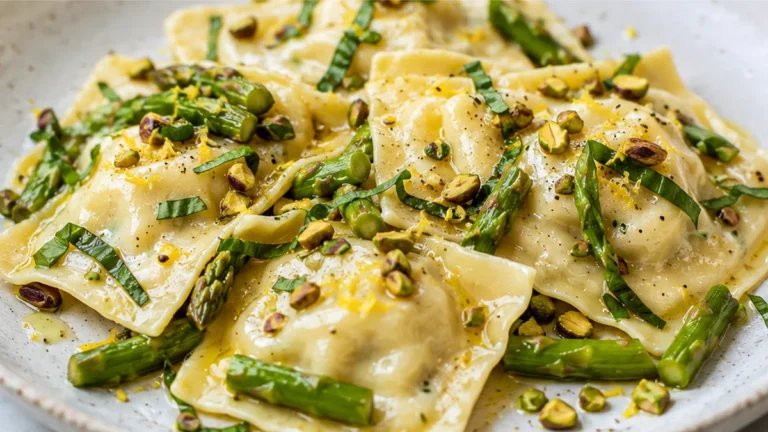
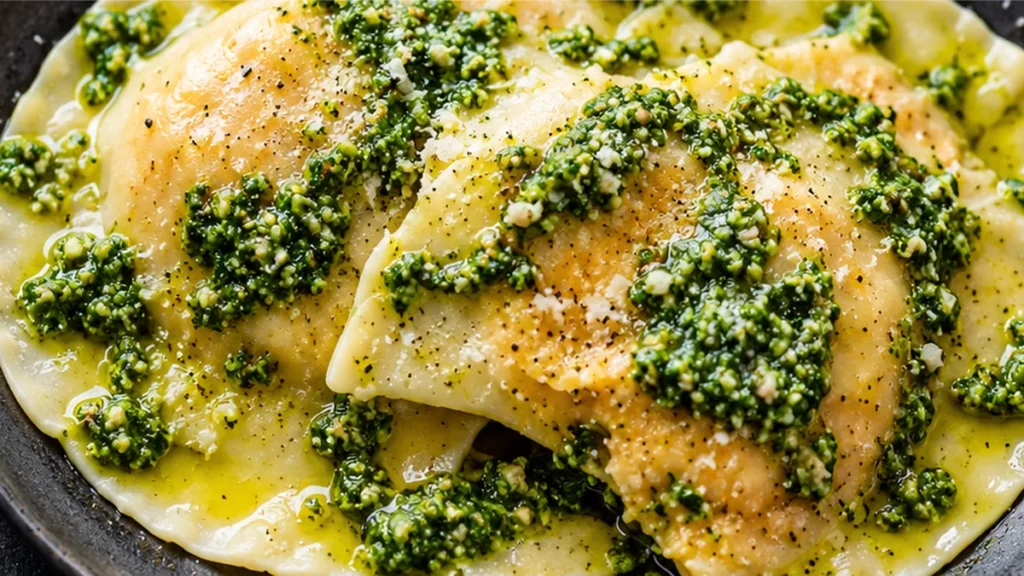
Jumbo squash ravioli depend on a filling thick enough to stay put while the wrappers are sealed and boiled. The squash, whole milk ricotta and Parmesan should process into a sticky mixture closer to cookie dough than sauce, which keeps the center contained inside these oversized parcels. The first time I shaped squash ravioli this way, an overfilled wrapper was much harder to seal cleanly. Using the stated 1-2 tablespoons and pressing the edges firmly gave the ravioli a more secure shape for boiling.
Key takeaways
- Dry the cooked squash on the stove until a spatula leaves a brief clear track, or the thin wrappers will leak.
- Drain whole-milk ricotta 20 to 30 minutes first so whey does not loosen the filling.
- Press all the air toward the edge before crimping; trapped air is the main cause of bursting seams.
- Cook at a gentle simmer, not a hard boil, and pull each ravioli a few seconds after it floats, around 2 to 3 minutes.
Jumbo Squash Ravioli You’ll Want Tonight
Ingredients
- 1 whole butternut squash, peeled, cubed and roasted, OR steam-in-the-bag squash, totaling about 4 cups cooked squash
- 1 cup whole milk ricotta
- 1/2 cup grated Parmesan cheese
- 2 tablespoons olive oil
- Nutmeg, garlic, thyme, and/or sage, to taste
- Generous pinch of salt and pepper
- 1 beaten egg
- 1 package round or square wonton wrappers, or gyoza wrappers (about 50-60)
- Kale Pesto
Instructions
- Add the cooked squash, ricotta, Parmesan, olive oil, chosen seasonings, salt, and pepper to a food processor. Pulse until nearly smooth; the filling should stay extremely thick and sticky, with a cookie-dough-like texture.
- Set a large pot of water over high heat and bring it to a rolling boil.
- Arrange half of the wonton wrappers in a single layer on a clean work surface. Spoon 1-2 tablespoons of filling into each center, brush the borders with egg wash, then cover with another wrapper. Press the edges firmly closed and use your palm to round the top into a neat shape.
- Cook the ravioli in batches in boiling water for about 5-8 minutes. Drain them carefully because they are delicate, then toss with a drizzle of olive oil so they do not stick. Serve with kale pesto and extra Parmesan cheese.
Notes
Why your squash filling ends up watery, and the roast-versus-steam choice that fixes it
The single biggest reason a squash ravioli filling turns loose and weepy is moisture, and butternut squash carries a lot of it. Raw butternut runs well over 85 percent water by weight, so how you cook those 4 cups decides whether the filling pipes cleanly or sloshes against the seam and splits it. Roasting is the stronger method here: dry oven heat around 200C (400F) drives off surface water and concentrates the natural sugars through browning, so the flesh firms up and tastes deeper. Steam-in-the-bag squash is faster and perfectly workable, but it traps condensation, so you are starting wetter.
Either way, mash the cooked squash and look at it honestly. If it slumps and pools, it is too wet for a thin wonton wrapper. Spread it in a wide pan over low heat for 5 to 10 minutes, stirring, until it stiffens and you can draw a spatula through it and see the pan for a second before it closes back. That extra drying step is what separates a filling that holds a pleat from one that oozes the moment it hits simmering water.
Drain the ricotta before it meets the squash
Whole-milk ricotta adds richness and body, but it also carries whey. Spoon the cup of ricotta into a fine sieve or a coffee filter set over a bowl and let it sit 20 to 30 minutes in the fridge; chefs who fill fresh pasta treat drained ricotta as the default for exactly this reason. You will shed a tablespoon or two of liquid that would otherwise thin your filling. The half cup of Parmesan does double duty: it seasons, and its dry, hard texture absorbs stray moisture and tightens the mix.
How to seal wonton wrappers so they survive the boil
Wonton and gyoza wrappers are the smart shortcut because they share the flour-and-egg logic of fresh Italian pasta, and they cook far faster, floating free in roughly 2 to 3 minutes rather than the 4 to 6 a thick dough needs. The trade-off is that they are thin and dry out quickly, so sealing technique matters more, not less.
Work with a damp towel over the stack you are not using. Brush the beaten egg around the full border of each wrapper, drop a measured mound of filling slightly off-center, then fold or top with a second wrapper. Here is the step most people skip: press the air out from the filling toward the edge before you crimp. Trapped air expands as it heats and pops the seam from the inside, which is the most common cause of bursting. Then seal firmly from the filling outward so you leave no gaps, and press with a fork or your fingertip along a clean, egg-coated edge.
Filling slides out the side: you overfilled. A rounded teaspoon to a scant tablespoon per piece is plenty; overstuffing stretches the thin wrapper and strains the seal as it cooks.
Seam splits in the pot: air was trapped, or the edge had dried before sealing. Re-press with fresh egg wash and expel the air next time.
Wrapper tears while folding: it dried out on the counter. Keep the stack covered and work in small batches.
Filling tastes flat: under-seasoned squash. Taste and correct salt, pepper, and nutmeg in the bowl before filling, because you cannot fix it afterward.
Cooking the ravioli without tearing them
Bring a wide pot of well-salted water to a gentle simmer, not a hard rolling boil. The thin wrappers tumble and tear in violent water; a bare simmer around 90 to 95C lets them cook through while staying intact. Lower them in with a spider or slotted spoon in batches of six to eight so they do not stick together, and pull each one a few seconds after it floats. The dough is done in 2 to 3 minutes, and the warm filling is already cooked, so you are only hydrating and setting the starch, which gelatinizes in the roughly 55 to 80C range, well below boiling (source).
Lift them out gently and let them drain on a towel for a moment before saucing, or they will dilute the Kale Pesto with carried-over water. If you are freezing a batch, do it raw on a parchment-lined tray until solid, then bag them; cook straight from frozen with an extra minute or two, never thawed, because thawed wrappers go gummy and leak.
Raw butternut water content: over 85 percent by weight, which is why drying the mash matters
Filling drying step: 5 to 10 minutes over low heat until a spatula leaves a brief clear track
Ricotta draining: 20 to 30 minutes in a sieve sheds a tablespoon or two of whey
Wonton cook time: 2 to 3 minutes at a simmer, pull just after they float
Starch gelatinization: roughly 55 to 80C, below a rolling boil, so a gentle simmer is enough
Portion per piece: a rounded teaspoon to a scant tablespoon to avoid straining the seal
Smart swaps and what each one costs you
This filling is forgiving, but every substitution shifts texture or flavor in a predictable direction, so choose with the result in mind.
Pumpkin or kabocha for butternut: both work, and kabocha is drier and sweeter, so it needs less stove-top drying. Canned pumpkin puree is the wettest option and often the most fibrous; drain it hard and expect a smoother, less roasted flavor.
Part-skim ricotta for whole-milk: cuts richness and, more importantly, holds more water, so drain it longer or the filling loosens.
Pecorino Romano for Parmesan: sharper and saltier, so cut the added salt; it binds moisture just as well.
Gyoza wrappers for wonton: they are round and slightly thicker, which makes them a touch sturdier against bursting but a shade chewier, a fair trade for beginners.
On the aromatics, nutmeg is not optional window dressing. The warm, slightly resinous note of nutmeg is the classic partner to sweet winter squash, and even a few grates lifts the whole filling; sage and thyme push it savory, while a little garlic grounds the sweetness. Add them before you drain-test the filling so the seasoning is locked in.
The nutrition angle that makes this squash filling worth the effort
Beyond taste, the butternut doing the work here is genuinely nutrient-dense, which is unusual for a comfort-food pasta. Butternut squash is a standout source of vitamin A, delivering well over a day’s worth per cooked cup largely from beta-carotene, plus meaningful fiber and potassium (source). That fiber, roughly 6 grams per cup of cooked flesh, is also part of why the filling sets up well once dried: it is not pure sugar and water. Because the wonton wrappers are thinner than traditional egg pasta, each ravioli carries proportionally more of that squash-and-ricotta interior relative to its dough, so a plate of these leans more vegetable-forward than a standard stuffed pasta of the same size, with the pesto adding the only real green note.
Freezing the assembled parcels raw, and the make-ahead window for the filling alone
These wonton-wrapped parcels freeze better raw than boiled, because a cooked ravioli reheated from frozen turns the wrapper gummy. Lay the finished pieces in a single layer on a floured tray, not touching, and freeze until solid, roughly one to two hours. Then transfer them to a zip bag and press out the air. Food held constantly at 0°F (-18°C) stays safe indefinitely; only texture declines, so aim to cook within about two months for the thin wrappers to hold up (USDA FSIS).
Cook them straight from the freezer. Do not thaw first, or the wrapper softens and sticks to the tray. Drop frozen parcels into the gentle simmer and add about one extra minute past the point they float. The single-layer freeze step matters most here: parcels frozen in a clump fuse along their sealed edges, and prying them apart tears the one seam you worked to close.
The filling on its own keeps three to four days covered in the refrigerator, and that head start works in your favour. A chilled squash-and-ricotta mix is firmer and less likely to squeeze out while you crimp. If you dried the mash and drained the ricotta in advance, refrigerate those two components separately and combine them cold the day you assemble; the colder filling also sits more neatly in that rounded-teaspoon portion the seal depends on. What you cannot bank ahead is the egg wash edge, which is brushed on at assembly, not before.
Why a December butternut makes a sweeter filling than an October one, and how to scale a crowd batch
The squash you buy in late autumn is not at its sweetest. Butternut converts starch to sugar slowly in storage, and it generally reaches optimal eating quality after about two months held at 50 to 60°F (10 to 16°C), with carotenoid pigment also rising over that window (SDSU Extension). A squash cured for roughly 60 days tastes markedly sweeter and roasts to a deeper orange than one rushed to market green (MOFGA). Practically, an early-season squash may need a touch more nutmeg or a whisper of maple to carry the filling, while a well-stored December one often needs nothing but salt.
Scaling is where this recipe tests your patience more than your skill. One butternut yields about 4 cups cooked, which fills roughly 50 to 60 wrappers, so doubling means a second squash and a second package of wrappers, but it also means twice the drying time at the stove, since a larger pan of mash sheds water more slowly. Work the filling in two batches rather than one deep pot. Keep unused wrappers under a damp towel while you crimp; a stack left open dries at the edges within minutes and will not take the egg wash. For a party, assemble and freeze across two evenings rather than one marathon, then boil to order in batches of eight to ten so the pot never drops out of its gentle simmer.
Pro tips
- Keep the squash ravioli filling very thick; a loose mixture makes the wonton seams harder to seal.
- I found that rounding each filled wrapper with my palm helped push the filling inward before boiling.
- Because egg wash seals the wrappers, 160°F (71°C) is the food-safety benchmark for cooked egg dishes.
- Refrigerate cooked leftovers promptly and use within 3 days.
Squash ravioli made with wonton wrappers keep the shaping process manageable while preserving the squash-ricotta center. Serve them gently with kale pesto and Parmesan.
More from Pasta Shapes Guide →