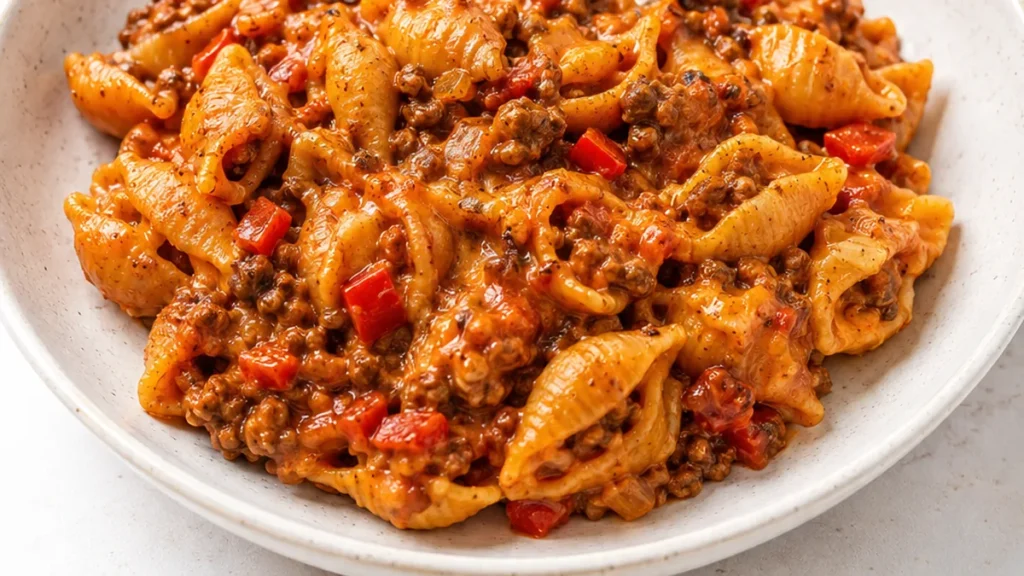
Taco pasta brings together the flavors of your favorite tacos in a comforting dish that’s easy to prepare. This one-pot meal eliminates the hassle of lengthy cooking and cleanup, allowing you to enjoy maximum flavor with minimal effort. Whether you’re feeding a hungry family or just craving some serious comfort food, this taco pasta is sure to hit the spot.
Key takeaways
- Choosing the right pasta shape enhances texture and flavor absorption.
- Balancing spices is essential for achieving authentic taco flavor.
- One-pot cooking infuses the pasta with rich flavors and simplifies the process.
- Addressing common cooking issues ensures a successful and enjoyable dish.
Mind-Blowing Cheesy Taco Pasta (One Pot!)
Ingredients
- 1 tablespoon olive oil
- 1 pound ground beef
- 1 small onion (finely diced)
- 1 small red bell pepper (finely diced)
- 4 cloves garlic (minced)
- 1 (5 ounce) can tomato paste
- 4 cups beef stock
- 1 pound uncooked pasta (I used shells)
- 2 tablespoons chili powder
- 2 teaspoons ground cumin
Instructions
- Heat the olive oil in a large stockpot over medium-high heat. Add the ground beef and sauté, breaking it up with a wooden spoon as it cooks, for 3 minutes. Add the onion, bell pepper, garlic and continue sautéing for 5 minutes, stirring occasionally, until the beef is browned and the veggies are softened. Stir in the tomato paste until it is evenly combined.
- Add the beef stock, 1 cup water, pasta, chili powder, cumin, salt, oregano and stir to combine. Continue cooking until the broth reaches a simmer. Reduce heat to medium, or whatever temperature is needed to maintain a simmer. Continue cooking for 10 minutes or until the pasta is *just* al dente, stirring the pasta frequently so that it does not accidentally burn on the bottom. If you find that you need more liquid to finish cooking the pasta, just stir in ⅓ cup of additional water whenever needed. (The pasta should be saucy but not overly-soupy once it reaches al dente. Remember that the sauce will thicken up considerably once the cheese is added!)
- Stir in the shredded cheese until combined. Taste and season with additional salt if needed.
- Serve immediately, topped with your desired toppings, and enjoy!
Video
Notes
– Don’t overcook the pasta; it will continue to soften in the sauce.
– Garnish generously with your favorite taco toppings like sour cream, salsa, avocado, or cilantro!
– For a spicier kick, add a pinch of cayenne pepper or a dash of hot sauce. Nutrition information is an estimate, calculated automatically. Values vary with brands, substitutions and portion sizes.
Choosing the Right Pasta for Taco Pasta
The choice of pasta significantly impacts the texture and overall experience of taco pasta. Shells are ideal as their shape captures sauce and cheese effectively, creating a delightful bite. Other pasta types, like penne or fusilli, can also work, but they may not hold the sauce as well. For optimal cooking, ensure the pasta is uncooked when added to the pot, allowing it to absorb flavors as it cooks.
Balancing Flavors with Seasonings
The combination of chili powder and ground cumin is crucial for achieving the authentic taco flavor in this dish. Chili powder, typically a blend of spices, provides heat and depth, while cumin adds a warm, earthy note. Adjusting these spices can enhance or mellow the dish according to personal preference. For a milder version, reduce the chili powder and increase the cumin slightly to maintain flavor without overwhelming heat.
Understanding the One-Pot Cooking Method
One-pot cooking simplifies the process and infuses the pasta with rich flavors from the meat and spices. Start by sautéing the ground beef, onion, red bell pepper, and garlic. This step is essential for developing the Maillard reaction, which adds complexity to the dish. After browning the meat, add the tomato paste and beef stock, allowing the pasta to cook directly in the mixture. This method ensures the pasta absorbs the savory broth, creating a cohesive dish.
Addressing Common Cooking Issues
- Problem: Pasta is mushy.
- Cause: Overcooking pasta. Ensure to monitor cooking time closely, as pasta should be al dente when finished.
- Problem: Lack of flavor.
- Cause: Insufficient seasoning. Taste the mixture before adding the pasta and adjust spices accordingly.
- Problem: Sauce is too thick.
- Cause: Not enough liquid. If the sauce thickens too much during cooking, add more beef stock gradually until the desired consistency is reached.
- Problem: Uneven cooking of pasta.
- Cause: Incorrect heat distribution. Stir the pasta occasionally to ensure even cooking and prevent sticking.
Exploring Ingredient Swaps for Taco Pasta
Experimenting with different ingredients can yield exciting variations of taco pasta. Here are some swaps to consider:
- Ground Turkey or Chicken: A leaner alternative to beef, resulting in a lighter dish but may require additional seasoning to enhance flavor.
- Vegetable Broth: For a vegetarian version, substitute beef stock with vegetable broth. This will alter the flavor profile but can still be delicious.
- Black Beans: Adding canned black beans can enhance texture and protein content, creating a heartier meal.
- Cheddar Cheese: While this recipe calls for a cheesy finish, experimenting with pepper jack can add a spicy kick.
How to Properly Store Leftover Taco Pasta
Storing leftover taco pasta requires careful attention to maintain its flavor and texture. Allow the dish to cool to room temperature before transferring it to an airtight container. Properly stored, taco pasta can last in the refrigerator for up to 3-4 days. For longer storage, consider freezing it. Place the cooled pasta in a freezer-safe container, ensuring it is well-sealed. It can be stored in the freezer for up to 2-3 months. When reheating, add a splash of beef stock or water to maintain moisture and prevent drying.
Scaling Your Taco Pasta Recipe for Larger Gatherings
Scaling this taco pasta recipe is straightforward, but there are key factors to consider to maintain flavor and texture. For each additional pound of ground beef, increase the amount of pasta to 1 pound, and adjust the beef stock accordingly, maintaining a 4:1 ratio of stock to pasta. Seasonings like chili powder and cumin should also be increased proportionally. However, be cautious with the cooking time; larger batches may require a few extra minutes of simmering to ensure the pasta cooks evenly.
Choosing the Right Equipment for Cooking Taco Pasta
The equipment used can significantly influence the outcome of your taco pasta. A heavy-bottomed pot or Dutch oven is ideal as it distributes heat evenly, preventing hot spots that can lead to uneven cooking. Avoid non-stick pans for this recipe, as the browning of the beef and vegetables is crucial for developing flavor through the Maillard reaction. If using a pressure cooker, reduce the liquid slightly and adjust cooking time, as pressure cooking can intensify flavors and reduce cooking duration.
Seasonal Ingredient Quality and Its Impact on Taco Pasta
The quality of ingredients can greatly affect the final dish. During peak seasons, fresh produce like bell peppers and onions will provide enhanced flavor and texture. Opt for locally sourced, in-season vegetables when possible, as they tend to be fresher and more flavorful. If using canned tomatoes or tomato paste, look for brands that use high-quality tomatoes for a richer taste. Remember that ingredient freshness can alter cooking times; for example, fresher vegetables may cook faster than older ones.
Why the texture of your taco pasta can vary
The texture of your taco pasta can greatly depend on the cooking time and the type of pasta used. For a creamy, cohesive dish, ensure the pasta is cooked until just al dente, which typically takes around 8-10 minutes for shells. Overcooking can lead to a mushy texture, while undercooking can result in a chewy bite. The starch released from the pasta during cooking helps to thicken the sauce, creating a more integrated dish. To maintain the right texture, consider testing the pasta a minute or two before the suggested cooking time on the package.
How to effectively scale your taco pasta recipe
Scaling your taco pasta recipe can be straightforward, but attention to detail is key. For each additional pound of ground beef, increase the other ingredients proportionally. However, be cautious with the liquid; you may need to adjust the beef stock slightly based on the pasta’s absorption rate. When scaling, consider using a larger pot to allow for proper cooking and to prevent overflow. If cooking for a crowd, keep in mind that cooking time may increase slightly due to the larger volume, so check the pasta for doneness periodically.
Understanding the impact of ingredient freshness on taco pasta
The quality of your ingredients can significantly affect the flavor and overall success of your taco pasta. Fresh vegetables like onions and bell peppers provide a crunch and sweetness that dried or older produce cannot replicate. Opt for high-quality ground beef, ideally with a fat content around 80/20, which ensures a juicy and flavorful base. Additionally, using fresh garlic instead of pre-minced can enhance the dish’s aromatic profile. Seasonal produce not only tastes better but can also provide better nutritional value, making your taco pasta not just delicious but also healthier.
How to Make Taco Pasta Ahead of Time
Preparing taco pasta in advance can be a game-changer for busy weeknights. To make it ahead, cook the dish as per the recipe but stop just before the pasta is fully cooked, about 2 minutes shy of the recommended time. This will ensure that the pasta doesn’t become mushy when reheated. Allow the dish to cool completely before transferring it to an airtight container. Store it in the refrigerator for up to 3 days. When ready to serve, reheat the taco pasta in a pot over medium heat, adding a splash of beef stock or water to help revive the sauce’s consistency. Stir frequently until heated through, and check the pasta for doneness, adding more liquid if necessary.
How Batch Size Affects Cooking Time and Texture
Scaling your taco pasta recipe is straightforward but requires attention to cooking times and pot size. When increasing the batch size, use a larger pot to ensure even cooking and prevent overcrowding. A larger volume of ingredients may require a longer cooking time, so monitor the pasta closely. For example, if you double the recipe, expect to add an additional 3-5 minutes to the cooking time based on the thickness of your pasta and the amount of liquid. Conversely, if you decrease the batch size, reduce cooking time accordingly. Remember, pasta should be cooked until al dente, as it will continue to cook slightly even after being removed from heat. Adjusting the ratios of spices and liquid will also ensure that the flavor remains balanced, regardless of the batch size.
Pro tips
- Use Mexican blend shredded cheese for an authentic taco flavor.
- Don’t overcook the pasta; it will continue to soften in the sauce.
- Garnish generously with your favorite taco toppings like sour cream, salsa, avocado, or cilantro!
- For a spicier kick, add a pinch of cayenne pepper or a dash of hot sauce.
Enjoy this incredibly satisfying One Pot Cheesy Taco Pasta! It’s a simple yet delicious way to bring taco night to your dinner table any night of the week.
Frequently asked questions
Can I use a different type of meat for this recipe?
Yes, you can substitute ground beef with ground turkey, chicken, or even plant-based alternatives. Just be mindful of adjusting seasonings, as different meats have varying flavor profiles.
What can I do if my sauce is too thick?
If the sauce becomes too thick while cooking, gradually add more beef stock or water until you reach the desired consistency. Stir well to incorporate the liquid.
How can I make this dish vegetarian?
To make taco pasta vegetarian, replace the ground beef with a mix of sautéed vegetables or canned beans and use vegetable broth instead of beef stock. Adjust the spices to maintain flavor.
Can I make this dish ahead of time?
Yes, you can prepare taco pasta ahead of time. Store it in an airtight container in the refrigerator. Reheat gently on the stove, adding a splash of broth or water to loosen the sauce if needed.
More from Baked Pasta Recipes →