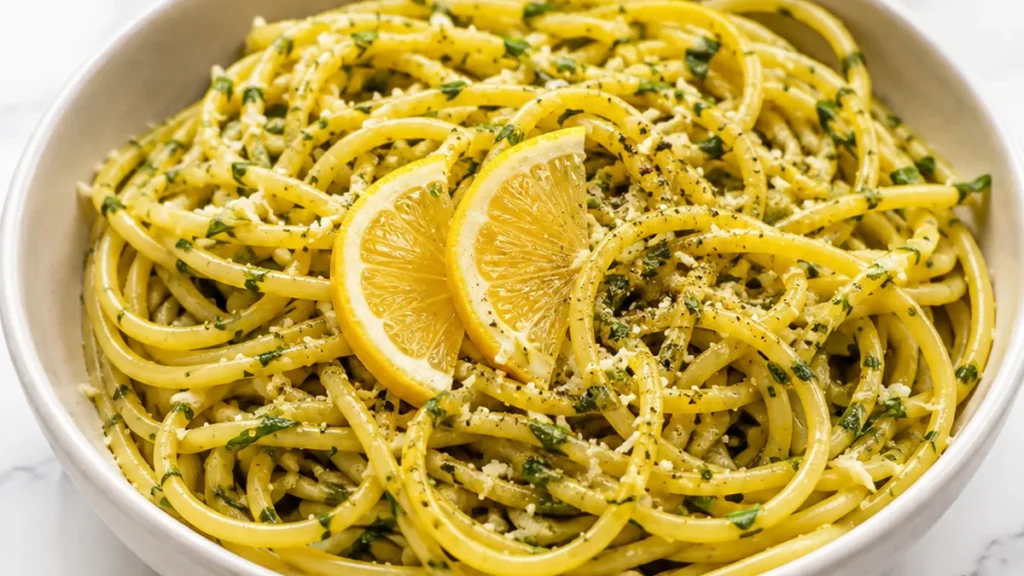
Lemon pasta is a deceptively simple dish that relies on the freshness of its ingredients to shine. This recipe delivers bright, zesty lemon notes balanced by aromatic basil and rich butter, all coating perfectly cooked pasta. It’s a dish that tastes like summer, no matter the season. The key to this lemon pasta is the quality of your basil and lemon, and not overcooking the pasta. A quick blanch ensures the basil’s bright green color and locks in its flavor before blending into the butter.
Key takeaways
- Creating a stable emulsion is key for flavor.
- Cook pasta al dente for optimal sauce absorption.
- Use reserved pasta water to adjust sauce consistency.
- Fresh ingredients enhance the dish’s unique flavor profile.
Vibrant Lemon Basil Butter Pasta: Sunshine in a Bowl!
Ingredients
- 3 cups packed (~80 grams) fresh basil leaves
- 6 tablespoons salted butter (room temperature)
- 1 large clove garlic
- 1 small lemon (zested and juiced)
- fine sea salt and freshly-ground black pepper
- 1 pound uncooked pasta (I used bucatini)
- Parmesan cheese (for serving)
Instructions
- Blanch basil (optional): Boil water, place basil in strainer, submerge 5-10 sec, plunge into ice water, wring dry, transfer to food processor.
- Make lemon basil butter: Add butter, garlic, lemon zest, 2 tbsp lemon juice, salt, and pepper to food processor. Pulse until smooth, scraping sides.
- Cook pasta: Generously salt boiling water, cook pasta until al dente. Strain and return to pot.
- Toss: Add lemon basil butter to pasta. Toss with tongs until evenly coated. Taste and season.
- Serve: Serve immediately, garnished with lots of Parmesan cheese.
Notes
Creating the Perfect Basil Emulsion
The key to a vibrant lemon basil butter pasta lies in creating a stable emulsion between the basil, butter, and lemon juice. Start by blending 3 cups of fresh basil leaves with 6 tablespoons of room temperature salted butter and 1 large clove of garlic. The butter should be soft enough to blend smoothly, ideally around 70°F (21°C). This process ensures that the basil’s aromatic oils are evenly distributed, resulting in a rich, flavorful sauce.
Controlling Pasta Cooking for Optimal Texture
Cooking 1 pound of bucatini pasta to the perfect al dente texture is crucial. Boil the pasta in salted water (about 1 tablespoon of salt per gallon of water) for 8-10 minutes, depending on package instructions. Test the pasta a minute before the suggested time; it should be firm to the bite but not hard. This texture allows the pasta to absorb the sauce better, enhancing the overall flavor.
Addressing Common Sauce Issues
If your sauce separates or does not cling to the pasta, it may be due to improper mixing or temperature. Ensure the pasta is hot when adding the sauce, allowing the butter to melt and combine effectively. If the sauce is too thick, add a splash of reserved pasta water (about 1/4 cup) to achieve the desired consistency. Conversely, if it’s too thin, consider simmering it briefly to reduce and thicken.
Ingredient Swaps and Their Effects
- Fresh Basil vs. Dried Basil: Using dried basil will result in a less vibrant flavor and aroma. If using dried, reduce the amount to about 1 tablespoon, as it is more concentrated.
- Salted Butter vs. Unsalted Butter: Opting for unsalted butter allows for better control of salt levels. If using unsalted, add salt to taste, usually around 1/2 teaspoon.
- Parmesan Cheese vs. Pecorino Romano: Pecorino Romano offers a sharper taste compared to Parmesan. This swap will add a distinct tanginess to the dish.
Unique Characteristics of Lemon Basil Butter Pasta
This dish stands out due to the combination of fresh basil and lemon, which creates a unique flavor profile not commonly found in traditional pasta dishes. The brightness from the lemon zest and juice enhances the herbal notes of the basil, making it a refreshing option that pairs well with the richness of butter. This balance is what sets it apart from other pasta recipes.
How to Properly Store Leftover Lemon Basil Butter Pasta
To maintain the vibrant flavors and textures of lemon basil butter pasta, proper storage is essential. Allow the pasta to cool completely before transferring it to an airtight container. It can be refrigerated for up to 3 days. When reheating, add a splash of water or additional butter to restore moisture, as the pasta may dry out in the fridge. Avoid freezing this dish, as the fresh basil and butter can separate and lose their creamy texture upon thawing.
Scaling the Recipe for Larger Gatherings
This lemon basil butter pasta recipe is easily scalable, making it perfect for gatherings. When doubling the recipe, maintain the same ingredient ratios. However, be cautious with the cooking time; larger batches may require a slightly longer cooking time for the pasta. Use a large pot to ensure even cooking and avoid overcrowding. For a 2-pound batch, consider using 12 tablespoons of butter and 6 cups of basil, adjusting the garlic and lemon juice to taste.
Choosing the Right Equipment for Optimal Results
The choice of equipment can significantly impact your lemon basil butter pasta. A large pot is essential for cooking the pasta evenly. Use a high-quality non-stick skillet for sautéing the garlic and emulsifying the butter and basil. A food processor can simplify the process of blending the basil and butter into a smooth emulsion. If you prefer a chunkier texture, chop the basil by hand instead of using a processor. Ensuring your tools are clean and dry will also help maintain the integrity of the flavors.
Effects of Seasonal Ingredients on Flavor
Using seasonal ingredients can greatly enhance the flavor of your lemon basil butter pasta. Fresh basil is best in the summer months when it is at its peak flavor. During winter, basil may be less aromatic and more bitter. Opt for organic or locally sourced lemons for a brighter flavor. Additionally, the quality of the butter plays a crucial role; choose high-fat, grass-fed butter for a richer taste. The overall freshness of ingredients will impact the dish’s vibrancy and taste.
How to Ensure Your Pasta Remains Al Dente
The key to achieving perfectly cooked pasta lies in timing and water temperature. For bucatini, bring a large pot of salted water to a rolling boil before adding the pasta. Cook for about 8-10 minutes, tasting a minute or two before the package instructions to ensure it’s al dente. Remember, the pasta will continue to cook slightly when combined with the hot lemon basil butter sauce, so it’s crucial not to overcook it in the boiling water.
Understanding the Role of Fresh Ingredients in Flavor
Fresh basil and lemon are the stars of this dish, and their quality significantly impacts the final flavor. Use vibrant, fragrant basil leaves that are deep green without any browning. The lemon should be organic if possible, as this will enhance the zest and juice’s brightness. Fresh ingredients not only amplify the dish’s taste but also contribute to its visual appeal, making it a true representation of summer on a plate.
Optimal Serving Techniques for Lemon Basil Butter Pasta
To serve lemon basil butter pasta effectively, consider the presentation. Use a large bowl or a platter to allow the pasta to be tossed with the sauce evenly. Garnish with freshly grated Parmesan cheese and a few extra basil leaves for color. Serve immediately after mixing to ensure the pasta is warm and the sauce is glossy. Pair this dish with a light salad or a crisp white wine to complement the vibrant flavors.
Understanding the Role of Butter in Emulsifying the Sauce
The key to a successful lemon basil butter pasta lies in the technique of emulsification, where fat and water combine to create a cohesive sauce. The butter, when properly melted and combined with the starchy pasta water, forms an emulsion that clings to the pasta. Use about 1 cup of reserved pasta water for every pound of pasta to achieve the right consistency. The butter should be at room temperature to facilitate blending. If the butter is too cold, it may not emulsify properly, leading to a greasy sauce. Aim for a final sauce temperature around 140°F (60°C) to maintain the emulsion without breaking it.
Scaling the Recipe for Larger Gatherings
When scaling up the lemon basil butter pasta recipe, consider the ratio of ingredients carefully. For every additional pound of pasta, increase the butter to 6 tablespoons and the basil to 3 cups. However, be cautious with the garlic and lemon; one clove and one lemon zest/juice can suffice for up to 2 pounds of pasta, as these flavors can become overpowering. Additionally, ensure you have a large enough pot to cook the pasta evenly and a spacious pan for the sauce to prevent overcrowding, which can hinder the emulsification process. Cooking times may remain similar, but always taste and adjust as necessary.
How to Prepare Lemon Basil Butter Pasta in Advance
Preparing lemon basil butter pasta ahead of time can be a great way to save time on busy days. To make this dish in advance, cook the pasta al dente, then drain and rinse it under cold water to stop the cooking process. Toss the pasta with a little olive oil to prevent sticking. For the sauce, blend the basil, butter, garlic, lemon zest, and juice until smooth, then store it in an airtight container in the refrigerator for up to two days. When ready to serve, simply reheat the sauce gently over low heat and combine it with the pasta, adding a splash of reserved pasta water to achieve the desired consistency. This method allows the flavors to meld beautifully, enhancing the overall taste.
Understanding the Role of Freshness in Flavor and Presentation
The quality of your ingredients directly impacts the flavor and presentation of lemon basil butter pasta. Fresh basil should be vibrant green and fragrant, as older leaves can turn brown and lose their aromatic qualities. When using lemon, opt for organic if possible, as they are less likely to have wax coatings that can affect flavor. The butter should be of high quality—look for European-style butter with a higher fat content for a richer taste. Additionally, the pasta should be cooked just before serving to maintain its texture. Fresh ingredients not only contribute to the dish’s flavor but also enhance its visual appeal, creating a dish that is as beautiful as it is delicious.
Pro tips
- For an extra bright green basil, quickly blanch the leaves in boiling water for 10 seconds before shocking them in ice water.
- Taste and adjust seasoning before serving; the salt and pepper are crucial for balancing the lemon and butter.
- If you prefer a smoother sauce, finely mince the garlic instead of pulsing it in the food processor.
- This recipe is best served immediately to enjoy the fresh flavors and al dente pasta texture.
Enjoy this delightful lemon basil butter pasta for a quick, flavorful, and satisfying meal. Experiment with adding a touch of red pepper flakes for a hint of heat!
Frequently asked questions
What type of pasta works best for this recipe?
Bucatini is a great choice due to its hollow center, which holds onto the sauce well. However, you can use other pasta types like spaghetti or fettuccine if preferred.
Can I make this dish vegan?
Yes, you can substitute the butter with a plant-based butter alternative and omit the Parmesan cheese or use a vegan cheese substitute for a similar flavor.
How can I store leftovers of this pasta?
Store any leftovers in an airtight container in the refrigerator for up to 3 days. Reheat gently on the stove, adding a splash of water to revive the sauce.
Can I add protein to this dish?
Absolutely! Grilled chicken, shrimp, or sautéed vegetables can be added for extra protein and texture, complementing the flavors of the lemon basil butter pasta.
More from Baked Pasta Recipes →