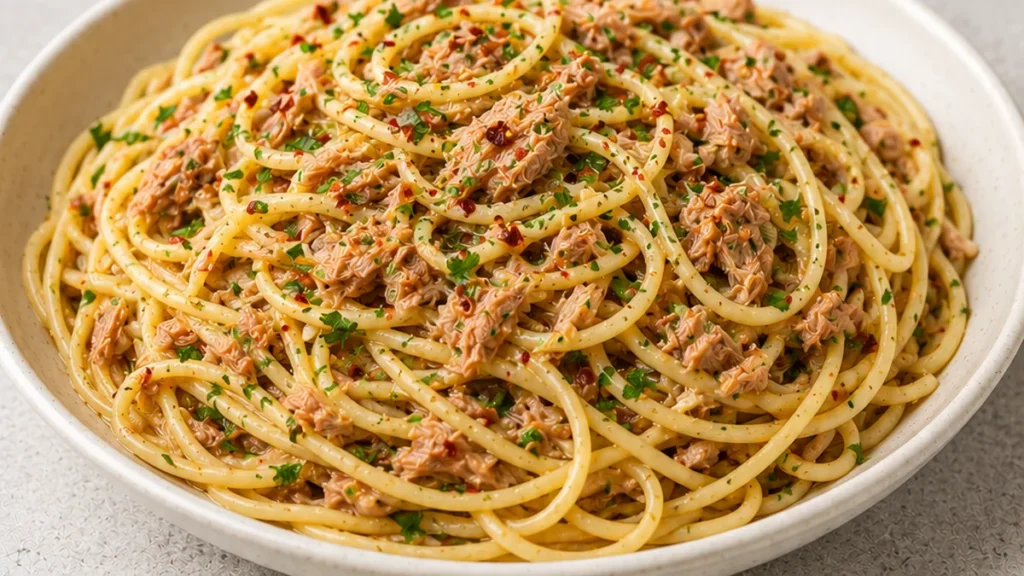
This tuna pasta recipe uses common pantry ingredients to create a flavorful dish. It’s a straightforward method for preparing canned tuna, moving beyond typical casseroles for a quick meal.
Key takeaways
- The key to a great canned tuna pasta is emulsifying the reserved tuna oil with starchy pasta water to create a rich sauce.
- Season the pasta water generously for flavourful pasta.
- Sauté aromatics like garlic and anchovies until fragrant before adding pasta to the pan.
- Finish cooking the pasta in the sauce with the reserved tuna oil and pasta water for maximum flavour absorption.
Ultimate Canned Tuna Pasta
Ingredients
- 200 g spaghetti
- 1 tbsp cooking salt
- 285 g canned tuna in oil, drained, oil reserved
- 2 clove garlic, finely minced
- 2 anchovy fillets, minced
- 1/2 tsp chilli flakes
- 2 tsp baby capers
- 1 tbsp parsley, finely chopped
- 1 tsp lemon zest
- 2 tbsp lemon juice
Instructions
- Bring 3 litres of water to the boil with 1 tbsp salt. Cook pasta per packet directions minus 1 minute. Reserve ~1 cup pasta water before draining.
- In the same pot, heat reserved tuna oil over medium heat. Add garlic, anchovies, and chilli flakes. Cook and stir for 1 minute until fragrant.
- Add drained pasta and capers to the pot with 1/3 cup reserved pasta water. Toss vigorously with 2 spatulas for 2 minutes, emulsifying the sauce.
- Turn off the heat. Add drained tuna, parsley, lemon zest, and lemon juice. Season with salt and pepper to taste. Gently toss to combine, keeping some tuna chunks intact.
- Serve immediately, garnished with extra parsley and lemon zest if desired.
Notes
The technique that makes it
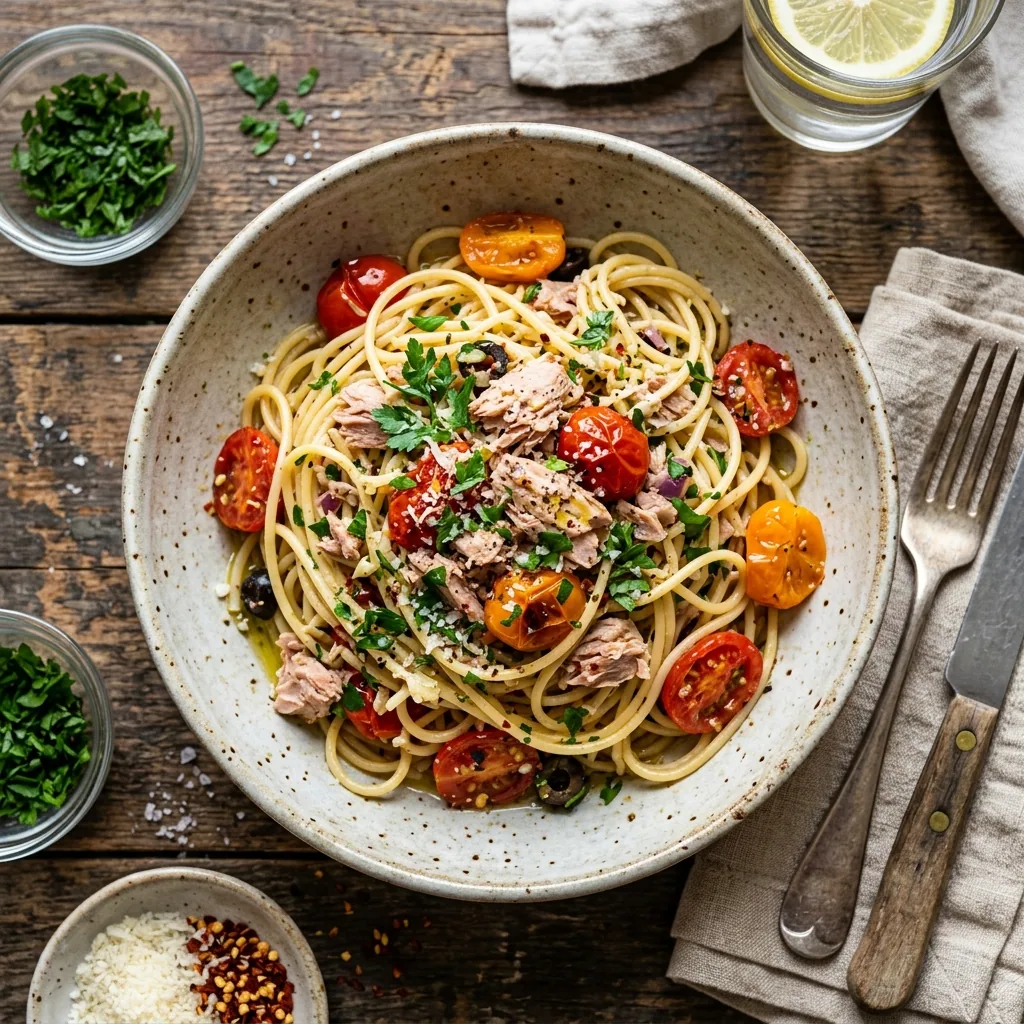
What makes this simple tuna pasta work is how the reserved tuna oil and pasta cooking water are emulsified to create a rich, cohesive sauce. When the spaghetti is cooked al dente, it retains a slight bite that is crucial for texture. As the pasta finishes cooking in the pan with the garlic, anchovies, chilli flakes, and capers, it absorbs these flavours. The reserved tuna oil, being rich in flavour and fat, acts as a base for the sauce. Crucially, adding a ladleful of the starchy pasta cooking water is key. The starch in the water helps to bind the oil and water together, preventing a greasy separation and creating a glossy, flavourful coating that clings beautifully to each strand of spaghetti. This technique transforms humble ingredients into a surprisingly complex and satisfying dish.
Troubleshooting
- Problem: The sauce is too oily and greasy.
Fix: Ensure you’ve added enough starchy pasta water. The starch is essential for emulsifying the oil. Stir vigorously to help the oil and water combine. If it’s still too oily, you can drain off a small amount of excess oil before adding the pasta water. - Problem: The pasta is bland or lacks flavour.
Fix: Make sure you’ve seasoned the pasta cooking water generously with salt. It should taste like the sea. Also, ensure the garlic, anchovies, and chilli flakes are sautéed until fragrant before adding the pasta to the pan, releasing their full flavour. - Problem: The sauce is too dry or clumpy.
Fix: You likely haven’t used enough pasta cooking water. Add another splash or two, stirring continuously, until the sauce reaches a glossy, coating consistency. The heat from the pasta and the pan will help it come together. - Problem: The tuna is dry and crumbly.
Fix: Avoid overcooking the tuna. Add it towards the end of the cooking process, just long enough to heat through. The residual heat from the pasta and sauce is often sufficient.
Substitutions
- Tuna: While oil-packed tuna is recommended for its flavour and moisture, you can substitute with tuna packed in brine or water. If using water-packed tuna, you will lose some richness, so consider adding a little extra olive oil to the sauce for body.
- Anchovy Fillets: Anchovies provide a deep umami flavour. If unavailable or disliked, you can omit them, but the sauce will be less complex. A tiny pinch of MSG or a dash of Worcestershire sauce can offer a similar savoury depth, used sparingly.
- Capers: Capers add a briny, salty pop. If you don’t have capers, you can omit them, but you might want to slightly increase the salt in the dish or add a few chopped olives for a similar salty element.
- Lemon Zest/Juice: Both add brightness. If you don’t have fresh lemons, a good quality bottled lemon juice can be used, though fresh is always preferred for the zest’s aromatic oils. Ensure the juice is added off the heat to preserve its fresh flavour.
Pro tips
- Reserve at least 1/3 cup of pasta cooking water – the starch in it is crucial for creating a silky, emulsified sauce that clings to the pasta.
- Don’t overcook the garlic and anchovies; cook them just until fragrant (about 1 minute) to avoid a bitter taste.
- Gently fold in the tuna at the end and try to keep some larger chunks for texture. Over-mixing can make the tuna mushy.
- This dish is best served immediately while the pasta is hot and the sauce is fresh. Adjust seasoning (salt, pepper) just before serving.
This tuna pasta is a testament to how simple ingredients can create something truly special. Experiment with different pasta shapes or add a sprinkle of red pepper flakes for extra heat. Enjoy this quick, flavorful meal!
More from Easy Pasta Recipes →
Frequently asked questions
What kind of canned tuna is best for pasta?
For the best flavor and texture in pasta, opt for oil-packed tuna, preferably chunk light or solid white albacore. Oil-packed tuna tends to be more moist and flavorful than water-packed. Drain it well before adding to your pasta to avoid a greasy sauce. If using water-packed, you can add a little extra olive oil to compensate.
Can I make canned tuna pasta ahead of time?
Yes, you can prepare the sauce and cook the pasta separately ahead of time. Store them in airtight containers in the refrigerator for up to 2 days. When ready to serve, reheat the sauce gently and cook the pasta until al dente. Combine the two, adding a splash of pasta water or olive oil if needed to loosen the sauce. Avoid overcooking the pasta initially.
How do I store leftover tuna pasta?
Let the pasta cool completely before storing. Transfer to an airtight container and refrigerate for up to 3 days. Reheat gently in a saucepan over low heat, adding a little water or broth to prevent drying out, or microwave until heated through. Canned tuna pasta can become a bit softer upon reheating, so it’s best enjoyed fresh if possible.
What can I add to canned tuna pasta to make it better?
Improve your canned tuna pasta with fresh ingredients. Consider adding sautéed garlic and onions, capers, olives, sun-dried tomatoes, or fresh herbs like parsley or basil. A squeeze of lemon juice or a pinch of red pepper flakes can also add brightness and a touch of heat. Don’t forget a sprinkle of Parmesan cheese for richness.