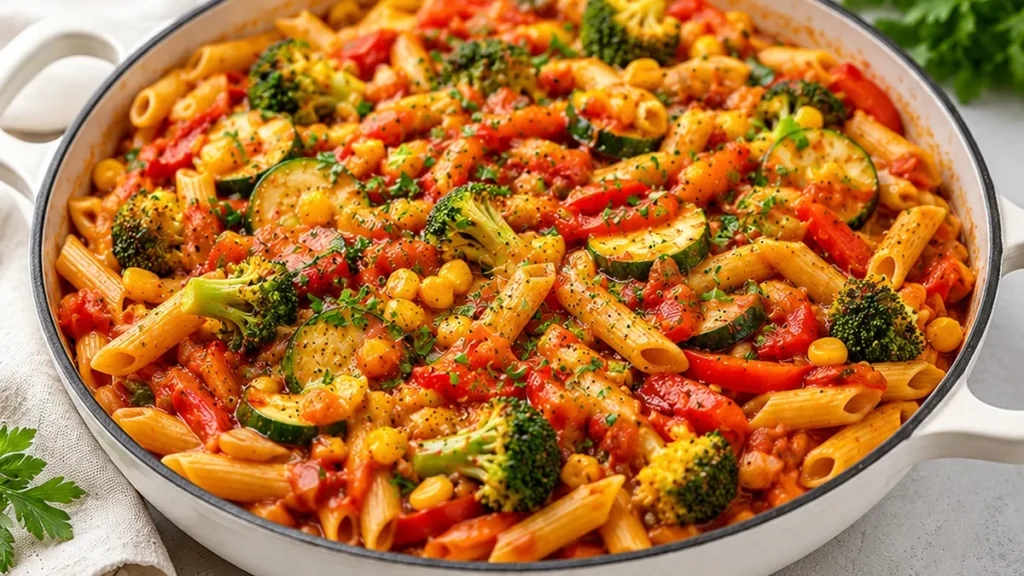
Vegetable pasta is a straightforward one-pot meal. This recipe uses fresh ingredients and takes less than 30 minutes to prepare. It’s ideal for weeknight dinners when time is limited.
Key takeaways
- Cook pasta directly in the sauce for maximum flavor absorption and a naturally thickened consistency.
- Balance liquid levels carefully to achieve perfectly cooked pasta and a rich sauce.
- Sauté aromatics and firmer vegetables first to build a robust flavor base.
- Stir frequently to prevent sticking and ensure even cooking.
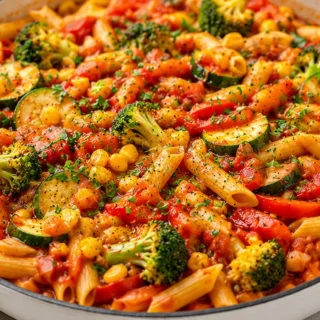
One-Pot Vegetable Pasta: A Colorful Delight!
Ingredients
- 1 tbsp olive oil
- 2 garlic cloves, minced
- 1 onion, finely chopped
- 2 zucchinis, halved lengthwise and cut into 0.8cm slices
- 1 red capsicum, halved and sliced
- 1 cup corn, frozen or canned
- 1 broccoli, broken into bite-size florets
- 250 g ziti or penne, or other short pasta
- 800 g crushed tomato
- 1.5 cups vegetable or chicken broth
Instructions
- Heat 1 tbsp olive oil in a large pot over medium heat. Add 2 minced garlic cloves and 1 finely chopped onion. Cook slowly for 3 to 4 minutes until the onion is translucent and sweet.
- Turn heat up to medium-high. Add 2 sliced zucchinis and 1 sliced red capsicum. Cook for 1 1/2 minutes.
- Add 800g crushed tomatoes, 1.5 cups broth, corn, and broccoli florets. Stir until the tomato paste dissolves. (Do not add pasta yet).
- When the liquid starts bubbling, lower the heat to medium. Add 250g short pasta and stir. Top with broccoli florets, pushing them into the liquid.
- Place a lid on the pot and cook for 5 minutes.
- Remove the lid. Cook for another 3 to 4 minutes, stirring frequently, until the pasta is almost cooked through and most of the liquid has been absorbed.
- Stir through half the cheese (if using). Adjust salt and pepper to taste.
- Top with the remaining cheese, put the lid back on. Leave for 1 minute until the cheese is melted and the pasta is perfectly cooked.
Notes
The technique that makes it
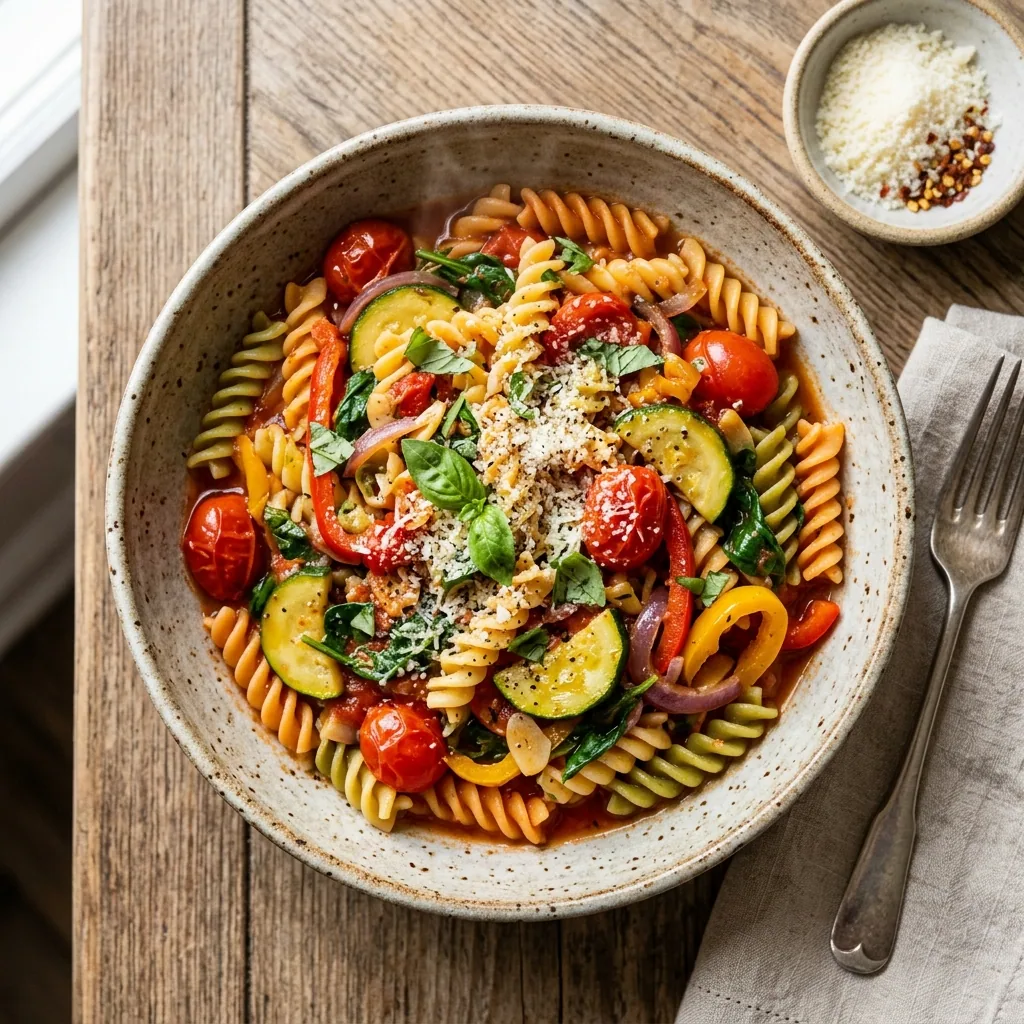
The beauty of this one-pot vegetable pasta lies in its simplicity and the trick to cooking the pasta directly in the sauce. This method, often referred to as ‘pasta affogata’ or ‘pasta in umido’ in Italian cuisine, allows the pasta to absorb the flavors of the vegetables and tomato base as it cooks. The starch released from the pasta also helps to thicken the sauce, creating a cohesive and rich consistency without the need for a separate sauce preparation. Key to success is the balance of liquid. The broth and crushed tomatoes provide the necessary moisture for the pasta to cook al dente, while the vegetables release their own water content. Ensuring the correct ratio of liquid to pasta is crucial; too little liquid and the pasta will be undercooked and gummy, too much and the sauce will be watery. The initial sautéing of the aromatics (garlic and onion) and then the firmer vegetables (capsicum and broccoli) builds a flavor foundation before the liquids are added. This step caramelizes the sugars in the vegetables, deepening their taste and aroma.
Troubleshooting
- Failure: Pasta is undercooked and still hard.
Fix: Add more broth or water, about 1/4 cup at a time, cover, and continue cooking on low heat until the pasta reaches your desired doneness. Stir occasionally to prevent sticking. - Failure: Sauce is too watery.
Fix: If the pasta is cooked but the sauce is thin, increase the heat to medium-high and let it simmer uncovered for a few minutes, stirring frequently, to allow excess liquid to evaporate. - Failure: Vegetables are mushy.
Fix: Ensure vegetables are cut into uniform, appropriate sizes for their cooking time. Add quicker-cooking vegetables like corn and zucchini later in the cooking process, or slightly undercook them initially. - Failure: Pasta is sticking to the bottom of the pot.
Fix: Stir the pasta and vegetables frequently throughout the cooking process, especially during the initial stages when the starch is being released. Ensure there is sufficient liquid.
Substitutions
- Vegetables: Replace zucchini and capsicum with other quick-cooking vegetables such as bell peppers of any color, mushrooms, or pre-blanched green beans. For a heartier dish, add pre-cooked lentils or chickpeas.
- Broth: Chicken broth can be used if vegetable broth is unavailable, though it will impart a slightly different flavor profile. For a vegan option, ensure you use vegetable broth.
- Tomatoes: Diced tomatoes can be used instead of crushed tomatoes, but the sauce will have a chunkier texture. You may need to cook slightly longer to break down the diced tomatoes.
- Pasta Shape: Any short pasta shape that holds sauce well, like fusilli, rotini, or farfalle, will work effectively in this one-pot method.
Pro tips
- Feel free to customize with your favorite vegetables.
- For a creamier texture, add a splash of cream or cheese while cooking.
- Don’t overcook the pasta; it should be al dente when finished.
- Store any leftovers in the fridge for up to 3 days.
Try this one-pot vegetable pasta recipe today and enjoy the flavorful blend of fresh vegetables and pasta. Feel free to experiment with different ingredients to make it your own!
More from Easy Pasta Recipes →