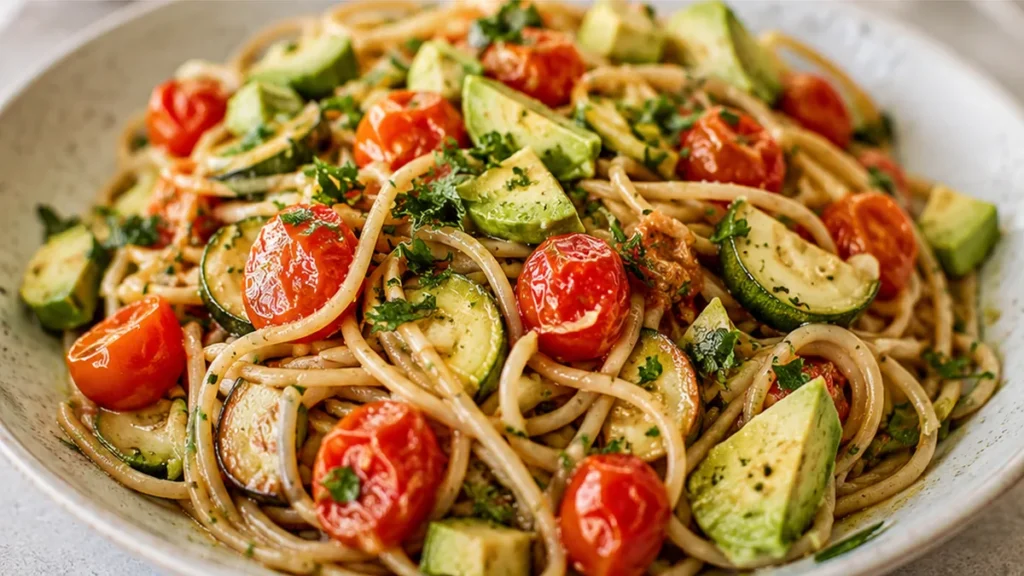
The secret to truly flavorful zucchini spaghetti lies in balancing textures and ensuring a sauce that clings beautifully without being heavy. This recipe for zucchini spaghetti achieves just that, combining tender-crisp spiralized zucchini with a rich, yet fresh, avocado sauce and juicy burst tomatoes, creating a dish that feels both indulgent and light. The key to avoiding watery zucchini noodles is a quick toss in a hot pan, just enough to warm them through without overcooking. This dish is perfect for anyone seeking a bright, plant-forward meal that comes together quickly, offering a delightful twist on traditional pasta.
Key takeaways
- Emulsify the avocado sauce thoroughly for a creamy, cohesive texture.
- Use perfectly ripe avocados to avoid bitterness and ensure smooth blending.
- Adjust sauce consistency with pasta water if it becomes too thick.
- Season adequately with salt to enhance the avocado’s natural flavor.
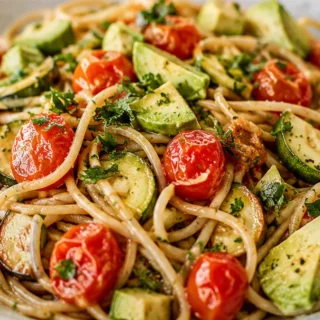
Burst Tomato & Zucchini Spaghetti
Ingredients
- 1 avocado
- 1/4 cup olive oil
- 1/2 teaspoon salt
- 1/2 cup fresh flat leaf parsley
- 3-4 green onions (green parts)
- 1 garlic clove
- 4 ounces whole wheat spaghetti
- 3 cups yellow and red cherry tomatoes
- 2 zucchini, spiralized
- Parmesan cheese for topping
Instructions
- Pulse all sauce ingredients (avocado, olive oil, salt, parsley, green onions, garlic) together in a food processor until smooth. Set aside.
- Cook spaghetti according to package directions. Drain and set aside.
- Heat the cherry tomatoes in a large skillet over medium-high heat with a very quick drizzle of olive oil. Gently shake the pan to get them moving (you might want to grab a lid for this – they really start to spatter when the juices hit the hot oil). Continue cooking until tomatoes are roasty-looking and the skins are split or loosened.
- Add the zucchini to the same pan and toss for 1-2 minutes, until tender-crisp.
- Add the spaghetti and the avocado sauce. Toss until combined.
- Season with salt and pepper, top with reserved tomatoes and Parmesan if desired. Serve immediately.
Notes
The Technique That Makes It: Emulsifying the Avocado Sauce
The magic of this zucchini spaghetti lies in its vibrant, creamy sauce, achieved through a simple yet effective emulsification process. Unlike traditional creamy pasta sauces that rely on dairy or heavy cream, this recipe uses avocado as its base. When blended with olive oil, lemon juice (from the parsley and green onions, which contain citric acid), salt, and garlic, the avocado’s natural fats bind with the other ingredients to create a smooth, cohesive sauce. The key is to blend these ingredients until completely smooth, ensuring the fat molecules from the olive oil are dispersed evenly within the water-based components of the avocado and aromatics. This creates a stable emulsion that coats the whole wheat spaghetti beautifully without separating. The residual heat from the cooked spaghetti and burst tomatoes is just enough to warm the sauce through without cooking the avocado, which can turn it bitter and brown.
Troubleshooting
- Sauce is too thick: Add a tablespoon of pasta water at a time while blending or tossing to loosen the sauce to your desired consistency. The starch in the pasta water helps to further emulsify the sauce.
- Sauce is bland: Ensure you’ve used enough salt to enhance the avocado’s flavor and balance the richness. Freshly squeezed lemon juice (if available) or a pinch more salt can brighten the flavors.
- Avocado is browning/bitter: This usually happens if the avocado is overripe or if the sauce is heated too aggressively. Use a perfectly ripe avocado and gently toss the sauce with the warm pasta and tomatoes, avoiding prolonged direct heat.
- Sauce is separating: This indicates an unstable emulsion. Ensure all ingredients are blended until completely smooth. Adding a little more olive oil or a tiny splash of water during blending can help stabilize it.
Substitutions
- Whole wheat spaghetti: Regular spaghetti, linguine, or even gluten-free pasta can be used. The cooking time may vary slightly, but the sauce will still coat them well.
- Zucchini: Spiralized yellow squash or even thin ribbons of cucumber (added just before serving to maintain crispness) can be used for a similar texture.
- Parsley: Fresh basil or cilantro can offer a different herbaceous note. The flavor profile will change but remain delicious.
- Cherry tomatoes: Halved regular tomatoes or even sun-dried tomatoes (rehydrated) can be used, though the ‘burst’ effect will be less pronounced with regular tomatoes.
Pro tips
- For a truly creamy avocado sauce, ensure your avocado is perfectly ripe.
- Listen for the distinct sizzle of the tomatoes in the hot skillet; this indicates they are bursting and caramelizing beautifully.
- If the zucchini becomes too soft, it will release excess water. Aim for a tender-crisp texture for the best results.
- Store any leftover sauce in an airtight container in the refrigerator for up to 2 days. Reheat gently, as avocado can discolor.
This Burst Tomato and Zucchini Spaghetti with Avocado Sauce offers a fresh perspective on pasta night. Experiment with adding a sprinkle of chili flakes for a kick or fresh basil for extra aroma. Enjoy this simple yet satisfying dish!
Frequently asked questions
Can I make the avocado sauce ahead of time?
It’s best to make the avocado sauce just before serving. Avocado can brown and lose its fresh flavor when exposed to air for too long, even when blended. Making it fresh ensures the brightest color and best taste for your zucchini spaghetti.
My sauce looks a bit watery, what did I do wrong?
This can happen if the avocado is very ripe or if too much liquid was added during blending. Gently toss the pasta and vegetables with the sauce over low heat for a minute, allowing some moisture to evaporate and the sauce to thicken slightly.
What kind of avocado should I use?
Use a ripe but not overly soft Hass avocado. It should yield gently to pressure. Overripe avocados can have brown spots and a more bitter taste, which will affect the final sauce’s flavor and appearance.
Can I add protein to this dish?
Absolutely. Grilled chicken breast, shrimp, or even pan-seared tofu would be excellent additions. Add cooked protein when tossing the spaghetti with the sauce to ensure it’s heated through.
More from Healthy Pasta Recipes →