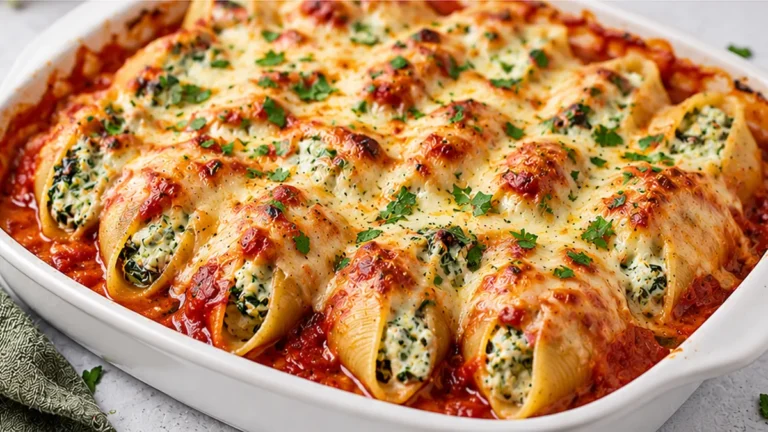

Vegetarian lasagna gets its hearty texture here from mushrooms, walnuts, zucchini, carrots and onion chopped until very fine rather than left in watery pieces. The vegetable mixture cooks down before tomato sauce is added, giving each pasta layer a dense, cohesive filling. This vegetarian lasagna also replaces the usual ricotta layer with mascarpone mixed with grated garlic. I found that spreading it as small dollops instead of one thick patch made each slice easier to portion while keeping creamy pockets throughout.
Key takeaways
- Cook the walnut-mushroom-vegetable filling down until the pan is dry and browned, so no excess water leaks into the bake.
- Spread the mascarpone in a thin film, not heaps, because there is no egg to set it and thick layers slump when sliced.
- Reserve mozzarella for the top for the pull, and let Parmesan melt into the sauce for salt and umami and a browned crust.
- Cover every uncooked noodle fully with sauce and thin a thick jar sauce with water so the noodles hydrate instead of baking hard.

Vegetarian Lasagna With Epic Cheese Pull
Ingredients
- 4 cloves garlic
- 1 onion, peeled and cut into chunks
- 2 medium carrots, cut into chunks
- 8 ounces fresh mushrooms
- 1 cup walnuts
- 1 small zucchini, cut into chunks
- 2 tablespoons butter or olive oil
- 1 teaspoon oregano
- 1 teaspoon Italian seasoning
- 1-2 teaspoons kosher salt + black pepper to taste
- one 24-ounce jar of your favorite tomato sauce
- one 8-ounce container mascarpone
- 2 cloves garlic, grated
- 1 teaspoon salt
- 2 cups shredded Parmesan cheese
- 2 1/2 cups shredded mozzarella cheese
- 1 box uncooked lasagna noodles (about 12 noodles for a 9×13 pan)
Instructions
- Add the mushrooms, walnuts, and zucchini to a food processor and pulse several times until very finely chopped, then move the mixture to a bowl. Process the garlic, onion, and carrots the same way.
- Warm the butter or olive oil over medium-high heat. Add the chopped vegetables and spices, then sauté for 7-10 minutes until very soft and fragrant. Stir in the tomato sauce and salt. Taste and adjust the seasoning as needed because sauce brands vary.
- Heat the oven to 400°F. Stir the mascarpone together with the grated garlic and salt.
- Spread sauce over the base of a 9×13 pan. Build each layer in this order: a few noodles, 1 cup sauce, several dollops of mascarpone, 1/2 cup Parmesan, then 1/2 cup mozzarella. Repeat, usually making 4 layers. Finish with noodles, sauce, cheese, and extra sauce dolloped over the top.
- Cover the pan with foil and bake for 40-45 minutes. Take off the foil and broil for 5 minutes until the cheese browns. Rest for about 10 minutes before slicing and serving.
Notes
Why mascarpone replaces the usual ricotta-and-egg layer here
Most lasagna recipes bind the white layer with ricotta and an egg. This one skips both, and that single swap changes the whole texture. Ricotta is a whey cheese sitting around 8 to 13 percent fat, grainy because its curds are built from loose whey proteins. Mascarpone is cream coagulated with acid and drained, carrying roughly four times the fat of full-fat ricotta source. That extra fat is what makes the middle of this lasagna taste like a sauce rather than a stuffing.
The eight-ounce container, loosened with two grated garlic cloves and a teaspoon of salt, spreads into a thin silk coat instead of sitting in clumps the way a ricotta-and-egg mix does. There is no egg to set, so this layer never turns rubbery or sliceable-firm. It stays creamy from edge to edge. The trade-off: mascarpone is softer and wetter than a drained ricotta mix, so you want it in a thin film, not heaped, or the slices will slump when cut.
How the walnuts turn a vegetable filling into something that eats like meat
The cup of walnuts is doing real sensory work, not just adding bulk. Walnuts are one of the few plant foods dense in free glutamate, the amino acid behind savory taste, carrying hundreds of milligrams per hundred grams source. The eight ounces of mushrooms stack more glutamate on top, and tomato sauce brings its own. Three independent umami sources layered together read on the palate as the meaty depth a ragu gets from browned beef.
To get there, the texture has to be right. Pulse the walnuts, mushrooms, onion, carrots, and zucchini in a food processor to a coarse rubble, not a paste, so each bite still has bite. Then actually cook the mixture down in the butter or oil. Mushrooms are around 90 percent water, and until that water boils off and the pan goes quiet, you are stewing, not browning. Push past that point until the fond browns and the vegetables shrink by roughly a third. That is where the Maillard reaction and the toasted walnut oils build flavor the raw mix cannot.
- Watch for the sizzle to go silent: loud spattering means water is still leaving; a steady low sizzle means browning has started.
- Toast the walnuts in the mix, not separately: their fats carry fat-soluble flavor compounds that need heat to open up.
- Season after the water leaves: salting a watery pan just makes salty liquid; salt the concentrated mixture so the teaspoon or two actually lands on the food.
Getting the cheese pull without boiling the noodles first
The pull in the name is mozzarella doing what no aged cheese can. Mozzarella melts and stretches because its casein protein network still holds the right balance of calcium; acid during its making dissolves just enough of the calcium glue between protein strands so they slide and stretch when heated rather than seizing source. Low-moisture shredded mozzarella, the kind in the two and a half cups here, stretches cleanly once it reaches the 50 to 65 degrees Celsius (122 to 149 degrees Fahrenheit) range where that protein matrix goes fluid source.
The two cups of Parmesan behave completely differently, and that difference is deliberate. Aged Parmigiano-Reggiano sits near 30 percent moisture and has undergone months of proteolysis, which chops the protein strands too short to stretch source. So Parmesan does not give you a pull; it melts into the sauce as concentrated salt and umami and browns into a savory crust on top. Mozzarella pulls, Parmesan flavors. Reserve a generous handful of mozzarella for the very top layer so the stretch is where you see it when you lift a slice.
The noodles are added uncooked. A standard 9 by 13 pan holds about 12 noodles across the layers, and they hydrate by pulling water straight out of the surrounding sauce and cheese during baking. This is the step that decides between a cohesive lasagna and a crunchy or soupy one. The 24-ounce jar of sauce has to be wet enough to feed that process. If your sauce is thick, loosen it: stir a half cup of water into it before layering, and make sure every noodle is fully covered edge to edge, because any noodle corner poking above the sauce will bake up hard and chalky.
Four failures that ruin this lasagna, and the actual fix for each
Every problem with this dish traces back to moisture balance or heat, and each has a clean cause.
- Watery lasagna that pools on the plate: the vegetable filling went in still releasing water. Mushrooms and zucchini are mostly water; if you layered them before the pan went dry and browned, that water ends up in the bake. Fix: cook the mixture down until no liquid runs when you drag a spoon across the pan.
- Hard, chalky noodle edges: a noodle corner sat above the sauce line with nothing to hydrate it. Uncooked noodles only soften by absorbing surrounding liquid. Fix: cover every noodle completely, and thin a too-thick jar sauce with a half cup of water.
- No cheese pull, just a greasy top: the mozzarella overheated or was over-browned under a hard broiler, pushing it past melt into fat release, where the protein network breaks and oil leaks out source. Fix: bake covered first so the cheese melts gently, then uncover only long enough to color the top.
- The white layer slid out when sliced: the mascarpone went on in thick heaps. Because there is no egg to set it, a thick layer stays fluid and slumps. Fix: spread it in a thin film and let the finished lasagna rest 15 to 20 minutes before cutting so the layers firm up.
Swapping ingredients without breaking the structure
Each substitution here has a predictable result and a cost worth knowing before you make it.
- Ricotta for the mascarpone: lighter and less rich, and higher in protein. Drain it well in a sieve and beat in an egg, or the layer will be grainy and wet since you lose mascarpone’s binding fat.
- Pecans or toasted sunflower seeds for walnuts: still adds body and crunch, but you lose some of the free glutamate that gives the filling its meaty read source. Add a spoon of tomato paste to compensate for the missing savory depth.
- Oven-ready noodles for standard uncooked ones: they are thinner and absorb less, so cut back any added water or the lasagna turns soupy. Standard dry noodles give a sturdier, more layered slice.
- Olive oil for the butter: a cleaner, more savory base with no dairy sweetness. You lose the rounding richness butter gives the browned vegetables, so you may want a touch more salt to balance.
Assembling tonight to bake Thursday: how this walnut-mushroom lasagna behaves in the fridge and freezer
Because the noodles here go in dry and rely on the sauce and mascarpone to hydrate them, a rest in the fridge actually works in your favour. Assemble the full 9×13 pan, cover it airtight, and the noodles draw moisture out of the sauce overnight, so they soften before the oven ever sees them. Keep unbaked assembly to 24 hours at or below 4C (40F); past that the walnut-mushroom layer leaches water and the bottom noodle turns gummy. Baking from cold adds real time: an oven-ready lasagna pulled straight from the refrigerator needs roughly 60 minutes at 190C (375F), covered with foil for the first 45 minutes so the top does not scorch while the centre catches up, then uncovered for the final 15 to brown the mozzarella. The mascarpone-Parmesan layer carries more free fat than a ricotta-egg layer, so it can look loose when hot; the 10-minute rest after baking lets it set into sliceable layers.
Fully baked, this lasagna keeps 3 to 4 days refrigerated or 3 to 4 months frozen, per USDA guidance, and it should be reheated to an internal 74C (165F) per the USDA. Cut it into single portions before freezing so you reheat only what you need. The walnuts are the one component that changes most in the freezer: their oils can pick up a faint cardboard note after two months, so wrap tightly and press the air out. Thaw a frozen pan 24 hours in the fridge rather than baking from solid, which otherwise adds 30 to 40 minutes per Barilla.
Doubling the pan, choosing the dish, and what to pour alongside the walnut filling
Scaling this recipe is not linear, and the trap is the noodle hydration you depend on. If you double into two 9×13 pans baked side by side, hold the same 190C (375F) but start checking at 50 minutes, because two cold masses pull the oven temperature down and slow the whole bake. The sauce quantity matters more when scaling than the cheese does: dry noodles need a wet environment, and a reliable floor is roughly 1.4 litres (about 48 ounces) of sauce per standard pan, so a single 24-ounce jar sits at the lean end and benefits from the moisture the vegetables release. A deeper dish changes the maths too. Glass and ceramic hold heat and keep bubbling after you pull the pan, while metal cools faster but browns the edges harder; if you switch to a deep 23cm (9-inch) square, add layers rather than widening, and expect 10 to 15 extra minutes to heat the denser stack through.
For serving, this filling is built on umami, not fat from meat, so the walnuts and mushrooms deliver savoury depth without heaviness. Walnuts run roughly 65 percent fat by weight, most of it the polyunsaturated kind, which is why the filling reads rich yet the slice stays lighter than a beef lasagna. That balance points to acid and crunch on the plate: a sharp green salad with a lemon or red-wine vinaigrette cuts the mascarpone, and a crusty bread handles the sauce. Wine-wise, the earthy mushroom note sits well with a medium-bodied red such as Chianti or a dry Montepulciano; for a non-alcoholic match, a tart pomegranate or blood-orange spritz mirrors the acidity a wine would bring. Finish portions with a scatter of extra Parmesan and torn basil so the aromatics read fresh against the slow-baked base.
Pro tips
- Pulse the mushrooms, walnuts and zucchini finely; large pieces change the intended texture.
- Brown the assembled lasagna only during the final 5-minute broil, and watch the top closely.
- Rest the vegetarian lasagna about 10 minutes before slicing so the layers settle.
- Assemble and freeze before baking for up to 3 months; bake covered at 400°F from frozen until the center reaches 165°F.
Serve the vegetarian lasagna after its short rest, when the layers are set but the mozzarella is still molten. Freeze an assembled pan before baking if you want a make-ahead meal.
Frequently asked questions
Do I need to pre-cook the lasagna noodles?
No. The noodles go in uncooked and soften by pulling water from the surrounding sauce and cheese as it bakes. The key is coverage: every noodle must sit fully under the sauce. If your 24-ounce jar sauce is thick, stir in a half cup of water first so there is enough moisture to hydrate all twelve noodles.
Can I use ricotta instead of mascarpone?
You can, but expect a lighter, less creamy middle. Ricotta carries roughly a quarter of mascarpone’s fat and sets up grainier. Drain it well in a sieve and beat in one egg so the layer binds and does not weep water. Mascarpone needs neither, which is why this recipe uses it straight with garlic and salt.
How do I get the cheese to pull in photos?
Pull comes from mozzarella, not Parmesan. Reserve a good handful of the shredded mozzarella for the very top layer. Bake covered first so it melts gently into the 50 to 65 Celsius (122 to 149 Fahrenheit) stretch range, then uncover briefly to color it. Serve while hot, since the pull disappears as the cheese cools and firms.
Why is my lasagna watery and how do I prevent it?
The usual cause is filling that was still wet when layered. Mushrooms and zucchini are about 90 percent water, so cook the processed vegetable-walnut mixture down until the pan goes quiet and nothing runs when you drag a spoon through it. Also rest the finished lasagna 15 to 20 minutes before cutting so the layers set and hold their shape.
More from Baked Pasta Recipes →