
Squash lasagna succeeds when the thick butternut puree stays distinct from the ricotta instead of turning the layers into one soft filling. This version alternates seasoned squash with ricotta, Parmesan and whole wheat noodles, then finishes under extra cheese. The first time I handled a squash lasagna this soft, I learned that a clean, even spread matters more than piling on filling. Here, keeping each layer level gives the finished pieces clearer structure and better contrast.
Key takeaways
- Thin the dense canned squash puree with a little warm liquid until it settles level in about three seconds, so it can hydrate the noodles and act as the sauce.
- Pre-soak the whole wheat noodles in hot water 15 to 20 minutes and keep squash above and below every noodle, since the high-fiber pasta needs moisture it cannot get from a dry layer.
- Balance the cinnamon with salt, pepper, and a touch of acid rather than more spice, and fold the Parmesan into the ricotta for even umami and salt.
- Bake to 165 F (74 C) at the center, add any top cheese only in the last minutes, and rest 15 to 20 minutes so slices hold instead of sliding.
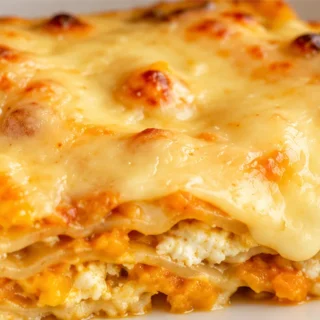
Butternut Squash Lasagna With a Cheesy Finish
Ingredients
- 4 cups butternut squash puree (e.g. Farmer’s Market Organic canned)
- 1 1/2 tbsp sel de cuisine seasoning blend (features cinnamon, rosemary, and salt)
- 1 tsp minced garlic
- salt and pepper to taste
- 15 oz part-skim ricotta cheese
- 1/2 cup grated Parmesan cheese
- 8 short whole wheat lasagna noodles
- sliced cheese to top pieces (optional)
Instructions
- Heat the oven to 400°F. Stir the butternut squash puree with the sel de cuisine, garlic, salt, and pepper until evenly mixed. In another bowl, combine the ricotta with 1/4 cup Parmesan plus salt and pepper.
- Cover an 8×8-inch baking dish with cooking spray. Spread a small amount of butternut squash across the base. Add 2 noodles with a slight overlap, then cover them with half the squash mixture. Add 2 more noodles and half the ricotta mixture. Repeat with noodles, squash, noodles, and ricotta, then finish with the remaining 1/4 cup Parmesan.
- Bake for 45 minutes. Add sliced cheese over the portions, then bake or broil for another 5-10 minutes, until the cheese is melted and bubbling.
Notes
The puree is the sauce, and canned butternut squash carries almost no water to carry it
In this lasagna there is no bechamel and no tomato sauce. Four cups of butternut squash puree does every job a sauce normally does: it binds the layers, keeps the noodles hydrated, and delivers the flavor. That makes the moisture state of the squash the single most important variable in the whole dish. Baked butternut squash runs about 88 percent water by weight, so a loose homemade puree can flood the pan.
Canned organic puree like the Farmer’s Market product is the opposite problem: it is cooked down and dense, closer to pumpkin pie filling than to a pourable sauce. Spread straight from the can it sits in stiff clumps that will not knit to the pasta. Loosen each cup with two to three tablespoons of warm water, milk, or the starchy pasta water before you layer, until a spoonful slowly settles back to level in about three seconds. That thin-custard consistency is what actually seeps into the noodle and cooks it.
Why whole wheat lasagna noodles come out chalky in a sauce this dry
Standard lasagna noodles finish cooking in the oven by stealing water from a wet sauce. The whole wheat noodles here have bran and germ still attached, roughly twice the fiber of white pasta, and that bran competes with the starch for whatever moisture is around. In a thick, low-water squash layer there simply is not enough free liquid to finish them, so they bake up firm at the edges and chalky in the middle.
Two fixes, and you want both. First, pre-soak the eight noodles in hot tap water, around 60 degrees C (140 degrees F), for 15 to 20 minutes until they bend like a ruler but still feel raw. Second, do not let a single noodle touch the pan or the top air directly: every noodle needs squash mixture above and below it. A bare noodle tip turns to leather. If you only soak, skip the bottom smear of squash, and you get the two classic failures at once.
Hard edges where noodles overhang the filling: trim the short noodles to the pan footprint, or overlap them so no edge is exposed.
Gritty center bite: the soak was too short or the squash too stiff; add more liquid to the puree next time.
Making 1 1/2 tablespoons of a cinnamon-rosemary blend read savory, not like dessert
The sel de cuisine blend leads with cinnamon and rosemary against salt. Cinnamon on sweet winter squash pushes the plate toward pumpkin pie fast, and that is the main thing that goes wrong with the flavor. The rosemary and the salt are what pull it back to dinner. Rosemary’s piney, resinous notes sit on the savory side and give the cinnamon something to argue with, while salt suppresses the perception of sweetness directly on the tongue.
Build the seasoning into the squash, not the cheese, and taste after you have thinned the puree, because diluting it also dilutes the salt. If it still tips sweet, the fix is not more cinnamon, it is more salt and a few grinds of black pepper. A squeeze of acid, a teaspoon of lemon juice or a splash of white wine vinegar stirred into the whole batch of puree, is the most reliable savory anchor of all; it does not read as sour at that dose, it just stops the dish tasting like a filling.
The ricotta and Parmesan layer: why 15 ounces plus 1/2 cup is a deliberate ratio
Part-skim ricotta is roughly 68 to 73 percent water, which seems to contradict everything above about keeping the dish dry. It works because ricotta’s moisture is held inside soft protein curds rather than running free, and because the Parmesan is doing structural and flavor work the ricotta cannot. Aged Parmesan drops to about 15 percent moisture and concentrates free glutamate, the compound behind savory umami depth, which is exactly what a sweet vegetable and a bland fresh cheese both lack. Half a cup grated is enough to season the whole ricotta layer without making it taste like a cheese sauce.
Before it goes in, drain the ricotta if it looks wet: set the 15 ounces in a fine sieve for 10 to 15 minutes and discard what weeps out. Then stir the Parmesan straight into the ricotta so the salt and glutamate are evenly spread, season with pepper, and spread it thin. Spooned on in heavy clumps it slides when you cut the baked lasagna into pieces; a thin, even smear gels into the squash and holds a clean slice.
Four swaps for this squash lasagna and what each one actually costs you
Every change to a dish this minimal moves either the moisture balance or the flavor balance, so none of these are free.
Homemade roasted squash puree for canned: you gain caramelized, nuttier flavor, but you inherit that 88 percent water. Roast the cubes dry at 200 degrees C (400 degrees F) until the edges brown, then let the puree steam off in a pan until a spoon leaves a clean track. Skip that step and the lasagna weeps.
Add an egg to the ricotta: one beaten egg sets the cheese layer firmer, so slices hold their shape better. The trade-off is a denser, slightly custardy texture instead of the loose creaminess of plain ricotta.
Cottage cheese for ricotta: lighter and higher protein, but it carries more free liquid; drain it hard or the dish turns soupy, and the texture reads grainier.
Swap the whole wheat noodles for regular or no-boil: easier to get tender in a dry sauce and no soak needed, at the cost of the fiber and the nutty backbone that stands up to the squash.
One thing is nearly unique to this build: with no tomato and no meat, there is no acidic, salty liquid layer to rescue a flat batch mid-bake. Seasoning has to be right in the raw puree before it ever reaches the oven, because you cannot stir anything in once it is assembled.
Getting it set, sliceable, and safe out of the oven
Bake until the center is hot all the way through. As a mixed, dense dish, baked lasagna should reach an internal temperature of 165 degrees F (74 degrees C) at the middle, which you can check with an instant-read thermometer pushed into the core (see the USDA safe minimum internal temperature chart). The top is where the optional sliced cheese goes; lay it on only for the last several minutes so it melts and browns lightly rather than drying out or splitting into oil.
Then rest it, uncovered, for 15 to 20 minutes before cutting. This is not optional with a squash-bound lasagna. During the rest the hot puree and the ricotta cool just enough for their proteins and starches to firm up and grip the noodles; cut it straight from the oven and the layers slide apart into a heap. A rested, properly seasoned squash lasagna also delivers real nutrition from that vegetable base, as a single cup of butternut squash supplies well over 400 percent of the daily value for vitamin A as beta-carotene, which the body converts for vision and immune function per the NIH Office of Dietary Supplements.
Holding this squash lasagna overnight: why the slices cut cleaner the next day
This bake behaves like most lasagna with a firm starch filling: it is easier to deal with after a rest than straight from the oven. The butternut puree sauce and the ricotta-Parmesan layer both set as they cool, so a square cut warm tends to slump, while the same square cut cold holds a clean edge. If you want make-ahead convenience, you have two useful windows.
Assembled-but-unbaked, cover it tightly and refrigerate up to 2 days before baking; this is standard practice for ricotta-based lasagna and does not degrade the filling. Baked, let it cool, cover, and keep it refrigerated. The one habit that matters most on reheat is temperature: bring leftovers back to an internal 74C (165F), checked with a thermometer at the centre, which is the USDA figure for cooked leftovers. See the USDA leftovers guidance.
Two quirks are specific to this recipe. First, the dry puree sauce gives you almost no moisture buffer, so reheat covered with foil to trap steam, otherwise the top layer and any optional sliced cheese scorch before the centre warms. Second, because the noodles drew their water from the sauce during the first bake, an overnight rest actually helps: residual moisture redistributes through the whole wheat sheets, so day-two portions are often less chalky at the edges than a slice pulled 10 minutes out of the oven.
Scaling, pan choice, and how good squash changes what you taste
The recipe as written fills a standard dish with 8 short whole wheat noodles, 4 cups of puree, and a 15 oz (425 g) ricotta layer. Doubling is straightforward but not linear in one respect: a deeper pan holds more thermal mass, so a double batch needs longer covered time to drive heat to the centre, not just a bigger pan. Keep the layer thicknesses the same and add time rather than stacking extra layers, which traps a cold core.
Pan material matters here more than in a saucier lasagna. Glass and ceramic heat slowly and hold heat, which suits this dry filling because the edges are less likely to dry out before the middle sets; thin metal runs hotter at the rim and can leave the squash sauce pasty at the corners. Whatever you use, match the footprint to the noodles so the sheets lie flat without overlap, since overlapping dry noodles steal water from each other and bake up stiff.
Ingredient quality is the lever most people underuse. Cooked butternut is roughly 88 percent water by weight (per USDA FoodData Central), yet canned purees are reduced and vary batch to batch; a thicker, sweeter can tastes almost caramel, a thinner one more vegetal and in need of extra salt. Taste the puree before you season, because the sel de cuisine blend reads differently against a sweet can than a bland one. In peak autumn, roasting your own squash gives a deeper, nuttier sauce, but thin it slightly so it still spreads and feeds the noodles their water.
Pro tips
- Spread the squash and ricotta in even layers; thick mounds make the finished squash lasagna harder to portion cleanly.
- I use the back of a spoon to reach the corners without disturbing the noodles.
- Watch the final 5-10 minutes closely once sliced cheese goes on top.
- For make-ahead service, assemble, cover and refrigerate up to 24 hours before baking.
Squash lasagna is especially satisfying when the orange puree, ricotta and pasta remain visibly layered. Serve it hot and let the browned cheese finish speak for itself.
More from Baked Pasta Recipes →