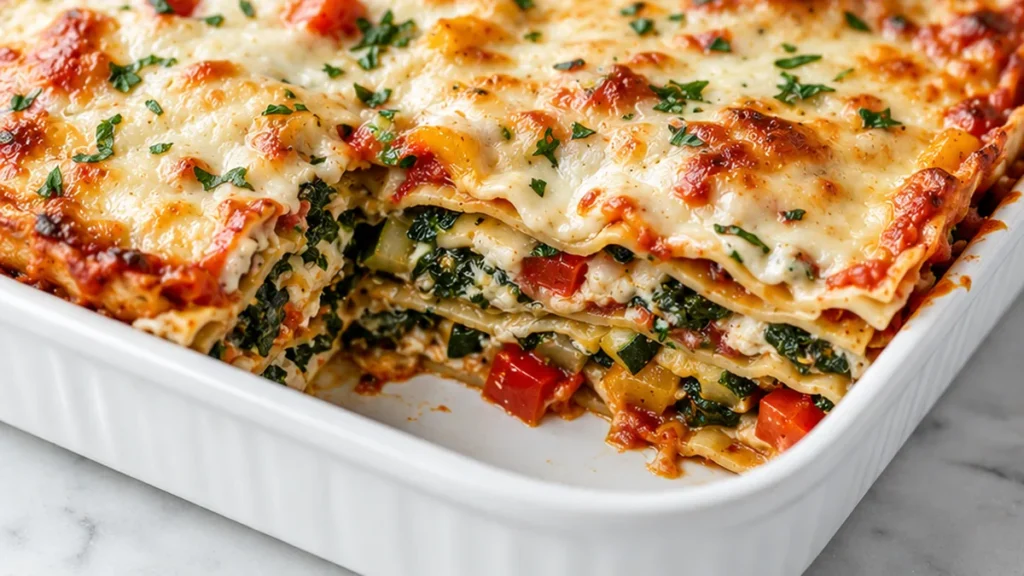
This veggie lasagna recipe offers a delightful and healthier twist on the classic comfort food. It masterfully combines tender whole grain noodles with a bright medley of fresh vegetables, creamy ricotta cheese, and a rich tomato sauce, all topped with melted mozzarella. Perfect for a satisfying weeknight dinner or a crowd-pleasing dish, this recipe proves that healthy eating can be incredibly delicious. The focus on fresh ingredients and smart substitutions makes this veggie lasagna a go-to option for those seeking both flavor and nutrition without compromise. It’s a dish that nourishes the body and satisfies the soul.
Key takeaways
- Sautéing vegetables to reduce moisture is key to preventing a watery veggie lasagna.
- Ensure oven-ready noodles are adequately covered in sauce and ricotta mixture to cook properly.
- Wilting and draining spinach before mixing with ricotta further controls moisture.
- Layering technique and proper cooking of components ensure an evenly cooked, flavorful dish.
Healthy Veggie Lasagna: Delicious & Easy Weeknight Meal
Ingredients
- 3 cups chopped veggies of your choice (e.g., zucchini, bell peppers, mushrooms)
- 1/2 chopped onion
- 2 tablespoons minced garlic
- 1 tablespoon olive oil
- 1 cup low fat ricotta cheese
- 1 egg
- 2 cups fresh spinach
- 2 cups tomato sauce
- 12 uncooked oven-ready whole grain lasagna noodles
- 1 cup mozzarella cheese, shredded
Instructions
- Sauté the onion and garlic in olive oil over medium-high heat for 3-5 minutes until softened. Add your chosen chopped veggies and cook for 7-10 minutes until tender-crisp. Set aside.
- In a bowl, whisk the egg into the ricotta cheese. Stir in the fresh spinach until just combined.
- Spread a thin layer of tomato sauce on the bottom of a greased 9×13 inch baking dish. Layer with 4 lasagna noodles, half of the ricotta-spinach mixture, half of the cooked vegetables, and 3/4 cup of tomato sauce.
- Repeat the layering process: another 4 noodles, the remaining ricotta mixture, the remaining veggies, and 3/4 cup sauce. Top the entire pan with the final 4 noodles, remaining sauce, and shredded mozzarella cheese.
- Cover the baking dish tightly with foil.
- Bake in a preheated oven at 375°F (190°C) for 40 minutes. Remove the foil and bake for an additional 10 minutes, or until the cheese is melted, bubbly, and lightly golden.
Notes
The technique that makes it
The key to a successful and delicious veggie lasagna, especially one designed for a weeknight, lies in managing moisture and ensuring even cooking. Using oven-ready whole grain lasagna noodles is a smart shortcut, but they require adequate liquid to soften properly. The tomato sauce provides the primary moisture, but the vegetables themselves can release a significant amount of water as they cook. To prevent a watery lasagna, it’s crucial to sauté your chopped vegetables (zucchini, bell peppers, mushrooms) and onion until they have released most of their liquid and are tender. This step concentrates their flavor and reduces their moisture content. Similarly, wilting the fresh spinach before adding it to the ricotta mixture helps to squeeze out excess water. Ensure your ricotta mixture is well-combined and not too wet. Layering is also critical: start with a thin layer of sauce on the bottom of the baking dish to prevent the noodles from sticking, then layer noodles, ricotta mixture, vegetables, sauce, and cheese. Repeating these layers ensures that the noodles are surrounded by moisture and cook evenly. The final layer of mozzarella cheese creates a beautiful, golden-brown crust that seals in the flavors.
Troubleshooting
- Watery Lasagna: This is often due to unreleased moisture from vegetables. Ensure you sauté vegetables until tender and most liquid has evaporated. Also, make sure the spinach is well-drained after wilting.
- Dry or Undercooked Noodles: Oven-ready noodles need sufficient liquid. Ensure your sauce is not too thick and that the noodles are well-covered by sauce and the ricotta mixture. Adding a bit more sauce if it seems dry can help.
- Mushy Vegetables: Overcooking vegetables before layering can lead to a mushy texture. Sauté them until just tender, not completely soft, as they will continue to cook in the oven.
- Ricotta Mixture is Too Runny: If your ricotta mixture seems too wet, it can make the lasagna soupy. Ensure the egg is fully incorporated and the spinach is well-drained. You can also add a tablespoon or two of breadcrumbs to absorb excess moisture.
Substitutions
- Vegetables: Instead of zucchini, bell peppers, and mushrooms, you can use eggplant, broccoli florets, carrots, or pre-cooked lentils for added protein. Ensure any new vegetables are chopped to a similar size and sautéed appropriately.
- Ricotta Cheese: Cottage cheese (drained) or a blend of cream cheese and Greek yogurt can be used as substitutes for ricotta, though the flavor profile will change slightly. For a vegan option, use a cashew-based ricotta alternative.
- Lasagna Noodles: If whole grain oven-ready noodles are unavailable, regular oven-ready noodles work, but may have a slightly different texture. You can also use traditional lasagna noodles, but they will need to be pre-cooked according to package directions.
- Mozzarella Cheese: Provolone, Monterey Jack, or a dairy-free shredded cheese blend can be used instead of mozzarella. For a sharper flavor, consider adding a sprinkle of Parmesan cheese.
Pro tips
- Use a mix of your favorite vegetables like zucchini, bell peppers, mushrooms, and carrots for varied flavor and texture.
- For an extra layer of flavor, add a pinch of Italian seasoning or red pepper flakes to the vegetable sauté.
- Ensure your ricotta mixture is well-seasoned with salt and pepper before layering.
- If not using oven-ready noodles, prepare regular lasagna noodles according to package directions before assembling.
Enjoy this flavorful and guilt-free veggie lasagna. It’s a versatile dish that can be adapted to your favorite seasonal vegetables.
More from Baked Pasta Recipes →
Frequently asked questions
Can I use different vegetables in veggie lasagna?
Absolutely! Feel free to substitute vegetables based on seasonality or preference. Zucchini, bell peppers, spinach, mushrooms, and eggplant are excellent choices. Ensure they are thinly sliced or pre-cooked to remove excess moisture, preventing a watery lasagna. This flexibility makes the recipe adaptable to your pantry.
How do I make healthy veggie lasagna ahead of time?
To make this healthy veggie lasagna ahead, assemble it completely, cover tightly with plastic wrap, then foil, and refrigerate for up to 2 days. When ready to bake, remove the plastic wrap and bake as directed, adding a few extra minutes to account for the cold temperature. It’s perfect for meal prep.
What’s the best way to store leftover veggie lasagna?
Leftover veggie lasagna can be stored in an airtight container in the refrigerator for up to 3-4 days. For longer storage, wrap individual portions tightly in plastic wrap and then foil, and freeze for up to 2-3 months. Reheat gently in the oven or microwave until warmed through.
How do I know when healthy veggie lasagna is done cooking?
Your healthy veggie lasagna is done when the top is golden brown and bubbly, and the noodles are tender. You can test the noodle tenderness by inserting a knife or fork into the center; it should slide in easily. The internal temperature should reach at least 165°F (74°C).