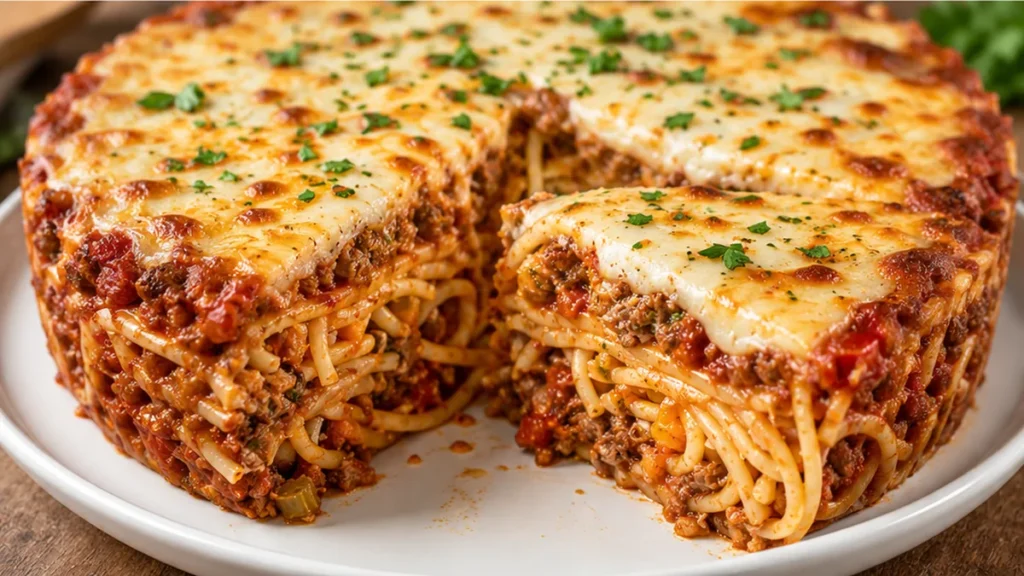
This spaghetti pie recipe is a true a real upgrade for comfort food lovers. It transforms simple pasta into a hearty, flavorful bake that’s perfect for any occasion. Get ready to impress your family and friends with this delicious twist on a classic. The beauty of this spaghetti pie lies in its satisfying texture and the way it combines tender pasta with a savory vegetable filling and a rich, cheesy topping. It’s a dish that promises warmth and deliciousness in every single bite.
Key takeaways
- The key to a successful spaghetti pie is using uncooked spaghetti that binds together as it bakes.
- Properly sautéing the aromatics and vegetables builds a crucial flavor base.
- Ensure adequate moisture for the spaghetti to cook through without drying out the pie.
- Allow the pie to rest after baking for easier slicing and a better texture.
Spaghetti Pie Magic!
Ingredients
- 1 lb uncooked spaghetti
- 1 tablespoon olive oil
- 1 yellow onion, minced
- 2 cloves of garlic, minced (optional)
- 3 stalks of celery, minced
- 3 carrots, minced
- 1 handful of spinach, chopped
- 1/2 teaspoon dried basil
- 1/2 teaspoon dried oregano
- tiny tiny sprinkle of nutmeg
Instructions
- Cook spaghetti according to package directions. Drain and set aside to cool.
- Mince onion, garlic, celery, and carrots. Heat 1 tablespoon olive oil in a large skillet; add onion and sauté for 5 minutes. Add garlic, celery, and carrots; sauté for another 5 minutes. Add spinach and cook until wilted. Stir in basil, oregano, and nutmeg; set aside to cool.
- Preheat oven to 350 degrees F (175 degrees C).
- Mix ricotta cheese and eggs together in a bowl.
- Toss cooked spaghetti with the vegetable mixture and the ricotta mixture. Transfer to a greased 9-inch pie dish or a 9×13 rectangular pan. Top with sauce and shredded cheese, then cover with oiled aluminum foil to prevent sticking.
- Bake for 20 minutes; remove foil and bake for an additional 5-10 minutes until golden brown and bubbly. Let stand for 5-10 minutes before serving.
Notes
The technique that makes it
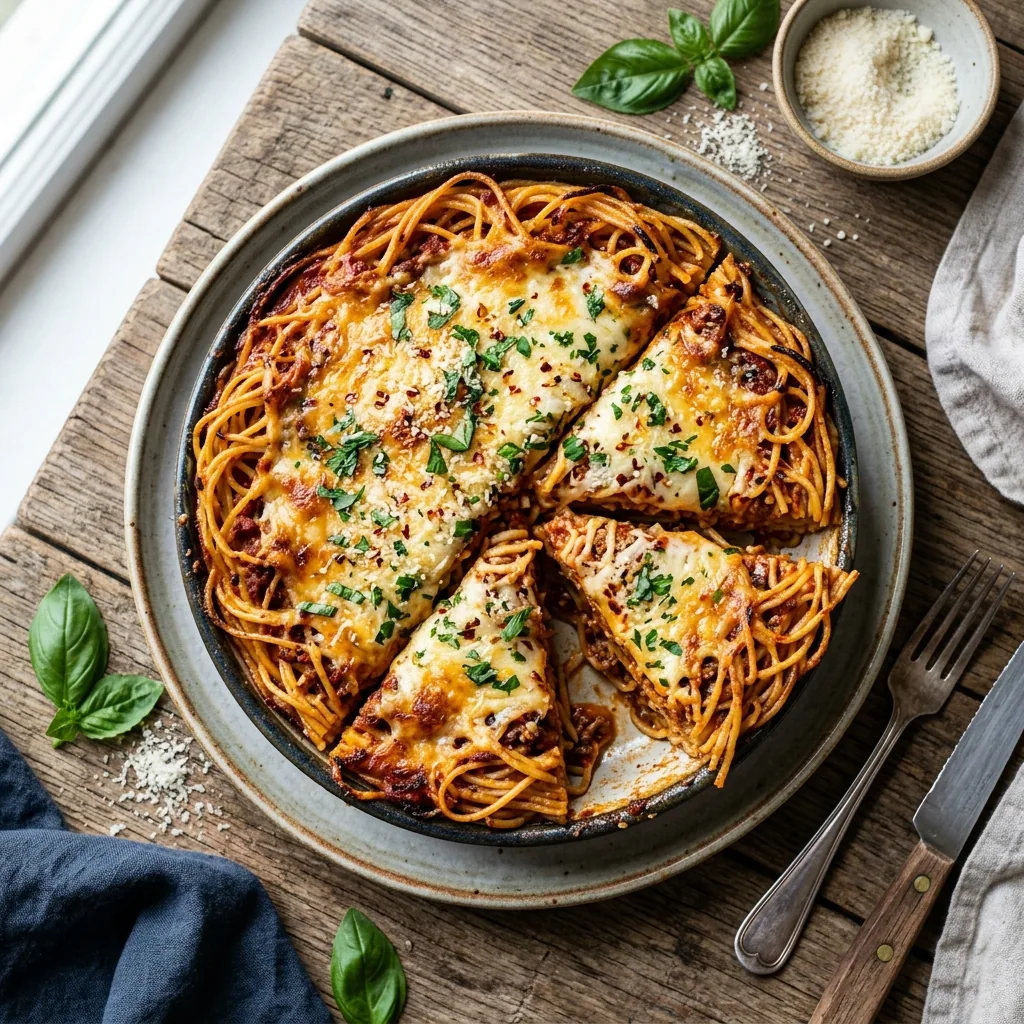
What makes this spaghetti pie work is its structure and how the ingredients meld together during baking. Unlike a simple pasta dish, spaghetti pie relies on creating a cohesive, sliceable entity. The uncooked spaghetti, when bound with the other ingredients and subjected to heat, undergoes a transformation. The starches in the pasta begin to gelatinize and soften, but crucially, they don’t become mushy if the pie is baked correctly. This process, combined with the moisture from the vegetables and any binder (though this recipe relies on the starch and vegetable moisture), allows the spaghetti strands to fuse together. Think of it like building a lasagna, but with spaghetti as the structural element. The key is ensuring the spaghetti is adequately coated and has enough liquid to cook through without drying out. The vegetables, particularly the onion and celery, release moisture as they sauté and then bake, contributing to this cooking process. The herbs and a whisper of nutmeg are essential for building flavor depth, ensuring that each bite is savory and satisfying, not just a carb base.
Troubleshooting
- Dry or Crumbly Pie: This often happens if the spaghetti wasn’t fully submerged or if there wasn’t enough moisture released from the vegetables during baking. Ensure the spaghetti is well-mixed with the sautéed vegetables and herbs before baking. If it seems dry, you can add a splash of broth or water (about 1/4 cup) to the mixture before pressing it into the pan.
- Mushy Spaghetti: Overcooking is the usual culprit, or using pre-cooked spaghetti. This recipe is designed for uncooked spaghetti to allow it to cook perfectly within the pie. Baking at too high a temperature can also lead to mushiness. Stick to the recommended oven temperature and check for doneness by inserting a knife; it should pass through with slight resistance.
- Lack of Flavor: Insufficient seasoning is the most common reason. Ensure you’re using the full amounts of basil and oregano, and don’t skip the sautéing step for the aromatics (onion, garlic, celery, carrots) as this develops their flavor. A pinch of salt and pepper added during the sautéing stage is also critical.
- Pie Falls Apart When Sliced: This indicates the spaghetti didn’t bind sufficiently. This can be due to underbaking, not allowing enough time for the starches to set, or if the pie was too wet initially. Ensure it’s baked until the edges are golden and the center feels firm. Let it rest for at least 10-15 minutes after removing from the oven before slicing.
Substitutions
- Spaghetti: While spaghetti is traditional, linguine or even angel hair pasta can be used. Angel hair will cook much faster and may become mushy if not watched carefully. Linguine will offer a similar texture. The cooking time might need slight adjustment.
- Vegetables: Bell peppers (any color, diced) can substitute for celery or carrots to add sweetness and color. Zucchini (shredded or diced) is another good option, but it contains more water, so you might need to bake it a bit longer or drain excess liquid. Mushrooms (chopped) add an umami depth.
- Herbs: Fresh herbs can be used in place of dried. Use approximately three times the amount of fresh herbs (e.g., 1.5 teaspoons fresh basil for 0.5 teaspoon dried). Italian seasoning blend can also be used as a substitute for basil and oregano.
- Onion/Garlic: Shallots can be used instead of yellow onion for a milder, sweeter flavor. Garlic powder can be used if fresh garlic is unavailable, but use sparingly (about 1/4 teaspoon).
Pro tips
- Use a good quality marinara sauce for the best flavor.
- Don’t overcook the spaghetti; it will continue to cook in the oven.
- For extra richness, add a dollop of ricotta cheese to the pasta mixture.
Enjoy this delightful spaghetti pie as a satisfying meal that brings everyone to the table. It’s a recipe destined to become a family favorite.
More from Baked Pasta Recipes →
Frequently asked questions
Can I make spaghetti pie ahead of time?
Absolutely! Assemble the spaghetti pie completely, cover it tightly with plastic wrap and then foil, and refrigerate for up to 2 days. When ready to bake, remove from the fridge about 30 minutes before baking to allow it to come closer to room temperature. You may need to add a few extra minutes to the baking time.
What can I serve with spaghetti pie?
Spaghetti pie is quite hearty on its own, but it pairs wonderfully with a simple green salad and some crusty garlic bread. A side of steamed or roasted vegetables like broccoli or green beans also complements the rich flavors of the pie. Keep it simple to let the main dish shine.
How do I know if my spaghetti pie is done?
Your spaghetti pie is ready when the cheese on top is melted and bubbly, and the edges are lightly browned and set. If you insert a knife into the center, it should come out hot. The internal temperature should reach about 165°F (74°C) on an instant-read thermometer.
What kind of pasta is best for spaghetti pie?
While the recipe is called ‘Spaghetti Pie Magic!’, you can use other long pasta shapes like linguine or fettuccine if spaghetti isn’t available. Even a medium pasta shape like penne or rotini will work, though the texture will be slightly different. Ensure the pasta is cooked al dente before mixing.