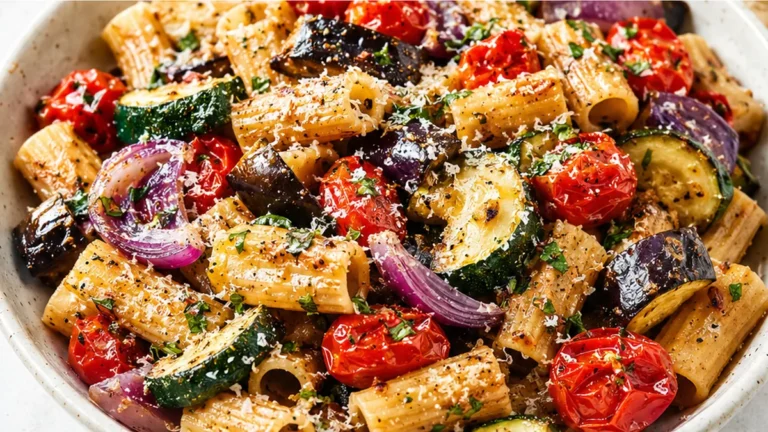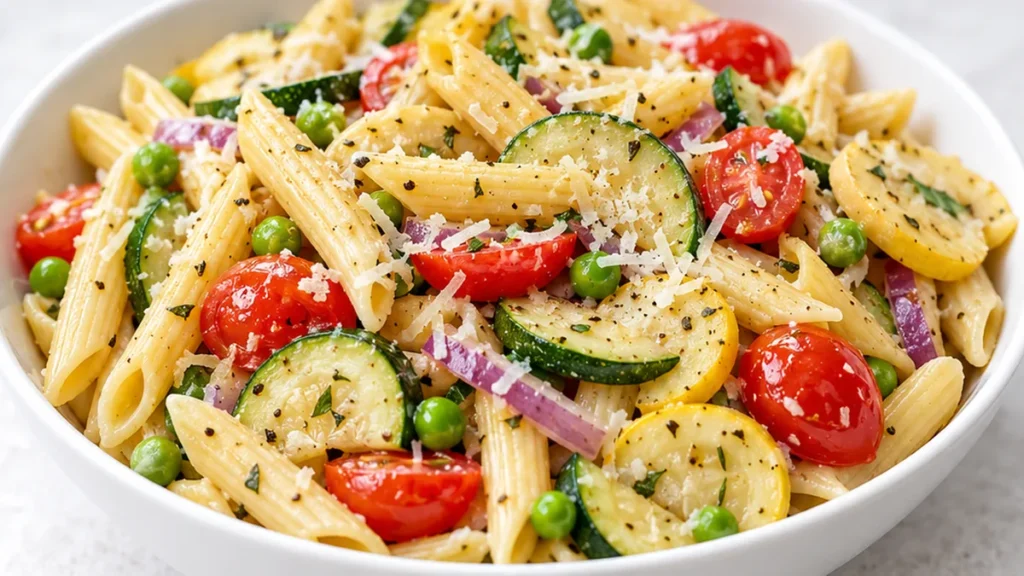
This vibrant pasta primavera to brighten is a simple dish packed with fresh vegetables. It’s a quick and healthy option for any meal.
Key takeaways
- Use fresh, seasonal vegetables for the best flavor and texture.
- Sauté vegetables separately to enhance their individual tastes.
- Avoid overcrowding the pan to prevent steaming instead of sautéing.
- Experiment with herbs and light sauces to keep the dish vibrant and fresh.
Vibrant Pasta Primavera to Brighten Your Day!
Ingredients
- 8 oz penne pasta (uncooked)
- 2 tbsp olive oil
- 1 zucchini
- 1 yellow squash
- 1 carrot
- ½ red onion
- ½ cup frozen peas
- 1 cup grape tomatoes
- 3 cloves garlic cloves (minced)
- ½ cup Parmesan cheese (grated)
Instructions
- Start by prepping your vegetables. Wash the vegetables, then cut and slice each vegetable into equal size pieces. Cut the zucchini and yellow squash into half moons, slice the carrots into thin rounds, cut the grape tomatoes in half and slice the red onion into strips.
- Next bring a large pot of salted water to a boil. Cook the pasta according to the package instructions, or until al dente. Reserve some of the starchy pasta water before draining the pasta in a colander.
- While the pasta is boiling, saute the vegetables. In a large deep skillet add olive oil and saute carrots and onion over medium heat for 1-2 minutes. Next add zucchini and yellow squash and saute for an additional 1-2 minutes.
- Next add the minced garlic, grape tomatoes and frozen peas. Season the vegetables with salt, pepper and dried oregano. Saute for an additional 1-2 minutes, then turn the heat off.
- Add the butter to the skillet along with the fresh squeezed lemon juice and stir well to combine. Either add the cooked and drained pasta to the skillet, or transfer the pasta and vegetables to a large bowl. Add grated parmesan cheese and some of the reserved pasta water. Stir the vegetables with the pasta until well combined. Serve with fresh chopped parsley (optional garnish) and enjoy!
The Importance of Fresh Vegetables in Pasta Primavera
One of the defining features of vibrant pasta primavera is the use of fresh, seasonal vegetables. The quality and freshness of your vegetables can significantly impact the overall flavor and texture of the dish. For instance, using vegetables like zucchini, bell peppers, and asparagus at their peak ripeness ensures a more vibrant and flavorful dish. Aim for a colorful mix to enhance both presentation and nutritional value. Cooking times for vegetables vary; for example, bell peppers may need only a few minutes to sauté, while asparagus requires slightly longer to become tender yet crisp.
Understanding Cooking Techniques for Optimal Flavor
The method of cooking vegetables in pasta primavera is crucial. Sautéing at medium-high heat allows for the Maillard reaction, which enhances the flavor through browning. Ideally, you should sauté vegetables separately to maintain their individual flavors and textures. A common mistake is overcrowding the pan, which leads to steaming instead of sautéing. For best results, cook in batches if necessary, ensuring each vegetable is cooked just until tender. For example, zucchini should be cooked for about 3-4 minutes, while carrots may take closer to 5-6 minutes. This careful attention to cooking time will ensure that each vegetable retains its unique taste and crunch.
Flavor Enhancements and Ingredient Swaps
While traditional pasta primavera is often seasoned with olive oil, garlic, and a splash of lemon juice, there are many ways to enhance the flavor profile. Consider adding fresh herbs like basil or parsley for an aromatic touch. If you prefer a creamier texture, a splash of heavy cream or a dollop of ricotta cheese can be mixed in at the end. However, swapping olive oil for butter will impart a different richness, while using vegetable broth instead of water for cooking pasta can add depth to the dish. Each swap, while altering flavor, can create a unique interpretation of this classic dish.
Common Mistakes and How to Avoid Them
One frequent issue when preparing pasta primavera is overcooking the vegetables, which leads to mushiness and a loss of vibrant color. To prevent this, always have your pasta ready before you start cooking the vegetables, and add them to the pan in the order of cooking time required. Additionally, not seasoning the vegetables adequately can result in a bland dish. Always taste as you go and adjust seasoning with salt, pepper, or additional herbs. Remember that the pasta should be coated lightly with the vegetable mixture, not drowned in sauce, to maintain the dish’s lightness.
Unique Characteristics of Pasta Primavera
Pasta primavera stands out from other pasta dishes due to its emphasis on fresh vegetables and a light, often oil-based sauce rather than a heavy cream sauce. This dish celebrates the flavors of spring and summer, making it a perfect choice for warm-weather dining. The vibrant colors of the vegetables not only enhance the visual appeal but also indicate a variety of nutrients, making it a healthful option. The flexibility of this dish allows for customization based on seasonal availability or personal preferences, making it truly unique.
How to Store and Reheat Vibrant Pasta Primavera for Maximum Freshness
Storing pasta primavera requires careful attention to maintain the freshness of the vegetables and the overall flavor. When storing leftovers, ensure the dish is cooled to room temperature before placing it in an airtight container. It can be refrigerated for up to three days. When reheating, avoid high heat, which can make the vegetables mushy. Instead, use a medium heat on the stovetop or microwave, adding a splash of water or broth to help steam the vegetables back to life. This method preserves the vibrant colors and textures that make pasta primavera appealing.
Scaling Your Vibrant Pasta Primavera for Large Gatherings
Scaling the recipe for larger gatherings is straightforward but requires careful consideration of ingredient ratios, especially for the vegetables. A good rule of thumb is to increase the pasta by 75-100 grams per additional person and adjust the vegetables proportionally. Keep in mind that cooking time may vary; larger quantities may require slightly longer cooking times to ensure even heat distribution. Additionally, consider using a larger pot to accommodate the increased volume, which helps in maintaining the right cooking temperature and prevents overcrowding.
Choosing the Right Equipment for Optimal Cooking Results
The choice of equipment can significantly influence the outcome of your vibrant pasta primavera. A large, heavy-bottomed skillet or sauté pan is ideal for even heat distribution, allowing the vegetables to cook uniformly without burning. Non-stick pans can help reduce the amount of oil needed and make cleanup easier. If you opt for a pasta pot with a built-in strainer, it can streamline the cooking process, especially when preparing larger batches. A high-quality chef’s knife is also essential for efficiently chopping vegetables into uniform sizes, ensuring even cooking.
Seasonal Adjustments to Enhance Your Vibrant Pasta Primavera
Seasonality plays a crucial role in the quality and flavor of the vegetables used in pasta primavera. In spring, fresh asparagus and peas are at their peak, providing a sweet and tender crunch. Summer brings a bounty of tomatoes and zucchini, which can add a juicy and refreshing element to the dish. In autumn, consider incorporating roasted root vegetables like carrots and bell peppers for a heartier version. Each season offers unique flavors that can enhance the dish, so adjust your vegetable selection based on what is freshest and most flavorful at the time.
Understanding the Role of Seasonal Vegetables in Pasta Primavera
Seasonal vegetables play a crucial role in the success of vibrant pasta primavera. Each season brings a unique selection of vegetables that can enhance the dish’s flavor, texture, and nutritional value. For instance, spring vegetables like asparagus, peas, and radishes contribute sweetness and crunch, while summer vegetables such as zucchini, bell peppers, and tomatoes add juiciness and vibrant color. The key is to choose vegetables that are at their peak ripeness, as they will offer the best flavor and texture. When using seasonal produce, aim for a variety of colors and textures to create a visually appealing dish. This not only enhances the aesthetic but also provides a range of nutrients beneficial for health. Cooking times may vary based on the type of vegetable used; for example, denser vegetables like carrots may require longer cooking times compared to softer ones like spinach. Therefore, it’s essential to consider the cooking order and timing to ensure all vegetables are perfectly tender yet still vibrant.
Batch Scaling and Serving Suggestions for Vibrant Pasta Primavera
When preparing vibrant pasta primavera for larger gatherings, batch scaling is essential to maintain flavor and texture integrity. A general rule of thumb is to increase the pasta quantity by 50 grams per person, adjusting the vegetable ratio accordingly to ensure a balanced dish. For instance, if you’re serving four people with a standard recipe, consider using 400 grams of pasta and proportionately increasing the vegetables. Additionally, consider the cooking equipment; larger pots or pans may be necessary to accommodate the increased volume, ensuring even cooking. When serving, vibrant pasta primavera pairs well with a light protein option, such as grilled chicken or shrimp, which complements the freshness of the vegetables. For a vegetarian option, consider adding chickpeas or white beans for added protein. Serving the dish with a sprinkle of fresh herbs, such as basil or parsley, can elevate the flavors further. Remember to keep some of the pasta cooking water aside; it can be used to adjust the sauce consistency for a more cohesive dish.
Understanding the Impact of Vegetable Freshness on Flavor and Texture
The quality and freshness of the vegetables used in vibrant pasta primavera significantly affect the dish’s overall flavor and texture. Fresh vegetables not only provide a vibrant color palette but also enhance the taste profile. For instance, using seasonal produce like asparagus, bell peppers, and zucchini at their peak ripeness ensures a sweeter, more robust flavor. Aim for vegetables that are firm and free of blemishes. A simple tip: when shopping, consider sourcing from local farmers’ markets to guarantee freshness. Additionally, the method of cutting vegetables can influence cooking time and texture; uniform cuts ensure even cooking and prevent some pieces from becoming mushy while others remain crunchy.
Batch Scaling: Preparing for Gatherings Without Compromising Quality
Scaling the vibrant pasta primavera recipe for larger gatherings requires careful consideration to maintain the dish’s integrity. When doubling or tripling the recipe, it’s crucial to adjust cooking times and temperatures accordingly. For instance, larger quantities may require a longer cooking time, and you may need to cook the pasta in batches to prevent overcrowding, which can lead to uneven cooking. Furthermore, consider the ratio of pasta to vegetables; a good rule of thumb is to maintain a 2:1 ratio of vegetables to pasta for optimal flavor. Lastly, when serving, keep the dish warm in a low oven (around 90°C or 200°F) to prevent it from cooling down too quickly before serving.
Pro tips
Pro tip: Best served immediately while hot!
Frequently asked questions
What vegetables work best for pasta primavera?
Seasonal vegetables like zucchini, bell peppers, asparagus, and cherry tomatoes are ideal for pasta primavera. They provide vibrant colors and varied textures, enhancing both the flavor and visual appeal of the dish.
How can I make pasta primavera more flavorful?
To enhance the flavor of pasta primavera, consider adding fresh herbs like basil or parsley, or a splash of lemon juice for brightness. A drizzle of high-quality olive oil can also elevate the dish.
Can I use frozen vegetables in pasta primavera?
While fresh vegetables are preferred for their texture and flavor, frozen vegetables can be used in a pinch. Just be sure to thaw and drain them before sautéing to avoid excess moisture in the dish.
How do I prevent the vegetables from getting mushy?
To avoid mushy vegetables, cook them just until tender and vibrant. Always have your pasta ready before adding vegetables to the pan, and sauté them in batches if necessary to prevent overcrowding.
More from Easy Pasta Recipes →