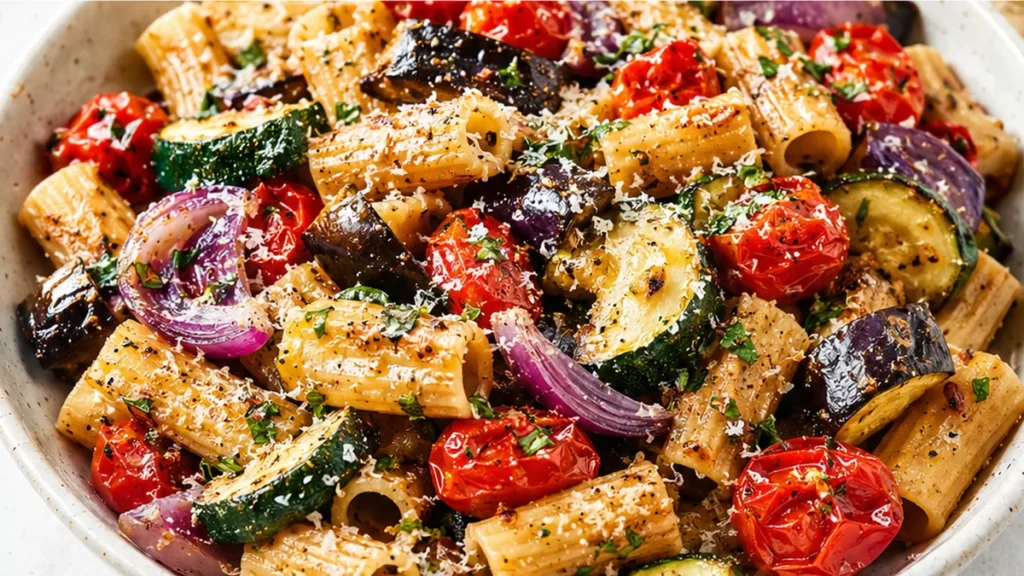
Roasted vegetable pasta is a mix of textures and flavors, transforming simple ingredients into an unforgettable meal. This recipe improves weeknight dinners with caramelized roasted vegetables and a decadent garlic brown butter balsamic sauce, all tossed with perfectly cooked pasta. It’s a dish that’s both comforting and bright, proving that healthy eating can be incredibly delicious and satisfying.
Key takeaways
- Toss the oil onto the eggplant first so it does not soak the pan dry, then roast everything in a single uncrowded layer at 220C/425F for real browning instead of steam.
- Roast the cherry tomatoes whole for 20 to 25 minutes so they burst into a jammy, self-made sauce base rather than drying into leather.
- Reserve a cup of starchy pasta water before draining; it is what emulsifies the 4 tablespoons of butter into a glossy coat instead of an oil slick.
- Add the 5 cloves of garlic and the pepper flakes to melted, not browning, butter for only 30 to 60 seconds so they bloom without turning bitter.
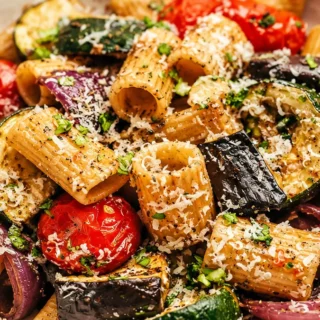
Ultimate Roasted Veggie Pasta That Will Blow Your Mind!
Ingredients
- 2 medium zucchini (1 pound) (cut into half moons)
- 1 small eggplant (1 pound) (diced into 1-inch cubes)
- 1 small red onion (thickly sliced)
- 3 tablespoons olive oil (divided)
- fine sea salt and freshly-ground black pepper
- 1 pound cherry or grape tomatoes
- 1 pound pasta (I used mezze rigatoni)
- 4 tablespoons salted butter
- 5 large garlic cloves (pressed or minced)
- 1/2 teaspoon crushed red pepper flakes
Instructions
- Prep the oven, baking sheet and pasta water. Heat the oven to 425°F. Line a large baking sheet with parchment paper. Bring a large stockpot of generously-salted pasta water to boil.
- Roast the vegetables. Combine the zucchini, eggplant and red onion in a large mixing bowl and drizzle with 2 tablespoons olive oil. Toss to combine, then arrange the vegetables in an even layer on the prepared baking sheet. Season generously with salt and pepper. Roast for 15 minutes. Meanwhile, toss the cherry tomatoes in the mixing bowl with the remaining oil and season with salt and pepper. Remove the baking sheet from the oven, gently scoot the veggies over slightly to make room for the tomatoes, then add the cherry tomatoes to the sheet. Roast for 15 more minutes.
- Cook the pasta. Once you have returned the baking sheet to the oven with the cherry tomatoes, add the pasta to the water and cook until *just* al dente.
- Make the garlic brown butter balsamic sauce. Add the butter to a large nonstick sauté pan and heat over medium-high heat until it is completely melted and barely begins to foam. Add the garlic and crushed red pepper flakes and sauté for 1 minute, stirring, while the butter continues to brown. Turn off the heat, add the balsamic vinegar, and stir to combine.
- Combine. Add all of the roasted veggies and basil to the pasta (you can either do this in the sauté pan, or pour out the pasta water and use the stockpot) and toss very gently until combined.
- Serve. Serve immediately, garnished with extra basil, grated Parmesan and a few twists of black pepper.
Video
Notes
Why the eggplant turns to grease while the zucchini stays watery on the same tray
Vegetable pasta lives or dies on how two very different vegetables behave under heat. Eggplant flesh is honeycombed with air pockets that act like a sponge; the moment it hits hot oil, capillary action pulls that oil deep into the cells, which is why one small eggplant can swallow all 3 tablespoons of olive oil before the zucchini has even browned. Zucchini has the opposite problem: it is roughly 94 percent water, so it weeps and steams instead of caramelizing. The fix is to give the oil to the eggplant and heat to the zucchini. Toss the eggplant cubes first so they claim their share of fat, spread everything in a single uncrowded layer, and roast hot (220C/425F) so surface moisture flashes off before the pieces can stew.
Kelli Foster of The Kitchn notes that collapsing eggplant’s air pockets before roasting is what stops the oil-soaking, which is why cutting into even 1-inch cubes and salting matters. Serious Eats found parchment paper slows browning; bare metal or foil gives the golden crust you want here.
Give each vegetable the space it needs
One pound of zucchini plus one pound of eggplant plus a sliced onion will not fit on a single half-sheet pan without touching. Overcrowding traps steam, and steam is the enemy of the Maillard browning that gives this dish its savory backbone. Use two pans, or roast in two batches, keeping at least a finger-width between pieces.
The 220C burst that makes the cherry tomatoes into a built-in sauce
The pound of cherry or grape tomatoes is not a garnish; it is the acid and moisture engine of the whole plate. Roasted whole at 200 to 220C (400 to 425F) for 20 to 25 minutes, the skins split, the interior jam concentrates as water evaporates, and the natural sugars caramelize at the stem scar. Each burst tomato releases warm, slightly sweet juice that, once you toss it with the pasta, loosens the garlic butter into a light pan sauce without a drop of cream. Leave them whole going into the oven so they steam themselves from the inside and burst on their own schedule; halved tomatoes dry out and turn leathery instead of jammy.
Time the tomatoes so they finish alongside the pasta. If they collapse into total mush, they were either cut open early or roasted past 30 minutes. Pull them the moment most have split but a few still hold their shape, so you get both sauce and texture. Living Lou and Dinner at the Zoo both land in that same 20 to 35 minute window at 400F, which is a reliable target for this recipe’s tomato load.
How the pasta water turns 4 tablespoons of butter into a glossy coat instead of an oil slick
Vegetable pasta needs the noodles and the fat to fuse, and the mechanism is starch. When you boil the pound of mezze rigatoni, the water fills with dissolved starch; a Serious Eats side-by-side test showed that the starchiest water (one pound of pasta in about half a gallon) turned plain oil into a thick, creamy, silky sauce, while plain salted water left a thin, greasy one. That starch is what lets the 4 tablespoons of salted butter and the reserved cooking water emulsify into a coat that clings to every ridge of the rigatoni.
Reserve at least a cup of pasta water before you drain. Melt the butter with the 5 pressed garlic cloves and the 1/2 teaspoon crushed red pepper flakes, then add the drained pasta and a splash of that starchy water, tossing hard over heat until the sauce turns glossy and thickens. The tubular shape of mezze rigatoni matters here: its hollow center and ridged exterior trap sauce and small vegetable pieces the way spaghetti never could.
Bloom the garlic, do not burn it
Five cloves of raw pressed garlic hitting hot butter will scorch in under a minute, turning bitter and acrid. Keep the heat at medium, add the garlic and pepper flakes to butter that is melted but not browning, and cook just 30 to 60 seconds until fragrant before the pasta goes in. The starchy water you add next drops the temperature and stops the garlic from tipping over the edge.
Four things that go wrong with roasted veggie pasta and the actual cause of each
Most failures with this dish trace back to moisture, heat, or timing rather than the recipe itself. Here are the common ones and the real reason behind each.
- Greasy, collapsed eggplant: the oil was poured on the pan instead of tossed onto the eggplant first, so the sponge-like flesh drank it all. Fix: toss eggplant with its share of oil directly, or salt and rest cubes 30 minutes before roasting.
- Soggy, pale zucchini: the pan was overcrowded and the oven too cool, so the squash steamed in its own water. Fix: single layer, 220C/425F, two pans if needed.
- Broken, oily sauce that pools at the bottom of the bowl: the pasta was drained without saving any water, so there was no starch to emulsify the butter. Fix: reserve a cup of cooking water and toss vigorously over heat.
- Bitter, harsh garlic: raw garlic scorched in butter that was already browning. Fix: lower the heat and add garlic for under a minute before the pasta.
Smart swaps for the vegetables and pasta, and what each one costs you
This dish is a template, but each substitution changes the balance of moisture, browning, or sauce-grip. Trade with intent.
- Swap mezze rigatoni for penne, rigatoni, or fusilli: all catch sauce well. Skip long strands like spaghetti; the roasted vegetable chunks slide off instead of nestling into tubes and spirals.
- Swap eggplant for bell peppers or mushrooms: peppers add sweetness and no oil-soaking risk, but you lose the creamy body eggplant gives. Mushrooms brown beautifully and stay meaty.
- Swap salted butter for olive oil: a fully olive-oil sauce leans toward aglio e olio, brighter and lighter, but without butter’s rounding richness. If you use unsalted butter, salt the dish more aggressively at the end.
- Add a splash of balsamic vinegar off the heat: the closely related version from Gimme Some Oven’s roasted vegetable pasta leans on a balsamic garlic butter; a teaspoon or two adds sweet-tart depth, at the cost of the cleaner tomato-forward flavor of the original.
For a sturdy primer on how heat drives the browning you are chasing across all these swaps, the Serious Eats Food Lab guide to roasting vegetables is worth keeping open. If you want to master the emulsion step that carries this whole dish, our walkthrough on building a starchy pan sauce for veggie pasta covers the toss technique in detail.
What happens to leftover roasted veggie pasta in the fridge and how to bring it back
Leftover roasted veggie pasta holds for three to four days in an airtight container, but the texture shifts the moment it cools. Mezze rigatoni firms up as its starches retrograde below 4C (40F), and the garlic butter congeals into opaque flecks that no longer coat the tubes. The zucchini keeps weeping, so the bottom of the container turns watery by day two. Reheat with a splash of liquid rather than dry microwaving, which turns eggplant leathery and dries the pasta ends.
The best fix is a hot skillet with two tablespoons of water or reserved pasta water per two cups. Stir constantly over medium heat for three to four minutes; the residual starch re-emulsifies the butter into a loose gloss again. Microwaving works if you cover the bowl and add a tablespoon of water, then stir at the halfway mark so the center is not cold while the rim scorches.
Freezing is possible but costs you the vegetables. Zucchini and eggplant are more than 90 percent water, and ice crystals rupture their cell walls, so they thaw to mush. If you know you will freeze a portion, undercook the veg by a few minutes and freeze flat in a bag for up to two months. Store the roasted tomatoes separately if you can, since their burst skins turn slippery after a freeze-thaw cycle and lose the concentrated sweetness that made them a built-in sauce.
Doubling the tray for a crowd without steaming the vegetables instead of roasting them
Doubling this recipe fails on one point: pan crowding. Two zucchini, one eggplant, one onion, and a pound of tomatoes already fill a standard half-sheet pan (roughly 46 by 33 cm, or 18 by 13 inches). Double it and the vegetables sit shoulder to shoulder, trap their own steam, and boil in place instead of browning. You lose the Maillard edges that give the dish its roasted backbone, and the eggplant stays spongy and grey rather than golden.
Use two separate pans on two racks rather than piling everything onto one. Roast at the same temperature but rotate the pans top-to-bottom halfway through, because the upper rack browns faster near the oven’s heating element. Give each piece at least a centimeter of breathing room; if you can see the pan between the cubes, you are roasting, not steaming.
The garlic-butter finish scales differently from the vegetables. Doubling the four tablespoons of butter and five garlic cloves is straightforward, but do it in a wide pan or a Dutch oven so the pasta has room to toss. Reserve more pasta water than you think you need, close to a full cup for a double batch, and add it in splashes. The starch-to-butter ratio is what keeps the coat glossy, and a cramped pot cannot fold that emulsion through two pounds of rigatoni evenly. Salt the pasta water generously, since it is your only seasoning for the noodles themselves.
Pro tips
- Use a large baking sheet to ensure vegetables roast rather than steam.
- Don’t overcrowd the pan; if necessary, use two sheets.
- Reserve a scoop of pasta water before draining; the starch helps thicken the sauce.
Enjoy this delicious and wholesome roasted vegetable pasta. It’s a versatile dish that’s sure to become a family favorite!
Frequently asked questions
Do I need to salt the eggplant before roasting?
It helps but is not mandatory here. Salting draws moisture out and collapses the spongy air pockets that soak up oil, giving you creamier, less greasy cubes. If you have 30 to 60 minutes, salt, rest, and pat dry the eggplant. Short on time? Just toss the oil directly onto the cubes so they claim it before the pan does.
Can I roast all the vegetables on one sheet pan?
Two pounds of vegetables plus onion will not fit on one half-sheet without crowding. When pieces touch, they trap steam and stew instead of browning. Use two pans or roast in batches, leaving a finger-width between pieces. The single-layer spacing is what delivers the caramelized edges that give this pasta its savory depth.
Why does my sauce turn oily and slide off the pasta?
You likely drained the pasta without saving any cooking water. The dissolved starch in that water is what emulsifies the butter into a clinging sauce. Reserve about a cup before draining, add a splash to the melted butter and pasta, and toss hard over heat until it turns glossy and thickens around the rigatoni ridges.
What if I do not have mezze rigatoni?
Any short, ridged, or tubular shape works well, such as penne, regular rigatoni, or fusilli. Their nooks and hollows grab the garlic butter and small roasted vegetable pieces. Avoid long strands like spaghetti or linguine, since the chunky roasted vegetables slide off the noodles rather than nestling into the shape and staying evenly distributed.
More from Baked Pasta Recipes →