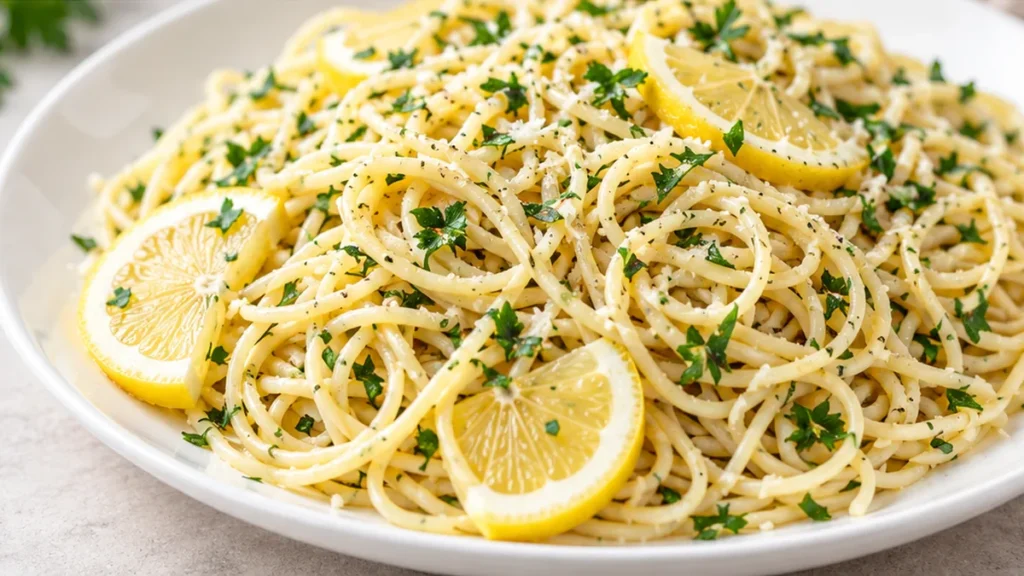
Zesty lemon parsley pasta is a simple yet flavorful dish. This recipe highlights fresh parsley and lemon, making it a refreshing choice for any meal.
Key takeaways
- Use fresh lemon juice and zest for optimal flavor.
- Avoid overcooking pasta to maintain al dente texture.
- Season pasta water adequately to enhance flavor.
- Consider ingredient swaps for variations without losing essence.

Zesty Lemon Parsley Pasta: Quick & Flavorful!
Ingredients
- 8 oz thin spaghetti
- 1 fresh lemon
- 2 cloves garlic, minced
- 1/2 cup chopped fresh parsley
- 1/8 tsp freshly cracked black pepper
- 1 tbsp olive oil
- 2 tbsp butter
- 2 tbsp grated Parmesan
- 1/4 tsp salt
Instructions
- Bring a large pot of water to a boil for the pasta. Once boiling, add the pasta and boil until tender (about 7-8 minutes). Drain the pasta in a colander.
- While the pasta is cooking, zest the lemon (you’ll need about 1 Tbsp). Chop the parsley and combine it with the Parmesan, lemon zest, and pepper in a bowl. Set the bowl aside.
- While the pasta is draining, add the olive oil and minced garlic to the pot used to cook the pasta. Sauté the garlic in the oil over medium heat for 1-2 minutes, or just until it becomes fragrant.
- Remove the pot from the heat and add the drained pasta and butter to the pot with the garlic. Toss the pasta until the residual heat has melted the butter and the pasta is coated in garlic and butter.
- Add the parsley Parmesan mixture to the pot and toss to coat again. Squeeze about 1 Tbsp of the lemon juice over the pasta and season with salt (about rac{1}{4} tsp). Toss to combine, then taste, and adjust the salt, pepper, or Parmesan to your liking. Serve warm.
Understanding the Role of Lemon in Pasta Dishes
Lemon plays a crucial role in enhancing the flavor profile of pasta dishes, particularly in this zesty lemon parsley pasta. The acidity from the lemon juice brightens the overall taste, balancing the richness of any accompanying fats, such as olive oil or butter. A general guideline is to use the juice of one lemon for every 200-250 grams of pasta, which provides a refreshing tang without overpowering the dish. Additionally, the zest of the lemon can be incorporated for an extra aromatic layer, as it contains essential oils that contribute to the overall flavor.
Common Mistakes and How to Avoid Them
When preparing zesty lemon parsley pasta, there are several common pitfalls that can detract from the dish’s intended flavor. One frequent issue is using too much lemon juice, which can lead to an overly sour dish. To avoid this, start with half the recommended amount and adjust according to taste. Another common mistake is not adequately seasoning the pasta water, which can result in bland pasta. A general rule is to add around 10 grams of salt per liter of water. Lastly, overcooking the pasta can lead to a mushy texture; aim for al dente, which typically requires about 1-2 minutes less than the package instructions.
Ingredient Swaps and Their Impact on Flavor
While the recipe calls for specific ingredients, there are several swaps that can be made without sacrificing the dish’s integrity. For instance, if fresh parsley is unavailable, basil or arugula can be used as alternatives, each providing a distinct flavor profile. Using whole wheat pasta instead of regular pasta adds a nuttier taste and increased fiber content, though it may require a slightly longer cooking time. If you prefer a creamier sauce, consider adding a splash of heavy cream or a dollop of ricotta cheese, which will mellow the acidity of the lemon while enhancing the dish’s richness.
The Unique Aspect of This Dish
What sets zesty lemon parsley pasta apart from other pasta dishes is its refreshing simplicity and reliance on fresh, vibrant ingredients. Unlike heavier sauces that can mask the flavors of the pasta, this dish highlights the quality of the ingredients used. The combination of lemon and parsley not only adds brightness but also promotes a sense of lightness, making it an excellent option for warm weather dining. The balance of acidity, herbaceous notes, and the pasta’s texture creates a dish that is both satisfying and invigorating.
Understanding the Impact of Fresh Ingredients on Flavor
The quality of ingredients, especially the lemon and parsley, plays a crucial role in the overall flavor profile of zesty lemon parsley pasta. Freshly squeezed lemon juice provides a bright acidity that enhances the dish, while fresh parsley adds a vibrant herbal note. When using dried parsley, the flavor is significantly muted, leading to a less lively dish. For optimal results, consider using organic lemons and fresh parsley, as they typically have more intense flavors. Additionally, the ripeness of the lemon can affect the acidity; a ripe lemon will yield more juice and a more balanced flavor compared to an underripe one.
Scaling the Recipe for Different Serving Sizes
One of the advantages of zesty lemon parsley pasta is its versatility in scaling for different serving sizes. When adjusting the recipe, maintain the ratio of pasta to sauce to ensure flavor consistency. For instance, if doubling the recipe, use twice the amount of lemon juice and parsley to preserve the dish’s signature zestiness. Keep in mind that cooking time may vary slightly with larger quantities; for instance, a larger pot of pasta may require a few extra minutes to reach al dente. Always taste and adjust seasoning as you scale up, since larger batches can sometimes dilute flavors.
Equipment Considerations for Perfect Pasta
The equipment used in preparing zesty lemon parsley pasta can significantly influence the final outcome. A large pot is essential for cooking pasta evenly, allowing enough space for the noodles to move freely. A sauté pan with a non-stick surface is ideal for combining the pasta with olive oil and lemon juice, ensuring even coating without sticking. Additionally, using a microplane for zesting the lemon can yield a finer texture, enhancing the dish’s aromatic qualities. If you have a pasta maker, consider making fresh pasta; it will elevate the dish’s texture and flavor, making the meal even more delightful.
Seasonal Variations and Their Effects on Flavor
Seasonal ingredients can greatly impact the flavor of zesty lemon parsley pasta. For example, during the summer months, ripe tomatoes can be added for a fresh burst of sweetness, creating a delightful contrast with the lemon’s acidity. In the fall, consider incorporating roasted vegetables like zucchini or bell peppers, which can add depth and earthiness to the dish. Additionally, the availability of fresh herbs varies by season; using freshly picked parsley in spring can provide a more intense flavor compared to store-bought options available during winter. Adapting the dish to include seasonal produce not only enhances flavor but also promotes sustainability.
Understanding the Role of Fresh Ingredients in Zesty Lemon Parsley Pasta
The flavor profile of zesty lemon parsley pasta heavily relies on the quality of its fresh ingredients. Fresh parsley, for instance, provides a vibrant color and a peppery taste that enhances the dish. Using freshly squeezed lemon juice instead of bottled juice is crucial as it offers a brighter, more aromatic flavor. Freshly grated lemon zest also adds an essential oil component that intensifies the citrus notes. Aim for organic produce when possible, as it tends to have a more robust flavor. The freshness of the pasta itself can also impact the texture; homemade pasta typically yields a superior bite compared to dried varieties. This dish is an excellent example of how the quality of ingredients can elevate a simple recipe into something extraordinary.
Batch Scaling for Zesty Lemon Parsley Pasta
Scaling the recipe for zesty lemon parsley pasta can be straightforward, but attention to detail is essential to maintain the dish’s integrity. When doubling or halving the recipe, keep the ratio of pasta to sauce consistent. For instance, if the original recipe calls for 250 grams of pasta, use 500 grams for a doubled batch. However, when it comes to the lemon and parsley, you may want to adjust slightly based on taste preferences; starting with the original amounts and then tasting before adding more can prevent overpowering the dish. Additionally, cooking times may vary slightly with larger quantities, so taste the pasta for doneness a minute or two earlier than the package instructions suggest. This ensures a perfect texture regardless of the batch size.
Make-Ahead Strategies for Zesty Lemon Parsley Pasta
While zesty lemon parsley pasta is best enjoyed fresh, certain components can be prepared in advance to save time. The sauce, which consists of lemon juice, zest, and parsley, can be made a few hours ahead and stored in the refrigerator. This allows the flavors to meld, enhancing the overall taste. However, it’s best to add the parsley just before serving to maintain its vibrant color and fresh flavor. Cooked pasta can be stored for up to 3 days in an airtight container in the refrigerator, but it’s essential to toss it with a little olive oil to prevent sticking. When ready to serve, simply reheat the pasta in boiling water for a minute or two and mix it with the fresh sauce. This strategy ensures that you can enjoy a quick and flavorful meal without compromising on quality.
How to Store and Reheat Zesty Lemon Parsley Pasta for Optimal Flavor
To maintain the vibrant flavors of zesty lemon parsley pasta, proper storage is essential. Store the pasta in an airtight container in the refrigerator for up to three days. If you anticipate leftovers, consider separating the pasta from the sauce to prevent it from becoming too soggy. When reheating, gently warm the pasta in a skillet over low heat, adding a splash of olive oil or a little reserved pasta water to revive the dish. This method ensures that the pasta retains its texture and the flavors remain fresh. Avoid microwaving directly, as this can lead to uneven heating and a rubbery texture.
Understanding the Importance of Ingredient Quality in Zesty Lemon Parsley Pasta
The quality of ingredients significantly impacts the final dish, particularly in zesty lemon parsley pasta. Fresh parsley and high-quality lemons are crucial; they provide the bright, zesty flavor that defines this recipe. Opt for organic lemons when possible, as they tend to have a more robust flavor and less wax coating. Similarly, using fresh parsley instead of dried will enhance the dish’s aroma and taste. The type of pasta also matters; opt for high-quality durum wheat pasta for better texture and flavor absorption. This attention to ingredient quality not only elevates the dish but also ensures a more satisfying culinary experience.
Pro tips
Pro tip: Best served immediately while hot!
Frequently asked questions
Can I use bottled lemon juice instead of fresh?
While bottled lemon juice is convenient, fresh lemon juice provides a brighter, more vibrant flavor that is essential for this dish. If using bottled juice, opt for a high-quality brand to achieve the best results.
How can I make this dish vegan?
To make zesty lemon parsley pasta vegan, simply omit any animal-derived ingredients like cheese or cream. You can enhance the creaminess by using a splash of plant-based cream or a nut-based cheese alternative.
What type of pasta works best for this recipe?
While any pasta can work, long pasta types like spaghetti or linguine are ideal as they hold the sauce well. However, short pasta shapes like penne or fusilli can also be used for a different texture.
Can I prepare this dish in advance?
This dish is best enjoyed fresh, as the lemon flavor can diminish over time. However, you can prepare the pasta and sauce separately and combine them just before serving to maintain the dish’s freshness.
More from Easy Pasta Recipes →