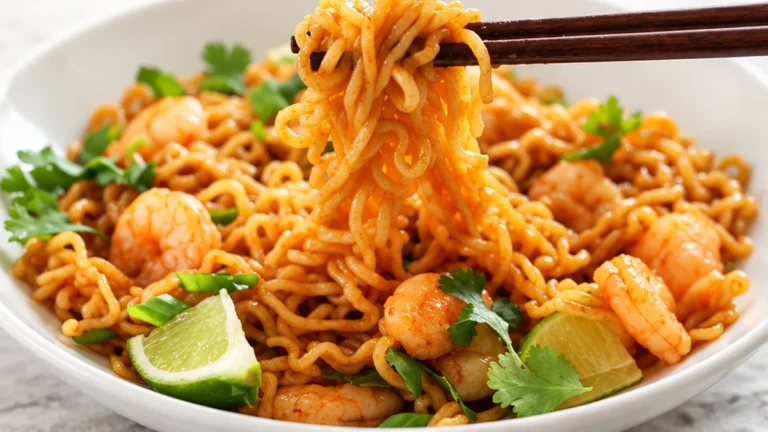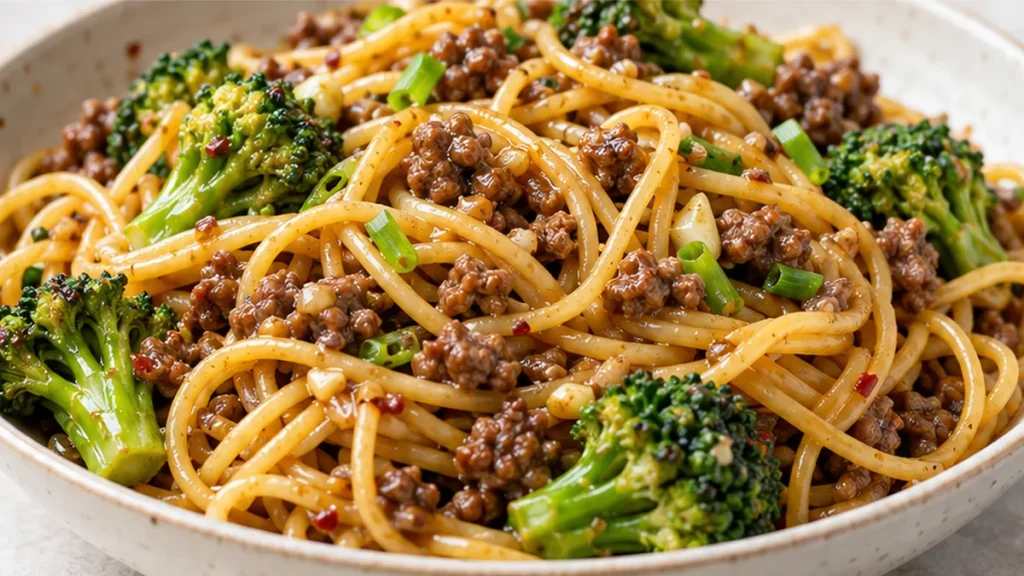
Beef broccoli garlic noodles are a quick and satisfying meal. This recipe combines tender beef and fresh broccoli in a flavorful garlic sauce.
Key takeaways
- Marinate beef for at least 30 minutes for flavor and tenderness.
- Blanch broccoli for 2-3 minutes to maintain color and crunch.
- Cook noodles al dente and rinse to prevent mushiness.
- Balance flavors with garlic, soy sauce, and a touch of sugar to enhance the dish.
Beef & Broccoli Garlic Noodles: Quick, Flavorful Weeknight Magic!
Ingredients
- 4 tbsp oyster sauce
- 3 tbsp butter, divided
- 1 tbsp soy sauce
- 3 tbsp brown sugar
- 1 tbsp toasted sesame oil
- 1/2 lb ground beef
- 4 cloves garlic
- 1/2 lb frozen broccoli florets
- 8 oz spaghetti
- 4 green onions
Instructions
- Melt 2 Tbsp butter in a bowl, then add the oyster sauce, soy sauce, brown sugar, and sesame oil. Stir to combine, then set the sauce aside.
- Bring a large pot of water to a boil. Once boiling, add the spaghetti and cook until tender (about 7 minutes). Drain the spaghetti in a colander.
- While the spaghetti cooks, begin the beef and broccoli. Add the remaining 1 Tbsp butter to a large skillet and melt over medium heat. Add the ground beef and cook until browned (5-7 minutes). Drain any excess fat if necessary.
- While the beef cooks, mince the garlic. Add the minced garlic to the skillet with the browned beef and cook over medium heat for 1-2 minutes more, until the garlic has softened slightly.
- Add the frozen broccoli florets to the skillet with the beef and garlic. Continue to sauté over medium heat just until the broccoli is no longer frozen. It will continue to cook in the next steps.
- Finally, add the cooked and drained pasta and the prepared sauce to the skillet with the beef and broccoli. Cook and stir until everything is combined, coated in sauce, and heated through.
- Slice the green onions and sprinkle over top just before serving, along with a pinch of crushed red pepper flakes, if desired.
Understanding the Role of Marinades in Beef & Broccoli Garlic Noodles
Marinating beef is crucial for enhancing flavor and tenderness. A typical marinade for this dish includes soy sauce, garlic, and sometimes a touch of sugar. The soy sauce not only imparts umami but also helps to break down the protein structure in the meat, making it more tender. Aim for at least 30 minutes of marinating time, but for optimal results, marinate for up to 2 hours. This allows the flavors to penetrate the beef deeply, resulting in a more flavorful dish.
Essential Techniques for Perfectly Cooked Broccoli
Broccoli should be cooked to a vibrant green while maintaining a slight crunch. The best method is blanching, which involves briefly boiling the broccoli and then shocking it in ice water. This technique preserves both color and nutrients. Aim for about 2-3 minutes in boiling water, followed by immediate immersion in ice water for the same duration. This ensures your broccoli remains crisp and visually appealing in the final dish.
Mastering Noodle Cooking for Optimal Texture
The texture of the noodles is vital for a successful beef and broccoli garlic noodle dish. For best results, cook the noodles until they are al dente, which typically takes about 7-9 minutes depending on the type. This means the noodles should be firm to the bite but not hard. After cooking, rinse them under cold water to stop the cooking process and prevent them from becoming mushy. Tossing the noodles with a bit of oil immediately after draining can also help prevent sticking.
Balancing Flavors: The Importance of Garlic and Seasoning
Garlic is a key ingredient that adds depth to beef and broccoli garlic noodles. Fresh garlic should be sautéed until fragrant but not browned, as burnt garlic can impart bitterness. Additionally, balancing the flavors with salt, pepper, and sometimes a hint of sesame oil can elevate the dish. Consider using low-sodium soy sauce to control salt levels while still achieving a robust flavor profile. A touch of sugar can also help balance the saltiness of the soy sauce.
Common Issues and How to Avoid Them
One common issue is overcooking the beef, which can lead to toughness. To avoid this, cook the beef quickly over high heat and aim for medium-rare doneness, which is around 57°C (135°F). Another issue is soggy noodles, often caused by overcooking or not rinsing them properly. Ensure you follow the timing and rinsing steps carefully. Lastly, if the dish lacks flavor, consider adjusting the seasoning and adding more garlic or soy sauce to enhance the overall taste.
Understanding the Impact of Ingredient Quality on Flavor
The quality of your beef and broccoli significantly influences the overall flavor of the dish. When selecting beef, opt for cuts like flank steak or sirloin, which are tender yet flavorful. Fresh, vibrant broccoli not only enhances the dish visually but also contributes to a more pronounced taste. Seasonal produce usually offers better flavor and nutritional value. For garlic, using fresh cloves is crucial; pre-minced garlic often lacks the robust flavor that freshly minced garlic provides. Additionally, consider sourcing organic ingredients when possible, as they tend to have superior taste profiles.
Scaling the Recipe for Different Portions
When scaling this recipe, it’s important to maintain the balance of flavors and cooking times. For instance, doubling the recipe requires careful attention to the cooking times, especially for the beef and noodles. Cooking in larger batches may necessitate using a larger pan or wok to ensure even cooking. Additionally, when increasing the quantity of sauce, maintain the same ratio of soy sauce to garlic and other seasonings to preserve the intended flavor profile. For example, if you double the soy sauce, also double the garlic and other flavor components to keep the taste consistent.
Equipment Considerations for Optimal Cooking
The type of equipment you use can greatly affect the outcome of your beef and broccoli garlic noodles. A heavy-bottomed wok or a large skillet is ideal for high-heat cooking, as it allows for proper searing of the beef and quick stir-frying of the vegetables. Non-stick pans can also be useful to prevent sticking, especially with the noodles. If using a stainless steel pan, ensure it is properly heated before adding oil to prevent sticking. Additionally, using a mandoline or sharp knife for slicing vegetables ensures uniform cooking, which is essential for texture.
Make-Ahead Strategies for Busy Weeknights
Preparing beef and broccoli garlic noodles in advance can save time on busy weeknights. Marinate the beef a day ahead and store it in the refrigerator to enhance flavor. You can also blanch the broccoli and store it in an airtight container, which allows for quicker cooking the next day. Cook the noodles al dente and toss them with a bit of oil to prevent sticking before refrigerating. When ready to serve, simply reheat the beef and broccoli in a pan, add the noodles, and finish cooking everything together for a quick meal.
Understanding the Impact of Broccoli Freshness on Flavor and Texture
The quality of broccoli used in beef broccoli garlic noodles significantly influences the dish’s overall flavor and texture. Fresh broccoli retains a vibrant green color and crisp texture, which contributes to the dish’s visual appeal and mouthfeel. Ideally, choose broccoli with tightly closed florets and firm stems. Old or overcooked broccoli can become mushy and lose its bright color, leading to a less appetizing dish. When preparing, blanch the broccoli briefly in boiling water to maintain its crunch and color before adding it to the stir-fry. This technique enhances the flavor profile by ensuring that the broccoli complements the beef and noodles rather than overpowering them.
Optimizing Noodle Type for Perfect Integration
The type of noodles used in beef broccoli garlic noodles can drastically alter the dish’s texture and flavor absorption. While traditional choices include egg noodles or rice noodles, each type has unique characteristics. Egg noodles offer a rich, chewy texture that holds sauces well, while rice noodles provide a lighter, more delicate mouthfeel. For a heartier dish, consider using udon noodles, which are thicker and absorb flavors effectively. When selecting noodles, consider the cooking time and method; for instance, rice noodles need soaking rather than boiling, which can affect the overall timing of your dish. Experimenting with different noodles can yield exciting variations in texture and flavor.
Batch Cooking and Storage Techniques for Busy Weeknights
Preparing beef broccoli garlic noodles in advance can save time on busy weeknights. To batch cook, prepare the beef and broccoli separately and store them in airtight containers in the refrigerator for up to three days. Cook the noodles fresh when ready to serve, as they can become sticky and lose texture if stored. If you prefer to store the entire dish, consider undercooking the broccoli slightly to maintain its crunch when reheated. When reheating, use a skillet over medium heat with a splash of water or broth to prevent drying out. This method ensures that the flavors meld while preserving the integrity of the ingredients, making for a quick and satisfying meal.
Choosing the Right Noodles for Beef & Broccoli Garlic Noodles
The choice of noodles can significantly influence the overall texture and flavor of the dish. Traditional options include egg noodles, rice noodles, or even udon. Egg noodles, with their rich flavor and chewy texture, tend to hold sauces well, creating a satisfying bite. In contrast, rice noodles provide a lighter option, which may absorb flavors differently. Udon noodles, being thicker and chewier, can add a unique texture but may require longer cooking times. When selecting the noodle type, consider the cooking time and how they will absorb the sauce. For instance, rice noodles should be soaked in hot water before adding them to the stir-fry to prevent them from becoming mushy. The key is to ensure that the noodles complement the beef and broccoli without overpowering them.
Enhancing Flavor Through Ingredient Quality
The quality of your ingredients can dramatically affect the final flavor of your Beef & Broccoli Garlic Noodles. Fresh, high-quality broccoli not only adds vibrant color but also contributes a crisp texture that contrasts beautifully with the tender beef. When selecting broccoli, look for firm, bright green florets and avoid any yellowing or wilting. Similarly, the beef should be of good quality; flank steak or sirloin are excellent choices due to their tenderness and flavor. Marinating the beef can enhance its taste, but the marinade’s quality matters too. Opt for fresh garlic rather than pre-minced or powdered garlic for a more potent flavor. Additionally, using low-sodium soy sauce allows you to control the saltiness while still imparting the umami flavor essential to this dish. By prioritizing ingredient quality, you can elevate the dish and create a more enjoyable dining experience.
Pro tips
Pro tip: Best served immediately while hot!
Frequently asked questions
Can I use a different type of noodle?
Yes, you can substitute with rice noodles or whole wheat noodles. Just be mindful of the cooking times as they may vary.
What can I do if my beef is tough?
If your beef turns out tough, it may be due to overcooking. Ensure you cook it quickly over high heat and consider using a tender cut of beef, like flank or sirloin.
How do I store leftovers?
Store leftovers in an airtight container in the refrigerator for up to 3 days. Reheat gently on the stove to maintain the texture of the noodles and vegetables.
Can I make this dish vegetarian?
Absolutely! You can replace the beef with tofu or tempeh and use vegetable broth instead of beef stock to create a vegetarian version of this dish.
More from Easy Pasta Recipes →