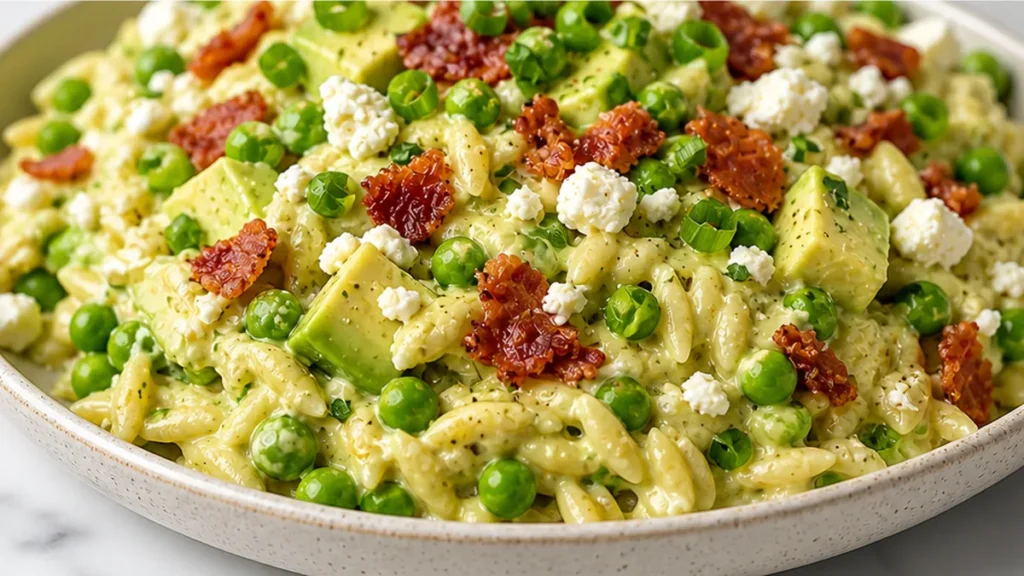
This avocado orzo recipe is a delightful twist on a classic pasta dish, perfect for a quick and satisfying meal. Combining the creamy texture of avocado with the savory crunch of bacon and the tang of feta, this avocado orzo is a big flavor. Ideal for busy weeknights or a light lunch, this dish is surprisingly simple to prepare, making it accessible for cooks of all levels. The bright green of the avocado and peas, contrasted with the golden orzo and crispy bacon, makes this avocado orzo a feast for the eyes as well.
Key takeaways
- Cook orzo al dente and drain thoroughly.
- Reserve starchy pasta water for a creamy, emulsified avocado sauce.
- Use ripe avocados for the best texture.
- Blend sauce immediately to prevent browning.

Creamy Avocado Bacon Orzo Dream
Ingredients
- About 10 oz. orzo pasta
- 1 cup frozen peas
- 2-3 avocados
- 1/2 cup crumbled bacon
- 1 tsp minced garlic
- Feta cheese crumbles
- Salt and pepper to taste
Instructions
- Cook orzo according to package directions. Add frozen peas during the last 2 minutes of boiling. Drain pasta and peas, then return to the pot.
- Slice avocados into cubes. Gently scoop the avocado cubes into the warm orzo mixture. Add minced garlic, crumbled bacon, salt, and pepper. Stir very gently for 30 seconds to combine, being careful not to mash the avocado.
- Sprinkle each serving generously with feta cheese crumbles.
- Serve the orzo warm immediately.
- For an extra festive touch, serve the orzo inside a hollowed-out avocado half.
- Enjoy this creamy, flavorful, and satisfying pasta dish!
Notes
The technique that makes it
The success of this Creamy Avocado Bacon Orzo hinges on two key techniques: the proper cooking of the orzo and the creation of a smooth, emulsified avocado sauce. Orzo, a small pasta shaped like a grain of rice, cooks quickly and can easily become mushy if overcooked. It’s crucial to cook it al dente, meaning it should retain a slight bite. Drain it thoroughly and, if not immediately combining with the sauce, rinse briefly with cool water to prevent sticking. This step ensures each pasta piece remains distinct and not a cohesive mass.
The avocado sauce is where the creaminess truly comes from. For the smoothest texture, ripe avocados are essential. They should yield gently to pressure. The sauce is typically made by blending the avocado flesh with a liquid – in this case, the starchy pasta water is ideal. Reserve about a cup of the hot pasta water before draining the orzo. The starch in this water acts as an emulsifier, helping to bind the avocado and create a luscious, creamy consistency without the need for dairy. Blending the avocado with the garlic, a splash of pasta water, and seasoning until completely smooth is vital. Adding the warm, drained orzo and peas to this sauce, along with the bacon, allows the residual heat to gently warm the sauce and meld the flavors without cooking the avocado to an undesirable texture or color.
Troubleshooting
- Sauce is too thick: Add more reserved pasta water, a tablespoon at a time, blending until the desired creamy consistency is reached.
- Avocado is not creamy, but gummy: This often happens if the avocado is underripe or if too much starchy pasta water is added too quickly. Try blending in a little more fresh avocado or a small amount of olive oil to smooth it out.
- Orzo is mushy: The orzo was likely overcooked. For future attempts, reduce the cooking time by 1-2 minutes and ensure it’s drained immediately.
- Avocado sauce turned brown: This is due to oxidation. Ensure you blend the avocado immediately after preparing it, and the acidity from lemon juice (if added as a substitution) can also help prevent browning.
Substitutions
- Bacon: Crispy pancetta or prosciutto can offer a similar salty, savory crunch. For a vegetarian option, smoked tofu or tempeh, pan-fried until crisp, can provide a smoky element.
- Feta cheese: Goat cheese crumbles would offer a tangy creaminess. A sharp, aged cheddar could also work for a different flavor profile, though it will alter the overall taste significantly.
- Peas: Edamame or finely chopped asparagus, blanched or steamed until tender, can be used. Ensure they are added towards the end of cooking to maintain their texture and color.
- Garlic: Shallots, finely minced and sautéed until softened, can provide a milder, sweeter garlic note.
Pro tips
- Use ripe but firm avocados to avoid them turning mushy.
- Gently stir the avocado into the warm pasta to prevent it from overcooking and turning brown.
- For extra flavor, add a squeeze of lemon or lime juice to the pasta before serving.
- Ensure bacon is cooked until very crispy for the best texture contrast.
Enjoy this incredibly versatile and delicious avocado orzo. It’s a simple yet elegant dish that’s worth making.
More from Creamy Pasta Recipes →
Read also on TastyBend: Ground Turkey Nutrition Facts: Complete Scientific Analysis.
Frequently asked questions
Can I make avocado orzo ahead of time?
While the orzo itself can be cooked and stored, it’s best to add the avocado and creamy elements just before serving. Avocado can brown and lose its bright color and texture when stored for too long. Cook the orzo, crisp the bacon, and prepare the sauce base, then combine with fresh avocado when ready to eat.
How do I store leftover creamy avocado orzo?
Store any leftovers in an airtight container in the refrigerator for up to 2 days. The avocado may discolor slightly, but the flavor will remain. Reheat gently on the stovetop over low heat, adding a splash of water or milk to help loosen the sauce. Avoid microwaving as it can overcook the orzo and make the avocado mushy.
What can I substitute for bacon in this orzo recipe?
For a vegetarian option, crispy fried shallots or onions offer a similar savory crunch. Alternatively, smoked tofu or tempeh, crumbled and pan-fried until crisp, can provide a smoky, meaty texture. Pancetta or prosciutto would also work if you’re looking for a different cured pork flavor profile.
How do I know when the orzo is cooked?
Orzo is cooked when it is al dente, meaning it is tender but still has a slight bite. It should not be mushy or hard. Taste a few grains after about 8-10 minutes of simmering. It should be plump and have a slight resistance when you bite into it. Drain any excess liquid if necessary.